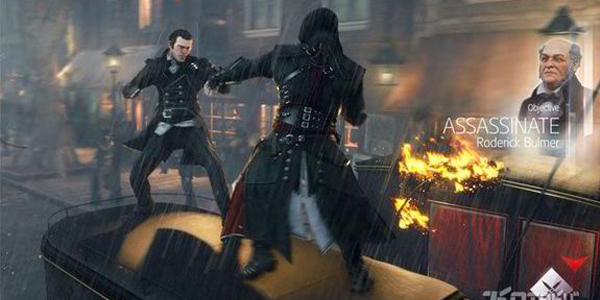
Assassin’s Creed: Victory - 10 Perfect Ways To Save The Franchise

It's make or break time for Ubisoft's biggest series.

How likely is it that Assassin's Creed will be truly phenomenal again? Okay scratch that, how about a release that's good and makes you glad you're playing it - not just sitting through something that's serviceable? Maybe the latter is a more attainable goal, but why should consumers settle for less? At the end of the day you're still going to be paying upwards of £60 for a product that's expected to blow your socks off into a neighbouring country, not to mention if you factor in all the pre-order bonuses and random logo-embossed tat that goes alongside the pre-release hype machine, some fans will be forking over hundreds to support a franchise they love. The biggest problem facing AC is Ubisoft themselves; having realised they can barely iterate on a given formula and guarantee huge sales, the 'suits' (assumedly) have reconciled to sticking to a very rigid (and crippling) yearly release schedule, meaning any major overhauls are pretty much out the window. However, that tide may be starting to turn - and somewhat drowning them in the process - following Unity, as although it's been patched up into a fun little romp around a gorgeously-rendered Paris, the release-day version was a perfect example of what happens when developers aren't allowed to set their own deadlines. Going forward it's imperative for Ubi to really double down on what's worked in the past, and although there's plenty things sure to be included in AC: Victory regardless, these core refinements would go a long way to reclaiming the studio's older reputation in a big way.


10. A Relatable Protagonist

First off, do you remember the name of the guy you're playing as in Black Flag? Not Edward Kenway, the modern day chap? Exactly. One of the biggest things that made up the core appeal of the series was routed in the present day, and more importantly Desmond; the fish-out-of-water destined for great things who as he was trapped inside Abstergo Industries allowed for both you and him to uncover the mysteries of what was going on together. It was a perfect setup, and one that as the series went completely off the rails ended up disappearing alongside. However, something that would be received positively across the board in the future is another new recruit to the fold of either the Assassins or Templars - or to play as one of the support crew from the older games. There needs to be some human element that's relatable in the modern time, outside of "Here's another cool-dude slaughterhouse with a grudge you can play as".

9. Create A Genuine Sense Of Progression

So you boot up the newest AC, take in the visuals on your first synchronisation, skewer a few guards in the exact same fashion as before and then hold the right trigger and press forward until you can't be bothered any more. Sound familiar? Also, can you remember the last time you actually acquired a worthwhile ability in an AC campaign? Unity had you unlocking the action to stab guys on the ground (erm... what?!), alongside letting you buy anything with real-world cash if you couldn't be bothered to play at all. The first title had you unlocking the very ability to grab ledges mid-jump, not to mention AC 2's ledge-leap that enabled you to dart up buildings faster. Following that what did we get? The hook blade? It was essentially pointless, existing to change your climbing animation slightly and allowing for zipline descents at key points in the map - hardly something that felt worthwhile. So far, outside of Altair, Ezio and to some degree Arno's paltry smattering of attributes, every other protagonist has ended their respective games with the same capabilities they started with - even Edward Kenway just straight up becomes an Assassin seemingly by staring at one at the start of Black Flag. Unity was a surface-scratching start, but would it be too much for Ubi to code a series of animations that change over time, maybe having to tap a button to regain your footing the first few times you make a huge jump, only to get better at it the more you do so? Little things like this would go a very long way in rewarding players for seeing the game through to the end, and systems like in Skyrim or Wolfenstein that procedurally unlock abilities as you use them feel like a very easy implementation to make.

8. Take A Break - Let People Get Excited

As much as it's easy to grumble and roll your eyes whenever you see a giant 'PRE-ORDER NOW!' sign next to any upcoming title, the baseline fact is all this 'hype machine' stuff really works - especially when a developer is confident in what they're showing off. Take Batman: Arkham Knight. Even though there's DLC plans, a variety of bundle deals and even a huge statue you can pre-order, nobody's batting an eyelid because they know the developers are taking their time and creating a solid core experience that's worth the cash. Contrast that with AC: Victory, which even though it leaked just after Unity you could immediately tell exactly how it was going to play and feel - the same in Unity's pre-release campaign. Ubisoft came out and said they were upset people knew about Victory at all, as they were trying to focus on getting Unity out there, but the problem they completely leapfrogged was that another title shouldn't even be at the screenshot stage yet. Take a step back, and drip-feed back in things like what could be the return of the double-blades, double-counter kills or even something like a derelict Animus powering back up again. Fans have been served the same gigantic platter of content every year all at once, and there's only so much you can look at an over-stuffed banquet before it gets sickening.

7. Rebuild The Combat From The Ground Up
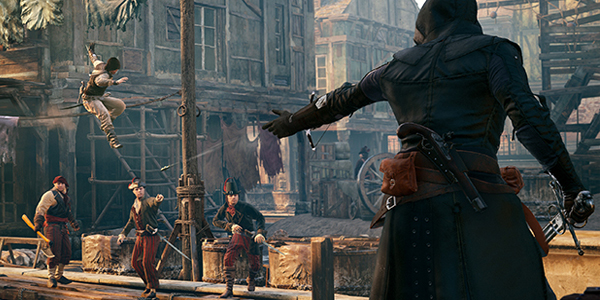
Unity elected to just straight-up remove features that were standard in the previous games under the guise of refinement. However can you point to one game with elaborate gameplay mechanics that actually got better when it removed features fans loved to deploy? Whilst you could make a case for these older elements to make a return, a much better solution would be to rejig all the animations from the ground up, delving into the physics and game engine to really change the feel of play. Right now it doesn't matter than Arno wields a blade different than Kenway, Connor or Ezio - you still prod the counter button at the same time and watch the whole thing play out through canned, motion-captured animations. Combat in Unity is as light as it was in Black Flag, and not since Ezio was slaying guards from atop horses with giant spears has their been any weight behind anything you do. Titles like Shadow of Mordor, Fable, Mortal Kombat etc. (i.e. games that are built with combat in mind) make sure every hit lands with the might of Rocky Balboa proportions; something that if combat is going to remain as a viable method of play needs to return to actually feeling enjoyable. Of course there's a very obvious flip-side to this...

6. Remove Melee Combat Altogether

Although the series isn't exactly regarded as a heavyweight any more, Splinter Cell: Blacklist was a raucous return to form for Ubisoft's other, more modern stealth franchise back in 2013. Part of stealth gameplay in general is surely to remain hidden, picking your targets and executing them with a devout purpose, knowing the animations and controls aren't about to betray you at the last second. It's what Shadow of Mordor absolutely nailed, whilst also highlighting the problems with Assassin's Creed after so many instalments; it just doesn't know what it wants to be. Melee combat in the first game was almost always a last resort - although it was fun to take on a string of enemies in a blur of counters and backstab insta-kills - but all that served to do was set the series down a path of putting a battering-ram approach to the fore of every encounter. Unity's combat is just godawful thanks to a lack of being able to telegraph enemy attacks very well, or feeling like Arno knew how to handle a blade outside of flailing around until everyone hits the floor. In Splinter Cell: Chaos Theory the devs introduced a two-button 'knockout or kill' mechanic, and it revolutionised the way everyone played, giving you the utmost confidence when in a jam to tackle any immediate threats and then deftly disappear into the shadows. If melee combat is going to remain it needs to be solid, reliable and effective - something that would get away from wishing for an instant restart button any time a brawl breaks out in Unity.

5. Introduce A Morality System

Although ever since GTA let you mow down a prostitute and loot their corpse, everyone's taken to seeing just what they can get away with in any given open-world title, but for AC all that happens is you'll 'Desynchronise' (die) should you kill too many bystanders. The reason? " didn't harm innocents" - something that goes against the idea of watching someone's memories play out, as if everything has already happened and they never did such a thing, how can you control their past to do so? Forget the pain that's now building in your head, as the solution would be to play as someone with far less of a rigid morale compass - essentially what happened in AC: Rogue, the most interesting title in years that got buried under all the Unity hate last year. It wouldn't be too much of a leap considering the elasticated tech on display already. Just surmise there's a newer 'advanced' version of the Animus that actually rewrites (or simulates) history itself Source Code-style, allowing for a morality system to sit underneath a huge number of choices you could then make. From deciding who to align with to which (otherwise-innocent) informants should meet the end of your blade, authoring your own experience in the past events of these games in a way that directly effects the future would be incredible.

4. Dial Back The Crazy

If you've ever tried to summarise the AC plotline following the events of Revelations, III and Black Flag you'll have a very hard time, being there's everything from bickering Gods with spectral trans-dimensional powers to meteors destined to decimate the Earth - all of which can only be stopped by accessing some specific underground tombs. In short, it's ludicrous, and for far too long the general sensation of just going through the motions when playing is the standard M.O. for AC in 2015. The main thing anyone who's played AC II will remember is the ending section where Minerva talks to you (and literally you), addressing the wider purpose of the world whilst shattering the fourth wall and delivering one of the best plot twists in gaming history. The problem, was Ubi then didn't know where to go from there, and when Desmond was being possessed to kill off another character just 'cause it all felt a bit too desperate, as if the writers were trying to one-up the previous instalment by doing something unexpected just for the sake of it. As the knowledge of these Gods didn't exist in-game until the events of AC II, there's plenty more tales to be told centred around the creation of the Animus; the experimentation of how far back it could go and just how many different races a bloodline could touch. Let the rules of the world dictate the action, and not the other way around.

3. Give Us A World Where Actions Actually Matter

This could be filed under the more common criticism levied at the series surrounding the whole 'make the present day stuff work' category, but the point to be made is the idea of tapping into a historical time period where any and everything is already accounted for doesn't always make for the best original stories to be told. The more 'epic' the historical context the more well documented it is, and the less freedom you've got to change or affect the world around you. Meeting up with historical figures is all well and good too in a 'Oh hey, look who it is' sort of way, but a much more enticing prospect would be to delve into myths and legends surrounding where certain figureheads were at any given time and expanding on the notion of "what if?" within. With Victory edging the series nearer and nearer to the present day - and closer chronologically to even better forms of documentation and accurate records - it reduces the possibilities of the world tenfold in terms of how larger set-pieces involving iconic characters can play out.

2. An Interesting/Female Protagonist

Yes, there's already been a female protagonist in Assassin's Creed 3: Liberation and no, this entry isn't some feminist frequency-tuned attempt at addressing the diversity complaints stemming from last year when Ubi stated programming a female assassin would be too much work. Instead the main problem with the AC titles for years now has been a lack of interesting protagonists, Rogue's Shay Cormac offered far more in the way of grey areas when going against the grain of the Order itself, but even his tale wasn't anywhere near compelling throughout - not to mention Liberation's Aveline de Grandpré got about as much coverage as a pamphlet on Fourth Century Latin tattoos. One of the best characters so far was Freedom Cry's Adewale, as at least that gave you a compelling historically-accurate context within which to have some fun - or as much fun as you can whilst freeing slaves and building a rebellion, anyway. For all the brooding character art that always trickles out of Ubi Towers leading up to release, it's always just yet another guy in a hood looking off into the distance and begging you to take his plight seriously. Shaking this up at its core and really fleshing out what it must have been like to be a woman in these older times - not to mention homosexual - would elevate not only AC's storytelling overall, but video games as a platform to tell these sorts of tales.

1. Make Traversal Fun And Death-Defying

Remember back when the first Assassin's Creed was shown - the notion of 'see that building? You can climb it!' was revolutionary, and as it boggled gamers' minds trying to figure out the programming prowess behind letting a character mantle onto any outcrop of in-world geometry, it immediately gave the series one hell of an appealing prospect; just simply seeing what it would look and feel like to clamber up and around everything. Naturally in service of making sure everyone could get involved, the actual mechanics for this were reduced down from a multi-button 'X is left arm, B is right, A is your feet' structure, to simply holding a couple of buttons and letting Altair (or whoever) do the rest. It's actually pretty remarkable considering how much cash the franchise has made that they've not put more behind the climbing mechanics themselves. When a new AC is announced and you breathe in the gorgeously-realised vistas and landmarks of any given place, it should prompt the question of how you're going to climb and conquer it, rather than just knowing from past experience. Unity took a step in the right direction with a dedicated decline button, but there needs to be far more weight to interactions between you and the world itself. Tying back into the idea of progression and honing your abilities over the course of the game, eventually getting to the top of the highest point in the world should be a genuine achievement every time. What core things would you change up to save the series, or are you done altogether at this point? Let us know in the comments, and sign up to our Gaming page on Facebook for more great content!

Gaming Editor
Gaming Editor

WhatCulture's Head of Gaming.