Assassin's Creed: Origins: 10 Major Rumours & Details You Need To Know
A complete reboot AND the return of Desmond Miles?

Considering the prominence of Assassin's Creed, it's rather surprising that Ubisoft has remained tight-lipped on the next instalment. However, with the major franchise fatigue felt after the release of Syndicate, their hesitancy makes sense. If they're going to unveil the next AC game after the year-long break, it better be something worth waiting for.
E3's coming up soon, so the stage is set for an extended unveiling of Ubisoft's latest venture into the Animus. The question is: What exactly will fans see? Will AC reinvent what came before, or will Ubisoft simply repackage old ideas yet again?
There are plenty of possibilities being discussed regarding everything from the game's setting to its place on the AC timeline. The theories and rumours are plentiful, but it's important to separate the realistic from the absurd.
After going through and combining a mix of what has been confirmed/possibly leaked, these are the 10 best details and features that feel the most credible.
10. Plot Focuses On Origins Of The Assassin Order

Sorry fans, but it looks like you'll have to continue waiting for that AC game set in feudal Japan.
This time around, players will activate the Animus and be transported to Ancient Egypt (approximately 1400 BC) for some assassin-related escapades. And with "Origins" literally in the title, players already have a solid idea of what they can expect in the story.
The main thrust will likely focus on the beginning of the Assassin Order. Origin stories may not always be the most exciting for players, but a literal "start at the beginning" narrative could shine new light on both sides of the Assassin-Templar conflict. A true beginning could be exactly what the AC series needs to get back on track. Instead of just another sequel, they could effectively re-establish the strong foundation that was once present all those years ago.
And if all else fails, Ubisoft can use Origins as a soft reboot to relaunch and start fresh.
The selection of Egypt is an interesting one too, as there haven't been any desert-heavy maps previously. If past games are any proof, it'll certainly look stunning and true to the geography of the time. The period-specific activities and plot elements will also provide for interesting material, as the period in history is so up for interpretation.
If you're still not convinced, remember that you'll be able to do a Leap of Faith off the Great Pyramid of Giza.
8. Modern-Day Sections Will Have Exploration & Increased Character Interaction

An intriguing component of AC games have been the controllable modern sections. You spend all of this time in whatever historical period, but you rarely ever interact with the current world. Unfortunately, these sections rarely ever felt properly explored or interesting as there was simply a lack of engaging activities to take part in. AC3 had the option of free-running around a small building where, as Desmond, you could talk to members of the team. However, other than that, there wasn't really anything to do outside of these limited conversations.
AC:O sounds ready to change that.
Origins will have another new modern day protagonist, but this time, they are an already well-trained assassin. There will be larger areas to move around in and an increase in character interaction. The description seems to promise a heightened version of AC3's present day sections, so depending on how you felt about them, this could be good/bad news.
The detail of the protagonist being a trained assassin does add plenty of interest, especially if there are some combat/stealth-based missions set outside of the Animus. Unless these sections feel like they have a purpose, fans will always resent them. If Ubisoft is going to add some creativity to these sections, perhaps they will allow the overall playing experience to be far more balanced than ever before.
7. Combat Will Be Witcher-Like

Combat in Assassin's Creed has always been a tough component to really nail. Ever since the original game, enemy encounters typically devolve to "counter until you win." It's time Ubisoft improves combat in a way that increases the difficulty and strategy involved with every potential enemy/group of hostiles. In order to do that, it sounds like Ubisoft will be taking some cues from the much-beloved Witcher series.
Enemies will work harder to flank you and find vulnerable points to hit, forcing the player to try new methods of attack. The combat system is expected to resemble Witcher's strategic fighting style, which mixes sharply-timed offensive moves with smart defense.
AC:O's fights will be tougher, more strategic, and dynamic than any other game in the series. Fans will have to wait to see gameplay footage before they can confirm these changes, but the possibility of notable improvements to one of AC's longstanding issues should give fans some positive vibes going forward.
6. Sailing Returns
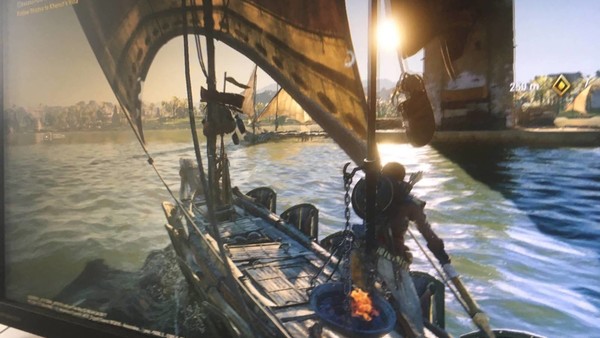
Thanks to a recently leaked photo, fans have already gotten a sneak peek into what to expect with this game's traversal mechanics. There are plenty of notable elements in the picture, but it's the controllable sailboat that takes the cake. The sailing function was a major high point of both AC3 and the focus in AC4, so its removal led to many fans missing the feature terribly. If this picture proves to be legitimate, then fans won't be missing the sailing mechanic much longer.
As a means of utilizing the setting and landscape, the protagonist will be able to travel through the Egyptian landscape on foot and traverse the map's bodies of water with the sailboat. There may not be any cannon fire or pirate shanties this time around, but any water-based components will surely add an interesting diversion to the core gameplay.
It doesn't seem far-fetched to suggest that Ubisoft took a well-regarded element from previous iterations and bring it back to bring back some good favor with fans. This image, along with the rumoured developers of the game (more on that later) points to this rumour being highly plausible.
6. The World Is Over 3x Bigger Than Black Flag

A continuing philosophy with Assassin's Creed's maps have been "make the maps bigger". Ubisoft, not wishing to break tradition, will continue this trend with Origins as the game's open world is expected to be over three times the size of AC4's map.
This decision to constantly increase map sizes isn't always clear, but maybe Ubisoft doesn't wish to waste their settings with a sparse map and a limited amount of activities. They've never struggled with filling their worlds with playable content, so players can certainly expect plenty of side content spread across the map.
The primary difference between Black Flag and Origins' hypothetical map would be in its landscape. Unlike Black Flag where the map was primarily oceans with many different land-based locations, Egypt isn't nearly as water-based. There will undoubtedly be some water-based activities to participate in, but fans can expect the primary focus to be on land-centric mini-games and activities.
5. Developed By The Black Flag Team

Depending on who you ask, Black Flag was one of the better AC games in recent years, thanks to a well-developed sense of freedom, a charismatic protagonist and the plethora of activities to take part in on the high seas.
It's difficult keeping up with exactly who is developing each AC game due to Ubisoft's seemingly unending array of development studios. But with the studio behind Black Flag (Ubisoft Montreal), you've got the company's go-to developer for the last couple years. They have a wide variety of titles on their resume (Far Cry 3, Watch Dogs 2, etc.), each of which offered quality, memorable experiences. Ubi Montreal's ability to implement gameplay variety in their titles should provide some sense of trustworthiness.
Not only are they battle-tested developers for many game types, they're also series veterans. Going all the way back to AC2 to the recent AC: Rogue, they understand what makes a good Assassin's Creed experience. Fingers crossed that Ubisoft Montreal is able to do what they did with AC4 again, giving players an en masse reason to return to the series.
4. Desmond Miles May Be Returning
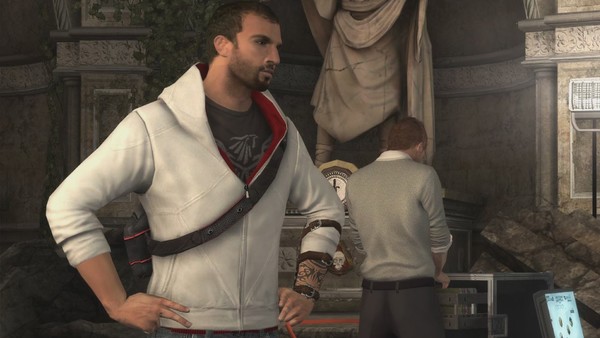
Poor old Desmond never had a chance. He represented the non-historical sections of each game's main campaign, which were divisive at best.
After his death in AC3, the series has lacked a face to connect with while the player is out of the Animus. In an effort to regain some of that once-present connection/engagement with fans, Desmond is rumoured to be returning in Origins.
Information regarding his reappearance are extremely scarce, but some flashbacks or audio recordings at least don't seem too unlikely. The prominence of Desmond's role will depend on how high an opinion Ubisoft has towards him. They may see his presence as a way to bring fans together with a familiar face. If they find a way to bring him into connection with AC:O's protagonist, their bond could lead to a heartfelt "passing of the torch" between special people with impressive ancestry.
When it comes down to it, Desmond could use some posthumous development to his character as he never got much progression throughout his time as AC's protagonist. This can be an opportunity for Ubisoft to remedy the weak legacy Desmond laid behind so that opinions of him are no longer so negative.
3. Historical Accuracy Is No Longer Essential (Or Possible)

If there's an element of Assassin's Creed that's been consistently lauded, it's the strong historical accuracy and attention to detail provided in the game's codex and open worlds. This has been possible thanks to plenty of historical documents readily available for each of the time periods within each game.
Unfortunately, because of Origin's rumoured 1400 BCE time period, historical accuracy will no longer be possible due to a severe lack of any confirmed information during that time.
An inability to utilise proper historical elements may prove to be a major shift in the series. The "fun facts" and entertaining cameos from well-known figures allowed the game to feel educational without being too restrictive or heavy-handed. That being said, removing this element could allow Ubisoft much more freedom than they've had in the past. No longer do they have to shoehorn in key historical figures or events.
Instead, they can tell whatever story they wish to tell, so long as it obeys basic historical facts of that era. Allowing Ubisoft the chance to flex their creative capabilities is far more preferable than pigeonholing them, especially when they've shown how quality their more creative ventures can be (see Far Cry 3).
It may bother those who appreciate the strong historical elements in these games, but considering that the series has steadily been moving away from "real history simulator" to "action game with historical components," the change isn't as substantial as many may think.
2. The Start Of A New Trilogy

Ever since the conclusion of the Ezio trilogy, AC players have only gotten one game for each subsequent assassin character. This has allowed the series to expand beyond the limitations of one assassin's journey, but it has made connecting with the protagonists increasingly difficult. Without a continuing character arc spread across multiple games, players avoid connecting with each game's characters as they'll just end up meeting a slew of new faces in the sequel. To avoid increasing amounts of detachment, Ubisoft hopes to establish a new trilogy, starting with Origins.
Although it's best to wait for fans to gravitate towards a character before you make them the foundation of your franchise, Ubisoft has never been about playing it safe. After all, in order to test how likeable a character is, you've got to see fans' initial reactions, as well as measure any change in opinion once they get their hands on the game.
Fans likely weren't expecting to fall in love with Ezio's character as much as they did, so Ubisoft likely is keeping their options open.
Another unclear element of this 'new trilogy' is whether the overarching story will be continued within the Animus or outside of it. Will the main character be another Ezio or will they be another Desmond?
Gamers will have to wait and see what Ubisoft ends up doing, but here's hoping this new trilogy can reach the same level of quality as the Ezio trilogy.
1. Story Importance Is Reduced, But Player Choice Is Heightened

Assassin's Creed has many commendable elements, but each game's main story isn't typically praiseworthy or even all that memorable. This problem stems largely from the exposition-heavy, slightly dull format. There are exceptions here and there, but it has been a predominant issue that has plagued numerous games in the series. In order to avoid those same plot pitfalls, Ubisoft CCO Serge Hascoet has discussed a new, less scripted approach for the next AC main campaign.
The goal is to promote player freedom and allow players more of an open sandbox experience where no playthrough will be the same. Player choice will be heightened substantially, while the main story will no longer be as important as it used to be.
More and more games are taking this "you make your own story" approach recently, and they don't always result in complete experiences. There are those that pull it off well (Minecraft, LOZ: Breath of the Wild) and those that don't (Destiny), so this approach is actually far more difficult to nail than some may expect.
It will ultimately depend on whether Ubisoft is able to reduce the story's importance without making it completely pointless or incomplete-feeling. If the story can be placed in the background without becoming irrelevant as you do other tasks and side activities, then Ubisoft may be able to do this storytelling approach justice.
--
What do you hope to see in the latest Assassin's Creed game? Are you excited about Ubisoft's new approach to storytelling? Note your thoughts below!