9 Prolific Video Game Developers That Released Absolute Trash
Quality not assured.

Not even the best and brightest creators in the games industry are infallible.
Keeping a perfect track record is nigh-on impossible, even for those developers that have etched out an impeccable one since their inception. For every Bayonetta and Dark Souls masterminded by top talent, there follows a dip in quality that none would expect from reputable institutions like Platinum Games and From Software, but it's not always the creator that's to blame in these unfortunate scenarios.
The Legend of Korra and Steel Battalion: Heavy Armor, created by the aforementioned bastions of quality respectively, arrived at a time when publishers had been forced to sit up and take notice of those past successes, wanting nothing more than to get their name behind a product with their name on it, whatever the cost (or lack thereof).
That's not always the case, of course. Self-sabotage too, is an all too common occurrence, especially when it comes to long-lasting players Nintendo and Sonic Team, but more on them later.
If a game has spent more than a decade in development hell, it's also probably for the best it stays that way. Gearbox wouldn't certainly agree, but they aren't the only ones...
9. Platinum Games

What a way to squander the talents of a developer renowned for providing consistent quality in the form of tight, deliberate combat systems à la Bayonetta and Vanquish. Activision, eager to get its name behind a similarly successful action title, chose Platinum to spearhead its game based on Avatar spin-off The Legend of Korra, naturally expecting a surefire winner.
Only, Activision neglected to consider the necessary funds and time requires by Platinum to craft something of the quality it had thereto been known for. The result, as if there could be any other, was an undercooked action brawler that very nearly stole the crown from M. Night Shyamalan for worst adaptation of Nickelodeon's famed series.
Next time it hires a reputable developer to do what it does best, Activision would do well not to smother its freedom with a tight budget and tight deadlines in order to make market in time for the lucrative holiday period.
8. Nintendo

Allowing Philips the opportunity to bastardize Zelda and Mario with its universally detested CD-i titles certainly ranks high on the list of Nintendo's worst decisions, but as bad as Hotel Mario's dreary door-closing gameplay was, it at least had substance.
Wii Music, on the other hand, does offer interactivity in the form of playing and performing music for ear stimulating entertainment, but the experience is so painfully shallow that no human beyond single-digit age could squeeze more than an hour or two of enjoyment from it.
A bafflingly small sampling of music - most of which was stripped from the public domain - coupled with zero opportunity for competitiveness or progression resulted in Wii Music becoming a financial black hole for Nintendo that provided none of the fun factor that prompted copies of Wii Sports to fly off the shelves in their millions.
It could have been so much more - Nintendo's answer to the rhythm-action genre fronted by Guitar Hero, for instance - but Nintendo wanted to do its own thing, much to Wii Music's detriment.
A+ for imagination; F for execution.
7. NetherRealm Studios (As Midway Games)
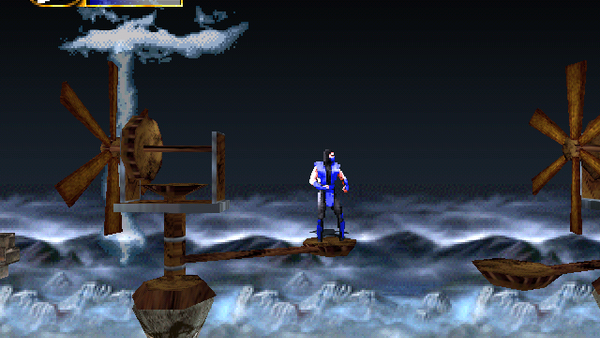
As is inevitable for any successful franchise, sequels, merchandise and, most importantly, spin-offs follow.
Prior to hiatus as a result of its restructuring into NetherRealm, Midway was content to capitalize on Mortal Kombat's gore-laden streak of success by churning out 'gems' like Sub-Zero Mythologies and Special Forces, the former a wobbly side-scrolling beat 'em up with spectacularly awful platforming and the latter... well, it starred Jax as a one-man army in a generic shooter setting against Kano's nefarious Black Dragon clan.
Both were serviceable, but it didn't take Midway long to suss out that sales had tanked, not just because of the departure from Mortal Kombat's fighting game core, but because its soul was missing as if Shang Tsung himself had stolen it away. The absence of a full cast, Fatalities and the visceral mana-a-mano fisticuffs that cemented the franchise's popularity weren't present in these pale imitations and fans were having none of it.
Midway found its way back to Earthrealm with the release of MK 9, and the series has never been better since.
Now, about that Mortal Kombat X sequel. When's the big day, NetherRealm?
6. Telltale Games
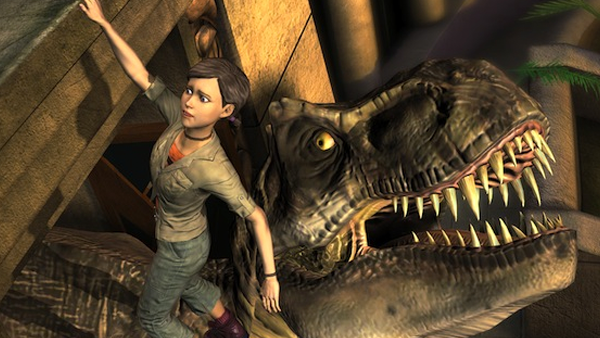
Heralded in the present as one of the best storytellers in the business right now, Telltale Games hasn't always enjoyed such a glowing reputation. In fact, just one year prior to the runaway success of its tie-in tale of survival based on Robert Kirkman's everlasting Walking Dead series, the developer was struggling to strike an all-important balance between narrative and meaningful gameplay.
Jurassic Park, a commendable in-between sequel bridging the gap between Spielberg's original film and The Lost World, tried its best to provide a rollicking good adventure on the dino-populated island of Isla Nublar but Telltale had yet to figure out how to utilize its strengths - a smart tale unfolding through the eyes of interesting characters - in tandem with justified interactivity.
The Walking Dead isn't perfect, but it blended environmental exploration and meaningful player choice to much greater effect than previous efforts. As such, Lee and Clementine's touching tale of survival to remains it's most successful yet.
If Telltale can further improve on its modus operandi, then there's no limit to what it can achieve.
5. Square Enix

Square Enix's gamble paid off in 2002. Final Fantasy XI, a mainline entry in the storied RPG series, cast off the shackles of single-player and went full MMO at the turn of the millennium, eventually progressing to become one of the company's biggest successes.
Today, the world of Vana'diel is still open for business (no mean feat for a non-Blizzard MMO) so it stands to reason that the team responsible for its success would be best suited to craft a potential successor, right? Wrong.
Final Fantasy XIV finally made it to market in 2010, though it wasn't the replacement for Square's flagship MMO that everyone had hoped. Visually stunning and equally expansive, XIV's aesthetic appeal hid an ugly mechanical mess of obtuse systems that borderline amounted to self-harm for anyone willing to give it a chance.
So loud was the vocal dissent from fans, that Square was forced to suspend subscriptions and bring in a new director - Naoki Yoshida - as a means of salvaging an utter failure. Yoshida embraced the challenge head-on and, three years later, Final Fantasy XIV: A Realm Reborn launched to critical and commercial success.
For once, a happy ending.
4. FromSoftware

Prior to the wider gaming community's fears being realized - that Microsoft's snazzy motion technology would go the way of the dodo sooner rather than later - every Xbox 360 owner had hope. Hope that the Kinect would revolutionize the way we played games and usher in an age of controller-less gaming for all, not just casual audiences.
From Software, fresh off the back of its success with Dark Souls and previous experiences with mech games (Chromehounds, Armored Core) was drafted in by Capcom to provide the most promising example of a hardcore Kinect title done right with Steel Battalion: Heavy Armor.
Except, as is the danger with all fledgeling technology, Kinect wasn't remotely reliable enough to spearhead such an ambitious project. From Software itself had little to no experience with the gimmick, the final result being a hybrid of traditional/motion-controlled mech combat that rarely registered player inputs correctly and bordered on monotonous if played exclusively with the former.
Fortunately for us, Heavy Armor's disastrous outcome didn't damage From Software's reputation.
3. Capcom

Because Capcom had forgotten how to make good decisions following the smash hit success of Devil May Cry, its higher-ups opted not to hand off a sequel to the same team that popularized Dante as the world's most kick-ass demon hunter, but an entirely different division instead.
Hideki Kamiya, despite his proven track record, was denied access to his silver-haired baby for unspecified reasons, thus resulting in a sequel that exhibited next to none of the qualities that propelled the original to massive success.
Dante, once the cocky, self-assured offspring of human and demon, seemingly underwent a personality transplant between games, and that wasn't the only attractive asset lost in translation. Combat felt markedly more sluggish, the level design was expansive but bland and puzzle elements had been stripped out completely.
Devil May Cry 2 felt and played exactly like what it was. A sequel sculpted by a team that was blissfully unaware of what made the first such a joy to pick up and play.
2. Gearbox Software

Credit where it's due, Gearbox isn't entirely to blame for the horrific excuse for digital entertainment that was Duke Nukem Forever. Having languished in development hell for more than a decade under the stewardship of 3D Realms, that Gearbox managed to pick up the pieces and cobble them together to form a playable title was nothing short of a small miracle.
As for Aliens: Colonial Marines: it doesn't get off so lightly. Gearbox frontman Randy Pitchford promised Xenomorph fans an authentic experience of grunts attempting to fend off an extraterrestrial posse of face-eating monstrosities - one that several pre-release demos and trailers supported - but what was delivered was far, far removed from that assurance.
Poor visual fidelity, bland level design and contradictory continuity with the films made Colonial Marines feel more like a cheap knock-off of the experience Gearbox had shown up to that point, and it didn't sit well with, well, anyone.
Gearbox attempted to patch the mess with post-launch updates, but the damage was done. Fortunately for Alien fans, Creative Assembly swooped in to save the day a year later with the terrific Alien: Isolation.
1. Sonic Team

Unleashed, Lost World, Forces and, of course, the dreaded Sonic '06: what freak event occurred behind closed doors at Sonic Team HQ for its partnership with the Blue Blur to go sour so fast? Remember, this is the very same studio responsible for Sonic's golden years, not to mention other pioneering titles like Phantasy Star Online.
No single fault can explain away Sonic's slip down the pop culture rankings, but there are two obvious contributors. The first, and most obvious, is that Sonic Team has always struggled to transition its mascot from 2D to three-dimensional space, and that, combined with the departure of the old guard (Yuji Naka, Hirokazu Yasuhara) led to the franchise's general decline.
But it's not all doom and gloom. Last year's Sonic Mania, spearheaded by Christian Whitehead, marked a return to form for the 90s gaming icon, singlehandedly winning back critical adoration after a decade-plus of mediocrity. Sonic Team, on the other hand, focused most of its development efforts on Sonic Forces which, as the internet can attest to, brought with it nought but further disappointment.
Scrap the 3D adventures, pour focus into continuing Sonic's 2D origins. Problem solved.