9 Lessons All Video Game Developers Can Learn From Dark Souls
It'll beat you to a pulp... But there are a few lessons to learn.
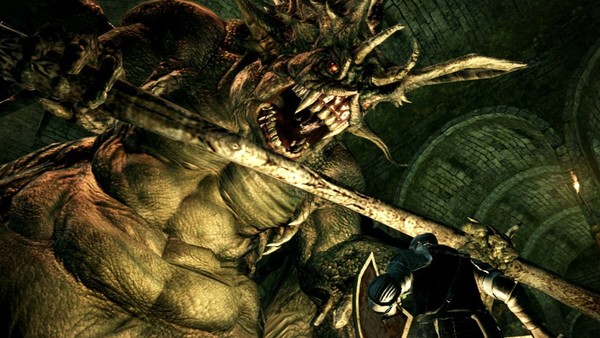
The original Dark Souls can often be polarising, with a lot of people heralding it as the best thing since sliced bread and a lot of others slamming it as the devil incarnate. Regardless of peoples' opinions, it is undeniable that Dark Souls is different to the vast majority of titles on the market. It changed a lot of common gaming tropes, and pushed the boundaries of third-person action with a lot of its mechanics.
The way the story was intertwined with the entire game and the multiplayer being intrinsic to the games world, there was a lot that it did differently.
And due to its ability to push boundaries and not be afraid to make new choices, the game fundamentally was sound. It introduced a lot of new ideas and concepts that should be held to a higher pedestal with a lot of lessons to be learnt from them. With its many success and mistakes, Dark Souls can be a major learning tool and one that developers don’t look to very often.
With that mentality, there are a lot of lessons to be learnt in regards to Dark Souls and I’m running down nine of those lessons that game developers need to learn to make their games better.
--
9. A Truly Interesting World
Building an interesting and deep world is difficult and getting the player to engage with it is even harder. And while making that world is difficult presenting the story and narrative behind the setting is something that is damn near impossible without a secondary medium. That's why games resort to books and dialogue trees to reveal story and back log exposition without having to explicitly throw it at them.
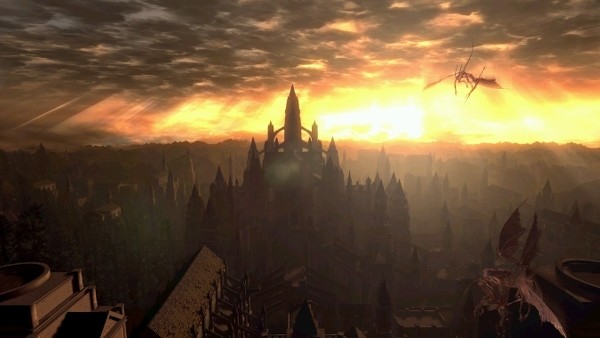
But when you look at the world of dark souls, a lot of its story is told through small snippets of dialogue with characters and through its world. The way the world is made, makes it feel real and purposeful and the details woven into the world tell their stories. Simply through a few visual keys and details in level design, you can extrapolate additional details about the world.
The stairs in Anor Londo having small steps and large steps to illustrate the fact that it is the city of the gods who aren't human, but giants. The switch between cramped small corridors and buildings in Undead Burg to the vast golden city with big rooms, further details the divide. The world is built with telling a story and simply by exploring it, you learn and figure things out.
Its a far more intrinsically effective way to communicate a narrative, and after all, video games are a visual medium for a reason.
8. Meaningful Death Mechanics

Death is often trivialised in games. If you die, hey no worries. Try again. But that never used to be the case.
Back in the days of Mario, you had a strict amount of lives, and if you lost them it was 'Game Over', back to the last checkpoint. Death had a certain degree of meaning, and while the system was nowhere near perfect, at least it had weight.
Dark Souls takes that to a new level, making death a really punishing mechanic that is interwoven into the story and lore. Losing your life means you lose your souls and become hollow. Losing your souls is losing all your experience points which can be incredibly crushing for new players. Losing thousands of souls can be devastating and makes running through that game a challenge.
Each movement has depth and death can lurk anywhere. You make calculated decisions around whether or not the next combat encounter will be your end and gives death weight and levity. There is no instant re-spawn. There is a punishment. The game expects you to do well and punishes you for not doing well.
Im not saying that every game developer needs to make that drastic change, but implementing a system that doesn’t reward players for throwing themselves randomly at enemies is a good step forward. It might not work for all games, but it would make the idea of death a little less romantic.
7. Don't Rush Content

Now as much as I intend to sing the praises of Dark Souls, there are lessons to be learnt in the mistakes of FromSoftware, namely rushed content. Dark Souls has an incredible case of rushed content when looking to the latter half of the game, and while it may seem forgivable to an objective standpoint, looking it at it in comparison to the former half of the game only emphasises the holes present afterwards.
Rushing content can be very detrimental and can in some ways ruin a lot of the game.
Case in point: Lost Izalith, one of the worst areas that is simply broken, providing a lesson to developers on how not to rush content. Sometimes doing so is necessary and needs to be done, but this is not the way to do it, as it can often lead to many players giving up due to unfair difficulty.
First, the textures and lava glow is enough to blind someone, with the entire area being painful to the eyes. Not to mention it is damn near impossible to navigate on your first time through, culminating with a boss that will make you break your controller, due to how unfair it is.
Rushing content is bad, but including content that is so obviously rushed and in dire need of help is downright detrimental. When looking across a lot of games, there are areas of the game that would make the game better if they didn’t exist and removing them would have been the right choice. Dark Souls only springs to mind due to how egregiously unfair and unfitting the area Is and should stand as a martyr for what not to include in a video game.
6. Restricting Progression Until The Player Proves Themselves

Structuring games can be very difficult. Achieving the right balance between difficulty and progression takes incredible precision and to do so in an open world can be hard. And so, developers tend to gate content behind certain barriers. Either through physical barriers or reasons within the game world that restrict your ability to move until you reach a certain point in the story.
This is not the case in Dark Souls for most the time. Gated content is gated until the player can prove themselves worthy to exploring it. The simplest example is the Asylum Demon. Until the player proves themselves worthy of exploring the rest of the game, they are trapped.
Now, there is a very fine line between gating content behind a challenge and gating it behind a physical barrier, as bosses and challenges in Dark Souls can often be considered barriers of their own. But tying into Player skill, the ability to overcome most challenges in inherent to the player. The way Dark Souls presents the entire game to be open at any point to any player who is willing to persevere is ingenious. Rarely does the game block areas of for no tangible reason and everything is open.
While the game does have its moments where It does explicitly lock portions of the game of through barriers and forces players to wait to experiencing them, it has more places where it offers up a challenge that is feasible to complete. It never downright says come back here later in the story and locks content which should be available away
5. Bridging Story And Gameplay

When you look at games, they exist in two separate states. You have the gameplay state, where you shoot and stab and do all that fun stuff that requires a degree of player interaction. Then you have the story state, that tells the story through cut-scenes or separate voids in the world space where the player has little interactivity.
While that system works, and could be argued as the better system, Dark Souls takes steps in pushing the level of player immersion by bridging those two states of gameplay and story into one. The story, however minimalistic, is given to the player in a world that doesn’t cease to exist. The world and the player are never taken out of the game to present the narrative, and the player is free to do whatever they want gameplay-wise during these sections.
Enemies still function and the world continues around the player instead of securing them to safely tell them the story. The game-play and the story are the same with information given to the player through mediums that don’t stop the action. Through world design and the very few characters you talk to in the world. The game rarely forces you through a cutscene, and when it does, it’s to enforce integral points that FromSoft can’t reliably let the player discover themselves.
Most importantly, the game bridges the gap by making the story a key factor into the gameplay. The story is about 'hollowing' and 'going hollow'; a mechanic that is in itself, built into the game. By making the story and gameplay one and the same, the degree of player involvement is increased tenfold as they live the story simply by playing the game and experiencing the mechanics.
4. How To Do A Proper Tutorial

Tutorials are hard to do without taking away from the game. You have games that will completely lock the rest of the game of until you master every single mechanics, ala Mirror’s Edge. Or you have games that will literally give you the reins with no button prompts whatsoever, in the case ICO. But rarely does a game manage to incorporate all the mechanics, tropes and features of a game into a single starting level that doesn’t even feel like a tutorial.
First, Dark Souls uses an in-game mechanic to directly engage with the player and tell them the controls, the messaging system. This means that the developers have a way to communicate that doesn’t detract from the game. It also means that the tutorial can be skipped entirely.
Now some say Asylum Demon is unfair, but he illustrates the central focus of the game. Either you can persevere through great difficulty, or explore other avenues to better equip yourself. Its teaching the player without telling them anything. Similarly, the door that loops back to the bonfire. It illustrates the idea that levels will intertwine and bonfires will be reused. And the boulder teaches players to be aware of traps, admittedly unfairly.
By incorporating all their central mechanics into one tightly knit and fluent level, the developers can teach the player everything they need to know. Either through messages or through experiencing. The tutorial area is a slice of the game that introduces players to what the game is, instead of dolling it up in a tutorial sequence that doesn’t reflect anything of the game beyond the controls.
3. Great Character Design

There is a reason that characters In Dark Souls are so loved and worshipped almost religiously. And that is because they are incredibly well designed. Modern day game developers somehow always get it wrong and force the player into ‘liking’ a character simply by saying that the character they are playing likes them. Love interests fall heavily for this, giving the player no other reason to love a character beyond the fact that ‘the game told me I love them’
Good characters have depth and motivation. The characters in Dark Souls breathe personality with the smallest quirks to their design and speech that make them instantly memorable. The eccentric boldness of Solaire, stuck in players’ minds as he had clear purpose and depth to his character. The way he spoke and little flairs to character made him unique and players bonded with him.
Characters are hard to write and sometimes they fall short. But game developers seem to have it in their mind that good character design can be written plainly and that players will love characters simply if we are told we do. They need those unique personalities and encounters that make them fresh and fun. Part of the joy of Dark Souls is finding those characters again and spending so little time with them instead of having them thrown at us and being told to love them.
It says a lot when FromSoftware can make players fall in love with a faceless suit of armour and Activision can’t make us love Burly White Protagonist #1032 in Call of Duty…
2. Player Progression Through Skill, Not Increased Stats

Progression in a game is almost always measured in a numerical value of some sorts. You have extra health because you levelled up, or your gun does more damage, or the magical stat on your halberd is increased by three. That is a system that is engineered into gaming and frankly it works perfectly. For a game, it works and enforces the mechanics perfectly allowing for a system of progression that directly affects the game.
But one of the more important layers of progression that is often over looked by most developers is player progression. The skills and abilities that the player intrinsically learns via playing through the game. No other game has better showcased player progression that Dark Souls as the only way to play is the progress as a player. By crafting a game that revolves around player skill and their ability to learn from their mistakes, Dark Souls perfectly outlines the idea of player progression.
When you look at games like Assassin’s Creed and Mass Effect, the idea of player skill is lessened, with the focus on equipment and stats taking prevalence. And while this serves to create a fun and engaging game, progressing as a player can add a layer of depth and achievement to playing through a game. Getting decimated by a boss and then absolutely decimating the boss in turn without getting hit - simply through learning - can beat increased numbers any day.
The sense of achievement bolstered by a system catering to player progression is unrivalled.
Game developers need to at least learn from that and understand that doing something purely through your own skill is infinitely more rewarding than throwing higher numbers at it.
1. Hidden Content

One of the major problems with modern game developers Is their lack of faith in the player. In some cases, the player is treated as a genuine idiot who can’t think for themselves and naturally the developers feel the need to sign post every detail of their game to ensure that every single player sees everything they’ve done. And that’s a fair way of developing a game. It makes sense that a game developer wants a player to see every part of what they put in.
Hence why it speaks volumes when a developer has the guts to hide away a lot of their content.
To that end, FromSoftware aren't afraid to have portions of their game never be seen by the average player, locking away major portions of the game, but still retaining a focused central narrative and game is an art-form. And the fact that FromSoftware are willing to hide the objectively better levels of their game away and include their worst in the main progression, speaks volumes to their attention to their game.
By hiding away their content, the game becomes incredibly large and rewards exploration in the most meaningful of ways. The best moments of any game is discovering a secret that has been incredibly well hidden. The joy of accidentally stumbling onto the double illusionary walls leading to Ash Lake was an incredible sensation, adding depth to the world that can’t be had by throwing all the content at the player.
I just wish that more developers had the guts to not wave banners around every single piece of content their game has to offer.
--
Do you think there are lessons to be learnt in Dark Souls and if so, what? Or is it complete drivel with no discernible points of quality? Let us know in the comments below!