8 Video Games That Caught Lightning In A Bottle
These games hit at just the right time.

Making a successful game isn't merely as simple as creating something good or even great and letting the universe do the rest - it's typically a confluence of skill and luck.
Many brilliant games have flopped commercially, and countless terrible ones have sold like nobody's business.
Often a game's sales success is the result of factor's outside the developer's control, such as releasing at just the perfect time, where it manages to capture the public's imagination for a unique and unexpected reason.
And that's true of these video games, each of which are the definition of capturing lightning in a bottle.
Each became a stunning success not merely because they were a lot of fun to play, but because they were in the right place at the right time, leaving them able to take advantage of technological advancements, tidal changes in the culture, and everything else in-between.
Had the timing worked out a little differently, it's safe to say that these games wouldn't have been nearly as successful or iconic, no matter their quality.
But as it stands, they're immortalised because all the right things happened at the same time...
8. Doom Eternal

While it's absolutely fair to say that there was considerable thirst for a follow-up to 2016's surprisingly great Doom reboot, id Software could never have conceived how perfectly timed Doom Eternal's release actually was.
Beyond releasing at the onset of the pandemic when folks were sheltered in place and many sought comfort in the escapist world of video games, Doom Eternal also released on March 20th, 2020 - the very same day as Animal Crossing: New Horizons.
Once fans of each franchise realised this, they went wild creating hilarious memes depicting Doomguy and Animal Crossing's Isabelle together as best pals.
In a similar vein to the Barbenheimer cinematic phenomenon of 2023, to see two major AAA franchises with such stark tones and aesthetics releasing on the same day captured the Internet's imagination, and each fanbase basically ended up propping up the other.
And given that Animal Crossing: New Horizons was an eye-watering sales juggernaut, ultimately selling over 47 million copies, the interplay between the two franchises evidently rubbed off on Doom, winning it a legion of new fans.
This was confirmed by the fact that Doom Eternal's first-month digital sales were more than triple that of Doom 2016.
And sure, it was a great game anyway, but it clearly benefitted from its unexpected association with Nintendo's smash hit life sim.
7. Five Nights at Freddy's

It's easy to picture an alternate reality where Five Nights at Freddy's simply came and went in the blink of an eye, but developer Scott Cawthon's survival horror game was released in 2014 just as Let's Plays and game streaming were reaching huge levels of popularity.
Horror games were especially well positioned for this, as viewers enjoyed watching their favourite streamers react to a game's jump scares, even if they were too afraid to play the game themselves.
And Five Nights at Freddy's was at the cutting edge of this trend, aided by its general lack of gore which made it more easily accessible to younger viewers.
This, coupled with the game's strange, mysterious lore, allowed it to amass a colossal fanbase in a reasonably short period of time, leading to not only a commercially successful run of video games, but a massive merchandising empire and, most recently, a hit movie.
It's telling that while countless horror games have attempted to emulate FNAF's success, it became a mega-hit totally organically, coinciding fortuitously with the prominence of streamer culture and reaction content.
6. Fortnite Battle Royale

The battle royale genre was popularised by the success of PUBG: Battlegrounds in 2017, and it was only inevitable that a glut of me-too imitators were going to follow suit.
And first up was Epic's Fortnite Battle Royale, which manage to launch just six months behind PUBG, while offering up a more accessible and polished battle royale experience whose cartoonish aesthetic made it infinitely more appealing to young children. Oh, and it was free to play.
Within a matter of months, Fortnite Battle Royale eclipsed PUBG's player count and never looked back, while around this time PUBG Corporation filed a lawsuit against Epic, believing that Fortnite infringed upon the copyright of PUBG.
The lawsuit was ultimately closed a few months later for unknown reasons, and by 2020 Fortnite as an overall brand had generated more than $9 billion in revenue, categorically dwarfing PUBG, which had certainly been a stonking commercial success itself.
All the same, Fortnite quickly wrestled the lion's share of the battle royale market away from PUBG in record time - a result of Epic's ability to quickly produce their own quality riff on the same idea before anyone else could.
5. The Elder Scrolls V: Skyrim

While a new Elder Scrolls game was always going to be successful, since Skyrim released in 2011 it's sold an insane 60 million copies across countless platforms, far outpacing any other RPG Bethesda has published.
Though Skyrim's sales can be largely attributed to it being a very, very good game, it also benefitted from releasing just as Internet meme culture was blowing up in a majorly mainstream way, in large part thanks to the burgeoning popularity of smartphones.
The infamous "arrow in the knee" meme - quoting an NPC who tells the player, "I used to be an adventurer like you.
Then I took an arrow in the knee" - was everywhere in 2011 and 2012, ensuring that Skyrim had mindshare far outside the gaming bubble. It was a genuine pop-culture event in the public sphere.
While memes are simply an accepted part of any popular game nowadays, back then Skyrim was well ahead of the curve with how organically it fostered engagement online and made itself into a genuine phenomenon.
4. Just Dance
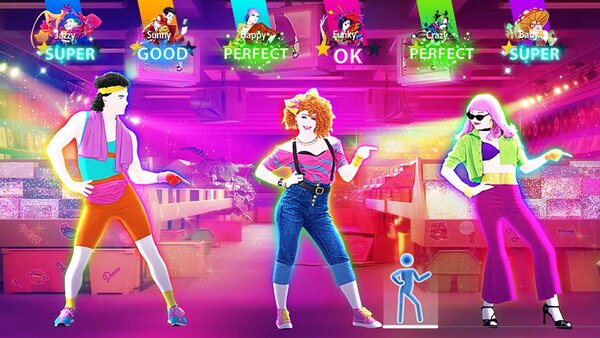
Whether you're a fan of the Just Dance franchise or not, it is a textbook example of a video game IP which landed at just the right time, allowing it to capture a slice of the zeitgeist and become one of the most financially successful series in gaming history.
The first Just Dance released exclusively for the Nintendo Wii in 2009, by which time the Wii had firmly established itself as the games console for families and casual players.
More to the point, the Wii got people involved who traditionally weren't interested in video games, and while Just Dance was poorly received by critics, its easy-going gameplay and peppy soundtrack made it a bonafide smash hit with the mainstream.
This momentum carried on long enough that Ubisoft kept releasing Just Dance on the Wii until 2020, believe it or not.
No other dance game has got anywhere close to replicating its success, and to hammer the point home, at present Just Dance is Ubisoft's second biggest franchise behind only Assassin's Creed, even if gamers-with-a-capital-G generally don't pay it much attention.
3. Goat Simulator
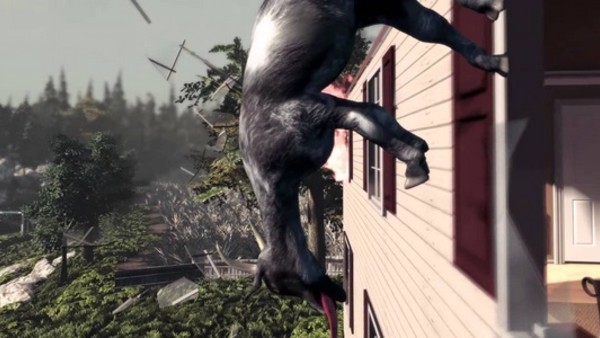
Goat Simulator is a game that, for all intents and purposes, probably shouldn't have worked. It was a literal joke prototype, but when developer Coffee Stain Studios posted some alpha footage online, it went viral, prompting them to develop the game in "earnest."
But beyond the charm of its wildly janky gameplay, what really made Goat Simulator hit is that it arrived at the peak of the simulator game boom in the early-to-mid 2010s.
With Euro Truck Simulator 2 releasing in 2012 and becoming a genuine sales behemoth far beyond most AAA games, the timing of Goat Simulator's comedic prototype was perfect.
Coffee Stain rather shrewdly rushed the full game out just three months later, allowing them to quickly capitalise on their viral meme currency, and within two years Goat Simulator had sold a mind-boggling 2.5 million copies.
With the adage that you can't catch lightning in a bottle twice, Coffee Stain decided to instead skip right over making a second game, instead releasing a "threequel," Goat Simulator 3, in 2022 to solid reviews and sales.
2. Life Is Strange

The first Life Is Strange launched at the start of 2015, just as Telltale Games - the king of episodic adventure games at the time - was beginning to lose ground by oversaturating the market with a sea of mediocre rush-job titles.
Life Is Strange was a breath of fresh air, though, not only being an original IP but also touting significantly more impressive visual fidelity and art direction compared to Telltale's output.
The unconventional high school setting for the genre and immediately appealing central pairing of Max and Chloe also didn't hurt, and of course, we can't ignore the game's agonisingly polarising final choice.
This all made Life Is Strange an episodic adventure like no other, and by 2023 it'd reached a staggering 20 million players. However, Life Is Strange was also a flash-in-the-pan success which Square Enix has never managed to recapture.
None of the sequel or spin-off series have been nearly as successful, and last year's direct follow-up, Life Is Strange: Double Exposure, proved divisive enough with fans that it sold poorly, reportedly causing a "large loss" for the publisher.
The success of the original Life Is Strange was a perfect storm of factors which, as the last decade has categorically proven, simply can't be repeated.
1. Braid

And finally, Jonathan Blow's puzzle-platformer Braid is one of the most iconic and successful indie games of all time, and is rightly lauded as a milestone title in the indie game revolution of the late 2000s and early 2010s, alongside the likes of Super Meat Boy, Limbo, and Fez.
Though indie games have always been a thing, they didn't break through into mainstream accessibility until Xbox Live Arcade picked up steam, making a name for itself as a genuine digital storefront for low-budget games from small dev teams.
And Braid was right at the forefront, releasing before all of the aforementioned games in 2008 and being singled out as an especially smart and creative XBLA title, demonstrating the potential of this platform to elevate small games from talented developers.
Braid helped usher in an era of indie puzzle-platformers, and yet, were it released today it'd likely disappear into the sea of them.
This is perhaps best evidenced by the fact that the recent Braid remaster failed to make a dent with a new generation of gamers and sold, in Blow's own words, like "dogs**t."