8 Video Game Plot Twists Revealed OUTSIDE The Main Story
ALWAYS listen to the audio logs.
We've covered plenty of instances of great foreshadowing and amazing plot twists in lists before, but sometimes it's not quite as simple as a major narrative reveal being either well executed or coming off as embarrassingly sloppy. Sometimes, video game developers include rug-pulls in their releases that most players don't even see.
Although a major piece of plot information being left out of the main story would kill a book or TV show, games can get away with it because the scope of their narratives - and especially the delivery of them - are so radically different. In some titles the story is delivered through cutscenes, in-game dialogue, audio-logs, text boxes and sometimes even tie-ins like comics and novels that players might never get around to investigating.
As a result, the complete view of a story might be completely lost on some, because the developers and writers decided to place major reveals in areas you'd never usually look.
8. The Taxi Driver Is Caine - Vampire: The Masquerade - Bloodlines
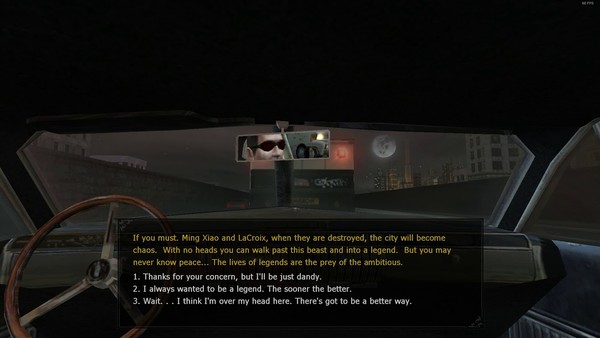
The mysterious cab driver in Vampire: The Masquerade shows up at multiple points to drive the player character around LA, all the while dropping cryptic teases as to their fate as well as his own origin.
Because of his eerie quality, fans immediately debated just who this character really was, as he had to be more than a mere, unassuming cabby. The prevailing theory was that he could be Caine, who in this story is the father of all vampires, being cursed with vampirism thousands of years ago after killing brother Abel. It's also implied that he put into motion the plot of Bloodlines as well, and is manipulating everything from behind the scenes.
The story of this second game never outright revealed whether or not he actually was the mythical Caine outside of a couple mysterious lines of dialogue though. Fortunately for those demanding answers, the sound files for the RPG do list this character as "Caine", giving fans all the proof they needed and confirming what the sequel only alluded to.
7. Coco's Origin And Tawna's Absence - Crash Bandicoot 2
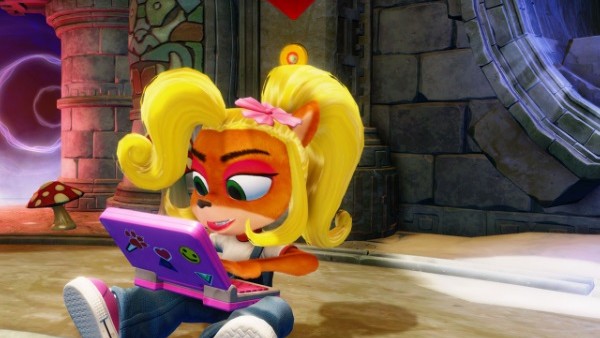
While all fans accept Coco Bandicoot as part of the Crash family after first showing up in the seminal second game, have you ever stopped to think about where she actually came from? Crash's sister was nowhere to be seen in the first game, where the whole point was to save his girlfriend, Tawna.
The real-life story for the switch of female characters is that Naughty Dog was pressured to remove Tawna from following games because she was, uh, "too sexy" for the target audience. The story goes that both Sony and Universal didn't think her design was appropriate, and wanted a female lead that was less sexualised.
As a result, Coco appears right at the start of Crash 2 like she's always been there, a bit like Dawn in Buffy the Vampire Slayer. Her sudden appearance is never addressed in game, and fans had to piece together through supplementary material, like the Wrath of Cortex manual, that she was indeed Crash's biological sister before the two were hit with the Evolvo-Ray, was created before the start of the series, and was a more successful experiment (hence her ability to talk)
Likewise, Tawna's sudden disappearance has never been addressed in game, but the Japanese manual for Crash 2 revealed that her and the Bandicoot broke up after the events of the first title, where she immediately started dating gangster Pinstripe instead.
6. Markovic's Disappearance - Deus Ex: Human Revolution
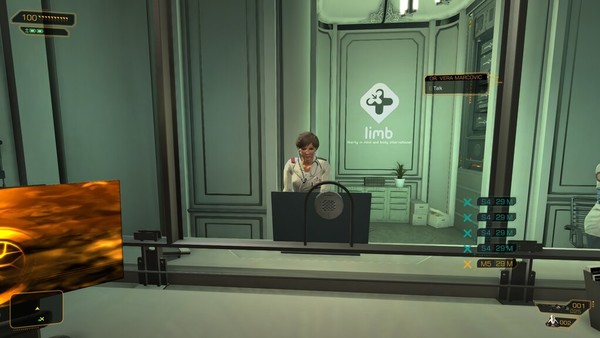
All things considered, Dr. Vera Markovic is a relatively small player in Deus Ex: Human Revolution. She shows up a few times when player character Adam Jensen needs to check in on his augments, gives him a few vital plot details and then disappears from her post at the LIMB clinic in Detroit.
What happened to her is never explained in the game itself, but it turns out her absence is much more important than the average fan would assume. That's because she actually becomes a main player in the Deus Ex comic series which was running at the same time, which explains she was kidnapped from the clinic by mercenary Quincy Durant and forced into implanting him with an ungodly amount of augments.
In the books, she fortunately escapes after Jensen frees her (but not before getting captured in the process), and this is the real reason she disappears so suddenly from the game. It's easy to forget now, but the cross-media universe of Deus Ex was actually pretty ambitious when the series was rebooted, and little details like this encouraged players to fill in the gaps of the story by seeking out all of the tie-in material, as even small characters often held a larger significance overall.
5. Kahlee And Anderson's Real History - Mass Effect 3
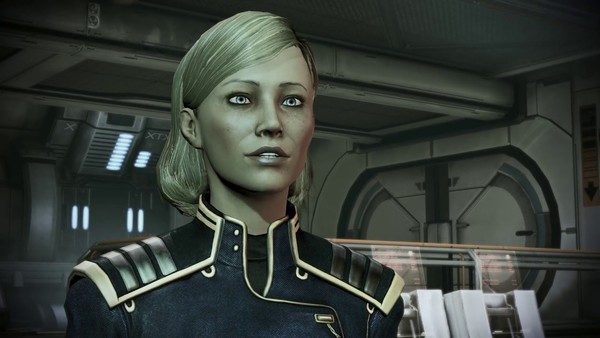
One of the strangest things about Mass Effect 3 was that, despite being the final entry in the whole saga, it introduced a bunch of new characters that had previously never showed up in the games before. For a lot of fans, this appeared to be a major misstep, as old favourites were sidelined in favour of new blood. For some though, it was a chance to see characters they'd been following for years in spin-off novels finally make it to the games before they ended.
One of the biggest of these was Kahlee Sanders, who Shepard and co. save when Cerberus attack the Grissom Academy, which is home to a bunch of talented Biotics Kahlee is overseeing. The player recruits the survivors to join the effort against the Reapers, but apart from this Kahlee doesn't really play a big role in the story.
However, Kahlee Sanders is actually a huge player in the Mass Effect universe, and functions as the main hero of the spin-off books. Here, her long history and importance is fully revealed, covering a whole bunch of missions her and Anderson teamed up on.
Her romantic relationship with Anderson is something only hinted at in Mass Effect 3, but it acts as the backbone of these stories. The novels also go into detail about the pair's battles with Kai Leng (another new character in Mass Effect 3 who gets little in-game explanation) who gets shot in the legs by Anderson.
4. The Plot Is All Agency Propaganda - Crackdown 2
Crackdown has a really weird story. The first game puts you in the role of a super cop who, by collecting a bunch of orbs and destroying gangs terrorising the city, can become an even more powerful super cop, with bigger weapons, bigger muscles and bigger vehicles.
It's a mad power trip, but the narrative's conclusion reveals that the militaristic police force you're working for (called the 'Agency') is more evil than any of the criminals you've killed, as they were the ones secretly bankrolling their activities as an excuse to use extreme force and prove to the city why a governing body like them is needed.
The game ends with you unknowingly consolidating their power and control over the city, which makes it a bit of a surprise when the second game picks up with you yet again controlling one of these super soldiers.
As explored in the great Polygon video above though, the twist in Crackdown 2 is far subtler than in the first. The sequel has you tracking down Catalina Thorne, who apparently unleashed a virus that's turning the population into mutated 'freaks', has planned terrorist attacks, and who has a personal vendetta against the Agency
Audio logs reveal, however, that this is again all manipulation from the Agency, who are actually responsible for creating the virus, bombed a summit to cover up their activities in the first game, and blamed it all on Catalina, who is really only trying to help.
Even if you figure the true story out as the player though, you have no way of stopping the Agency, but simply have to continue being their pawn.
3. Zero's Real Feelings For Big Boss - Metal Gear Solid V
Strangely for a prequel, Metal Gear Solid V is more concerned with telling its own unique story than bridging the gap between the Big Boss and Solid Snake saga, but the Truth Records, 50 minutes of audio-logs which shed more light on Patriots' creator Zero, do their best to give some closure on the whole franchise.
Zero's transformation from jokey special forces leader to architect of the Patriots always felt a little strange, thrown in at the end of Metal Gear Solid 4 to connect the prequels to the present day instalments. It was difficult for fans to picture the Brit as a complete villain with a vendetta against Big Boss, made even more frustrating because his appearance in that game sees him in a vegetative state, unable to communicate and explain his side of the story.
These tapes, though, finally clarify his motivations, and reveal that Zero actually cared deeply for Big Boss, essentially putting everything on the line to keep him safe. It also elaborates on the origins of the Patriot A.I. system, which came about after Skull Face's attack on Zero left him wounded.
Fans have hypothesised that the tapes were at one point supposed to be full cutscenes, and their substantial narrative weight certainly points toward that being true.
2. The Reason Behind The Covenant-Human War - Halo

In the first Halo game, you didn't really need a reason to shoot the aliens that were trying to kill you. They were aliens trying to exterminate mankind after all, and it didn't really matter why they were doing what they were doing, only that they needed to be stopped.
Sure, the series is much more complex than that and the wider mythology does explain how the war started and who everyone involved is, but the real reason as to why the Covenant have such a hard-on for exterminating humanity is never addressed in-game. It is a pretty big mystery though, especially because so many other species were offered to join the Covenant, yet humans were treated as an instant threat and war was waged.
Well, it turns out that the reason is way more complex than it first appears. The leaders of the entire Covenant force were the Prophets, a small group who resided over all of the species under the worship of the Forerunners and Forerunner technology. Books and other supplementary material revealed that it was the Prophets realising the similarity between the Forerunners and humans, including the ability for humanity to wield Forerunner tech, which led to a war waged out of fear.
Through propaganda, the Covenant armies became convinced that humans were an affront to their gods, and that only total genocide would be the appropriate response.
1. Zelda Isn't Zelda (Kinda) - Zelda 2: The Adventures Of Link

The black sheep of the Zelda family, Zelda 2 is such a strange anomaly. Pretty much nobody thinks fondly of it, and even creator Shigeru Miyamoto has admitted that it's the one game he regrets didn't turn out the way he wanted it to.
For the longest time, it was the only canonical follow up to the original game as well, though if you played it in the west you might not have even known that. That's because, while the core design of Zelda 2 was already botched, the abysmal English translation only exacerbated matters.
Consequently, while the plot appears to be classic series fare, with Link yet again going on a mission to save Zelda, it's not quite as simple as that.
That's because in this game, the Zelda in question isn't actually the Zelda from the first and later games, but actually that character's ancestor who had been sealed away. She's the Zelda that the entire title is based on, and all following princesses have taken her name.
How Well Can You Remember Halo: Combat Evolved's Campaign?
