8 Video Game Leaks That Changed EVERYTHING
These leaks made a huge impact, for better or worse.

Leak culture is a strange and fascinating beast in video games, and considering the many hundreds of people that work on any given AAA game, it's sometimes surprising that more stuff doesn't end up leaking out.
And while leaks can help drum up excitement, there's also no denying the damage that a leak can cause, both in terms of showcasing unpolished footage of a game and derailing the publisher's carefully planned marketing campaign.
While most leaks ultimately don't have a significant impact on a game's eventual release and reception, there certainly are exceptions, and few that were more tectonic than this lot.
These eight video game leaks caused quite the furore when they hit the web, perhaps making the fanbase freak out en masse and prompting the developer to change course accordingly.
Elsewhere the leak might've tainted the discourse surrounding the game ever since, or in a positive example, it actually turned the tide of public perception in a more favourable direction, enough that it was even partially responsible for the game's success.
For better or worse, then, these gaming leaks changed everything...
8. Splinter Cell: Conviction
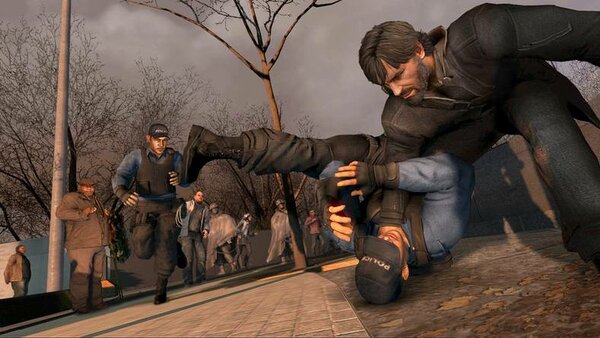
In September 2006, promotional materials for a new Splinter Cell game, eventually revealed to be Splinter Cell: Conviction, were leaked online.
These images showed protagonist Sam Fisher with long hair and a scraggly beard, implied a greater emphasis on action over stealth, and would also incorporate gameplay mechanics from Ubisoft's Assassin's Creed franchise, such as the ability to blend in with a crowd.
The immediate fan response was not good, to be kind, and when Conviction was formally unveiled in May 2007, it confirmed the leaks to be totally legitimate, only further fuelling an already irate fanbase.
The sustained negativity seemingly led Ubisoft to delay Conviction from its November 16, 2007 release date, with reports suggesting they "went back to the drawing board."
When we saw Conviction again at E3 2009, Sam looked more like his usual self and the game resembled a far more traditional Splinter Cell sequel, much to fans' delight.
It ultimately released to positive reviews, but had Ubisoft ignored the furore from that original leak onwards, their more casual-skewing iteration of the game could've very well flopped and killed the franchise.
7. Deus Ex: Human Revolution
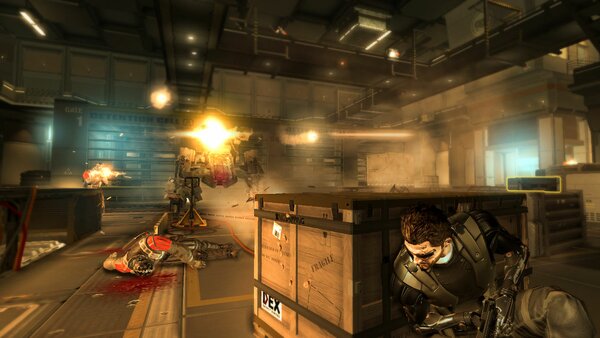
Though Square Enix probably won't ever want to admit it, they most likely have a leak to thank for the commercial success of Deus Ex: Human Revolution.
There was considerable skepticism about the sequel's ability to live up to the original Deus Ex leading up to its release, but in June 2011 - less than three months before the game came out - a large preview build was leaked online.
This build, intended only for the press, contained an estimated 10-12 hour chunk of the game, and the reception from players who tried it was overwhelmingly positive, enough that droves of fans loudly announced they were now pre-ordering Human Revolution.
Square Enix swiftly caught and sued the alleged leakers, yet the leak played a huge part in shifting the general fan sentiment leading up to Human Revolution's release, almost certainly contributing to the game's sales success and Square Enix beating their commercial projections for the quarter.
It's probably not too dramatic to say that, without the leaks convincing many to buy the game at full price on day one, sequel Deus Ex: Mankind Divided may never have happened.
6. The Last of Us Part II

In April 2020, roughly two months before the release of The Last of Us Part II, extensive gameplay videos were leaked online, spoiling what would ultimately be some of the game's most pivotal story moments.
This included the unexpected death of Joel at the hands of Abby in the sequel's first few hours, and with many fans seeing this footage devoid of its ultimate context, an air of disdain was created before the game had even been released.
Many frustrated by Joel's death directed their ire at Naughty Dog on social media in deeply toxic and hateful ways, ensuring the well of discourse was firmly poisoned before the game was in players' hands.
Now, of course there's nothing inherently wrong with being disappointed by this story decision, but discussion about the game already skewed intensely negative prior to release because of the leak, and so steering the conversation in a less-vitriolic direction was an uphill battle.
Above all else, The Last of Us Part II was a staggering example of how leaks can irreversibly impact a game's reception.
Sure, Joel's death would've always been polarising, but two months of "fans" raging about the leaked footage combined with social media's tendency to reward negativity ensured that the discourse was forever tainted by a tiresome air of anger.
5. The ESA Data Leak

Though E3 was once upon a time an ultra-exciting annual showcase for the next year's most anticipated games, the convention began its calamitous decline following its 2019 edition.
In August 2019, it was discovered that the website of the Entertainment Software Association (ESA) - the company behind E3 - contained unsecured personal information of more than 2,000 press and influencers who attended the event, leaving them open to harassment from malicious parties.
Though the ESA removed the data, further data of 6,000 attendees from prior E3s was then discovered and also scrubbed by the ESA.
But this data leak marked a huge change in perception of E3 as an event - with some members of the press reporting unwanted phone calls and even death threats, distrust in E3 and the ESA was at an all-time high.
And this was really the beginning of the end for the show - after E3 2020 didn't go ahead because of the pandemic, the virtual-only E3 2021 edition was largely panned, E3 2022, 2023, and 2024 were cancelled amid dwindling publisher interest, and then the ESA finally announced that E3 was no more.
While E3 would've always struggled to regain its footing following the pandemic, the massive reputation hit it took from the data leak meant that industry support for it was basically in the toilet, hammering one very large nail in its coffin in the process.
Much as many miss the pageantry and splashy spectacle of E3 compared to its so-so replacement Summer Games Fest, the ESA mostly has themselves to blame for its demise.
4. Mass Effect 3

Mass Effect 3 was one of the most anticipated games of the 2010s, and in November 2011 - some four months before release - a private beta was leaked online.
The beta contained a sliver of both the game's single-player and multiplayer modes, but far more concerningly players sifted through the code and found a full script, elements of which caused considerable concern among the fanbase.
This led BioWare to actually rejig parts of the script in the final months of development, such as removing an opening sequence in which Commander Shepard is on trial for destroying the Alpha Relay in Mass Effect 2's Arrival DLC.
The list of changes between the leaked script and the final game is comprehensive, and while we can't say for sure that all of these changes were due to the leaks, BioWare openly said at the time that they listened to the fan feedback and acted accordingly.
Still, that didn't stop them from serving up an absolute clunker of an ending regardless.
Even so, to see a company rework a game's story in the final months of development due to a leak was basically unheard of at the time.
3. The Legend of Zelda Netflix Series

In extreme cases a leak can piss off the higher-ups enough that they just end up cancelling the thing, and that's absolutely what happened with Netflix's intended live-action series based on The Legend of Zelda.
Way back in 2015, The Wall Street Journal reported that Nintendo and Netflix were partnering on the adaptation, which was described as "Game of Thrones for a family audience."
But in 2021, Adam Conover of Adam Ruins Everything revealed that Netflix pulled the plug on the Zelda series after the Wall Street Journal article came out.
Conover, who was working on a claymation Star Fox project which was also cancelled at the same time, said that Nintendo "freaked out" when the leak happened, causing them to shut down all in-development adaptations.
While it's no secret that Nintendo is fiercely protective of their IP, it's wild that a Game of Thrones-esque, presumably mega-budget Zelda series was canned because of a leak.
If it had gone ahead, though, Nintendo presumably wouldn't have greenlit the 2027 Legend of Zelda movie that's currently in pre-production.
2. Half-Life 2

Video game leaks simply don't get more insane than this.
In October 2003, mere months before Half-Life 2 was due to release, the game's source code was leaked online by a hacker, making an unfinished version of the game available to the masses.
The incomplete nature of the build caused significant backlash among the Half-Life fandom, which was already growing impatient waiting for the game's release, and far worse, it massively damaged morale at developer Valve, causing development to further slow down.
Ultimately Half-Life 2 finally released in November 2004 to universal acclaim, while the hacker, Axel Gembe, was arrested as part of an FBI sting operation and sentenced to two years' probation.
Beyond demonstrating how utterly devastating a leaked build can be to a developer in the final stretch of making a game, it also caused Valve and other developers to seriously beef up their internal security.
Additionally, Valve instituted a new rule that journalists would have to attend their office in-person to demo games they're working on.
1. Sonic the Hedgehog 4: Episode I
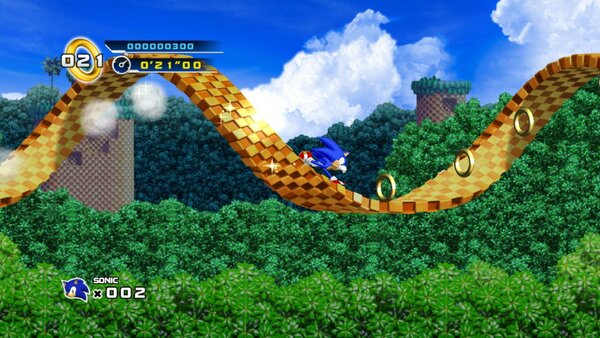
Sonic the Hedgehog 4 was an episodic sequel to Sonic & Knuckles which began its rollout in 2010, but the lead up to its release left fans anything but convinced.
Beyond the sorry state of the Sonic IP at the time, a prototype version of Episode I was leaked onto the Xbox 360's game testing service PartnerNet months before release, causing screenshots and videos to be widely shared online.
The fan response was dire, many criticising the rough physics and levels designed for mobile platforms, feeling that it wasn't worthy of the Sonic 4 moniker.
Sega responded by delaying Episode I by several months to address fan concerns, such as replacing the mobile-exclusive levels on consoles. But while the critical response was ultimately passable, fans largely still hated the game.
The negativity continued into Episode II, which finally came out in 2012 and, while deemed a mild improvement, was still largely panned by players.
The sustained hatred for Sonic 4 from fans ever since that initial leak ultimately led Sega to scrap a planned Episode III.
But this also had an unexpected outcome - developer Christian Whitehead, who was originally offered to work on Episode III, instead went on to develop remasters of the first two Sonic games, leading to him getting the job directing Sonic Mania a few years later.
Sonic Mania became the best-reviewed Sonic game in 15 years and remains a major high-point for the franchise.
And yet we probably wouldn't have had it without this leak kneecapping Sonic 4's reputation right out of the gate, in turn setting Whitehead on a totally different path.