8 Times Listening To Fans Made Video Games WORSE
Proof that listening to players isn't always the right choice.
Considering the perilous, high-risk nature of the games industry, it certainly makes sense for developers to listen closely to player feedback and react accordingly.
That might mean deploying a patch to fix nagging issues or simply endeavouring to ensure the next game in the series better hits the mark.
But there's also something to be said for the artists' process, because there are absolutely times where blindly kowtowing to the demands of vocal fans - who might, in fact, be the vocal minority - isn't actually the way to go. In fact, it can be downright harmful to the end product.
And that's absolutely the case with these video games, each of which saw their developer listen to fan complaints and then make a hard pivot.
Their intentions were clearly good, but for one of many reasons the final game ended up suffering immeasurably as a result.
They pivoted for sure, but didn't do so with enough clarity or conviction, ensuring that what we ended up with was most often a wishy-washy mess, if not downright broken.
The lesson here? Player feedback should definitely be considered, but it isn't everything...
8. Get Rid Of The Timer - Dead Rising 4

One of the more divisive gameplay aspects of the original Dead Rising trilogy is the in-game timer, which places a hard ceiling on how long players have to finish the main story.
Many felt that this made the game less fun, as it discouraged exploration and put pressure on them to race through the core story as fast as possible.
Capcom listened to the complaints and made the timer more forgiving in Dead Rising 3 in particular, but because some fans still weren't happy, they ditched it entirely for the series' most recent entry, Dead Rising 4.
And yet, perhaps the single most vocal complaint about the fourth game was that the lack of an in-game timer robbed the experience of its overarching tension and unease.
Some felt that the sequel tried too hard to streamline and even "casualise" gameplay to its overall detriment, when a fair compromise would've probably been including the timer as an optional toggle.
7. Make It Harder - Devil May Cry 3: Dante's Awakening

The early days of the Devil May Cry franchise are evidently defined by Capcom's struggles to balance the series' difficulty.
Case in point, some opined that the first game was too challenging, and so Capcom responded by making Devil May Cry 2 hilariously easy, to the point that most of the fanbase cried foul that they had massively over-corrected.
Capcom promised fans that this issue would be ironed out for Devil May Cry 3, however, which once again botched its balancing, resulting in what remains the most punishingly difficult entry in the franchise.
For the game's western release, Capcom infamously made Hard mode from the Japanese version the default "Normal" difficulty, which combined with a brutally unforgiving checkpoint system ensured that even seasoned DMC players found it too challenging for its own good.
The feedback was so vocal that when Devil May Cry 3's Special Edition was released the next year, Capcom re-balanced the difficulty while introducing a more amenable checkpoint system.
Since then the franchise seems to have found the sweet spot of difficulty that's challenging but not controller-throwingly demanding.
6. Include The Batmobile - Batman: Arkham Knight

Despite the outpouring of love for both Batman: Arkham Asylum and Arkham City, many fans were a little disappointed that neither game included one of the most iconic facets of the Dark Knight's repertoire - a driveable Batmobile.
But Rocksteady heard fans loud and clear, and so decided to introduce the vehicle in their third game, Arkham Knight.
The marketing certainly made the Batmobile look like a fantastic way to explore Gotham, but once players finally got the game in their own hands, it was clear that Rocksteady had totally whiffed it.
The Batmobile is far and away the most contentious and polarising aspect of Arkham Knight's gameplay, given that you're largely forced to use it in a number of tedious and frustrating combat and stealth sequences.
It simply didn't feel good to use and far too much of the core gameplay was reliant on it, ensuring that a badass method of transportation quickly became a massive chore.
Pretty much no discussion about Arkham Knight is complete without a prolonged rant about how annoying the Batmobile is, and that's a damn shame.
5. More Strategy - Valkyria Revolution
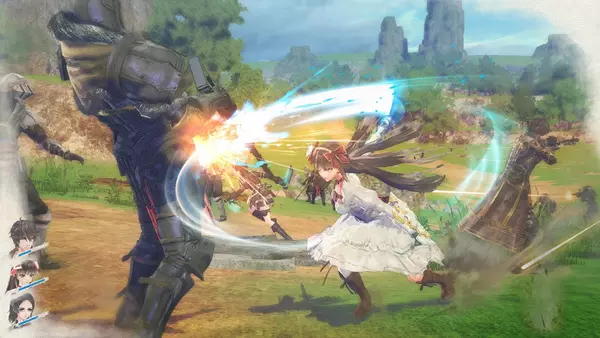
2017's Valkyria Revolution - a spin-off from the tactical RPG franchise Valkyria Chronicles - marked an attempt by Sega to broaden the series' player-base, and to say it spectacularly backfired is quite the understatement.
When a demo for the game was released, fans en masse lamented the greater emphasis on action over the series' expected strategy elements, feeling that a core facet of its identity has been watered down - "dumbed down," even - for cynical commercial reasons.
The blowback from die-hard fans was potent enough that Sega promised to retool the combat before launch to introduce more of the familiar strategy elements, and while they did, its messy implementation only made the game even worse.
Given that the strategy gameplay was only injected into the game in the final months of development, there clearly wasn't enough time to get it right, resulting in a clunky mish-mash of mechanics which satisfied neither the action nor strategy crowds.
Ultimately a lot of critics and fans felt that Sega would've been better off sticking to their guns and going all-out action, considering that this half-baked compromise pleased basically nobody.
4. Tone The Cutscenes Down - Metal Gear Solid V: The Phantom Pain

Metal Gear Solid 4 was widely praised for its ultra-cinematic send-off for franchise icon Solid Snake, which felt like peak Hideo Kojima in every sense of the word.
But there are also fans who saw the game as a step too self-indulgent for Kojima, that the balance between gameplay and cutscenes was simply too unwieldy for its own good.
That is to say, Metal Gear Solid 4's cutscenes comprised about half of its play-time, with an ending sequence that's shockingly close to feature-length.
With Metal Gear Solid V, however, Kojima evidently took the feedback onboard, toning down the lengthy cutscenes and ensuring the player had more hands-on time.
And while the fifth game arguably touts the strongest gameplay of the series, many were ultimately left disappointed by just how infrequent the cutscenes actually were.
The grandiose, cinematic sequences from previous MGS games were desperately few and far between, ensuring that the story seemed like a total afterthought compared to the sprawling open world gameplay.
Thankfully Kojima seemed to realise the error of his ways once again, as both Death Stranding games found a more amenable compromise between cutscenes and gameplay.
3. Make It Less Linear - Mirror's Edge Catalyst
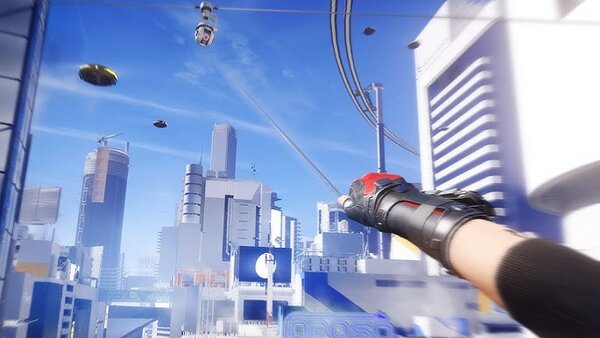
Mirror's Edge was generally lauded for its fluid parkour-infused traversal gameplay and spritely visuals, though many also felt that it fell short of its full potential by being far too linear.
Given that the free-running gameplay implied a degree of freedom, there was considerable disappointment that players were largely on-rails for most of the experience, and there was little opportunity to experiment or run off the beaten track.
But for 2016's belated sequel Mirror's Edge Catalyst, developer DICE seemed to answer fans' prayers by revealing it would transpire within an open world sandbox which players were free to explore.
However, Catalyst's open world was a big, fat disappointment - a bafflingly sterile, empty environment which never really seemed "alive" in any sense, from the somnambulant NPCs to the general environmental repetition.
It didn't help that despite the apparent "freedom" on offer, many of the core missions still forced you down a linear path regardless.
Ultimately it feels like a middle-ground between the original's linearity and Catalyst's listless open-ness would've probably been the right way to go.
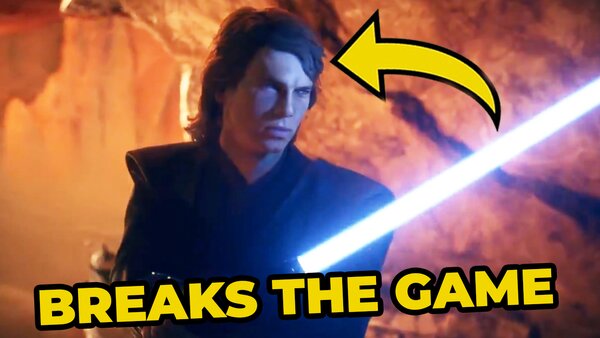
2. Put Anakin In The Game - Star Wars Battlefront II

Though Star Wars Battlefront II had one of the most tumultuous launch periods of any video game ever, it was eventually shaped into a worthwhile experience through patches and free content drops.
By far the most vocal request from fans was the inclusion of Anakin Skywalker as a new Hero character, and in early 2019 that wish was finally granted.
But the joy was incredibly short-lived, as it didn't take long for fans to realise that Anakin was hilariously overpowered to the extent of being genuinely broken.
Beyond having insane overall stats, Anakin was also the only Hero to have a fourth ability, making him excessively powerful to the point that he was extremely difficult for other players to take on.
Now Anakin should of course be a highly powerful Force user given his stature in the franchise, but at the cost of pure misery for anyone not playing as him? Nah.
After a few months of this, DICE finally relented and gave Anakin a nerf, in turn restoring some semblance of balance to a game that had run chaotically amok.
1. Make The World Bigger - Dragon Age: Inquisition

Though it was broadly well-received by critics, many fans felt that Dragon Age II was a major step down from the original game, largely because players were constrained within the tiny city of Kirkwall for the whole game.
With recycled assets throughout and a patent lack of environmental variety, it was painfully clear that the RPG sequel was rushed to market by EA.
But BioWare undeniably took the feedback onboard for threequel Dragon Age: Inquisition, which offered up a more expansive, semi-open world structure.
And while Inquisition was deemed a major improvement in many broad areas, it was also widely criticised for going too far in the opposite direction and being massive to its detriment.
The game world is so huge and yet so empty and lacking in interesting things to do - likely a result of the open world arms race that was going on in the early 2010s, where just about every even remotely open world game was trying to be bigger than the one next to it, content be-damned.
It's a textbook example of quantity over quality, for while Inquisition had a lot going for it, its world was deeply, thunderously dull.