8 Shocking Video Game Moments When You Realised You Were The Bad Guy
You monster... how could you?!

It's difficult for a video game developer to keep secrets about their protagonist from players. Because they're usually in control of them for the entire runtime (as well as sometimes being capable of tailoring their actions to their own choosing), gaming heroes are more often than not open books.
That only makes it even more satisfying when devs manage to trick players into believing they're playing as the good guy - the righteous hero of the story - only to reveal later that they've been a right evil bastard.
Gamers don't usually question what they're told; if it's been stated that the hundreds of goons they're killing are villains, it's more than enough justification to murder them as brutally as possible for the next ten hours.
Taking that trust and smashing it into a million pieces, thanks to some cheeky narrative tricks that convey the unreliable perspective of these main characters, there's nothing quite like realising the hero you've been playing as has been the big bad the whole time.
8. Bioshock: Infinite
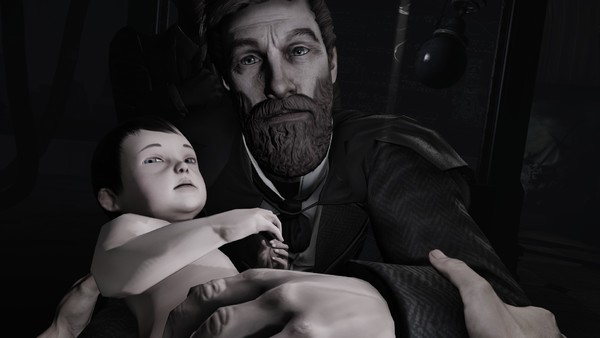
Bioshock: Infinite's plot hinges on a pretty simple instruction: bring us the girl and wipe away the debt. That's the only direction the player character, Booker, has in the opening hours, but the game eventually reveals that the "girl" you're looking for is Elizabeth, the protagonist's own daughter. She's missing, because, well, you sold her to a racist prophet called Comstock in order to pay off a gambling debt.
That's a pretty s****y thing to do, but that's not what makes you the villain. While you battle through the hoards of religious zealots in order to free Elizabeth from the slavery you sold her into, attempting to take down the ruthless Comstock in the process, a late game twist actually reveals that the dictator and Booker are one and the same.
Okay, so technically he's a version of you from an alternate timeline, birthed formally after receiving, rather than shunning, a baptism after returning home from war. Still, because he's a byproduct of yourself, you're still ostensibly the problem, and it's only by being killed before this choice can be made that he's stopped from ever causing harm.
7. Prototype

Narrative wasn't the main reason people flocked to Prototype back in 2009, but the game did tell a surprisingly gripping story about a plague turning an entire city into monsters. It's pulpy as all hell, right down to the fact that the player character, Alex Mercer, begins the game with amnesia and a whole load of random mutant powers.
You spend the next ten hours decimating creatures on the streets of New York and attempting to get to the bottom of who unleashed this bio-weapon and why. Who could have been so devious to damn thousands and thousands of innocents, though? Well, it turns out that it was you, done before being gunned down at the start of the title.
Although you've spent the whole game trying to figure out the origin of your powers and contain the threat, you end up finding out it was your own fault to begin with. Oops.
6. Silent Hill 2

While Resident Evil always boasted the spectacle and the gameplay, Silent Hill was the survival horror series with the best stories. Moving away from the pulpy, action influences most releases in the genre gravitated towards, the second game in Konami's franchise told a rather low-key tale, following James as he's lured to the titular town after receiving a letter from his dead wife, Mary.
Whether or not Mary is alive - and her connection to Silent Hill in the first place - becomes the game's central mystery, with James battling one nightmarish monster after another to get to the bottom of it. However, later it's revealed that it was James himself who killed his ill wife in order to stop her suffering, an act which he repressed immediately after.
Unfortunately for him, Silent Hill gets its kicks on delving into the repressed psyches of its victims, and uses this guilt to bring his biggest worries to life in the form of stabby monsters.
5. Nier: Automata

Nier: Automata's plot goes absolutely off the rails in its final act, reshaping everything you thought you knew about the seemingly straightforward war between humanity's machines and the alien invaders. It turns out the machines, including heroes 2B and 9S, work on a cycle which keeps the war going in perpetuity in order to give them a reason to exist. When they've finished their job, they're eliminated and fresh models come in to start the whole thing over.
Though this revelation takes the heroes by surprise, there's one more twist that's even more devastating. 2B and 9S' relationship is one of the game's most charming elements, as while the former is initially a little cold to her sidekick, she later warms to his incessant badgering and attempts to strike up a friendship.
While she may seem like a bit of a needless dick for refusing to open up to her partner initially though, it's later revealed that this is by design, as 2B is actually a robot designed to execute 9S units once they've fulfilled their purpose.
Though there are hints that these models are out in the wild (as some have gone rogue), you never suspect 2B. Fortunately she doesn't succumb to her true programming, but it certainly casts her personality at the start of the game in a far more sinister light.
4. Mafia III

All Mafia games revel in the grey areas of their gangster main characters, but the third game's Lincoln Clay has a particularly sharp decline into criminality. Initially only involved in the Mafia to support his family, Clay becomes a ruthless crime boss in order to get revenge on the current head honcho, who shot him in the head and killed all of his loved ones.
However, what starts out as a personal mission for justice slowly gives way to a lust for total power. Eventually you realise that Clay's campaign to tear down rackets and put up his own is as much for personal gain as it is a selfless crusade, with the game's moral compass, Father James, not even being able to talk the anti-hero down from contributing to rampant crime on the streets.
The game culminates in a choice - either rule democratically with your sub-bosses, or take them out and do everything yourself - but no matter the ending, it's clear that somewhere down the line, Clay's soul was corrupted.
3. Shadow Of The Colossus

In order to save the life of his companion in Shadow of the Colossus, Wander is told by the ghostly Dormin that he needs to kill 16 Colossi scattered throughout the forbidden lands. You don't know exactly who this person is or if they're telling the truth, but considering you have no other options and the beasts themselves seem pretty damn terrifying, you don't really question the challenge.
The thing is, while these hulking giants are certainly imposing and intimidating, they don't ever pose a threat to you. They only attack you if you attack them first, otherwise they're pretty chill hanging out for all of eternity. Consequently, after you've taken a few down, something starts to feel... wrong, as you continue to cull these majestic creatures and rob the world of so much of its character.
That's because it turns out that the information you were fed wasn't entirely correct, and after all the guardians have been killed you've actually allowed Dormin, a pretty bad dude all things considered, to manifest and take control of Wander's body. The Colossi weren't villains at all, and you had no business ruthlessly murdering them all.
2. Spec Ops: The Line

By now, just about everyone knows the central twist in Spec Ops: The Line. An amazing modern spin on Heart of Darkness, the game sees soldier Walker descend on Dubai in order to take out Konrad, a military man who's used the isolation of the foreign setting to take a little power for himself and his own private army.
On paper it reads like any other modern-military narrative, but over the course of the title you realise that Walker isn't exactly all there when it comes to his psyche. Especially after accidentally killing a bunch of civilians with white phosphorous (look, we've all made mistakes), the soldier begins to crack.
The twist is that from here on out, Konrad is actually dead, and the villain Walker has been communicating with has been himself, as his fractured mind has hallucinated the figure in order to rationalise the terrible things he himself is responsible for.
The game also reveals that much of the events were being depicted from the POV of an unreliable narrator, and either didn't happen at all or were radically different to how they appeared, all committed by a man slowly slipping into insanity.
1. Undertale

Undertale, on the surface, is one of the most charming, upbeat games ever made. From its colourful sprites to its array of characters who are only ever one line removed from a knock knock joke, the game's underworld, full of weird creatures and monsters, is a bloody joy to spend time in.
That only makes it even harsher when it turns out that you've been the villain the whole time though, murdering these lovable rogues when you totally didn't need to. Every combat encounter can end in you sparing the enemy, but unless you know that in advance you're almost guaranteed to lose your cool and kill one of these monsters.
And why wouldn't you? The game rewards you with LOVE (health) and EXP so, like most releases, the more you kill the stronger you get.
However, it turns out EXP is actually "execution points" which chart only how much of a bastard you've been and don't provide any in-game buffs, while LOVE stands for "level of violence". In world full of monsters, the only villain is you.