8 Most Ridiculously Complex Video Game Plots

Crazy plot twists, enormous casts and jumping the shark.

Video games have evolved over past years and decades to become incredibly deep story-telling devices, often rivalling books and films in terms of complexity. Certain game series have now made names for themselves, priding themselves on marrying excellent gameplay with a deep and interesting plot, but with such evolution comes new pitfalls as stories spiral out of control and plot lines are left unresolved. This is evident in cases where writers take it too far and gamers are left with a mind-bending mess of plot lines, struggling to make head or tails of the latest plot twist. In rare examples, the player is left in disbelief as the story chucks story-telling conventions out of the window entirely and jumps the shark. This phenomenon is all too prevalent, and invariably signals a decline in quality, although some games do manage to retain some semblance of sense, often by the skin of their teeth. The major takeaway from the modern Story Wars is that there are examples even in the premium releases where the plot is a tangled mess, forcing players to keep notes, and in rare cases, resort to searching the internet for some explanation of what the hell just happened. What follows is a look through some of the more complex plots known to gaming.


8. Metal Gear Solid

Hideo Kojima€™s creation is well known for its mind-boggling complex plot, stretching over a host of sequels and prequels, but funnily enough, the first Metal Gear Solid was one of the most tightly- written plots in gaming, with very little left up in the air once the story was said and done. Unfortunately, the follow-up sequel Sons of Liberty blew the plot wide open. Sons of Liberty had fans who were expecting to play as Solid Snake flapping as they instead controlled a new protagonist tackling a new terrorist organisation and uncovering the secrets of a far-reaching conspiracy created by the Patriots. What followed was a taxing mess of staggering revelations and plot lines that required extensive note-taking to keep any track of the story. This trend continued in the rest of the series, arguably made even worse by the constant switching of protagonists, especially to Raiden in Sons of Liberty and Big Boss in the subsequent prequels. An overarching story starting in 1964 and finishing in 2018, encompassing no less than 11 individual games and featuring three separate protagonists, makes for one of gaming€™s most complex plots. And it still hasn€™t finished with Metal Gear Solid V: Phantom Pain set to arrive in 2015.

7. Legend Of Zelda

A total of no less than 18 games in The Legend of Zelda series has resulted in such a tangled web of plot lines that fan theories featuring alternate worlds and time travel raged across the Internet for years, attempting to dissect the myriad of prequels and sequels to the original stories. Far more confusing was how protagonist Link seemed to have more hometowns than was realistically possible, not even accounting for the various child, teen and adult forms which changed seemingly at the developers€™ whim throughout the series. And to cap it all off there was the constant revival of Ganondorf and his beast form, which suggested that the development team might actually run out of ways to crowbar the character into every single game. Eventually Nintendo felt it necessary to produce an official timeline detailing events; not that it actually helped as the chart featured no less than three alternate dimensions in relation to the original timeline, creating far more questions than answers. And of course, there's a new game coming in 2015 to add to the mix.

6. Chrono Cross

Chrono Cross was the lesser known PS1 follow-up to Square€™s legendary Chrono Trigger, this time revolving around alternate dimensions rather than time travel as its predecessor did. Quite frankly, it was a mind-bending plot crammed full of psychology and an enormous cast of 45 playable characters, many with sprawling background stories. Those characters featured a scythe-wielding cat man as the primary antagonist, and protagonist Serge could count a fairly colourful bunch amongst his allies: a harlequin, pirates, a Mexican wrestler, a cyborg, a musician, robots, dragons, dinosaurs, aliens, an undead clown and a living turnip. No, really. And half way through the story, a mind-bending plot twist has you controlling the antagonist in an alternate dimension without all your allies. All of this combined to make a ridiculously convoluted plot, with the final boss springing out of nowhere, seemingly unrelated to the story as has become a bit of a tradition for Square Enix these days.

5. Tales Of Symphonia

On the whole, Namco€™s Tales of Symphonia didn€™t have that complicated a plot. In fact, it was rather simple at first: beat the baddie, save the girl and save the world in the process, but the writers clearly weren€™t satisfied with just that and introduced a series of dizzying plot twists, and consequently the story went to hell in a handcart. There are so many u-turns in this game that players could be forgiven for not knowing who it was they were actually fighting, given that the primary antagonist seemed to change every half an hour. But persevering with the plot would reward players with a lovely, feel-good ending after saving the world from a mad-man bent on its destruction. Until you played the sequel that is. Then everything goes to pot again as Dawn of the New World threw in two new protagonists, a new antagonist and a few plot holes for measure. Somewhat inevitably, the game flopped in the charts, leaving players wishing they'd left it alone to preserve the memory of the original story.

4. Final Fantasy VII

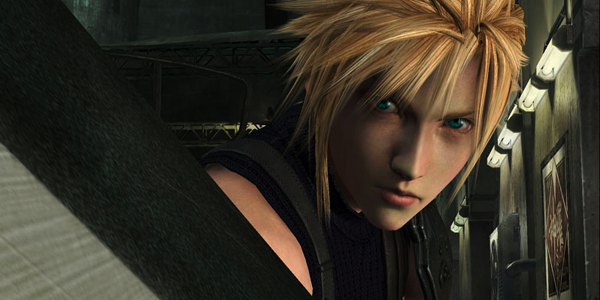
A perfect example of a game that couldn€™t just be left well alone, Square€™s epic Final Fantasy VII was a resounding success in the West and single-handedly catapulted their developers Square to global stardom, as well as popularising the Japanese RPG genre outside of Japan. The original game was a complicated plot with many eco-friendly references, but could be understood with a bit of patience. Protagonist Cloud Strife joining an eco-terrorist cell to take on planet-pollutors Shinra Corporation and then tackling primary antagonist Sephiroth made for a superb self-contained plot, even if said story stretched imaginations to the limit. But Square Enix had to build on the success of the original game by introducing various spin-offs such as Advent Children, Dirge of Cerberus and Crisis Core that featured new protagonists. As a result, the plot was mangled beyond repair with no less than six versions of one infamous scene in the protagonist€™s hometown of Nibelheim, causing much confusion for long-term fans of the game.

3. Legacy Of Kain

This PS1 classic was arguably the king of the mind screw way back in the 1990s, featuring a baffling plot consisting of false gods, time travel, multiple paradoxes, destiny versus free will debates, amnesia, resurrections and secret motives. And that was just the start. Following series protagonists Raziel and Kain, players are guided into a dark, gothic world filled with vampires and other creatures of the night. And if the baffling time travel didn€™t put players off, then the pseudo-philosophy would as characters debate topics such as evil and the concept of free will against fate. Subsequent plot complications and time travel abuse meant fans lost patience with the series, causing a decline in popularity, even if the original remains a classic of the genre.

2. Mass Effect

While not as mind-bindingly complex as other games on this list, Mass Effect earns its place through the sheer detail and depth of its universe and lore recorded within the game's glossary, known as the Codex, which meant that players had to submerge themselves within a enormous wealth of information in order to fully comprehend the plot. A space-faring adventure also meant players had plenty of history to learn as well as the number of new alien species to memorise as protagonist Commander Shepard navigates the Milky Way over the course of the trilogy. And of course, the now infamous ending to Mass Effect 3 threw another spanner into the works as fans were outraged at the seemingly pointless ending to Shepard's adventure, so much so that petitions sprang up almost immediately, appealing BioWare to change it. A entire trilogy was very nearly ruined by some clumsy writing on the creators' part, only to be averted at the very last minute with the release of a new extended cut of the ending.

1. Kingdom Hearts

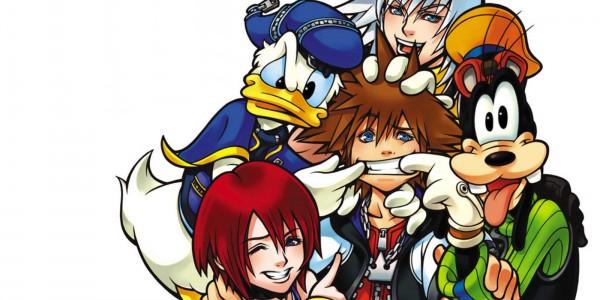
The daddy of them all. Kingdom Hearts' sheer complexity is probably best summed up by creator Tetsuya Nomura when he claimed that the most important element of any story was 'making it surprising'. Nomura certainly made the series surprising. In fact, he probably went overboard with no less than five spin-offs crammed full of plot twists completely vital to the progression of the overarching story. What made it even worse was that said spin-offs were spread over several consoles such as Playstation 2, PSP, Vita, Nintendo Game Boy and Nintendo DS. Don€™t have one or more of those? Tough luck. At least it was until the arrival of the ReMixed versions on the PS3 when players could actually play all of the games on one console. And then they released Dream Drop Distance on the Nintendo 3DS. Even when you play all of them, good luck understanding the plot and character cast which easily runs into the dozens, many of them with clones with differing motives based on the story progression. It takes a dedicated individual to make sense of this enormous tangled mess. Which other convoluted game plots deserve to be on this list? Share your thoughts below in the comments thread.

In this post: 
Mass Effect
 
Posted On: 
Contributor

Callum Fox hasn't written a bio just yet, but if they had... it would appear here.