8 Lies The Video Game Industry Can't Stop Telling
When what they're advertising isn't what you buy.

You ever think it's a little weird, just how many lies - and how much lying - the average gamer puts up with?
We're talking about an industry where fakery and bluster is king. Where astronomical amounts of money back something as hard to quantify as the feel of shooting a gun or moving a character.
An industry where despite the collective getting carried away on hype trains departing for No Man's Sky or something like Ghost Recon Breakpoint bombing to the point where Ubisoft lost 93% of their operating income in 2019, Cyberpunk 2077 lowered the bar even further across 2020.
It's truly staggering to be standing at the beginning of the ninth console generation - a time when the industry is more lucrative than ever for some, and more instant-fail for others - and wonder how much crazier it can get.
With the eighth generation seeing some of gaming's biggest longform issues come face-to-face with a mainstream audience, the power of 24 hour news cycles and social media sharing, we're at a point where awareness of the industry's biggest failings is front and centre.
8. "Pre-Order For Exclusive Content"

Pre-ordering as a "thing" has absolutely ran the gamut of opinion over the years.
From immortal conversations over whether you should EVER pay for a game before you know what it is (you shouldn't) to deluxe bundles segmenting optional DLC like skins and weapons as broadband connections became standard, to the whole controversy over on-disc DLC. The latter saw EA and Capcom come under fire, as consumers rallied under the notion that we're buying a physical disc, therefore anything on there should be accessible.
With many titles going digital then, pre-orders as an entity didn't go anywhere - morphing more into "pre-loads", which can be awesome if they're available after a review - and yet we still have tons of "exclusive" items offered to butter you up.
The reality of literally ANYTHING labelled as "exclusive" though? It isn't, and either content will become available after the initial marketing window, or it'll be bundled into a "Game of the Year" version sold next Christmas.
7. That Any Squad Game Is A Worthwhile Single-Player Experience

If there's one gameplay template currently doing the rounds, it's the squad shooter.
A hybrid of late 2000s third-person action games like Gears of War, the burst of co-op mechanics Left 4 Dead added to the mix, and the loot-drive of Diablo 3, everything from The Division to Outriders, Avengers, Anthem, Back 4 Blood, Aliens: Fireteam Elite to Redfall has trailers of multiple main characters going up against hordes of enemies.
Nothing against these games existing of course, but it's become a go-to statement to point out that "Hey, this game can totally be played single player too!"
A throwaway line in marketing that still ensnares those who just don't want to play online squad shooters, the reality in every.single.case of these, is that no game designed for group combat remotely works as a single player experience.
You can play a co-op game solo, but that's not the same as a single player game. Health pools aren't balanced, enemy aggression and A.I. doesn't adapt, and if you go into the arbitrary "downed state", you're just stuck there with no one to revive you, forever reminded that the game is not meant to be played this way.
6. That Anything With An Online Connection Will Work At Launch
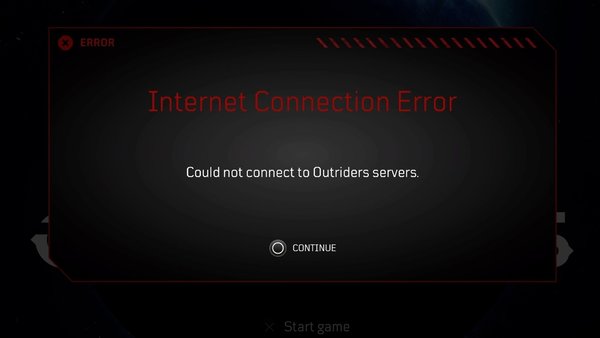
Yup, I can remember on one hand - even one finger - a multiplayer game that actually worked at midnight, whilst hundreds of thousands of players poured in:
Destiny.
Bungie's 2014 shooter might have been all over the place, but if you wanted to dive in and do some PVP with your friends into the early hours of the morning, you could.
For almost everything else though? The inevitable problem of server testing in-house versus the world's playerbase coming online tends to break the whole experience.
Long match queues, server dips - it's always abundantly clear that "server maintenance will follow", as most games CAN only be ready after the devs have monitored traffic for a few days or even a weeks (like with Outriders).
Many titles now are striving for public betas, but again they're tied to pre-orders, hampered by even more stringent developer deadlines to allow for access, or they fundamentally might put you off a pre-order, so it's "better" for investors if we wait til launch.
5. "More Innovative Than Ever Before"

If there's one word the industry has thoroughly overused to the point where it's lost all meaning, it's "innovative".
Another squad shooter is not innovative, nor is a loot system, a military first-person shooter or a hero shooter with individual powers spread across a roster.
The idea of something like Call of Duty touting innovation after following the original Modern Warfare's template for the last 14 years is almost hilarious.
Obviously not saying these games aren't enjoyable, mechanically solid or recommendable, but innovative? Pushing the medium or the genre forward? Coming up with ANYTHING new where we actually sit back and remark at how an established ruleset was innovated upon?
I can point to Dark Souls changing the way we think about action RPGs and boss fights, Gone Home inventing a whole new way to do video game storytelling, but neither were advertised as such, and they're both almost a decade old.
4. "Target Renders" Produce Fake Gameplay
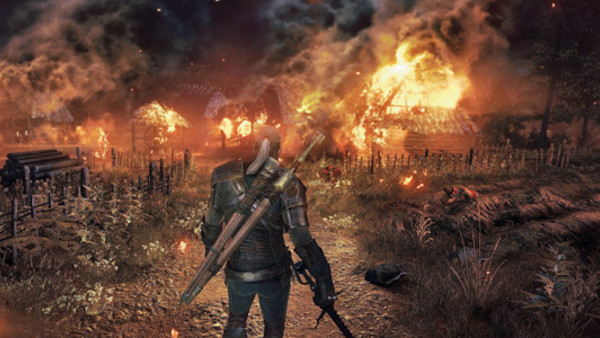
Reaching a notable boiling point with Cyberpunk 2077, the idea of a "target render" or "vertical slice" of an in progress game is often a reality of business.
Shareholders need to know where their money is going, publishers have marketing deadlines to hit and developers can sometimes benefit from seeing a snapshot of where they're collectively heading.
Where it gets weird though, is with everything I mentioned in regards to hype, pre-orders and manufacturing a version of the game that starts to exist more in the minds of the masses, than the creators themselves.
In Cyberpunk's case, the 45 minute "gameplay demo" journalists were shown in 2018 was literally faked. Same goes for No Man's Sky and even The Witcher 3 before 2015.
Whether or not you agree that a team doing their best to hit that render constitutes terms like a "downgrade" when a demo's finish line was one level instead of the full game are up for debate. The point is:
The general public are not applying or aware of the rules of a "target render" when it comes to pre-launch footage, and nowhere in the marketing handbook does it say "Tell the truth and risk losing sales".
3. "You Can Play Your Way"

Almost the "see that mountain? You can go there" of the last few years, tons of top-tier studios started adapting RPG-like notions of player and class customisation, in titles that are not really built for deviating pathways.
For example, I'm currently replaying 2003's mighty Knights of the Old Republic. At the beginning of the game you're tasked with venturing into the "Undercity" to locate a companion. You're free to literally ask around the entire chunk of the metropolis you're in, quizzing bartenders and neighbours for info.
The results give you everything from acquiring Sith documents to fake your way past patrols, to stealing armour from a Sith general's house party after all the guests have passed out from drinking.
THAT, is "playing my way".
The Witcher 2 gating off an entire half of the game because of a choice you make in the first act? That too, is "playing my way".
What feels like channeling these age-old, more "true RPG" playstyles - but then not following up on it - is saying that any game with a skill tree or stat screen at all does the same thing.
From God of War 2018's Runes to modern Assassin's Creed's abilities, or any number of loot shooters with unlockable damage buffs or defence modifiers, we all largely still play these games the exact same way.
The Avengers tried to say that each individual player's Iron Man would be completely different, but as is largely the case, unless the guts of your game are a branching path narrative and variety of gameplay approaches, it just isn't the case.
2. Almost ANY Defence Of Microtransactions In Full Price Games
Microtransactions became the pre-order argument of the 2010s, and though there were some heinous pay-to-win implementations across the eighth generation, we have seen titles like Rocket League, Warframe, Fortnite and more show that if you respect the consumer, there is a way to monetise an experience over time, and largely keep it fair.
In general, microtransactions came from both the idea of opening a "blind box" of content - first used in EA's UEFA Champion's League 2006-2007 - and the notion of any initial price point not representing let's say 30+ hours of game time.
Why should something that you can play for literally hundreds of hours be the same price as a campaign you blow through in 8? Is there some way that figure can be adjusted? As various devs have weighed in over the years - including games writer Alanah Pearce - that can be a more respectful way of thinking about it.
Obviously the reality of how things went boiled down to "how many pieces of this game can we slice off and charge separately for?", but it wasn't about fleecing the populace from day one, at least from those outside EA.
Overall though, the key terms are "fairness", and "balance". The vast, VAST majority of titles that have a tail long enough to be monetised, have repeatable mechanics and levels that could be offered up for free, segueing into a fair monetisation system afterwards.
The reality is, many titles still include remnants of the mobile gaming boom that reached its worst point in 2017, still coming with a console-sized price tag because of general expectations.
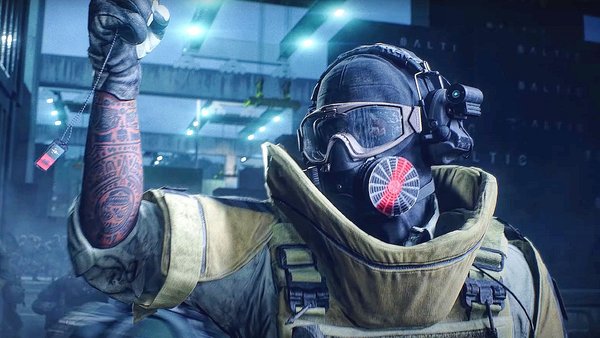
Even with Battlefield 2042 we're getting a title that's multiplayer-only, with tons of cosmetic microtransactions, but it'll be sold at full price. The "Ultimate Edition" is £110.
1. That Launch Dates Matter Anymore

When was the last time you bought a game and it worked as expected on day one?
No bugs, no glitches, no meaningful content add-ons or mechanics that should've been there, attached weeks later?
When was the last time a developer's vision for a title dropped fully-formed on day one, and stayed that way?
I can point to 2018's God of War, The Last of Us 2 and Red Dead Redemption 2... and that's about it.
The overwhelming majority either use players as glorified test audiences, patching in gameplay tweaks or balance fixes weeks or months later, or a game is released in a genuinely unfinished state.
It's got to the point now where we actively expect something to not be optimum on day one. We actively take to social media or speak to friends wondering if X element will get fixed in the next patch.
It's a truly bizarre state for a medium to be in, and the single-most jarring reality to come to grips with, the newer you are to gaming.
Most titles go from being fixed post-launch to being completely overhauled. Even the term "patch" went from minor performance upticks across the 7th generation, to Assassin's Creed Unity being completely replaced on Xbox One in 2014, Cyberpunk 2077 still being in active development a year after launch, and No Man's Sky overhauling itself and releasing multiple sequels' worth of content into the same game.
Launch dates, early access, a crowd-funded prototype? Save for the biggest studios on the planet, they can often be the same thing.