8 Huge Problems With The Future Of Racing Games

We're running out of spares here.
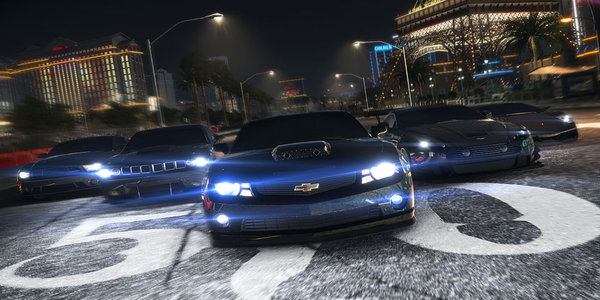
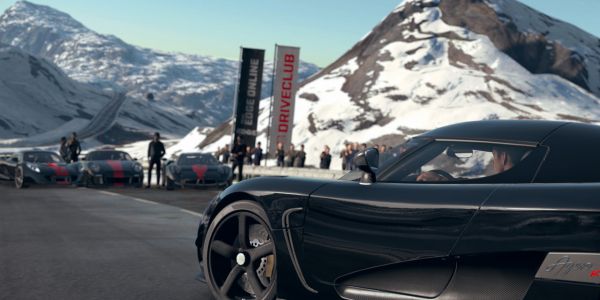
Racing games are perched curiously between the fantastically fictitious, and the realism-driven, cyclical nature of more conventional 'do this, win the points' sports games. They share the goal of recreating a real-world experience with such mammoth franchises as FIFA and Madden but also aim to draw players in through other, more unique means - capitalising on the primitive but alluring idea that lovingly-sculpted hunks of metal sprinting across a landscape are pretty damn cool. There's no room for a dozen football or basketball IPs, because they would all ultimately be hitting the same notes to varying degrees of effectiveness - instead there's a quantifiably superior experience at their core. This is not true for the racing genre, which has grown as diverse as its touted cars through the subtle nuances inherent in arcade (think Burnout) and simulation (think Gran Turismo) racing. Need For Speed, Burnout, Forza, Driveclub, Ubisoft's forthcoming The Crew and dozens more all fill - or are at least working to fill - their own niche, and offer a subtly different experience for players who take up the wheel. In keeping with the latest raft of win-the-points sports games however, racing games are beginning to plateau - ironically, just as the newest console generation is truly finding its footing, a time one would expect to stoke the best of the genre. Worse still, we're seeing similar shortcomings across multiple studios and platforms, suggesting there's a fundamentally flawed approach to blame for all the flat tires rolling around.

8. Poor Gamepad Controls

Few would argue that traditional gamepad or keyboard controls can equal a properly calibrated steering wheel, and none would argue it successfully. In the quest for an immersive and realistic racing experience, there is no more valuable tool. Consequently, save the extravagant 3D setups of die-hard enthusiasts, there is no more expensive one. Even still, racers truly come into their own when they're no longer relying on analog sticks or - dare we speak of it - WASD keys. Of course, consumers aren't the only ones aware of this. The studios behind all the rubber-burning are keen on steering wheels as well and often create their own. The benefits of this are enormous - sharper turns, better feedback, tighter handling - but also only enjoyed by the relatively small and emphatic population willing to drop three digits on a nice wheel. Contrastingly, the negatives are felt by far more. Sloppy controls are to racing what stupid AI is to shooting - that is to say, absolutely game-breaking. Nothing deflates a racer quicker than what has affectionately been labeled Ice Rink Syndrome - the insufferable tendency for cars to slide across asphalt like they were so many Olympic skaters - or other handling-shattering pitfalls. And guess what gamepad users are getting more and more of? An uncharacteristically frosty racer and subsequent good taste of the airbag, correct.

7. Absurd Premises

https://www.youtube.com/watch?v=eDA37BmvNwM An excellent summary of Need For Speed Rivals' pretentious narrative is seen in YouTube personality Total Biscuit's look at the title, when he remarks "Are these the lyrics to a Linkin Park track? What is this?!" It is a profoundly simple thing to structure a sports game: you're this team, in this league, doing this thing. Where sure there will be at least one dry eye in the house after that riveting delivery, but there will also be a distinct lack of stunned disbelief. That last bit, particularly the lacking part, is an area where racers continue to struggle. It should be an equally simple thing to give a basic premise - a written excuse to progress, really - to racing, but by way of angst-filled leads and juvenile dialogue, many games have missed that point. It doesn't matter how unrealistically gravelly the main character's voice, how vindictive opponents behave, or how oh-so-totally-cool your crew is - that's not why racing fans are here. Racers are at their best when actual people are all but removed from the equation; the cars should be the main characters of the game. Let them do the talking, and spare us the monologue.

6. Hand-Holding

In yet another instance of the games industry's loss of teeth, racers have picked up the nasty habit of playing for us in recent years. Where PlayStation 2/Xbox-era installments once threw players to the wolves, modern entries hold hands at best and outright penalize at worst. If you're lucky, the option to auto-brake on turns will, in fact, be an option; otherwise you'll simply be smacked on the hand. There are very few cases where it is acceptable for games to tell players they're playing incorrectly, if only because them of that rewarding sense of self-learning. In racing in particular, being forced to brake a corner or take a certain road is a crippling, annoying obstruction because other options are readily available. Those options may very well end with us getting another good taste of the airbag, but we're still going to try and take that turn at 60. We've got lap times to beat, you know, and don't have time for pussyfooting.

5. Shoddy Handling Of DLC

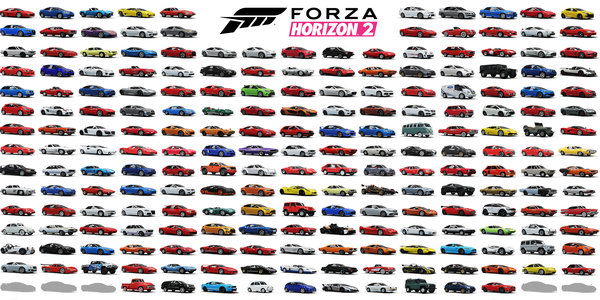
Consumer-gouging add-ons are an annoyance that much of the industry refuses to grow out of, and it doesn't help that racing games are exceptionally well-poised to wallow in the profits. Games like Borderlands: The Pre-Sequel and Destiny have DLC written all over them, to be sure, but you can bet it will be much more difficult to put out than slapping a steep tag on a batch of vehicle models. It's one thing to expand a world with new characters and settings, but another entirely to lengthen an already titanic roster with a few more cars, yet the two are often costing consumers the same. That's not to say Forza and The Crew and others shouldn't receive additional cars post-release, mind. However, paltry packs of cosmetic options and handfuls of cars aren't worth the current price of admission. The concept of free DLC also deserves a turn in the spotlight. Hell, a free car or track a week could be quite the marketing hook, even.

4. Limited Track Selection

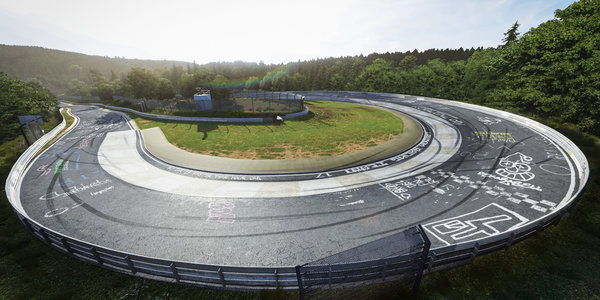
In their endless pursuit to perfectly recreate their source material, sports games are limited in terms of what they're allowed to do. The same is true for the often monochromatic locales of racing games which are derived from the big-name competitive circuits, if not copied verbatim. There's an almost escapist satisfaction to tearing through Laguna Seca or Silverstone that's very much in line with the general appeal of racing games - again, going fast is cool, and it's that much cooler when done on an authentic course. However, recent games have demonstrated the other side of this blade. Courses tend to run together, lacking personality because the makers literally couldn't deviate from a set design. If you want Silverstone in your game, you can't add in tunnels, hills and drift-bait, after all. The balance between realism and fun is exemplified by the gap between arcade and simulation racers, but more colorful tracks are something both sides stand to gain from. Even if it comes down to a cut-and-dry separation of the two - new tracks go here, recreated tracks go there - adding original circuits to a game would do wonders for its personality.

3. Starved Customisation

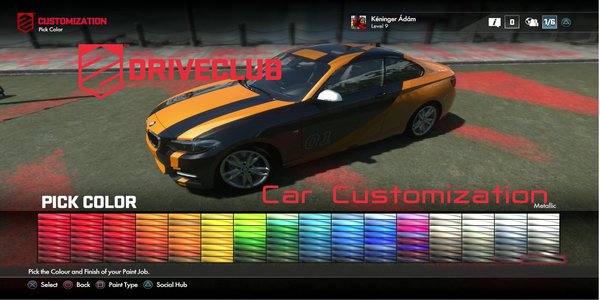
It's no grand secret that games are bettered by granting players more agency, a larger role in the flow of a game be it through story or combat or aesthetics. The likes of Infamous, Elder Scrolls and BioWare's repertoire will attest to that, and so too will the satisfaction of decking out your ride in any racer. From sheer appearance to the most technical of performance aspects, fine-tuning a vehicle can be an engrossing experience - and one of the few ways cars develop real character, a voice of their own, if you will. It's strange, then, to see part lists and options menus culled. In stark contrast to the advancement of visuals and soundscapes - perhaps even for the sake of it - creating your own car is slim pickings nowadays. A colour here, a decal there - but it's all devoid of the fine-tooth micromanagement that ate countless hours in the PlayStation 3/Xbox 360 era. The idea of stepping back and knowing in the end that your creation is truly yours, possibly wonky suspension and all. This is compounded by the fact that racers are only becoming more social. Driveclub, for example, prides itself on its subtle multiplayer interaction, spontaneous instances where you can challenge the records of other players. Just as the platform for veritably virtual, user-generated car shows arrive, the tools needed to make them work up and vanish?

2. Skeleton Campaigns

The continued march of social integration has added much to modern games, but also arguably robbed them of their single player prowess. It's tough to stay a solo player in today's gaming sphere what with every shooter, RPG, sports and racing title and their dog plugging networks at every opportunity. Racers have felt the decline of single player content more sorely than others (laughably stumpy FPS campaigns notwithstanding) and seen their once lavish campaigns dwindle, now a token gaggle of circuits amounting to a pre-multiplayer appetizer. Military shooters have been in a similar position for years, but the effects are more pronounced with racers. Shooter fans often wind up investing the majority of their play time in multiplayer interactions regardless of how focused the campaign is, whereas many racing fans relish challenging their own records, playing their races and, again, revisiting their cars. There's no stopping the growth of multiplayer gaming, but there's no need to strip single player content to its bones either. They do not exist in the absence of the other, after all.

1. Stale Features

For all their sales figures, enormous followings, and ever-chugging hype trains, cyclical IP such as Assassin's Creed, Battlefield, Forza and Need For Speed share a common problem: they're iterative. And once again the racing genre - even new IP that genuinely build upon previous titles - has proven particularly susceptible to dulled luster. Point-and-clicks by their script, sandboxes by their vitality, shooters by their gunplay: Every genre and niche has its sticking point, its essence. For racers, unsurprisingly, that comes down to the drive, the hopefully inviting meeting of asphalt and rubber. However, with so many competent games already available, it takes more than tight handling and proper physics to surpass competency and hurtle into excellence. That's where we find new race types, smoother UI navigation, henceforth unseen vehicles, new and original tracks and much more. Racers, too, need to stop iterating, to stop playing it safe and start taking the risks their players are after. Remember, we're taking that turn at 60. What do you want to see more of in racers? What should they stop doing?

 
Posted On: 
Contributor
Contributor

A freelance games writer, you say? Typically battling his current RPG addiction and ceaseless perfectionism? A fan of horror but too big a sissy to play for more than a couple of hours? Spends far too much time on JRPGs and gets way too angry with card games? Well that doesn't sound anything like me.