7 Video Game Characters That Completely Changed After Fan Backlash
Who'd have thought we'd be craving to play as J.D. Fenix again?
Video games franchises don't always get it right on the first try. Hell, sometimes they don't even get it right on the second or third. That's fine though, because the beauty of having an ongoing series is that elements which don't work can be revised or thrown out entirely between sequels, which is probably what saved the world from having to sit through three Jar Jar Binks-heavy Star Wars prequels.
However, the beauty of video games in particular is that this process can be sped up, with it sometimes only being a patch that stands in the way of a radical change. While historically patches have been used to fix bugs and glitches, sometimes they're used to alter the personality of a character players completely rejected.
That's because it's often botched characters who need salvaging the most. After all, video game heroes can make or break a series - could you imagine Metal Gear Solid without Solid Snake? Devil May Cry without Dante? Watch Dogs without Aiden Pearce? (alright maybe scratch that last one) - but the devs don't always nail the characterisation the first time around, and need some pushback to point them back in the right direction.
7. Dante - Devil May Cry 3
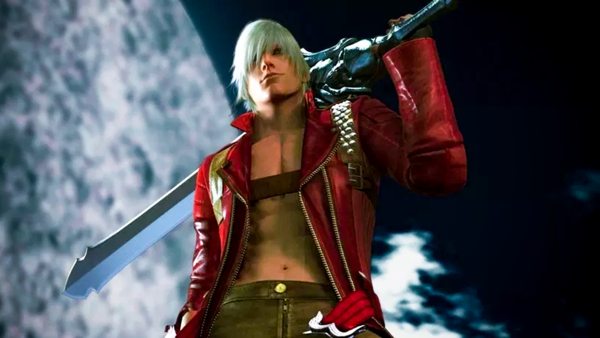
With the original Devil May Cry, Capcom were onto a winner. Not only did they manage to pioneer a new brand of fast paced, tough-as-nails action gameplay, but they did it while also creating an instantly iconic demon hunter protagonist in Dante.
He didn't say much in game, but his cocky attitude in cutscenes and ridiculously over-the-top wardrobe made him instantly appealing, full of personality and intrigue. Fans wanted to know more about him, and more importantly, spend more time with him, a desire which bit them in the ass when DmC 2 came around.
On the surface, this game looked like a sequel to Devil May Cry, but its soul had clearly been sucked out. The version of the character here was assassinated completely, being little more than a silent, emotionless husk. At times it felt like you were playing a robot wearing Dante's skin. The charm had evaporated.
Thankfully, the third game was essentially an apology for the first sequel, and it brought Dante back better than ever. Being a prequel, this incarnation was younger and even more cocksure, able to pull off any of the theatrical feats the developers could dream up.
While this would be the last time we saw young Dante, the threequel finally solidified his personality (bar one controversial reboot).
6. Raiden - Metal Gear Solid 4

Metal Gear Solid 2's Raiden was an interesting experiment. Some would say he was a cruel trick, but let's be generous for a second. Even though he was the main playable character, he wasn't mentioned in any of the pre-release promotional material, all of which showed series staple Solid Snake sneaking around and snapping necks.
When fans finally got their hands on the game though, they realised all the footage they'd seen had been doctored. Snake was playable for the introductory prologue, but was swapped out for this rookie without warning as soon as the meat of the story kicked into gear.
Needless to say, fans were not happy. It wasn't just that they'd been bamboozled, it was the fact that Raiden was purposefully inept and annoying, a boy scout without even a hint of gruffness. He didn't even really have an identity of his own - acting as more of a cypher for the player than a real character.
Potentially out of spite, director Hideo Kojima brought the character back two games later in a supporting role, and transformed him into the most badass member of the cast. No longer a personality-free Snake imitator, he was now an unstoppable cyborg killing machine chopping up mini Metal Gears with knives wedged between his feet.
In 2002, if you told MGS fans Raiden would get his own spin-off, they'd have revolted. After MGS 4, they lapped it up.
5. Lara Croft - Rise Of The Tomb Raider

The new version of Tomb Raider never capitalised on its reinvigorating reboot, which did a stellar job of reshaping the classic franchise for modern audiences. That game did almost everything right, boasting a grittier story, more intense combat, and contemporary traversal gameplay - but it didn't quite nail its hero.
This version of Lara Croft was much more relatable than her uber-posh, uber-moralistic predecessor, but the issue was the developers seemed obsessed with defining her character through punishment. The problem wasn't that Tomb Raider shouldn't be a violent, R-rated franchise, it's that repeated bodily punishment ended up being a lazy way for the writers to define Lara as a "strong female character".
This opinion only worsened when dodgy comments from the developers were brought to light, with designers describing how Lara would be defined through experiences of kidnapping and attempted rape. Portraying sexual assault in media isn't inherently bad, but the general consensus was that these themes weren't included for the right reasons, with the devs explaining they wanted the player to "want to protect her" rather than explore the effects of these horrific actions in the narrative.
Thankfully, the next two games moved away from this idea, and instead gave Lara far more agency in her own story. She was no longer simply a reactionary hero trying to survive constant abuse, but a strong character with her own motivations and shortcomings.
Fans no longer wanted to protect her, they wanted to be her.
4. J.D. Fenix - Gears Of War 5

When Gears of War returned for a fourth instalment set decades after the original trilogy, it kind of made sense that the new developers would want to introduce some new blood to compliment the new threat. Of course, it wouldn't have made sense to cut ties with the established canon completely, so they came up with a compromise: keeping the old guard around in supporting roles while putting players in the shoes of their children.
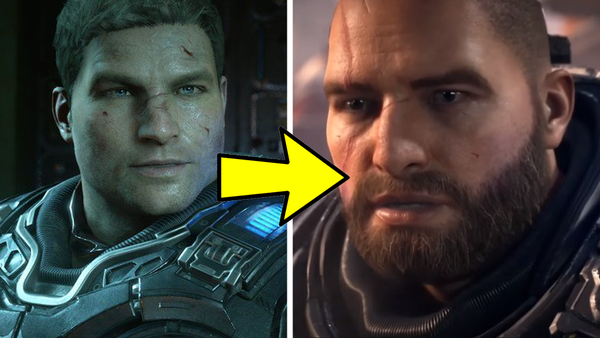
Gears 4's new protagonist was J.D. Fenix, son of Marcus, but sadly he turned out to be the most boring character in his own game. The dude was incredibly generic, devoid of any real depth, and any friction he did have with other characters made him appear like little more than a petulant kid.
He just looked uninspired as well - at least Marcus had that killer soul patch.
When crafting the sequel, the devs took the criticism on board, and perhaps oversteered too much to compensate. For one, J.D. was now out of the main protagonist role in favour of Kate, but he was also was given a real, compelling reason to be mopey. His story revolved around him living up to the legacy of his father, and the reckless consequences and collateral damage that came from prioritising that during battle.
Oh, and he grew a sick beard as well, which admittedly trumped the old soul patch.
He was so reinvigorated, fans then got annoyed about not being able to play as him this time around. Sometimes you just can't win.
3. Kratos - God Of War

For a while, God of War was proof that video game stories didn't need to be that deep to still be fun. In this series, players were put in control of meathead Kratos, told that their OTT killing was justified as revenge for his dead family, and then encouraged to be a hulking rage monster/mad shagger.
For the first two games, that worked, but the third release broke the balance by essentially transforming Kratos into a caricature of himself. The devs at once tried to make the story more emotional and layered in the cutscenes, but in the gameplay let the God of War literally destroy an entire civilisation and use the deaths of innocents to solve puzzles. It was jarring, and felt like the kind of juvenile schlock onlookers had pitched the series as being previously.
After that game jumped into the sun, nobody at Sony had faith that Kratos could carry the series forward. Other first-party studios were focusing on crafting nuanced and compelling stories with relatable human characters at the forefront, and this Greek God was seen as a relic of a bygone era.
It took Cory Barlog to go out on a limb and convince the publisher that the anti-hero could be more than a cartoon character, and with 2018's sequel not only made Kratos complex and compelling, but even retroactively gave more weight to the brainless action of the third game. No small feat.
2. Ghost - Destiny

For the most part, the changes to characters on this list have always been after the fact, either between sequels or reboots, but the pushback against Destiny's Ghost was so loud that developers Bungie couldn't wait until Destiny 2 to make a change.
While there was a lot of problems with their game at launch, the dialogue spouted by this A.I. companion - and more pressingly Peter Dinklage's delivery of said dialogue - became a memeable thing for disgruntled players to latch onto and point towards to convey how botched the project was.
Even if you didn't play Destiny, you'll have no doubt witnessed the "that wizard came from the moon!" clip that went viral, thanks in part to Dinklage's performance, which was as flat as the final season of Game of Thrones.
Rather than admit defeat straight away (well, apart from removing that viral line, anyway), the developers focused on punching up the core of Destiny first. Only after the gameplay was in a better state did they return to Ghost, and instead of trying to improve what they had, they simply cut ties with the original version.
Removing Dinklage's performance, they brought in esteemed voice actor Nolan North to re-record the dialogue in its entirety, with a couple of rewrites here and there. The lines themselves still weren't perfect, but North's delivery made the character so much more bearable, and actually gave the mechanical sidekick a personality.
1. Deacon Saint John - Days Gone

Their first major console release in a while, Sony Bend's Days Gone wasn't easy to put together, and went through a number of high-profile delays that ultimately gave the studio the time it needed to respond to the worries players had before launch.
First and foremost was lead character Deacon St John who, prior to release, looked as bland as unbuttered toast. The industry isn't starving for gruff, white anti-heroes with a heart of gold (hell, Sony alone isn't starving for gruff, white anti-heroes with a heart of gold), and the only thing that seemed to set Deacon apart was his bordering-on-fetishistic love of his motorcycle.
It wasn't just critics of a few trailers left unimpressed either, but apparently the people actually playtesting the game. The general response Sony Bend received was that Deacon was too much of a d**k, and players didn't enjoy spending 10 hours with him before his humanity started shining back through.
As a result, his character was softened and given more justification for why he was so disconnected with humanity.
That's probably for the best as well, as Deacon's arc was a major highlight of the eventual release. Apart from the constant, mad mutterings to himself anyway. I still don't know what they were about.