7 Popular Video Games That Ruined Everything
GTA V unintentionally killed the Rockstar you love.
The current video game industry very much has a problem with scale, focus, hype and release.
Where the 2000s were a near-perfect nexus of ideas, budgets and top-tier game expectations being as one - helping the most popular console of all time, the PS2, showcase hundreds of beloved titles - that approach has all but gone away.
While it's not a problem endemic to gaming (we're seeing runaway corporate influence force endless sequels or remakes in Hollywood too), gaming has absolutely settled into a routine of remaking the past, with very few genuinely new ideas greenlit outside the indie space.
Even ex-Sony boss Shawn Layden has commented on this multiple times, saying that personal favourites like Vib Ribbon or Parappa the Rapper cannot exist in a world where the average title costs millions of dollars, and takes multiple years to turn around.
It's one hell of a spot for the world's most lucrative entertainment industry to be in, and we can look to a select number of trailblazers that have been unnaturally elongated or copycatted, as part of the problem.
7. Assassin's Creed
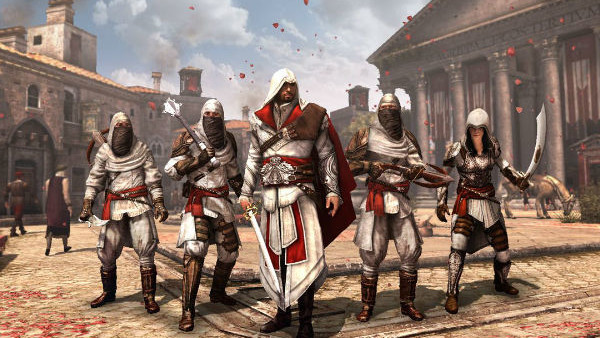
It comes to something when a franchise identity has been so stretched and forced to fit a variety of moulds, it's literally changed genre entirely while maintaining a brand name, just to keep up with trends.
Because Assassin's Creed started with a lead creative mind Patrice Desilets backing what was sketched out to be a trilogy of titles, and a wider view to six potential games. Voice of Desmond, Nolan North, discussed this in 2015, saying the plan was having Desmond revisit various ancestors' memories, learning all their respective skillsets until at the close of the series we'd be in the modern day, with him now a master assassin, capable of anything.
You can feel that plan coming together across the first few games... until Ubisoft decided they'd rather make more money. Various other studios were put to work on Assassin's Creed sequels and spin-offs, leaving Desilets to either get with the program or find somewhere else to work.
Patrice promptly left Ubisoft, and the overwhelming success of Assassin's Creed lead to Desmond being killed, the original plan being scrapped as complete tire fire releases like Assassin's Creed Unity "had" to be made.
Today, Assassin's Creed is a nebulous open-world loot-snatching action RPG... and so's the vast majority of the competition because of it. It's totally solid and serviceable, but the distance from shadow-slinking Altair and Ezio to viking longboats and pillages as Eivor is kinda hilarious.
Even right now Ubisoft are planning "Assassin's Creed Infinity", a live-service continuation of the IP that will see even more campaigns, characters and time-bending plot revelations, for as long as they can possibly milk the footnotes of that original blueprint.
6. Call Of Duty: Modern Warfare (2007)

As strange as it'll sound to younger readers, there was a time without Call of Duty.
Even before Modern Warfare when the IP was going up against Medal of Honor across the early 2000s, it wasn't "Call of Duty" as we now know it.
That changed with 2007's Modern Warfare, a title that after three main instalments prior, shifted its setting to the modern day, twinned it with one of the best FPS models ever made, and completely overhauled the industry.
Call of Duty wasn't just an overnight sensation. It fundamentally upended the way we control first-person shooters; the way we think about unlocks in an online space; the very pace of play that stood it in direct opposition to the more experimental and overblown likes of Halo.
With such a meteoric success crossing over into the 2010s, we've seen Activision force another Call of Duty every single year since 2007. COD: Ghosts was a notably flat release, and as the series lost key creatives Vince Zampella and Jason West to Titanfall, still the IP survived.
Everyone remembers the terribly received combo of Black Ops III and Infinite Warfare, but as developer schedules became even messier, teams were ditched and deadlines prioritised as Black Ops 4 ditched its campaign entirely.
2019 saw a complete lap of the franchise. Modern Warfare's soft reboot became the crown jewel yet again, but thanks to the annual model of release, Black Ops following a year later barely caught on, thoroughly cannibalised sales-wise as Activision insist on competing with themselves.
5. FIFA (Ultimate Team)

The game and mode combo that completely changed EA's lookout on the industry, and makes the Lord of the Rings, Simpsons and James Bond-era of the 2000s look like a spec in the rear-view mirror.
FIFA's Ultimate Team would become the mode EA would try to cram into everything.
Starting back on UEFA Champion's League before moving into FIFA at the start of the 2010s, Ultimate Team's reach, microtransactions and football celebrity star power resulted in astronomical sales figures.
The sorts of sales figures any executive literally just watching the numbers go up would then try to apply to everything, and in EA's case that meant the Star Wars IP.
With former Legacy of Kain and Uncharted creator Amy Hennig being told her idea for a Star Wars game needed an Ultimate Team-style game mechanic, it came alongside Star Wars Battlefront 2 being utterly riddled with RNG and exploitative money grinds. Hennig promptly left EA and we managed to get ONE decent single-player Star Wars title - Jedi Fallen Order - in the entire EA run.
Meanwhile, four full game ideas were scrapped as the utterly forgettable Battlefield Hardline had EA taking developers away from in-progress single player stories, to get a game with microtransactions and lootboxes over the finish line.
Today, EA seem to have learnt their lesson and the likes of Knockout City, Josef Fares' work and Skate's revival show the worst of it has passed, but there's no way in hell they're abandoning this framework for good.
4. Destiny
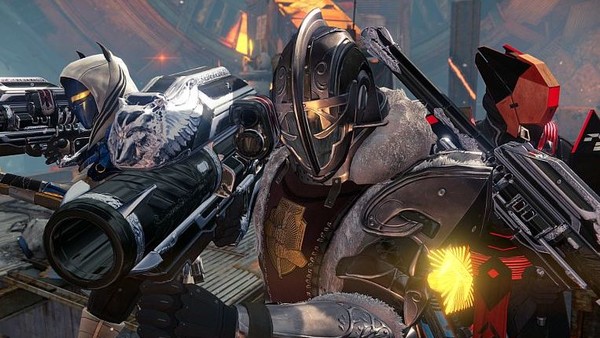
Bungie's meld of simplistic MMO quest design and character customisation with the console-born, satisfying shooting of Halo gave us something they'd nail far better in Destiny 2, but the industry has learned ALL the wrong lessons from the whole ordeal.
What was supposed to be a "10 year plan" of assumedly consumer-respecting content packs - story, weapons etc - turned into "what's the least we can get away with charging for", every single time.
The reason was largely down to original Destiny's development being an absolute mess, the project being restarted as all story was thrown out months before launch, giving us a mega slow content release schedule that others then aimed directly at.
Scores of publishers to this day attempt four-person squad shooters with loot components and a reliance on lore over story, the idea being to make something worth full price over time.
Even Bungie themselves would get embroiled in controversy over ostensibly charging £40 for dance emotes in 2015 - them being the only "new content" attached to The Taken King expansion - but such was now the way of segmenting formerly full titles to monetise content over time.
Across the eighth gen we saw countless top-tier titles try and "make a Destiny", only to flop and fail to varying degrees. Ubisoft stepped up with The Division, a solid enough shooter that feels utterly pointless over time, and Bioware tried with Anthem, another vacuous stitching together of "bankable elements" that couldn't produce a coherent whole.
Square Enix tried in 2020 with the abominable Avengers title, something that would've literally sank the entire company if not for Final Fantasy VII Remake recouping enough sales to keep them afloat.
3. Overwatch

For a time, Overwatch was king. The instant conversion of anyone going from zero knowledge of the IP to all-out character-worshipping convert happened with just one look at any one of Blizzard's super sexy superheroes.
Then... we all burnt out. Too many roster changes, balance tweaks - honestly it's tough to say exactly what it was across the last few years before Blizzard as a company name became an utter joke, but Overwatch was here... and then it was not.
And yet, its outright domination of this space - something that killed everything from Battleborn to Lawbreakers, Gigantic to XDefiant - meant there's a notable lethargy with anything resembling "hero shooter" mechanics.
Blizzard themselves can barely go a few weeks supporting any of their key franchises with any degree of consistency, but the post-Overwatch burnout - considering it's more a game we talk about than play - is real.
2. Fortnite

The game that stole PUBG's lunch and presented it as its own. Epic Games literally stating they are "huge fans of PlayerUnknown's Battlegrounds", then proceeding to spin off from Fortnite's main horde mode into a battle royale for consoles, changed everything, even Epic themselves.
Using the astonishing revenue from such a runaway success, they created the Epic Games Store, rivalling Steam and attracting a LOT of brand tie-in deals that royally peed off the Valve faithful.
As for Fortnite itself though, every last one of the competition wants a piece of the pie, despite the reality that Fortnite is another Overwatch, or another Minecraft.
People who play these titles ONLY play these titles. The repeat attempts to cash in on cutesy, cartoony art styles like we've seen in everything from Hyper Scape to Rocket Arena and XDefiant, only results in turned up noses and people walking the other way.
There can only be one Fortnite. It is absolutely everywhere, bending legendary identifiable IP to its house style, consuming everything in its path and to this day, showing no signs of stopping.
1. Grand Theft Auto V & GTA Online

Can you remember a time when Rockstar weren't working on GTA Online?
It's almost a decade ago - an entire generation of consoles ago - and something that, as has become the sentiment online, is increasingly ridiculous, being GTA itself certainly didn't start out as an online-only title.
And yet, sales data for GTA V is absolutely ludicrous. Year on year it's only gotten bigger, with 2020 setting records for GTA Online spending, and GTA V as a unit becoming the highest-selling piece of entertainment ever.
$6 BILLION later, Rockstar themselves have only elongated their release schedules and gone all-in on GTA Online. Contrasted to the Rockstar of the 2000s - a company that gave us Smuggler's Run and Midnight Club, plus one-offs like Bully, The Warriors and GTA on home console and portable - Rockstar since 2013 has produced Red Dead Redemption 2, some remakes of the original 3D GTAs... and that's it.
Even the company's upcoming slate includes another version of GTA V on PS5 and Xbox Series consoles, with the loss of head writer Dan Houser pointing to a studio firmly entrenched in repeat business, rather than innovation.