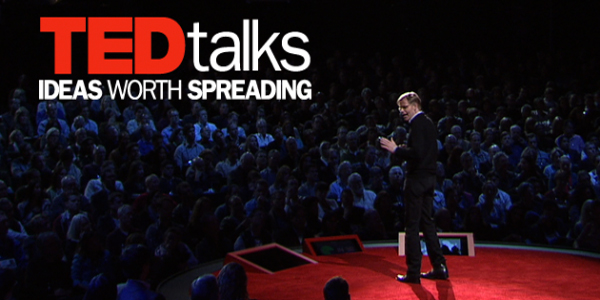
We're all used to hearing about the good and the bad when it comes debating the virtues and cultural significance of video games. Tabloid newspapers often see them as socially damaging or controversial. But for every media storm that drags the industry through the mud, here is a slew of rebuttals and counterarguments that try to alleviate the situation and properly inform people. Many of these arguments are done via gaming blogs and news sites; places where you would expect people who see gaming as a positive cultural phenomenon to voice their concerns. As gamers, we need people who can stand up for the community and educate the somewhat more ignorant segment of the population on this beloved passion. The problem with it though, is people who don't understand (or even outright hate) video games, are not the type of people who tend to gravitate to places like IGN or GameSpot to gain new insights. It's very rare that video game opinion and analysis is conducted in a more impartial way. Where there to be such a haven, the industry would be seen perhaps in a more fair light as well-educated individuals, industry professionals and respected academics share their thoughts and findings in an informed way. Fortunately we have TED Talks, a series of educational videos that cover a range of topics, including science, technology, philosophy, maths and business. If you know someone who needs a little enlightenment, link them to this short list we've compiled of some of the talks that aim to show video games in a more positive way.
5. David Perry: Are Games Better Than Life?
https://www.youtube.com/watch?v=mfv_hOFT1S4 David Perry is a veteran in the games industry, having been responsible for a raft of classic titles, including Earthworm Jim. While it might seem a little biased to have someone who works with video games to be talking about them in an impartial way, it's important to remember that the people who are going to have a better perception of the industry, are the ones who are on the inside. In this video from 2006, Perry takes us on a brief journey through the history of game graphics. He also shows a list of statistics that are perhaps well-known amongst many people reading this, but will be a surprise to non-gamers (such as the average age of a gamer being 30, and only 15% of games at the time having any violence in them). Perry shows us that the technology used in the creation of video games is something that is on the rise. It can be used as a force for good by giving young people a new avenue to explore and can extol the emotional connections many people have with the technology. Are video games better than life? If anything, they are an extension of it.
4. Gabe Zichermann: How Games Make Kids Smarter
https://www.youtube.com/watch?v=O2N-5maKZ9Q Beginning his talk by saying that Where In The World Is Carmen Sandiego? is the greatest game ever, Gabe Zichermann states that it was the last time parents, children and teachers agreed that it was a great title. Bear in mind the game was released in mid 1980's. He then goes on to explain how his love of playing games as a child moulded him into the successful author he is today. The video explains how research over the years has lead to children being more intelligent, citing a multitude of skills learned in video games. For example, he lists the simultaneous tasks players of World Of Warcraft have to cope with while playing, such as hand-eye coordination, maintaining conversations via voice chat, dealing with distractions from parents etc. He explains the notion of gamification; how people (including children) solve real world problems using technology that incorporates game mechanics, such as a speed camera that rewards people who go under the limit. Zicherman then passionately ends his talk by encouraging current generations to stop fighting video game progression and to become involved with them along with their kids.
3. Daphne Bavelier: Your Brain On Video Games
https://www.youtube.com/watch?v=FktsFcooIG8 The debate on how video games affect the human mind is a constant and research into the science behind it is huge in number. Neuroscientist Daphne Bavelier understands that video games are such a huge part of modern culture, it's pointless to ignore them any longer. However, she acknowledges that binging on video games (or indeed any vice) is not healthy for an individual, but it does have the capacity to assist in learning and mental focus. When people talk about games being beneficial to the mind, most would picture bland, simple titles that have 100% interest in helping users learn and nothing else. Bavelier argues that even games such as Call Of Duty can have positive affects on our behaviour. The idea is that attention can actually be improved by playing popular video games on a regular basis (remember, not obsessively). Tests are conducted in laboratory conditions and the results seem to speak for themselves. Vision and focus are shown to increase as players subject themselves to an arbitrary amount of time playing, and skills in multitasking appear to improve as well.
2. Philip Rosedale: Life In Second Life
https://www.youtube.com/watch?v=lHXXsEtE3b4 If you're unfamiliar with it, Second Life is an online multiplayer game where players can create an avatar and live out a separate, virtual existence. If this sounds like a sad investment of time, remember that there are millions of subscribers to the hugely popular World Of Warcraft. Many people spend hours of their time leading second lives concurrent with their own real life, usually as a form of escapism or leisurely recreation. Philip Rosedale is the creator of Second Life and in his talk, he tells us how its inception allowed him to unleash his creative potential. How is living in a fake universe away from your own life a positive outlook for video games? Maybe it's not, but listen to the way Rosedale gives his talk; he speaks enthusiastically about how humans cultivate the idea of going to a new world and starting again, using space exploration as a childhood dream many of us had (or have) as an example. Whether you're a fan of the game or not, the video shows the passion creative people in the industry truly have for their product. People can scoff at the whole concept, but games are an amazing outlet for people who have a talent that they want to show the world. That's pretty positive in itself.
1. Jane McGonigal: Gaming Can Make A Better World
https://www.youtube.com/watch?v=dE1DuBesGYM Back in 2010, statistics indicated that the entire population of Earth spent around 3 billion hours a week playing video games online. But can they be used to help solve global issues? Game designer Jane McGonigal thinks so and believes that although 3 billion hours sounds like a lot of time to be playing video games, it's not nearly enough for solving world issues. The video aims to show how gaming is actually a necessary part of society and, in fact, can help motivate us into doing good in the world. McGonigal goes on to say that many games involve collaborative tasks where players must work together to overcome problems. It utilises trust between characters and sets people goals that are tailored to their skill level, rather than being too difficult to attain. How does this translate into the real world? By making us, as a species, more cooperative with each other. As more and more people become gaming 'masters', we learn to collaborate better and use our skills to help improve the world. Video games, particularly online, foster teamwork and positive feedback that rewards players, making them more motivated in the real world. Did you enjoy this article? Share your thoughts below in the comments thread, and remember to check out our articles on Video Game Sexism and Video Game Violence.