20 Recent Video Games That Were Sent Out To Die
These games just didn't stand a chance.

Gaming is perhaps the most unforgiving of all the art forms where business is concerned, because developers can spend years and years on a game, receive great reviews for it, and still fail to make money because of something entirely outside their control.
All the same, sometimes the writing is very obviously on the wall that a game is being sent out to die.
Perhaps the developer or publisher knows they've got a big, fat dud on their hands and does only the bare minimum to promote it, or maybe the entire project has fundamentally misjudged the gaming market from the jump.
Whatever the reason, these 20 recent video games all ended up flopping and it was an outcome which many, many observers saw coming.
Even though a good number of these games had clear potential, from the concept to the marketing and everything else in-between, the stars unfortunately aligned for them to falter commercially.
In some cases it's simply a regrettable bust for a studio that could stomach the loss, though in many instances it unfortunately led to major layoffs...
20. Highguard
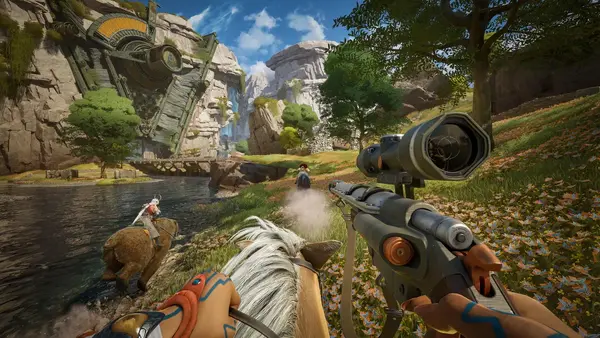
Let's kick this list off with gaming's most recent high-profile flop - Highguard.
Wildlight Entertainment's free-to-play hero shooter turned a lot of heads when it was unexpectedly announced at the very end of last year's Game Awards.
With such a slot typically being reserved for megaton reveals in name franchises, it caught many by surprise, with Game Awards founder Geoff Keighley later revealing that Wildlight didn't pay for the slot, but rather he chose to showcase the game out of his own desire to support it.
Even with the game set to release just six weeks after the Game Awards, Wildlight stayed radio silent until three days before launch, when they announced a gameplay showcase to release on launch day.
It was a bizarre marketing strategy which puzzled many, with increasing speculation that Wildlight simply bit off more than they could chew with the project.
Highguard ultimately achieved almost 100,000 concurrent Steam players on launch day, though within a week it shed 90% of that figure amid wildly mixed reviews from critics and players alike.
Within a month, Highguard had lost 99% of its launch player count, but by this point the game's backer Tencent had already withdrawn funding, resulting in the majority of the studio's staff being laid off.
This was the final nail in the coffin, as Highguard was shut down on March 12th, a mere 45 days after launch.
And like that, it joined the pile of short-lived live-service games many predicted would flop the moment they were revealed.
19. God of War Sons of Sparta
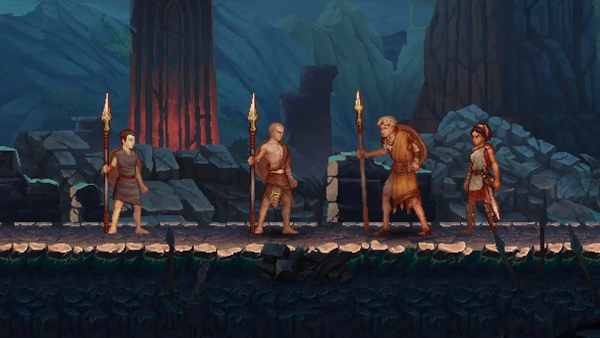
God of War Sons of Sparta is a Metroidvania prequel to the hit action-adventure franchise, which was announced by Sony during their State of Play presentation back in February before releasing the very same day.
Shadow-dropping is an interesting albeit controversial release strategy, but absolutely not one that worked for Sons of Sparta, largely because the game's reveal simply lacked the wow factor Sony may have been hoping for.
Furthermore, once critics got their hands on it the reviews were wildly mixed, many dismissing it as a generic, shallow Metroidvania with the God of War branding listlessly slapped on it.
And so, Sons of Sparta came and went in the blink of an eye, its utterly unremarkable nature ensuring it vanished from The Conversation in a matter of days.
When you serve up a risky genre-shifting entry into a beloved franchise totally out of nowhere, it needs to be an absolute home run, lest it fall off the face of the Earth in record time like this.
18. Sonic Racing CrossWorlds
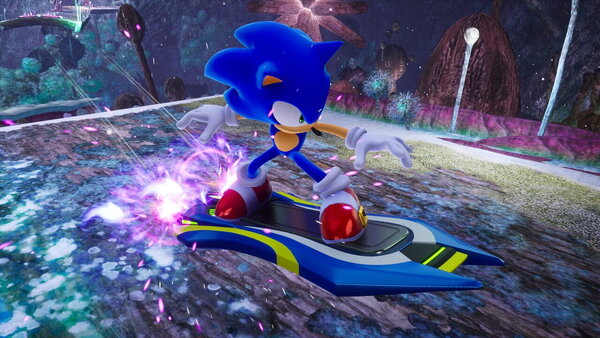
While it was easy to take one look at Sonic Racing CrossWorlds and dismiss as a low-effort Mario Kart knock-off, the racer ultimately released to firmly positive reviews from critics, who praised its addictive gameplay loop and inventive CrossWorld track-switching mechanic.
Despite this and the game selling over a million copies in its release month, Sega revealed in November that CrossWorlds failed to meet their sales expectations, and more recently spoke of their wider struggle to translate critical acclaim into strong sales.
The real problem with Sonic Racing CrossWorlds was obvious to many pre-release, though - the price.
Sega launched the game with a $70 price tag - the very same figure players typically expect to pay for a bigger-budget AAA blockbuster nowadays.
To all but the Sonic die-hards, the content on offer simply didn't justify the asking price, with many feeling that $40-50 would've been more appropriate.
And so, in an especially budget-conscious era for gaming where players have so many more affordable options at their disposal, Sega didn't give Sonic Racing CrossWorlds much of a chance to succeed.
17. The Outer Worlds 2
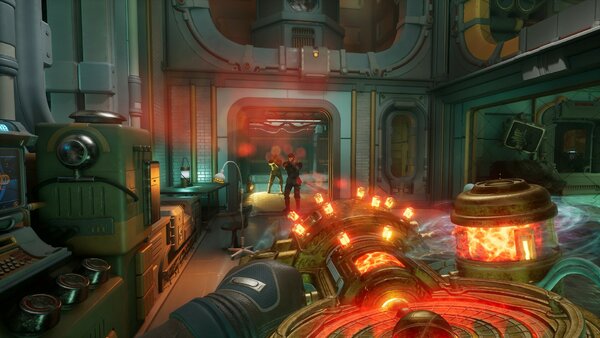
Action-RPG sequel The Outer Worlds 2 was one of Xbox Game Studios' biggest releases last year, and though many critics considered it a modest improvement over the first, it simply failed to make a dent with players en masse.
Though Xbox marketed the game extensively, there was enormous controversy over their initial decision to charge $80 for the game, and even though they later backtracked due to the overwhelming backlash, the PR damage was already done.
It also didn't help that The Outer Worlds 2 launched in late October, where it faced stiff competition from buzzier titles like Dispatch, ARC Raiders, and Call of Duty: Black Ops 7.
By January, reports emerged that the game had failed to sell a million units within three months of launch, despite the original game selling roughly 2 million copies in the same period.
This was seemingly confirmed in February, when developer Obsidian flat-out stated that The Outer Worlds 2 underperformed, enough that there are no plans to develop a third game in the series.
It's a sad outcome for a solidly entertaining action-RPG from a tremendously talented developer, but also one that many observers saw coming.
16. The Rogue Prince of Persia
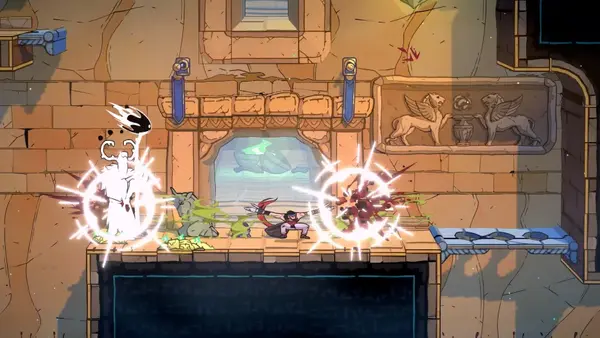
The Rogue Prince of Persia is a roguelike entry into the Prince of Persia franchise and launched in early access in May 2024.
The first big issue with the game was immediately apparent, given that it landed just three weeks after the release of the far more high-profile roguelike Hades II, whose own early access launch basically sucked all the oxygen out of the room.
Consequently The Rogue Prince of Persia peaked at less than 1,000 concurrent Steam players on launch, compared to Hades II crossing the 100,000 mark on release week.
This soft launch basically hobbled the game from the jump, and even when the 1.0 version released last August, it barely cracked 500 concurrent Steam players.
Despite being well-received by critics, the combined sales failure of both this and the series' previous Metroidvania spin-off, Prince of Persia: The Lost Crown, suggest that mainstream fans of the series are really only interested in the IP as a more traditional action-adventure puzzle-platformer.
15. Vampire: The Masquerade - Bloodlines 2

Though many wanted Vampire: The Masquerade - Bloodlines 2 to be great, pretty much everything pre-release pointed to the game being, at best, a flaming disappointment.
First and foremost, it spent almost an entire decade in development, with original studio Hardsuit Labs being replaced by The Chinese Room in 2021.
Given that The Chinese Room had never made a game of this scale before, many questioned the ability of the team behind more modest, atmospheric games like Dear Esther, Everybody's Gone to the Rapture, and Still Wakes the Deep to deliver a sequel worthy of its beloved predecessor.
After numerous delays, Bloodlines 2 was finally released last October to largely indifferent reviews from critics and fans alike, most of whom found it to be a shallow, janky action-RPG.
And who didn't see this coming, nor that Bloodlines 2 would fail to meet Paradox Interactive's sales projections?
Ultimately the game's poor sales caused Paradox to report operating loss of approximately $28 million for the quarter.
Since the game's release, The Chinese Room's creative director Dan Pinchbeck revealed that the studio knew they had neither the time nor money to produce a worthy Bloodlines sequel, and even asked Paradox to consider removing "Bloodlines 2" from the title, which they refused.
14. Drag x Drive

In their April 2025 presentation focused on the impending Nintendo Switch 2, Nintendo announced Drag x Drive - a new multiplayer sports game centered around 3v3 wheelchair basketball.
The game was primarily intended to function as a showcase for the Joy-Con 2's mouse mode, allowing players to mimic the motion of moving around in a wheelchair.
It was certainly a novel idea and a theoretical win for disability representation in video games, though there was also immediate skepticism over the game's potential to deliver the goods.
For one, many commented that Drag x Drive looked like a shallow tech demo, and given how silent Nintendo was about the game leading up to its release last August, it seemed like they knew it wasn't going to land.
Ultimately Drag x Drive quietly launched to mixed reviews, many criticising its clunky control scheme and lack of content.
Furthermore, the fact that we've heard nothing about the game's sales figures despite it launching for just $20 suggests it was a catastrophic flop, and one which surprised just about nobody.
13. Call of Duty: Black Ops 7

It might seem silly to suggest that any Call of Duty game could possibly be sent out to die, considering both the commercial success of your average entry into the franchise and the mind-boggling amount of money that Activision spends marketing them.
But Black Ops 7 just kept continually throwing up red flags in the months leading up to release.
For one, Activision confirmed that, in an unprecedented move for the franchise, the game was developed by Treyarch and Raven Software at the same time as Black Ops 6.
Though Call of Duty games have traditionally been developed concurrently by separate studios, in this case Treyarch and Raven were making both Black Ops sequels side-by-side - a bold choice which many fans were immediately skeptical of.
But things got much worse on the eve of launch, when reviewers revealed that the campaign couldn't be played offline or even paused, and the game also contained AI-generated art.
This resulted in Black Ops 7 becoming one of the worst-reviewed games in the series and landing the lowest user score in the franchise's history, reflecting its significantly lower sales than Black Ops 6, enough that it was even outsold by competitor Battlefield 6.
Activision sent this thing out into the world with the utmost cynicism that it would be a sales juggernaut regardless of its shadier practises, and while it surely still turned a profit for the publisher, it fell far short of their loftier expectations.
12. Skate
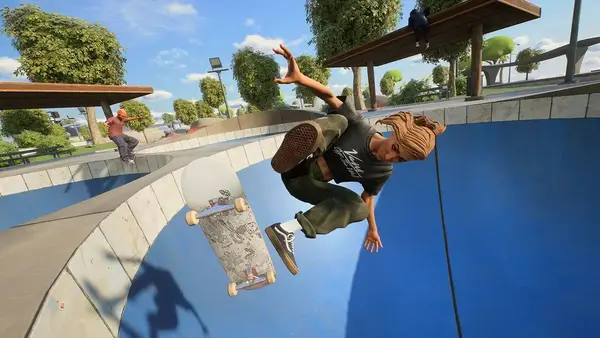
There was huge initial excitement when a fourth entry into the Skate franchise was announced, though it cooled somewhat when EA confirmed it would be a free-to-play title, prompting many fans to skeptically consider how EA of all publishers would monetise it.
Compounding this was the subsequent announcement that Skate would be always-online, meaning there was no way for players to experience the game offline and in the event that EA shut the servers down, Skate would be functionally dead.
Skate finally launched in early access last September, where it received extremely mixed reviews from critics and players alike.
And though it peaked at an impressive 134,000 concurrent players on Steam at launch, that number swiftly dwindled to the extent that it lost 90% of its player-base within two months.
Ultimately Skate just wasn't what most fans of the series wanted - a live service game with microtransactions and little meaningful content that felt like an aggressively corporate shadow of the original trilogy.
11. Mindseye
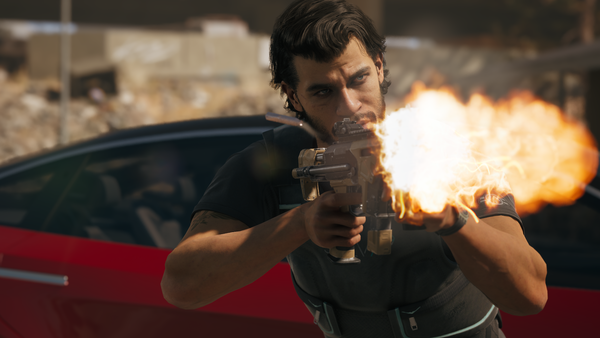
MindsEye is truly one of the most baffling AAA video games of recent years, because while there was some scattered buzz about it being directed by Grand Theft Auto producer Leslie Benzies, publisher IO Interactive only really started marketing the game in earnest a few weeks before launch.
It's a terrible strategy for any AAA game really, and underpinned the wider suspicion that this open-world sci-fi action game was an utter dud destined to incur huge losses.
In addition to this, the CLO and CFO of developer Build a Rocket Boy excited the company a week before release, critics weren't given review copies, and the devs even tried to stop streamers playing the game on its actual release day.
This all added up to a seismic wave of negativity without even factoring in the eventual reviews themselves, which were near-universally negative.
MindsEye peaked at just 3,300 Steam players and shed most of them in a matter of days, prompting the developer to begin the redundancy process mere weeks after the game's launch.
When a AAA game makes virtually no noise until the final month leading up to its release, you know it's absolutely dead in the water.
There's a reason why reputable AAA publishers spend millions of dollars over many months, even years, promoting their blockbuster projects.
10. Yakuza Kiwami 3 & Dark Ties
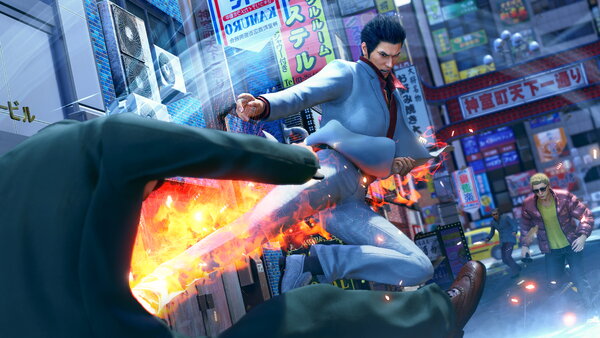
In February, Sega released Yakuza Kiwami 3 & Dark Ties - a remake of Yakuza 3 accompanied by a new spin-off taking place before the events of the main game.
However, the pre-release reception to the game was mixed, with many feeling that Kiwami 3 lacked the polish of the earlier Kiwami remakes.
This only got worse when Kiwami 3 was actually released and fans discovered that more than three-quarters of the Yakuza 3's beloved sub-stories had been removed, with changes also being made to the original story.
All this negativity leading up to launch surely contributed to Yakuza Kiwami 3 & Dark Ties peaking at a mediocre 8,300 players, barely one-third of the numbers pulled in by last year's spin-off Like a Dragon: Pirate Yakuza in Hawaii.
The game's failure to strike a chord with Yakuza fans is also surely in part because the original Yakuza 3 is considerably easier to access than the first two Yakuza games, having been released on PS3 outside of Japan unlike its predecessors.
Plus, with Yakuza 3 being remastered as recently as 2018, some struggled to see the necessity of a remake - especially one which made so many questionable "updates."
9. King of Meat
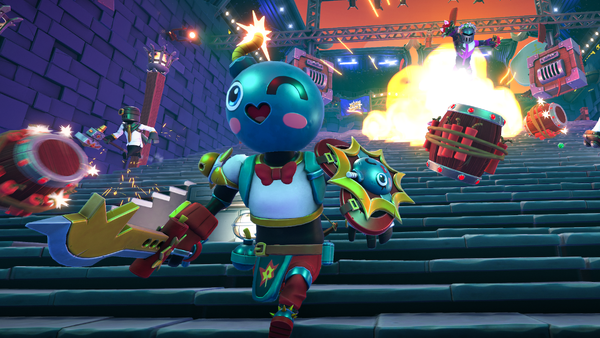
King of Meat is an online co-op dungeon crawler which was released last October, and even with the game being published by Amazon Games and promoted by Mr. Beast, it simply couldn't garner much player interest at all.
Reports later emerged that Amazon expected the game to have 100,000 concurrent players on Steam, only for it to top out at a mere 320 - and that was on a free weekend no less.
Though reviews were fine, that ultimately wasn't enough to move the needle when the co-op multiplayer space is so crowded. King of Meat simply failed to differentiate itself in a market overstuffed with me-too multiplayer games desperate to become the Next Big Thing.
Sadly the game's commercial failure led to layoffs at developer Glowmade last December, and by February the decision was made to shut the game down in April, with refunds being given to the few people who actually bought it.
8. Killing Floor 3
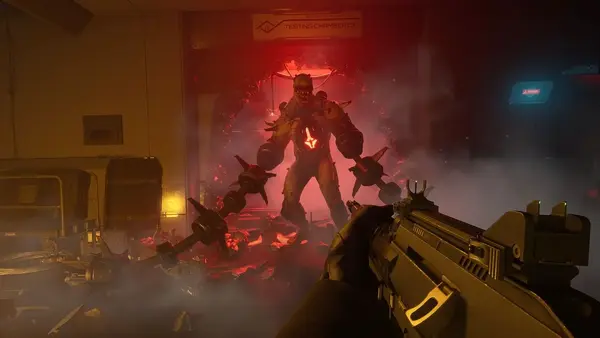
Killing Floor 3 was the long-awaited third entry into the hit multiplayer FPS franchise, but upon launch the game took an absolute pummelling from fans who found it a largely un-worthy follow-up.
Many complained that between the repetitive gameplay, lack of maps, and frustrating weapons customisation system, Killing Floor 3 felt like a soulless follow-up to the beloved second game, and hardly worth the near-decade they'd spent waiting for it.
The most telling vote of no confidence was the massive player exodus that followed, as within less than three weeks of the sequel's release, its concurrent player count on Steam was eclipsed by that of Killing Floor 2.
Nothing points to a game being outright rejected by players than its lunch being eaten by the previous game released almost a full decade earlier.
To rub salt in the wound, there are often as few as 400 people playing Killing Floor 3 on Steam these days, while Killing Floor 2 regularly posts ten-times that figure.
7. To a T
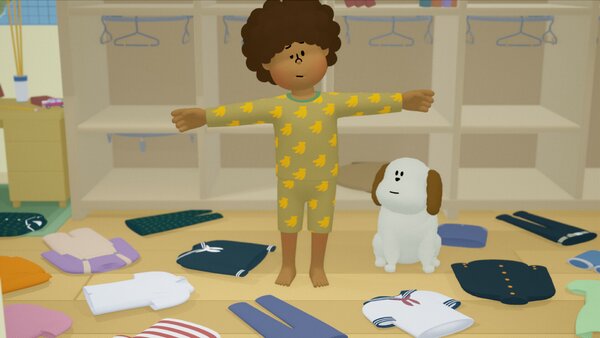
To a T is the latest game from Katamari Damacy creator Keita Takahashi, and centers around the extremely peculiar premise of a teenage boy struggling to get through his day-to-day life while stuck in a T-pose.
The oddball concept ensured that To a T was set to be a niche title, but that hardly stopped Takahashi's Katamari games finding their audience.
But the writing was on the wall that To a T wouldn't enjoy the same warm embrace, given that it was scarcely marketed ahead of its release last May, where it released to decent enough reviews, though they certainly weren't glowing enough to turn many new eyes onto it.
Back in December, Takahashi revealed that the game "didn't sell well" and "wasn't a good fit," in turn forcing him to move back to Japan from San Francisco.
This is game that, for all its flaws, desperately needed smart viral marketing in order to become a word-of-mouth hit, but it ultimately felt like publisher Annapurna Interactive barely marketed it at all.
6. FragPunk
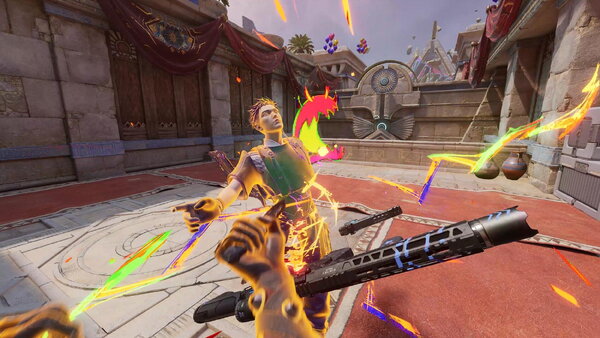
The success of Overwatch quickly led the gaming market to get flooded with a bevy of middling hero shooters, the majority of which died a quick death.
And though the NetEase-published free-to-play 5v5 hero shooter FragPunk launched to a promising 113,000 concurrent players on Steam last March, reviewers and players alike criticised the game's balancing and especially its implementation of microtransactions.
With nine separate in-game currencies, it basically felt like a parody of an overly monetised live-service game, and that likely did the game no favours at all as it tried to retain a player-base.
Within barely a month of launch FragPunk had shed more than 90% of its players, and for the last four months it's basically remained flatlined at barely 2,000 concurrents.
FragPunk was yet another game desperately trying to cash-in on a trend long after said trend had peaked, while failing to do enough to stand out from its competition.
5. Tron: Catalyst
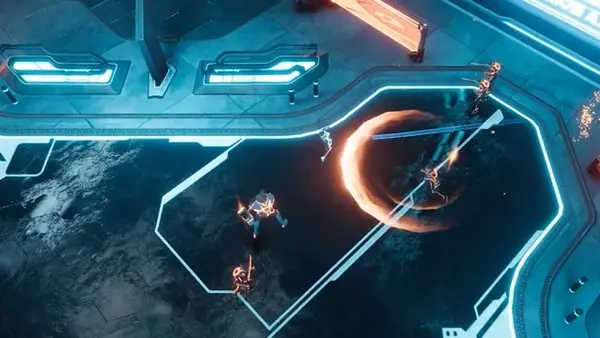
With the Tron franchise having such a passionate fanbase, top-down action adventure game Tron: Catalyst should've basically sold itself.
It certainly didn't hurt that the game was developed by legendary Thomas Was Alone designer Mike Bithell, and had the mighty backing of publisher Devolver Digital, who typically do a stellar job of marketing their games.
But Tron: Catalyst launched near-silently last June, where it peaked at a brutal 56 players on Steam and still has less than 100 reviews on the platform, suggesting absolutely dire sales.
This was likely caused by an unfortunate combination of the Tron brand's fading popularity, the niche nature of the games Bithell develops, and the fact few Tron fans were seemingly in the market for a "AA" top-down action game.
Devastatingly, the game's commercial failure combined with Bithell's struggle to find more work for his team led Bithell Games to lay off the majority of its full-time staff back in August.
4. Bionic Bay
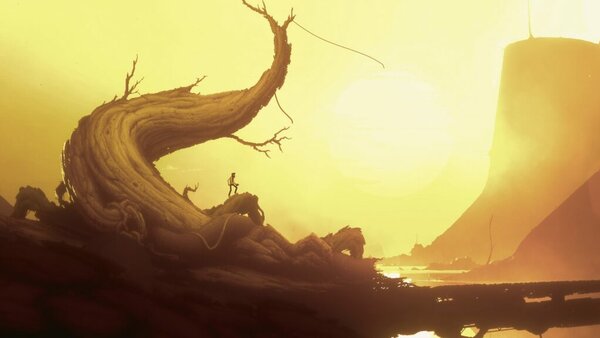
Bionic Bay is a visually stunning physics-based platformer which launched last April, and though it released to enthusiastically positive reviews, it failed to make much of a dent sales-wise, as almost a year after launch it's amassed barely 500 reviews on Steam.
First and foremost, publisher Kepler Interactive barely gave Bionic Bay any sort of a marketing push at all, but perhaps the bigger issue is that while a mind-bending physics platformer might've been an easy hit 10-15 years ago, the market of today is decidedly more crowded with many other similar titles to choose from.
And so, while Bionic Bay is an especially gorgeous and smart platformer, that just wasn't enough to make it stand out, again unaided by marketing that failed to highlight its novel gameplay mechanics.
If Bionic Bay came out during the indie gaming boom of the early 2010s it would've been a sure-fire hit, but releasing in the more brutal, busy market of today, it just couldn't find any breathing room.
3. Lost in Random: The Eternal Die
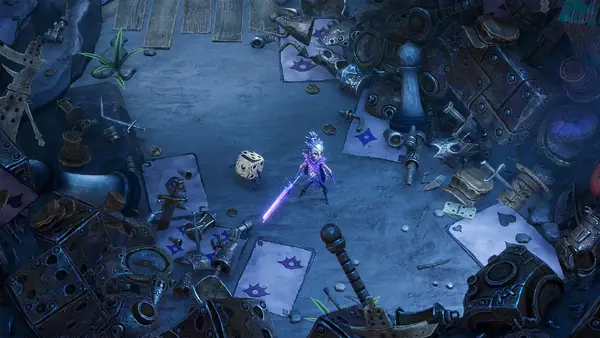
The only game on this list which literally has the word "die" in its title, Lost in Random: The Eternal Die is a spin-off from 2021's well-received action-adventure game Lost in Random.
Its August 2024 reveal came as quite a surprise, all the more so as The Eternal Die wasn't the direct sequel to Lost in Random you might've expected, but instead an isometric roguelike centered around the antagonist of the original game, Queen Aleksandra.
Publisher Thunderful gave The Eternal Die a relatively soft sell leading up to its launch last June, and though the game was generally well-received by critics for being an accessible and artful roguelike, there was also the fact that many fans of the first game simply weren't interested in a roguelike spin-off.
Many simply wanted a direct sequel to the original in the same style, and so deciding to make a genre-shifting spin-off to a game that was already a relatively niche success in its own right was a massive commercial risk.
With how few reviews The Eternal Die has received on Steam, it's clear that the game just didn't catch on.
2. Code Violet
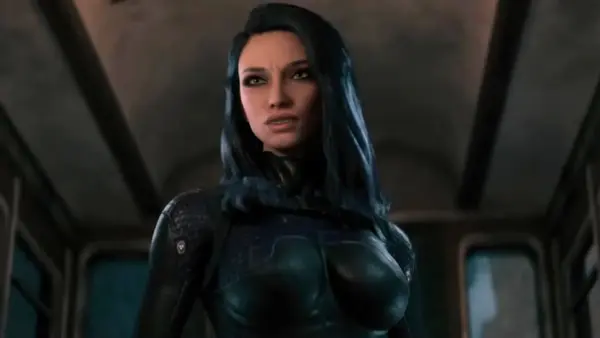
When TeamKill Media announced their new Dino Crisis-inspired action game Code Violet, the writing was already on the wall, given the developer's reputation for putting out buggy rush-job shovelware titles such as Kings of Lorn: The Fall of Ebris, Quantum Error, and Son and Bone.
Code Violet was just the next one up, then, and TeamKill courted extra controversy when they revealed that the game wouldn't get a PC release for fear that it would lead to "vulgar" mods.
Ultimately Code Violet received universal critical scorn when it released back in January, only furthering the assertion that the studio rushes out low-effort slop in the pursuit of a quick buck.
Yet because TeamKill's small dev team produced the game for a paltry budget, they nevertheless reported that it turned a profit, enough that sequel Code UltraViolet was swiftly announced.
Expect it to get shoveled onto the PlayStation Store with the same cynical indifference sometime within the next year-or-so.
1. Horses
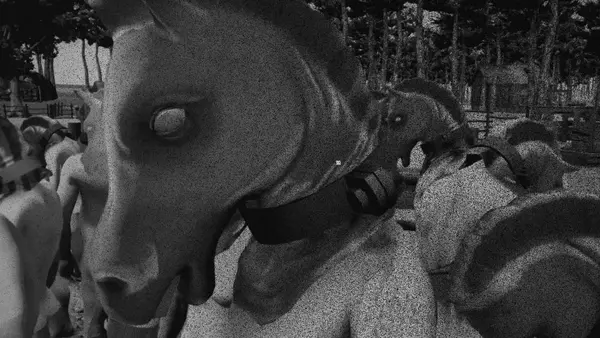
Surreal horror adventure game Horses is an unfortunate example of the trouble that can befall developers who produce transgressive art outside the norm.
Last November, mere weeks before the game's release, developer Santa Ragione announced that Steam had decided not to distribute the game, with Epic Games Store soon enough following suit.
Valve refused to sell Horses amid the vague claim that it appeared to feature sexual content with minors, despite the game featuring no such material.
Even with Santa Ragione's protests, Steam and Epic both upheld the ban, leaving Horses only available on more niche storefronts like GOG.com and itch.io.
Given that Steam has an absolutely colossal share of the PC gaming market, it'd be a massive blow to any game to be banned from the platform, ensuring that Horses launched with limited financial opportunities.
Though the PR surrounding the game's troubled launch was enough for Horses to sell 18,000 copies and recoup the costs of development, Santa Ragione added that it wasn't nearly enough to fund a new project, and so most of the game's developers were forced to take on other jobs elsewhere.
With Steam taking such a reactionary stance to the game's surreal imagery - namely naked adults wearing horse masks - it sadly never stood a chance of being a true success.