20 MORE Pointless Video Game Mechanics Nobody Used
Did anybody bother taking care of the magical creatures in Hogwarts Legacy?

Mechanics are the very rules and systems that dictate what players can and cannot do in a video game. They inform everything from how players get from point A to B, fight enemies, and how they upgrade their heroes. The more complex and ambitious a project is, the more mechanics tend to be involved to make the end product as fun and immersive as possible.
Some mechanics like fully controllable 3D cameras completely changed how games could be played, while innovative titles like What Remains Of Edith Finch and Her Story made us rethink what a game could be. However, not all mechanics are as memorable or integral to their respective title.
No matter how fun or interesting a gameplay idea is, if it doesn't add value to the player's experience it's likely to be completely overlooked or quickly forgotten about.
Even some of the best games in recent years aren't immune to including some mechanics that, despite sounding good on paper, are generally useless during actual gameplay. These mechanics are so pointless that it's possible some players may not even be aware of their existence.
20. Alchemy – Baldur’s Gate 3 (2023)
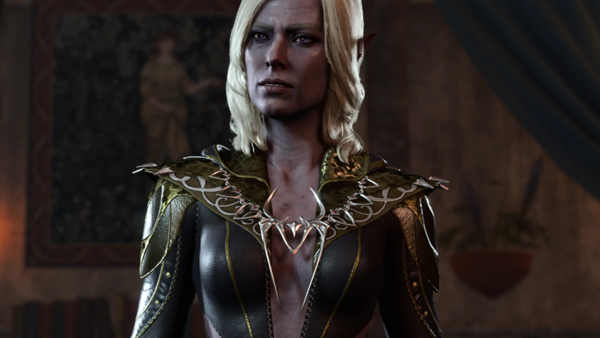
Set within the expansive world of Dungeons & Dragons, Baldur's Gate 3 is an enormous RPG that offers a level of freedom rarely seen in other titles.
Not only did developers Larian Studios deliver an epic adventure overflowing with meaningful choices, but they also gave players one of the most robust character creators in recent years. With various races, classes, and subclasses to pick from, players have complete control over how they choose to play.
A game of this scope requires a multitude of systems and mechanics to accommodate various playstyles, allowing players to face encounters head-on or to come up with more creative solutions. For those wishing to dabble in magic, BG3 also features an alchemy system. However, players will seldom have much use for it.
Although some quests involve brewing a specific concoction, these are always entirely optional steps. It also doesn't help that the game never teaches players how to use this complicated mechanic, meaning that those who want to engage with this system will have a difficult time figuring it out without a guide.
Given the sheer number of potions and elixirs scattered throughout the world, players will never need to open the alchemy menu.
19. Building Outposts - Starfield (2023)

Starfield, the latest RPG from Bethesda, is huge in terms of its scope. Not only did the developers deliver a space-faring odyssey set across a multitude of planets and star systems, but they also included a vast array of different gameplay systems and mechanics that immersed players deeper within its expansive setting.
As captivating as it was to build and customise spaceships and dive into the in-depth skill trees, not every part of this game was as exciting.
One such mechanic was building outposts, which proved to be less beneficial than surveying barren planets.
Building upon similar systems from Fallout 4 and Fallout 76, Starfield lets players construct their own base on any planet they desire. Bethesda included enough options that dedicated players could spend countless hours creating their ideal base to display their most precious gear and talk to crew mates. The issue, though, is that this feature is completely optional and can be ignored entirely for multiple playthroughs without impacting anything.
Throw in a convoluted and wholly unnecessary Cargo Link mechanic the game never teaches players how to use, and fans have even less of a reason to interact with this system.
18. Social Media - Life Is Strange: True Colors (2021)

When tragedy strikes shortly after Alex Chen arrives at the picturesque mining town of Haven Springs, resulting in the death of her brother, Life Is Strange: True Colors follows her as she works to uncover the truth about what happened that night.
As with the other games in this series, True Colors is an emotionally-charged journey driven by difficult choices and filled with memorable characters. To help players gain further insights into the protagonists' thoughts, previous Life Is Strange entries had a journal and text message feature that updated as the story progressed. In addition to these, True Colors also included MyBlock, a social media site where the town's residents discuss local events.
For dedicated fans willing to pore over every comment to soak up as much information as they can, MyBlock was a welcome addition that fleshed out the ensemble of characters. For everyone else, though, this mechanic was quickly dismissed.
With no hidden plot beats or secret revelations tucked away in the timeline, there's nothing on this site that players won't discover by playing the game normally. Every second spent scrolling through this virtual space is time that could be spent actually playing this incredible game.
17. Soap – Elden Ring (2022)

Although its open world design and handful of quality-of-life features make Elden Ring more approachable than FromSoftware's other Soulsborne titles, this acclaimed RPG is just as punishingly brutal as its predecessors.
To assist would-be Elden Lords fight their way through the treacherous Lands Between, the developers provide an assortment of items and abilities to help even the odds. While the likes of Spirit Ashes, Talismans, and Crystal Tears are invaluable tools at the player's disposal, other items can be incredibly niche.
One glaring exception, however, is soap.
According to the item's description, this consumable is "A plant-based soap made from mushroom juice" used to clean "filth and other accumulations on the body". Washing dirt from an armour set may be ideal for players wishing to flaunt their best Fashion Souls outfits online, but this item is largely useless during regular gameplay.
While scrubbing away oil and slime prevents the negative side effects they cause, there are other consumables and incantations that are much better at doing the same job.
Soap may be good for basic hygiene, but it's completely unnecessary for beating Elden Ring and can be safely discarded from players' inventories.
16. Burying Treasure - Sea Of Thieves (2018)

Since its release in 2018, developers Rare have continuously added to their pirate sandbox Sea Of Thieves to bring players exciting new features and content. Notable additions have included Tall Tales, rowboats, ziplines, and massive world events. Within this lengthy list of updates, the ability to bury treasure was added as part of the Season Five update in 2021.
Stashing treasure and marking its location on a map is something that's deeply associated with piracy. Finally being able to do this in-game was a revolutionary departure from only ever digging up loot. Not only could players hide their own plunder from rival crews, but they could also now pin their own maps to notice boards at Outposts for other players to complete.
Despite sounding like an engaging way to play, this turned out to be more of a hassle than it was worth.
Alongside generous sailors having to wait for their posted quests to be completed before they're rewarded, the reward itself is far lower than what they'd get from turning the treasure in themselves. Add in mischievous pirates burying powder kegs or stashing low-value loot in hard-to-reach locations, and it's easy to see why this mechanic is mostly ignored.
15. Companion Apps

The games industry likes to go through different phases every few years. In the late 2000s, for example, every platform implemented their own form of motion controls to compete with the Nintendo Wii. Following that, loot boxes and live service games became just as ubiquitous.
Another trend that tried to get off the ground in the 2010s was companion apps, which began with the release of Xbox SmartGlass in 2012.
Pitched as a revolutionary way for players to seamlessly interact with their games and media, these apps introduced unique new mechanics and features into certain titles. In Dead Rising 3, the app became a phone for NPCs to call players, Assassin's Creed Unity offered a real-time depiction of the game's map, and GTA V had the iFruit app, which was the only way players could train Chop.
In practice, though, dividing attention between two screens made playing games more convoluted than it needed to be without providing any worthwhile benefit to players. It wasn't long before these apps began to be phased out, with Microsoft closing down SmartGlass in 2018.
Almost a decade later, this trend's greatest legacy is the missing or broken features it left behind.
14. Shoe Shining - Mafia II (2010)

There are many reasons why Mafia II is considered to be the best entry in the franchise. In addition to telling a captivating, character-driven story with genuine emotional weight, developer 2K Czech likewise crafted a wonderfully realised world for the story to unfold against.
The New York-inspired Empire Bay was brimming with tiny details that made the setting feel immersive and lived in. Police would pursue players who exceeded the speed limit, cars could run out of fuel, and the city would change dramatically as the decades went on.
Although Empire Bay functioned more as a highly detailed backdrop to the linear narrative, the world was filled with little things for players to discover. One of these inclusions was that Vito could get his shoes shined.
As players explored the city, they could encounter NPCs who enthusiastically offered to polish the protagonist's footwear. For the cost of $1, they'd provide their services while talking to their new customer.
It's an amusing interaction that added an extra layer of authenticity, but there was no reason to ever use it. In addition to providing no in-game benefit, the mechanic didn't even make Vito's shoes look any cleaner.
13. Vivarium - Hogwarts Legacy (2023)

Launching to critical acclaim before becoming one of the best-selling games of all time, Hogwarts Legacy lets players live their ultimate wizarding fantasies. From soaring around on a broomstick to attending various classes, this was the foray into the world of Harry Potter that fans had been dreaming of.
The developers at Avalanche Software went above and beyond to make their vision of Hogwarts feel as immersive as possible by adding tonnes of small details and gameplay mechanics. One of these additions was caring for the many magical creatures that are found throughout the surrounding countryside.
By using the Nab-Sack, players could rescue the lovable critters from poachers before placing them inside a vivarium located within the Room of Requirement. While brushing, feeding, and petting hippogriffs and nifflers in exchange for special crafting materials sounds like a fun and meaningful inclusion, its presence was less valuable than it sounds.
In reality, having to keep returning to the vivarium to collect materials that are already abundant throughout the rest of the game turned what should have been an adorable side activity into tedious busywork. It wasn't long before these animals were left neglected by players.
12. Repair Kits - Indiana Jones And The Great Circle (2024)

Helmed by MachineGames, Indiana Jones And The Great Circle follows the iconic archaeologist as he finds himself in a race against time to acquire mysterious artefacts before they fall into the wrong hands.
Throughout this globe-trotting adventure, players explore forgotten tombs, solve ancient puzzles, and take part in eye-widening set pieces. A large part of the game also involves infiltrating heavily guarded areas, which requires a disguise to do safely.
Whether it's wandering around the Vatican as a priest or posing as an enemy soldier, each disguise comes with its own unique weapon that's useful for stealthily taking down enemies or deploying during a brawl. Like every other melee weapon in the game, these items will break after a certain point. Unlike the standard weapons, though, these can be mended with a repair kit.
However, the game never explains this mechanic to players and instead tucks it away in an awkward part of the inventory. Even if players are able to figure out what repair kits are for, there are more than enough makeshift weapons lying around at any given point that repairing them would be redundant.
Whichever weapon players chose, The Great Circle is an amazing Indiana Jones adventure.
11. Car Washes - Grand Theft Auto V (2013)

Rockstar have continuously proven themselves to be the best at creating video game worlds that are vibrant and fully realised. None have been as impressive as GTA V's Los Santos, which remains as striking today as it was when players first explored it over a decade ago.
From its multitude of side activities to the responsive behaviour of NPCs and the insane attention to detail given to simulating vehicle damage, no other game comes close to achieving what Rockstar accomplished.
When players aren't causing havoc on the streets, they can interact with various car washes located throughout the map to clean their cars for a small fee. While great for keeping that expensive supercar looking pristine, this mechanic only removes dirt from the bodywork. Like in real life, players would have to visit a mechanic to actually repair the extensive damage caused from driving recklessly.
With no functional benefit to driving a clean car, and no story mission requiring players to use a car wash, the game gives no reason to ever engage with this feature. Although it's another one of the many additions that make Los Santos feel so alive, players might not even realise this mechanic exists.
10. Social Stealth – Assassin’s Creed Valhalla (2020)

Ever since Origins shifted the Assassin's Creed franchise into an open-world RPG, the series has leaned more into the action side of its gameplay. And so, the announcement that 2020's Valhalla would reintroduce social stealth into the series for the first time since Syndicate came as welcome news for long-time fans.
Footage in the gameplay overview trailer showing new protagonist Eivor blending in with a group of scholars to slip past guards was reminiscent of classic Assassin's Creed. Its inclusion suggested that stealth would once again be a core part of the experience. In reality, though, this mechanic was far less integral than it seemed.
Although Valhalla featured "Distrust Areas" where enemies would become hostile to Eivor if they were detected, there were only a handful of them located throughout the vast map. Given that stealth is always optional and how quickly Eivor becomes an unstoppable killing machine, fighting enemies head-on was often easier than finding specific spots to hide.
Thankfully, veteran AC fans would be able to experience social stealth properly in the criminally underrated Assassin's Creed Mirage.
9. Binoculars - Dark Souls (2011)
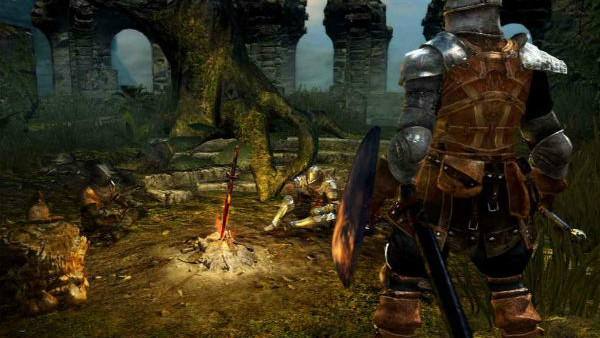
From the moment Dark Souls drops players into the decaying world of Lordran, they're left to fend for themselves as they figure out where to go and how the game's mechanics work. Given the lack of direction that's provided, newcomers will likely spend a large chunk of their time exploring Firelink Shrine, the area they arrive at after completing the tutorial.
Here, players will meet important NPCs in addition to obtaining some useful items to help them on their journey. One of the items that players can find here is the binoculars, which are located on a corpse lying at the edge of a cliff in the graveyard.
This item does exactly as expected and allows players to get a closer look at their surroundings. Being one of the earliest tools players can obtain, it wouldn't be unreasonable to assume that this item is a central mechanic. While skilled players have found ways to use the binoculars to aim at distant enemies, surveying the environment doesn't come with any mechanical advantage during regular play.
A variation of this item has appeared in every Soulsborne game, with each one being as unnecessary as the last.
8. Procedurally Generated Quests - Various Games
The idea of a game having endless content is an exciting one. Not only would it give players a reason to keep returning to their favourite games, but the limitless number of things to do would be incredible value for money. Although some live service titles like Sea Of Thieves and Dead By Daylight have managed to make this concept work with a steady stream of updates, this idea doesn’t always work as well in practice.
The most common way developers implement unlimited content is through procedurally generated quests. Designed to provide players with a constant rotation of challenges to complete, these types of quests have become a common part of modern games. They've appeared in everything from Preston Garvey constantly sending players to help settlements in Fallout 4 to the never-ending list of Bureau Alerts in Control and the bottomless list of optional contracts in Assassin’s Creed Shadows.
Though each of these quests is initially a useful way to acquire resources or earn specific rewards, it doesn’t take long for their constant presence to become distracting interruptions that never leave players alone.
Once players have obtained whatever they need, these quests are ignored throughout the rest of their playtime.
7. Gear - BioShock Infinite (2013)

When private investigator Booker DeWitt is sent to retrieve a girl in the floating steampunk city of Columbia, the pair soon find themselves caught in the midst of a violent uprising while being pursued by the city's fanatical leader.
As the narrative unfolds in brain-bending fashion, players use an arsenal of weapons alongside a variety of supernatural abilities to survive the fast-paced combat. Players can likewise purchase a selection of upgrades for their core stats, weapons, and Vigors. Unlike the previous BioShock games, Infinite implemented a gear system where players could equip four pieces of clothing, each providing their own passive bonuses.
Found in gift boxes scattered throughout the game, each of the base game's 41 pieces of gear bestowed an assortment of buffs that ranged from damage multipliers to giving melee attacks different status effects. Although these kinds of upgrades are common in modern titles, their effects in Infinite were so minuscule that their impact on moment-to-moment gameplay was negligible.
In addition to randomised spawns making it impossible for players to create reliable builds, the first-person perspective meant that they couldn't even see Booker wearing his new outfits.
It really didn't matter if players equipped gear at all.
6. X-Ray Vision - Superman: The New Superman Adventures (1999)

Better known as Superman 64, this Nintendo title is regarded as one of the worst games ever made. With its unwieldy controls, frequent glitches, and its insistence on forcing players to fly through rings, its infamy is well earned.
The plot followed the Man of Steel as he ventured into a virtual reality created by Lex Luthor to save his friends. The levels themselves were a combination of puzzle solving, escort missions, and anticlimactic boss fights, each of which was just as atrocious as the last.
Players could also collect powerups to use a selection of the hero's signature powers. These included super speed, ice breath, and heat vision. While these worked as well as they could in a game as poorly made as this, the X-ray vision power managed to be even worse.
Intended to enable players to locate key items for certain puzzles, this mechanic sounds useful in theory. The problem, however, was that it simply didn't work. The mechanic was completely broken and served no purpose.
A combination of a rushed production and issues with the licensor meant there was no time for the developers to realise their ambitious vision for what this game could have been.
5. Swimming - Cyberpunk 2077 (2020)

Whether it's installing cybernetic augmentations, modifying weapons, or delving into the expansive skill trees, developers CD Projekt RED gave players everything they needed to play Cyberpunk 2077 however they saw fit.
Amongst the enormous list of things that players could do in this title to fulfil their wildest cyberpunk fantasies, they could also swim. While this mechanic has become a standard part of most open-world games, its inclusion here was wholly unnecessary.
With the exception of a standout quest in which players accompany fan-favourite character Judy Álvarez on an intimate diving trip, there are very few opportunities for V to take a dip on their own. Considering that Night City is a sprawling concrete metropolis surrounded by the desert-like Badlands, there's barely any water in the game for swimming to be a viable option.
The near-total absence of swimming was so prominent that the developers would go on to remove the Commando perk (which made players undetectable when swimming) for the massive 2.0 update.
Although not immediately dying when entering water in video games is always a nice inclusion, swimming could have been completely removed from the final product without being missed.
4. Throwing Items - GTA IV (2008)

The first Grand Theft Auto game released on seventh generation consoles, GTA IV marked a huge technological shift from San Andreas. Alongside telling a grittier narrative within a more realistic world, Rockstar also added a plethora of new features and mechanics to bring the franchise into the modern age.
In addition to giving Niko a usable phone and equipping cars with functioning GPS, the developers overhauled the gameplay with a cover system and free-aiming. Another new mechanic for the series was being able to pick up and throw various small objects. These included things like bottles, cans, bricks, and pieces of food.
Players are introduced to this mechanic during the early mission "Bull in a China Shop", in which Niko is strongarmed into collecting protection money for loan shark Vlad. While players can approach this task in a handful of ways, the game directs them to throw a nearby brick through the uncooperative owner's window.
Given this feature's niche purpose and the arsenal of superior weapons players later get access to, there was no need to ever engage with this mechanic again, if players even bothered to use it at all.
3. Wooden Shield - Bloodborne (2015)

Unlike the slow and methodical combat that was required to survive the harshness of Dark Souls, developers FromSoftware took a drastically different approach to the gameplay in Bloodborne. Instead of patiently waiting for an opportunity to attack, this gothic horror encouraged speed and aggression by having players regain lost health with quick counter attacks.
Although this title shared some core elements with the developer's previous genre outings, it demanded a vastly different playstyle than what even the most seasoned veterans were used to. For those desiring something closer to the Dark Souls experience, Bloodborne included a shield. However, its benefits were greatly outweighed by severe drawbacks.
Located in the Cathedral Ward near the start of the game, the Wooden Shield allowed players to block some damage. While this could be helpful in certain situations, it couldn't be upgraded or used to parry attacks. Crucially, though, having the shield equipped meant that players couldn't use their ranged weapon, which put them at a massive disadvantage.
The Wooden Shield is a joke item included by the developers to poke fun at Dark Souls, with its in-game description stating "Shields are nice, but not if they engender passivity."
2. Eavesdrop - Call Of Duty 4: Modern Warfare (2007)

Almost two decades after its release, Call Of Duty 4: Modern Warfare remains one of the most beloved entries in the long-running franchise. Alongside featuring some of the most unforgettable campaign missions in the whole series, its online multiplayer was revolutionary and would go on to form the foundation for the genre.
Its maps were meticulously designed, progression was satisfying, and the moment-to-moment gameplay was exhilarating. It was also the first title in the franchise to introduce perks, which added meaningful twists to loadouts. Most of these perks were incredibly useful. Sleight Of Hand halved reload time, Stopping Power increased bullet damage, and players could even equip a second primary weapon with Overkill.
Not all of them were helpful, though, with Eavesdrop being a notable exception.
Unlocked at level 35, Eavesdrop enabled players to hear voice chat from nearby enemies. While the intention was to let sneaky players learn what their opponents were planning, anyone who played this game will know they'd be more likely to hear someone yelling colourful insults than discussing gameplay tactics.
Eavesdrop was so disliked by the community that it never appeared in future instalments. Unfortunately, it wasn't removed for Modern Warfare's otherwise excellent 2016 remaster.
1. Miles' Invisibility - Marvel's Spider-Man 2 (2023)

The follow-up to one of the best superhero games ever made, Marvel's Spider-Man 2 improved on its predecessor in significant ways. Alongside the new Web Wings making traversing across New York even more exhilarating than before, the character-driven narrative continued to hit in all the right places. Players could now take control of both Peter Parker and Miles Morales, each of whom had their own set of abilities.
Those who previously played Miles' standalone adventure would already be familiar with his powers, with his active camouflage being one of his best. As well as enabling players to quickly escape fights, its in-depth upgrade system made it one of that title's most powerful additions. However, it would undergo a massive downgrade for the sequel.
While the new parry mechanic and symbiote abilities made combat feel punchier, the lack of an upgrade system for Miles' active camouflage meant it wasn't as versatile this time. Moreover, the new Web Line gadget, which let players create their own pathways above enemies, was an easier, faster, and more fun alternative to sneaking up behind enemies on the ground.
Combined with this ability's shorter duration, players weren't given any incentive to use this once-vital mechanic.