20 More Cult Classics Trapped On Old Consoles

As the console generations have progressed, the concept of backwards compatibility has taken more of a backseat. Sure, Xbox and Nintendo allow fans to access some previous console games on their respective storefronts, and you can enjoy a somewhat temperamental stream of some PS3 games on your PS5 (if you’re really desperate), but gone are the days of inserting old discs into your current generation hardware, and it just working.
With this abandonment of older titles comes the many fan favourites that are firmly stuck in the console generations of the past. Our only option, at least on consoles, is to simply wait in hope for more of those nostalgic gems to hit modern hardware.
While we wait, we prepared a second list in celebration of those classics that we’re dying to play on our latest generation of hardware. Here are 20 More Cult Classics Trapped On Old Consoles.
20. Jet Set Radio Future

The early 2000s were awash with creativity and style, and the beloved Jet Set Radio Future was definitely one of the cornerstones of this confident time for gaming.
Released in 2002 on the Xbox, it built upon the foundations seen in its previous entry, Jet Set Radio, bringing a freer, more fluid playground for players to get stuck into and cause mischief. Like the previous entry, players take on the role of a gang member, skating the streets of a cel-shaded Tokyo while spraying graffiti and avoiding rival gangs, as well as the police.
The secret to the affinity that players have for this one lies in its free-flowing movement and memorable cel-shaded aesthetic, representing a more playful version of trick-based roaming compared to similar titles of the time, such as Tony Hawk’s Pro Skater. It fully captured the growing counterculture of the early 2000s too, and encapsulates the nostalgia that many people of a certain age feel for that time period.
It's a shame then that it’s trapped on the original Xbox, which basically nobody owns anymore.
While there’s no news of a port to newer consoles, a new game in the series was announced in 2023, although we haven’t heard much since. A spiritual successor was released in 2024 named Bomb Rush Cyberfunk, and while it doesn’t quite match up to the Jet Set Radio titles, its streamlined tagging system and sprawling city design will surely scratch an itch for fans of the series. If you haven’t checked it out yet, it’s one way to experience this early 2000s slice of nostalgia, while we wait for news of the series’ jump from the original Xbox hardware.
19. Def Jam: Fight For New York
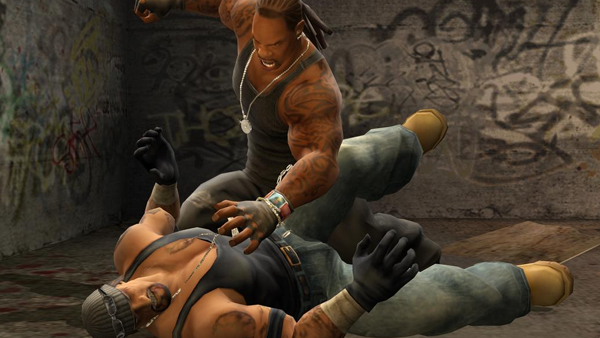
Standing out as one of the most confident and unlikely fusions of hip-hop culture and fighting game design, it’s baffling that we haven’t seen a port of Def Jam: Fight for New York to modern consoles.
Many people bring this one up when thinking about older fighting games, and it’s not hard to see why. The combination of street fighting and everyone’s favourite hip hop icons, such as Snoop Dogg, Ice-T, Ludacris and Sean Paul, is a tantalising prospect that stands the test of time. While the uniqueness of its premise certainly contributes to its cult classic status, it would be considered a gimmick if the gameplay didn’t also hold up, but thankfully this isn’t the case.
The combat experience is excellent, and the story mode lets players carve their own path through the New York Underground, with overall a nice sense of progression to the gameplay. While the game released on Nintendo, PlayStation and Xbox hardware in 2004, sadly it’s impossible to play this one on modern consoles without emulation. Here’s hoping a remaster or even a port makes its way to current generation hardware at some point in the near future.
18. Prince Of Persia: The Sands Of Time

After the recent and very unfortunate cancellation of the Prince of Persia: The Sands of Time remake, the 2003 original is now very much deserving of its place on our list.
Developed by Ubisoft, it remains one of the most beloved action-adventure games of the early 2000s, and arguably better than the other two titles in the trilogy. Famous for its fluid wall-running acrobatics, addictive combat and time-rewinding dagger, the game has aged incredibly well, and blew all of our minds when it was first released.
The Prince’s narration and his evolving partnership with Farah added warmth and personality to a well-realised story, and the Prince himself became a beloved character, primarily because of his depiction in this title. The time-rewinding mechanic was seen as particularly ground-breaking, allowing players to take more risks in their gameplay choices. Instead of a game over screen, players could be more daring, feeling out platforming scenarios in a more carefree manner. This also helped players manage the platforming pitfalls of early 2000s game design, while the mechanic itself is also seen as a memorable piece of innovation due to how seamlessly it integrated into the Prince’s story.
Many players long for a return to this 3D style too, with modern Prince of Persia titles like The Rogue Prince of Persia and The Lost Crown going for a 2D side-scroller aesthetic, harkening back to the series’ original style. Players will have to undertake their own time-rewinding if they’re to play this title today though, as old PlayStation, Xbox and Nintendo consoles are now the only place to experience one of the Prince’s defining adventures.
17. True Crime: Streets Of LA

True Crime: Streets of LA is arguably the better of the two True Crime titles, and one of the most playable GTA clones of its time. While there were many games of the early 2000s pushing for a recreation of Rockstar’s winning formula, the True Crime series stood apart from that series by putting players in charge of enforcing the law, rather than breaking it.
Streets of LA is also memorable for its ambition. Containing a branching narrative, morality system, random events such as street crimes, and detective elements, the game impressed many back in 2003. The game even adapts to the failure of certain missions, with the existence of multiple level outcomes depending on your success in completing objectives. Its depiction of LA itself is very detailed too, with its recognisable neighbourhoods, beaches and highways giving players a more accurate deep dive into the city than GTA San Andreas managed in 2004.
While much of this game’s formula would be vastly improved upon in spiritual successor, Sleeping Dogs (originally conceived as a direct True Crime sequel), True Crime: Streets of LA remains a memorable experiment from the era when open-world games were rapidly evolving. Older GTA games get all the spotlight in terms of older crime dramas, so it’s a shame that we can’t more easily play this charming, ambitious gem of the early 2000s. Fingers crossed, like Sleeping Dogs, we get a definitive edition of the title on more modern consoles, but let’s be honest, it’s unlikely.
16. Afro Samurai

A real cult favourite on the PS3 and Xbox 360, Afro Samurai’s distinctive style captured the attention when it released in 2008. Developed by Bandai Namco and based on the manga and anime of the same name, it follows the titular Afro as he attempts to take revenge on his murdered father. The game is a 3D brawler, focusing on fast-paced gameplay to hook players. The ability to target individual limbs is a notable inclusion for an otherwise simple moveset, with few brawlers including such depth.
The game is also notable for its presentation, showcasing a vibrant cel-shaded visual style deeply reminiscent of the source material. Its blend of Japanese samurai culture and hip-hop influence is identical to the books and anime too, allowing a dedicated fanbase to transition seamlessly into the game. The return of Samuel L Jackson from the anime also adds to this, resulting in a continuity between different mediums and impressive care and attention given to the title by Bandai Namco, in contrast to the many sub-par tie-ins of the 2000s.
Afro Samurai also holds up well today thanks in part to its ageless cel-shaded look, and is well worth playing to this day. Its unique blend of cultures and stylish combat represents a memorable addition to the PS3 and Xbox 360 catalogue, and since the cultural demand for Afro Samurai died out some time ago, we will likely never see a port to modern hardware. If you do still own either console though, this is a vibrant trip back in time that will stick in the mind.
15. The Getaway
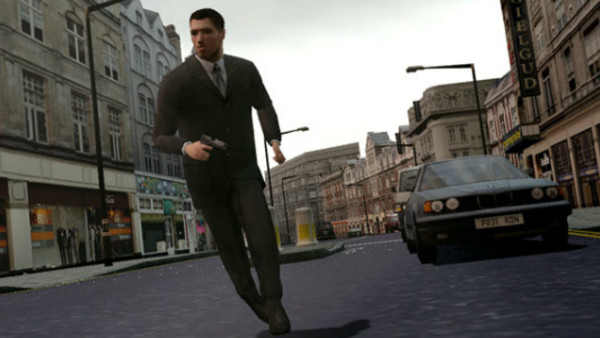
2002’s The Getaway was a lot of people’s first foray into not-GTA, presenting players with an immersive crime story on the PS2. It set itself apart from GTA III, released only the year before, by allowing players to experience both sides of the law in ex-convict Mark Hammond, and police officer Frank Carter, while presenting players with a more grounded, cinematic take on crime drama compared to Rockstar’s more bombastic vision.
Set in a meticulously recreated version of London, The Getaway is still often cited for its attention to detail, with little touches that set the game apart from its contemporaries. Faithfully recreated shops and buildings bring London to life in a way few cities did at the time, with many other settings feeling more generic due to the technological limitations of the early 2000s. Developer Team Soho circumvented these issues by taking over 500,000 reference photographs of London to aid the process of mapping the city in-game, while the game engine was reworked to stream the more intensive details of London’s streets only when the player was close to them, allowing the team to stretch the PS2 hardware further than had been taken before.
Other details such as licensed vehicles, no loading screens, and a minimalist HUD also serve to heighten the immersion for players, and it’s therefore unsurprising that The Getaway is still fondly remembered today. The game was very ambitious for its time, and it is this combined with its relatively unique London setting and strong narrative focus which helped it stand apart. It’s disappointing then, that we probably won’t get a chance to revisit that incredible experience on modern hardware anytime soon, nor will a new generation get to experience an impressive early 2000s example of developer ingenuity and technical flair, which is a real shame.
14. GUN
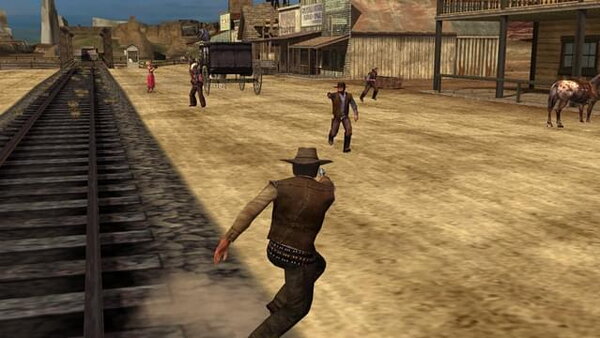
While we now think of Red Dead Redemption 2 as the pinnacle of games set in the wild west, many years prior, there was GUN. Released by Neversoft in 2005, GUN was an ambitious, third-person open-world western, a combination that came a full five years earlier than the first Red Dead Redemption.
Complete with bounties, animal hunting, and even poker, GUN contains many of the mechanics that would later be seen in the Red Dead series. Some similarities can also be found in the combat, with its Dead Eye style quickdraw gauge. If triggered, the game reverts to first person, slows time, and temporarily grants the protagonist, Colton White, unlimited ammo, allowing you to more easily deal with multiple enemies at once. It’s notable that many mechanics found here made their way to other games, and GUN can - ironically - therefore be seen as a forgotten pioneer, overshadowed by the Rockstar-developed heavyweights that followed. GUN was an early standout in the Western genre, taking risks with its setting, open world ambition, and surprisingly large number of mechanics. It paved the way for later open-world cowboy experiences, but its relative obscurity compared to those later titles has resulted in the game being trapped on old hardware.
This is something that feels particularly unjust when considering its impact on western video games, and its ambitious early inclusion of many mechanics that we now take for granted.
13. Resistance: Fall Of Man
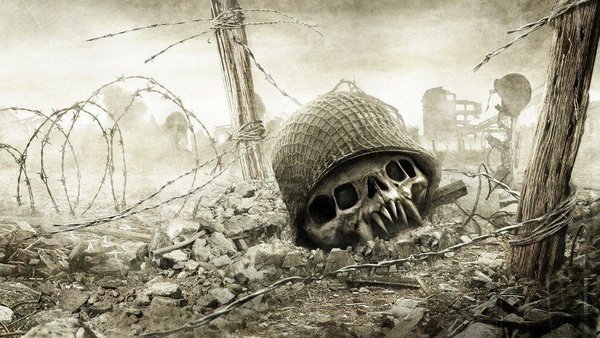
Long before Insomniac began working on Marvel titles, they released a trilogy with an altogether different tone. While there is debate over which of the Resistance games is the overall fan favourite, I've gone with Resistance: Fall of Man for this list, a launch title on the PS3 and arguably the best of the bunch thanks to its darker atmosphere and superior weapon feel.
Released in 2006, Resistance: Fall of Man sees players take part in the resistance (shocking, I know) against the Chimera alien invasion of the UK, in an alternate version of 1951. The game stood out for its impressive visuals for the time, and use of the SIXAXIS controller, which helped showcase the capabilities of the then-new PS3 hardware. Its large scale battles also set it apart from other titles, and its impressive weapon variety, a result of Insomniac’s prior Ratchet and Clank experience, was a memorable facet of the game as well.
The ability for players to engage in a multiplayer mode for up to 40 players also feels very ahead of its time, and further contributes to the fond memories associated with this early PS3 experience. The leaps taken in this first Resistance title cemented the series as a fan-favourite on the PS3, and it’s baffling that we haven’t seen a fourth game, or indeed a port of this title on modern hardware.
12. The Lord Of The Rings: Return Of The King

We all remember the first time we watched The Lord of the Rings trilogy. Quite a few of us also remember the Two Towers game, and even more of us fondly remember the Return of the King tie-in.
Rather than loosely adapting the film, the 2003 EA-developed title closely followed its events with the use of actual film footage and voice performances from the cast. It represents a rarity for tie-in games, being a perfect accompaniment to the film, with gameplay that is also fantastic in its own right. Being able to play as multiple playable characters including Aragorn, Legolas, and Gandalf was a dream come true for many fans, and this alongside the ability to play out iconic battles like Minas Tirith and Pelennor Fields has cemented its cult classic status.
It also represents a relatively rare win for licensed video games at the time, and is an example of what a lovingly crafted tie-in can play like compared to many comparatively soulless releases of the early 2000s. Many people still pine for a return to this world in video game form, with the recent The Lord of the Rings: Gollum and Tales of the Shire games falling way below par. Unfortunately, the PS2 and Gamecube are the only consoles able to provide this particular trip back to Middle-Earth, but with those aforementioned recent failures creating more of an appetite for a good Lord of the Rings game, perhaps we may yet see the return of this tie-in king.
11. The Saboteur

One of the most eye-catching games on this list, The Saboteur is another gem that has unfortunately been resigned to the consoles of old, but fondly remembered by those that played it when it released in 2009.
Developed by Pandemic Studios, the game is most famous for its interesting use of colour, but is also notable for its depiction of Nazi-occupied Paris and its excellent gameplay. As a saboteur, protagonist Sean Devlin is tasked with gradually chipping away at enemy control points in order to reclaim Paris from Nazi control. As you liberate areas, they gradually go from oppressive black and white (and red when encountering Nazi symbols) to their natural colours, reflecting the changing mood of the people as they are inspired by the acts of sabotage and defiance against the Nazi occupiers.
This unique approach to visual design helped the game stand out upon its release, and has contributed to a growing appraisal of the game in subsequent years as its uniqueness has only become more apparent. The Saboteur is also notable for tackling WWII in a different way to many other games focused on the subject, honing in on the civilians affected by occupation instead of soldiers battling the Nazis on the frontline.
It gave players a refreshingly different take on the war, and this alongside a less well-trodden setting of Paris has contributed to a fond view of the game in the years since its release. The Saboteur is sadly only available on Xbox 360 or PS3 though, a travesty considering its handling of war is something that we don’t see enough of in gaming.
10. Star Wars Rogue Squadron II: Rogue Leader

One of the better Star Wars games that is stuck on the consoles of the past, Star Wars Rogue Squadron II: Rogue Leader is the second, and arguably best, of the Rogue Squadron trilogy.
Released in 2001 on the Nintendo GameCube, it offers players an engaging ten mission campaign, fighting the Empire in epic space battles as either Luke Skywalker or Wedge Antilles. The game has long-lasting appeal for fans, partly due to the experience being extremely true to that of the films. Players can pilot a range of ships such as X-Wings, Y Wings, Snowspeeders and the Millenium Falcon, with missions matching closely to events from the original trilogy.
Very few Star Wars games had bridged this gap so successfully upon its release, and it was an exciting prospect for fans at launch. The game was also very impressive visually, becoming fondly remembered as a game deeply associated with the Gamecube’s graphical capabilities. While Rogue Squadron 3 released on the console two years later adding multiplayer and on-foot sections that haven’t aged particularly well, Rogue Squadron III remains the fan favourite, offering a more complete package than the third. It is therefore this second instalment that fans would be most keen to see ported to modern consoles, but sadly, that ship has sailed to a galaxy far, far away.
9. Eternal Darkness Sanity's Requiem

A favourite among horror fans, Eternal Darkness: Sanity's Requiem is another GameCube-only release that was a critical success, but has been largely forgotten.
Developed by Silicon Knights, the 2002 survival horror title follows multiple characters spanning two millennia, with the story centred around the titular Tome of Eternal Darkness and godlike entities known as Ancients. The game features the sanity meter, an innovative gameplay system that makes the game stand out among its contemporaries, and contributes to its continued high status among fans. The sanity meter introduces increasingly aggressive effects the longer your character is exposed to enemies, such as statues creepily watching the character, or more direct, fourth-wall-breaking moments such as a black screen, temporarily lowered volume, or the most evil scenario imaginable, the game falsely appearing to have deleted your save data.
Instead of only presenting the player with traditional horror tropes such as creepy enemy design or jump scares, Eternal Darkness takes it a step further with these meta-horror elements. The novelty and uncertainty that this created for players when progressing through the game has arguably not been matched since, and it is for this reason that a new generation of horror fans deserves the chance to play this ambitious horror title. Unfortunately, digging out the GameCube is unfortunately the only way to play this one.
8. Rayman 2: The Great Escape

With the first Rayman game deservedly getting a re-release on modern hardware, and with the announcement of the upcoming remake of Rayman Legends, the time is right to shout out the second game in the series.
While not held to quite the same standard as that excellent first instalment, Rayman 2: The Great Escape has a strong following thanks to its darker tone and successful move to 3D, with many fans longing for a return to this style following the more recent 2D adventures. While many know the revamped PS2 version, Rayman Revolution, fewer played the original version of the game released in 1999. The story focuses on the titular Rayman, attempting to save his home, The Glade of Dreams, from a robotic pirate invasion. It is an ambitious step up from its predecessor, containing new elements that have all stood the test of time.
Its jump to 3D for example, results in presentation and platforming sections that feel sophisticated for 1999. It also has a much darker tone, with a heightened focus on cinematic storytelling. Combat also holds up, and the cast of characters such as fan-favourite Globox, and the Teensie kings, are all memorable. The result is a sequel that does a lot of things right without excelling at only one thing, but the end product is a game that still feels decent to play today. It is this well-realised ambition that gives it its staying power, and it is also the reason that the game would do well if presented to a more modern audience. Perhaps the increased attention that the series is getting will make Ubisoft consider dusting off this trapped sequel too.
7. The Punisher

Known for its brutal environmental finishers and adult tone, in addition to its excellent gameplay, it’s perhaps surprising that this 2005 title hasn’t made its way to the hands of modern players, especially in the wake of increased attention of the Marvel character in the MCU.
Developed by Volition and published by THQ at the peak of their powers, The Punisher is unsurprisingly well polished, with a story full of Marvel character cameos and references for wider fans. The game gained controversy for its graphic violence, with some of the most brutal torture scenes needing to be watered down in many countries. By today’s standards it is relatively tame, but its appeal came from presenting a much darker tone to the relatively straight forward heroics of many other superhero depictions at the time.
The slew of environmental takedowns is also a leading feature, giving players an added layer of interactivity when torturing opponents using fixed objects close by, or dangling them from rooftops while seeking information. These sequences are particularly memorable and are still talked about today, but the game didn’t manage to get a sequel, leaving this title a dark one-off snapshot that many fans miss. In 2026, fans of superhero fiction still enjoy a morally grey hero, and there is increased attention on the character these days. It feels like a missed opportunity then that The Punisher is trapped on The PS2 and original Xbox, but perhaps we might see a port at some point in the future.
6. Need For Speed Carbon
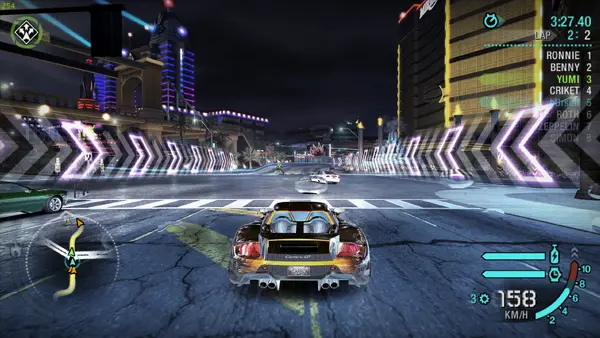
Sure, Underground 2 and Most Wanted are the more commonly thrown around names when it comes to old Need for Speed titles, but 2006’s Carbon has a strong following and is extremely underappreciated more broadly, despite it being the direct sequel to Most Wanted.
The shadow of most Wanted has inevitably led to Carbon being forgotten when thinking about this era of Need for Speed titles, but the game does implement a lot of interesting ideas that help it stand apart from its predecessor. In addition to being a step up graphically, Carbon made some positive changes to gameplay, such as drift challenges and checkpoint-based canyon duels.
A highly detailed customisation system also allowed players to tweak their favourite cars far more than previous entries allowed, and even more so than many other racing games of the mid 2000s. The crew system was also notable, allowing players to recruit AI teammates to aid their chances during races, creating the feeling that the protagonist is gaining a network of allies as you take over the city.
All of these additions worked well and gave the series a new energy, and the permanent night-time setting helped Carbon stick in the minds of many players that owned the game at the time. The fact that it is still so overshadowed by Most Wanted gives Carbon an underrated quality, and for these reasons, it is perhaps time that the permanently dark Carbon got its day in the sun.
5. SSX Tricky

SSX Tricky is one of those games that we can’t believe is even on this list, as it seems like an open goal to have ported it to modern consoles, or remade it entirely. A passionate fanbase still exists for arguably the best ever snowboarding game, with the 2001 EA developed title being extremely fun to play.
Part of the game’s success is the memorable trick system, giving players something to consistently aim for in filling a trick meter through successfully landing tricks, which can be spent on the extremely over the top “Uber” moves once fully charged. These powerful moves were a skill measure for players, and presented a solid level of challenge. The game also perfectly encapsulates the exaggeration of the early 2000s found in games such as Tony Hawk’s Pro Stater and the aforementioned Jet Set Radio Future, with nostalgia a key reason for the game’s lasting appeal.
The bombastic audio, over-saturated visual design and larger- than-life characters add to SSX Tricky’s overall charm, and it felt very accessible due to its arcadey gameplay. It also didn’t take itself seriously in its presentation of snowboarding, creating a perfect game for kids and an entry point into sports titles. Those kids are now fully grown, and pine for the return of this cult classic. It’s a shame then that experiencing that nostalgia for yourself is more difficult than it needs to be.
4. Heavenly Sword
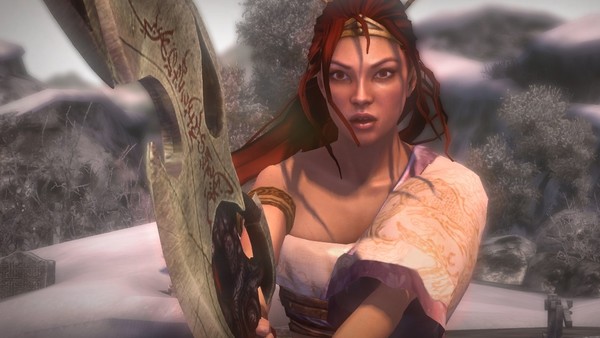
With a passionate fanbase despite it never getting a sequel, 2007’s Heavenly Sword was an excellent hack and slash title for the PS3, and was far more than a God of War clone.
Developed by Ninja Theory, the game follows protagonist Nariko as she fights enemy forces with the Heavenly Sword, a mythical blade that is said to lead the world to peace (after being used to kill people, I suppose). The game is memorable for many who played it, with engaging combat, actually successful motion controls (yes, in 2007) and an excellent motion captured performance of villain King Bohan by none other than Andy Serkis.
The game still holds up today, and features a cinematic quality to its eastern inspired story that wouldn’t be the norm in video games for a few more years. While the game did eventually spawn a very poor film which many people are unaware even exists, it’s a shame that Heavenly Sword didn’t spawn a sequel, something that only adds to its cult classic status.
It is representative of a time in gaming where developers were more experimental than they are now, with new IPs and creative one offs far more common than in the risk averse, remake filled gaming landscape of today. Sadly, this underrated gem will probably be stuck on the PS3 forever, but it is still well worth playing if you have access to the console.
3. Ico

An early entry into the discussion of video games as art and a source of nostalgia for many PS2 players, Ico tells a simple boy meets girl story, through a deeply atmospheric and immersive lens. Developed in 2001 by Sony’s Japan Studio, the game sees the titular Ico attempt to escape a castle with a magical girl named Yorda, who is herself attempting to run from Yorda’s mother, an evil queen who wants to prolong her life using her daughter’s life force.
It’s clear to see why Ico has stood the test of time, with its simple but effective gameplay and minimalist art style capturing the attention of players, and not significantly aging the experience through a modern lens compared to many releases of the early 2000s. It was also very different to many games released in 2001, with the action focus of major releases such as GTA III, Halo: Combat Evolved and Devil May Cry making Ico feel more remarkable, especially in retrospect. Its simplicity allowed the game to be discovered through gameplay and environmental storytelling instead of through spoon feeding or exposition, and it's easy to feel connected to the characters due to their vulnerability and small stature compared to their giant surroundings.
The game builds tension in moments when the defenceless Yorda needs to be separated from Ico in order to complete certain puzzles, and this presents a refreshing take on suspense in games, differing from typical tropes seen in outright horror or action focused titles.
2. Syndicate (2012)

One of the lesser known titles on this list but with a growing reputation as a hidden gem in the years since its release, Syndicate is a shooter with a huge personality. Published by EA and confined to the Xbox 360 and PS3, this reboot offered something new to fans of the 1998 original by moving away from its real-time tactics roots.
Set in 2069, Syndicate tells a cyberpunk story of competing mega corporations, with one company, EuroCorp, creating a neural chip that much of the story revolves around. The game was unfairly overlooked upon its release, with its deviation from the origins of the IP leading fans to dismiss the title. In reality, Syndicate contains some unique qualities, with extra elements to gameplay alongside excellent visual and audio design that really set Syndicate apart from its contemporaries.
A key example is the ability of protagonist Miles Kilo to use so-called “breaching” powers, with Miles able to utilise one of the aforementioned neural chips to manipulate his enemies and the environment outside of combat. Players could approach encounters in a more tactical, nuanced manner than many other shooters at the time could allow. While it didn’t do well commercially, it has retained a passionate following post release, and this is likely to be one title that you missed back in 2012. Time to dig out the PS3 and give this one a go.
1. Shinobi
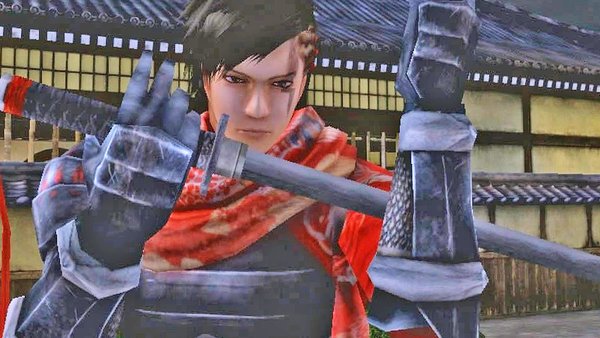
2002’s Shinobi was a blast on PS2, with its famed difficulty and tight controls that still hold up well today. Published by Sega, the hack and slash title marked the first new entry for the series since 1987, and for many players, it was worth the wait. The game features a new protagonist for the series, Hotsuma, who is embarking on a quest to save his clan after it was destroyed by an evil sorcerer, long thought dead. Shinobi is another title on this list that has aged very well, with an easy to understand but hard to master design philosophy key to the title’s longevity.
The player is encouraged to take an aggressive approach through the game’s mechanics, such as time-sensitive special attacks, and a unique mechanic in Hotsuma’s soul-feeding sword, Akujiki, which feeds upon Hotsuma if the player waits too long between killing enemies. This coupled with the fact that combat itself was extremely punishing, requiring precision and timing to make it through levels, gives the game a frantic quality that has stuck in the minds of many who played it.
It also resulted in a steep learning curve that still presents quite the challenge. Hotsuma’s red scarf is also an iconic image of the PS2 era, and Shinobi is surely one of the most underrated action games on the console. Unique mechanics such as the life sucking Akujiki represent real innovation, and Sega should definitely consider bringing the game to a new generation of players. Until then, it’s definitely worth dusting off the PS2 for if you fancy the challenge.