20 Incredibly Important Video Games That Shaped The Industry

The time sapping artform we know and love simply wouldn't be the same without these...

Gta Ocarina Call Of Duty Super Mario Angry Birds Compared to other entertainment mediums like film and television, gaming is a mere infant. Despite this it has made huge progress in its forty plus years of existence. In the time it takes from a baby to grow into a man-sized baby and then a slightly wrinkly, greying man-baby, gaming has leapt from two dimensions to three, from arcades to living rooms and from living rooms to our pockets. It€™s got to the point where people can play Doom on an ATM and printers can play Mario music. Quite simply, games are everywhere. Gaming has changed for sure, but there is one rule that has been present ever since the beginning: in every console generation there are a handful of games that shock the industry with ground-breaking, innovative features that are then shamelessly copied by developers hundreds of times over. The following 20 games are so important and innovative that gaming as we know it today would be very different without them. Love them or hate them, they came up an idea that set off a chain reaction that made our beloved industry improve, expand and reach a wider audience. That can only be a good thing, right? Let€™s begin!

20. Angry Birds

Why It Is Important: Angry Birds became the first killer app for smartphones. Angry Birds is the Tetris of the smartphone generation. It's something that you, your uncle, that guy you don't really like and his pet goldfish have all played at some point. It proved that people were more than up for playing cheap and cheerful games on their smartphones that drained their battery in 30 minutes. Ever since 2009 players have been using their fingers to catapult poor birds at structures and pigs. Over the years the franchise has expanded with numerous spin-offs like the excellent Bad Piggies. There's even two games set in the Star Wars universe that surprisingly don't suck (mostly because George Lucas had zero involvement in them) and feature more action-based gameplay, equipping the birds with blasters, lightsabers as well as giving them the ability to use the force. Angry Birds paved the way for Plants vs. Zombies and every other smartphone game that we play for a few minutes when we're waiting for a bus or when our friends are talking about boring stuff we really don't give a toss about.

19. Metal Gear Solid

Why It Is Important: Metal Gear Solid brought the stealth genre into the modern era and pushed the boundaries of cinematic storytelling. Metal Gear Solid is a game that was ahead of its time in many aspects. It re-invented the stealth genre when it released in 1998 and had a cinematic sheen we had not seen in a game before. David Hayter's iconic performance as Snake combined with the all-round excellent production values made players feel like they were in their own action movie. Most games on the first PlayStation used Full-Motion Videos to tell their story, but Metal Gear Solid impressively rendered its cut-scenes in-game. There was no awkward transition from blocky PS1 graphics to a slick FMV that looked nothing like the game you were just playing. Instead, players were completely immersed in the world Hideo Kojima had crafted from the get go. The cinematic feel remained in-tact for gameplay, too. The camera would shift from a top-down perspective to come down to Snake's level when he hid behind a wall, enabling the player to see if an enemy was patrolling around the corner. The slick camera was completely automatic but rarely became a nuisance. It made you feel like you were watching the game through the eyes of a film director. Every single character was professionally voiced and the dialogue was translated with the utmost attention to detail. It was quite a feat when you consider that the lengthy cut-scenes and codec conversations were very ambitious for their time. Metal Gear Solid raised the bar in production values, writing and storytelling in games and continued to do so with later entries in the series.

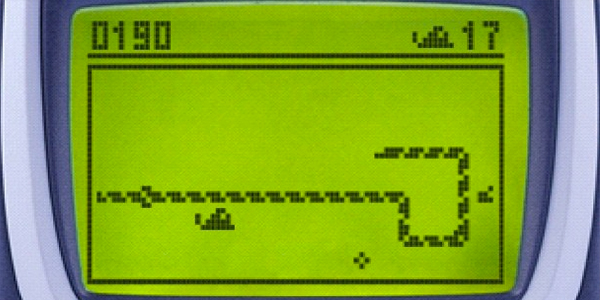
18. Snake

Why It Is Important: Snake single-handedly proved the viability of mobile phones as a gaming platform. They may have fallen on hard times in recent years, but back in the late 1990s Nokia were a forward-thinking, highly innovative company that dominated the mobile market. They had the ingenious idea of including a game on their 6110 handset. It turned out to be one of the many reasons why the product sold like hot, strangely indestructible cakes. The game of course was Snake. The objective was to collect as much food as possible and make the snake grow without hitting the its body. Much like Tetris, the game would speed up as the player's score increased. Snake was a massive hit and it became synonymous with early Nokia phones. And just like that mobile phones became a platform for gaming, paving the way for the smartphones that would later follow. Thanks to Nokia people around the world no longer had to idly stare into space while doing their business on the toilet. After all, nothing took your mind off a particularly troublesome bowel movement better than a quick game of Snake.

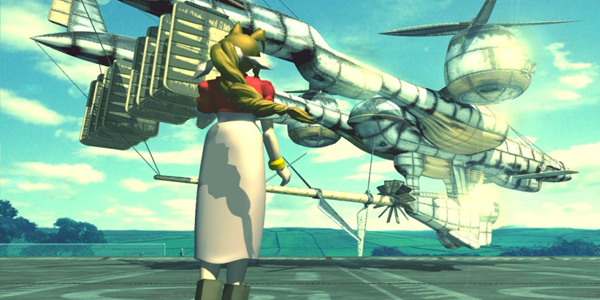
17. Final Fantasy VII

Why It IsImportant: Final Fantasy VII started the golden age of JRPGs that would turn the genre into a global phenomenon. While Final Fantasy VII clearly wasn't the first in the long-running JRPG series, it was the first to see a release in Europe (apart from Final Fantasy Mystic Quest, which doesn't really count). Released in 1997, Final Fantasy VII turned the JRPG into a global phenomenon. Despite having a long history of developing Final Fantasy games for cartridge-based Nintendo platforms, Squaresoft could not resist the extra storage capacity and value of the CD format and jumped ship to Sony. It was a smart decision, as it allowed them to create over 90 minutes of cutting-edge (for their time, anyway) FMV sequences and beautiful pre-rendered backgrounds for Final Fantasy VII. The cut-scenes were more than just a gimmick, though and enhanced moments of the story in a way that the in-game graphics simply couldn't. Watching Sephiroth disappear through the fire in Nibelheim was spine-chilling to see up close. The humble CD enhanced the gameplay, too. Developers used the extra space to cram in dozens of mini-games including a real-time strategy game, chocobo races and the iconic motorcycle chase sequence. There's even an entire theme park full of little distractions when level grinding begins to get tiresome. The sheer variety of activities and the size of the world was a huge leap forwards for JRPGs and games in general. Final Fantasy VII smartly used new technology to give the JRPG genre a new lease of life and proved that the CD was a perfect medium for telling stories so epic that they could not be contained on a single disc. It's responsible for bringing the JRPG to the attention of a generation of gamers and was the start of a beautiful trilogy of Final Fantasy games on the PlayStation.

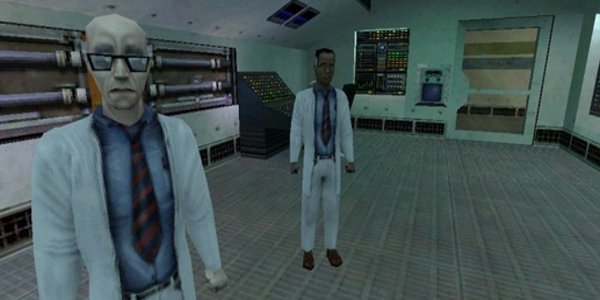
16. Half-Life

Why It Is Important: Half-LIfe pioneered scripted sequences and created a completely immersive, believable world. Unlike Metal Gear Solid with its bombastic Hollywood flair, Half-Life had a more conservative approach to its storytelling. Instead of focussing on cinematic prowess, Valve instead created a completely immersive story by telling it solely through the eyes of the game's silent protagonist Gordon Freeman. Half-Life has such an amazing attention to detail it's a sight to behold even today. It's a world that actually feels lived in. You see people go about their day in the Black Mesa Research Facility and converse with colleagues. It feels like everything in the world has a purpose and isn't just a load of random stuff put in a room for you to gawp at. In terms of gameplay, Half-Life was the game that popularised the scripted action sequence that of course became a staple of the FPS genre. It also used highly sophisticated skeletal animation and advanced AI that made enemies fight strategically and, more shockingly - made supporting characters useful. It's nice to play a game where your allies don't get in your way or hold you back or continually run into a wall for no reason. In some ways, Half-Life feels more immersive and organic than a lot of modern titles. Not bad at all when you consider that it came out in 1998.

15. Shenmue

Why It Is important: Shenmue raised the bar by creating a completely immersive, open world that gave players an unparalleled sense of freedom. At its time of release in 1999, Shenmue was the most expensive video game ever produced, costing a whopping $70 million. It started life on Sega's 32-bit Saturn console before development moved to the significantly more powerful (and easier to work with) Dreamcast. Due to its low install base, rumour had it that every Dreamcast owner would have had to buy the game twice for Sega to see a profit. Shenmue wasn't a sound financial investment, but it is widely regarded as one of the most important games in recent memory. The simple tale of a teenage boy hunting down his father's killer took place in a vibrant open-world so detailed that it still manages to put modern games to shame. You could enter any house and have a good old rummage through people's drawers if being a nosey creep was your thing. You could even call people. Series creator Yu Suzuki wanted Shenmue to offer a non-linear, realistic and immersive playing experience. You could progress with the story, or simply go for a wander and play some classic Sega titles in the arcade. The whole town felt believable, with fully-voiced NPCs all having their own lives and routines, opening and closing their shops at certain times of day and going home in the evening. Shenmue was also the first game to have seasonal, randomised weather cycles. Many arcade and adventure games used Quick-Time Events before Shenmue, but it was Suzuki himself that coined the phrase. His brilliant implementation of the mechanic turned it into omnipresent nuisance we know (and mostly hate) today. Shenmue was a game that was ahead of its time in many aspects. It had a massive impact on gaming and gamers, as fans continue to beg Sega for a third instalment in the franchise today.

14. Call Of Duty 4: Modern Warfare

Why It Is Important: Modern Warfare set the template for modern shooters with its cinematic campaign and multiplayer. It's a shame that Call Of Duty games have been basically the same since COD4. This landmark title changed the face of the FPS and set the template for modern shooters with its intense campaign and addictive multiplayer that had RPG elements. COD4 took the FPS out of the stale Second World War setting and dragged it kicking and screaming into the modern era. The new setting meant that Infinity Ward could now use high-tech guns and gadgets to add variety to the campaign and mix things up. You could be escaping a sinking ship by the skin of your teeth one minute and shooting terrorist dudes in an urban environment the next. Despite its enjoyable single-player, it was COD 4's multiplayer that had the most impact. It was the first to introduce a create-a-class system that added a layer of strategy to shooting people in the face. Additionally, it added Killstreaks that rewarded players for killing multiple enemies without dying. While Halo had previously used a similar mechanic, it was strictly for bragging rights and served no real purpose beyond that. It also introduced a levelling system. Much like in an RPG, players would gain access to better weapons, perks and equipment as they gained experience. It was highly influential to the point where it's hard to find a multiplayer shooter that doesn't use a similar system today. COD4 showed the world how a modern FPS should play and feel. Though it marked the beginning of the end as far as innovation in the franchise is concerned, it remains to be one of the most important games of its generation.

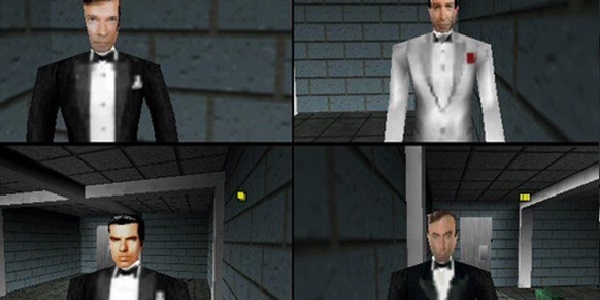
13. Goldeneye 007

Why It Is Important: Goldeneye popularised the FPS on consoles with its highly customisable multi-player mode. While it may not hold up well today (seriously, moving around feels like controlling a drunk guy that's on the end of a very large, bendy stick), Goldeneye had groups of friends worldwide huddling round a bulky CRT televisions and playing until their fingers bled. Until Goldeneye's release, shooters were mostly seen on the PC. Though there had been shooters on consoles before its release in 1997 (Hexen, Doom, Turok etc), Goldeneye really pushed the genre forward with its innovative multiplayer mode that players could tweak and customise. On top of having five main modes to choose from players could pick weapon sets for each match. Will you play with pistols, or will you opt for no weapons and run around slapping each other silly instead? The choice was yours. Its single-player by comparison was just as innovative and had emphasis on realism and physics, which was practically unheard of in the era of Doom clones. Enemies had context-sensitive animations, meaning that if you shot them in the leg, they'd actually react to it realistically with blood stains appearing where the bullet entered their body. Though the PC shooter Team Fortress added a similar feature in a patch that pre-dates Goldeneye by a few months, it's Rare's game that made it a requirement for all shooters that followed. Goldeneye is a landmark title that started the unstoppable rise of the shooter that would eventually become the massively popular genre we know it as today.

12. Wii Sports

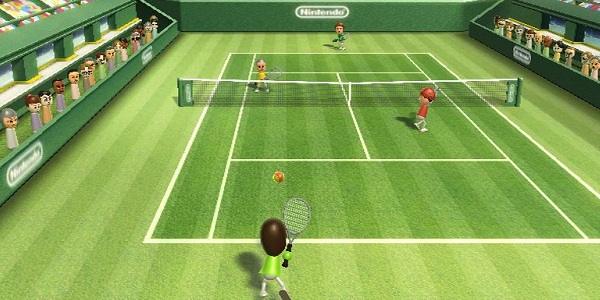
Why It Is Important: Wii Sports perfectly demonstrated Nintendo's motion control technology that would go on to define an era of gaming. Back at Tokyo Gameshow 2005, Nintendo gave us a peek at what the successor to the GameCube would have to offer. We saw a trailer starring a weird little motion-sensitive remote that people used to swing a baseball bat, fish, play the drums and conduct music. Journalists and gamers alike were dubious to say the least, with many starting to think of Nintendo as that nice old relative that's just started to lose their marbles. It wasn't until Nintendo showed off the Wii and Wii Sports at E3 2006 that people finally got it. Swinging a controller and watching a tennis racket swing on-screen was mind-blowing. It was so simple and intuitive that even your Grandma could play. Well, for about 5 minutes anyway until she got bored and went back to good old Scrabble. Nintendo bundled Wii Sports with the console, which was a huge factor in its subsequent success that saw it selling over 100 million units. Love it or hate it, there's no denying Wii Sports' innovation. It proved that motion controls and gaming could work. Sony and Microsoft later followed suit with the PlayStation Move and Kinect, but they failed to capture the success of the Wii.

11. Tetris

Why It Is Important: Tetris became the first handheld killer app and defined an era of portable gaming. It€™s hard to believe that there was a time when having a dedicated handheld console simply wasn€™t a thing. Sure, there were basic handhelds like Nintendo€™s Game & Watch series, but they were far too limited to unleash the full potential of portable gaming. Nintendo finally got it right with the Game Boy €“ a bulky little cartridge-based box with a monochrome display that almost every child of the 80s and 90s owned at some point. It quickly became a cultural phenomenon thanks largely to one game: an addictive little puzzler called Tetris. The objective of Tetris was to simply make lines out of various blocks as they fall down the screen and prevent the blocks from reaching the top for as long as possible. As the player progressed, the speed at which the blocks fell would increase, which of course got to a point where it would scroll too fast even for a Ninja fresh out of Ninja school. Tetris had released on other systems previously, but it was on the Game Boy that it cemented its place in gaming history. Nintendo smartly bundled the Game Boy with Tetris and the hardware went on to sell 118 million units in its lifetime, creating the handheld industry that Nintendo still rules with an iron fist today.

10. Street Fighter 2

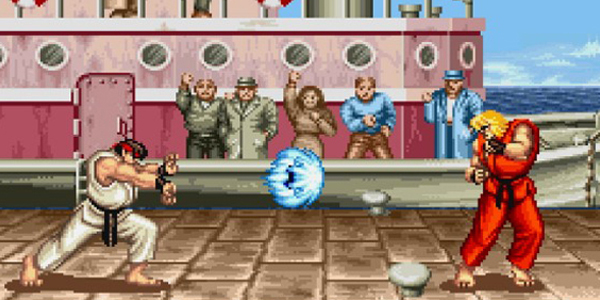
Why It Is Important: Street Fighter 2 revolutionised the beat 'em up genre with its intuitive controls and combo system. As the name implies, Street Fighter 2 wasn't the first Street Fighter game, but it was the first good one and that's all that really matters. Released in 1991, it brought a new level of precision and strategy to the beat 'em up genre and gave the dying arcade the boost it desperately needed. It was later ported to every console under the sun so that friends could get unnecessarily angry at one another in the comfort of their own homes. The strength of Street Fighter 2 lies in its controls. For the first time there was no real element of luck to doing special moves. The button inputs for moves were simple and easy to remember (down, forward punch for hadouken, down left back for the badass Tatsumaki Senpuukyaku tornado kick). If you failed to pull off a Hadouken it was your own fault because the game always responded exactly to the buttons you pressed. Special moves soon became standard in future fighters, as did SF2's excellent combo system that allowed moves to be chained together in quick succession. The sheer number of ways to attack combined with the varied character roster meant that every player could develop their own fighting style. You could jump around like a dog on a bouncy castle or play more defensively and counter attack. It was like a fast-paced game of chess. But with punching. This of course led to the popularity of tournaments where the best players in neighbourhoods would gather to compete. SF2 is still popular amongst tournament players today, which really proves how well the game was designed. Street Fighter 2 quite simply is an amazing game with a huge legacy. There would be no Mortal Kombat or Tekken or Virtua Fighter without this gem existing. There wouldn't be a Street Fighter movie either, so feel free to blame SF2 for that abomination.

9. World Of Warcraft

Why It Is Important: WoW brought the MMORPG to the mainstream with its user-friendly interface and addictive, rewarding gameplay. Online gaming gradually gained popularity in the late 1990s and early 2000s as the Internet became more readily available and affordable, climaxing in the release of World Of Warcraft in 2004 that took the world by storm. Blizzard didn't re-invent the wheel but instead found numerous ways to streamline the MMO experience. Players could literally run from one side of the map to the other without encountering a single load screen. Furthermore, they were able to recover from death quickly and combat encounters progressed at a much faster pace, reducing tedium and making it ideal to for playing in short bursts. The user-friendly nature of the game combined with its pretty graphics, addictive gameplay and low system requirements turned WOW into the most successful MMORPG ever made, with 12 million subscribers at its peak. The huge number of players created a real sense of community within guilds that was unlike anything else. It has the honour of being the highest grossing video game of all time, raking in over $10 Billion for Blizzard. WOW propelled the MMORPG into the mainstream, creating a diverse community full of people from all walks of life that's still going strong today. It became such a popular culture phenomenon that South Park dedicated an entire episode to it. When you draw the attention of Matt Stone and Trey Parker, you know that you're kind of a big deal.

8. Grand Theft Auto III

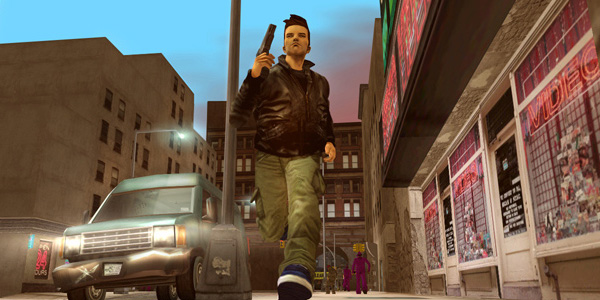
Why It Is Important: Grand Theft Auto III revolutionised the sandbox genre with its perfectly realised city and gameplay mechanics. Grand Theft Auto III was by no means the first sandbox game, but it used the new hardware of the PlayStation 2 to create a vast, detailed city that just wasn't technically possible before. It also showed us the simple joy of hiring a prostitute and then running her over to get your hard-earned, gangster as hell money back. Released in 2001, GTA III's scale was unmatched at the time still serves as a template for sandbox games today. Liberty City had its own pedestrians, law enforcement, public transport systems, weather systems, funny radio stations... It was the perfect playground for gangster shenanigans to take place in. The sheer variety of things to do was mind-boggling. On top of the lengthy campaign players could compete in races, go on murderous rampages, locate hidden packages scattered around the city, complete unique stunts and do missions as a taxi driver or paramedic. DMA Design managed to seamlessly integrate free-roaming, driving and shooting gameplay mechanics into one game. Everything combined gave the player an amazing sense of freedom that made other games feel restrictive by comparison. GTA III showed the world what the PlayStation 2 was capable of. It was a huge leap for the gaming medium as a whole and laid the foundations for everything that followed.

7. Wolfenstein 3D

Why It Is Important: Wolfenstein 3D defined the FPS and pushed the industry forward with its ground-breaking 3D graphics, sound and gameplay. John Carmack's ray-casting technology may be a bit of an eyesore today, but back in 1992 it was simply amazing. It created a pseudo-3D effect that pulled player into the gory, Nazi-infested world of Wolfenstein 3D. The sound was particularly innovative as well. SS soldiers would bark orders in real German, adding an air of authenticity to the game (that was subsequently lost when you fought Mecha-Hitler at the end). However, Wolfenstein 3D had much more going for it than eye candy (and whatever the equivalent is for the ear). It invented many ideas that shooters still used to this day. Players could freely switch weapons and collect guns and ammo and could keep tabs on their health and ammo count using the on-screen display. It pioneered the typical run and gun action associated with the genre. It's a good thing then that Carmack and his team prioritised responsiveness over visual fidelity, ensuring that the game maintained a high frame-rate at all times. Wolfenstein essentially created the genre of the FPS as we know it today. Its ground-breaking visuals, gameplay mechanics, user interface and tight controls were way ahead of their time. It's still playable today. Once you adjust your eyes to its blurry, pixelated goodness, that is.

6. Pong

Why It Is Important: Pong brought gaming to the attention of the masses with its addictive multiplayer that made it the world's first popular video game. Released in 1972, Pong was the first massively popular arcade game despite basically being a rip off of a Tennis game on the Magnavox Odyssey. That's not to say Atari didn't make improvements, however. They added sound effects and a scoring system. On top of this, it was way more strategic as you could pull off angled shots. Tension was also increased thanks to the ball increasing in speed as rally's progressed. It may seem basic by today's standards, but Pong represents the humble beginnings of the medium. Being able to control a paddle on a screen and send a ball back and forth was seen as a technological form of witchcraft to people at the time. After all, there was only a select few that had played games before at this point. Thanks to Pong's pick-up-and-play nature and competitive multiplayer mode, it became a sensation that started the arcade industry boom of the 1970s. Atari went on to build Pong consoles in 1975 to huge success. Their example proved that there was a market for home consoles just waiting to be tapped into. People wanted to play games on their televisions, something that Atari took advantage of later when they released the Atari 2600. Pong wasn't original, but it took an existing idea and improved on it in numerous ways. In doing so it had a huge part in bringing the arcade and home console scenes to life.

5. Pac-Man

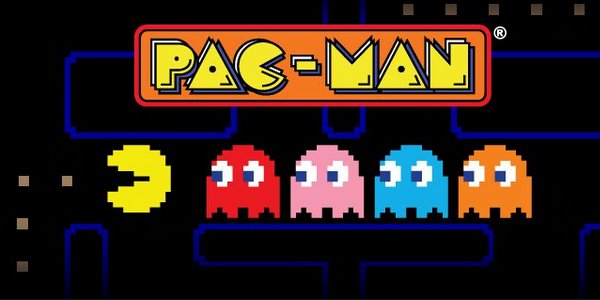
Why It Is Important: Pac-Man revolutionised games with its outside the box game design and broadened gaming's audience by appealing to both genders. Who would have thought that weird game starring a yellow thing inspired by a pizza with a slice missing would have such an immeasurable impact on gaming? Pac-Man ushered in a new era of games that was all about mascots and interesting gameplay ideas. It arrived in an era full of Asteroids and Space Invaders clones and stood out from the crowd with its charming visuals and strategic gameplay that appealed to both males and females. Players had to guide Pac-Man through a maze, collecting every dot along the way while avoiding the ghosts that relentlessly hunted them down. There was a weapon to use against the persistent ghouls in the form of the power pellet (gaming's first power-up) that temporarily gave the ability to munch them into submission. There were limited power pellets per maze, so avoiding the ghosts was the best strategy most of the time. It sounds pretty much like a stealth game, right? Well, Pac-Man is widely credited as being one of the earliest examples of the genre. The mighty Big Boss and Solid Snake owe a lot to this guy. Its AI was pretty sophisticated for its time, with each colour of ghost having its own distinct personality and tactics for tracking Pac-Man down. It was quite easy to get out-smarted and cornered by the cute little phantoms with no means of escape. In yet another first, Pac-Man featured little cut-scenes at the start of each level. It was a smart choice, as the first one in the game basically shows the player how to play. Pac-Man was gaming's first mascot who's still recognisable around the world today. His first game innovated in so many areas and represented the start of a new era of gaming in which novel gameplay ideas like avoiding enemies instead of shooting them reigned supreme.

4. Super Mario 64

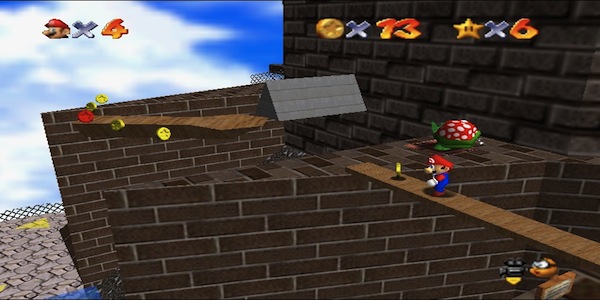
Why It Is Important: Super Mario 64 showed the world how to design 3D games and perfectly demonstrated how to bring an existing 2D franchise to the third dimension. The mid 1990s saw the gaming industry leave 2D sprites behind in favour of the mighty polygon. Technology was finally powerful enough to fully render 3D worlds. Sadly there were a few teething problems as developers struggled to adapt to the increase complexity of game design. Shigeru Miyamoto and his team at Nintendo showed the world how it it was done with Mario 64 in 1996. Considering it was one of the first 3D platformers, Mario 64 did a shocking number of things right. The designers eased players into the third dimension by letting them run around the castle's garden at the beginning of the game to get used to the controls. It didn't take too long, though as using the brand new analog stick just felt right. Pushing it all the way up made Mario run, pushing it a little and he'd walk. Simple. A problem with early 3D games was that camera's were really hard to get right. Mario 64 elegantly got round this problem by allowing the player to control the camera freely using the C buttons. It wasn't perfect and feels a bit clunky today, but for its time it was highly innovative and laid the foundation for subsequent camera control systems. Instead of having the sole objective of getting to the end of a level like in earlier Mario games, players had to complete missions in order to earn stars and progress. They ranged from collecting red coins scattered across the level to finding a baby Penguin for its mother because she couldn't be bothered to get up and look for it herself. It was a clever way of re-using the same levels, something that most 3D platformers of the mid-to-late 1990s and beyond would end up copying. Mario 64 showed the world not just how to make an amazing 3D platformer, but how to make a 3D game in general. Its first-of-its-kind camera control system, tight, responsive controls and phenomenal level design rewrote the rules on how games were made.

3. The Legend Of Zelda: Ocarina Of Time
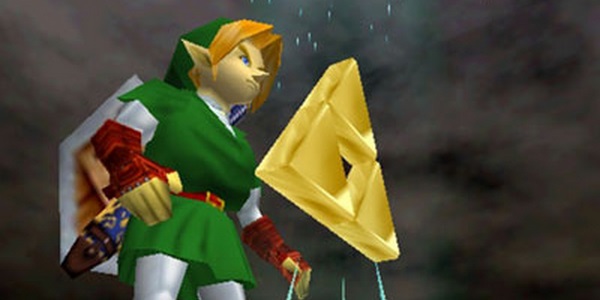
Why It Is Important: Ocarina Of Time invented Z targeting and context-sensitive controls - two mechanics that continue to appear in games today. Link's first foray into the third dimension was praised almost universally by critics when it released in 1998. Apart from the Water Temple, it was an amazingly well designed game with so many different mechanics that worked flawlessly. There were stealth sections, epic bosses, brain-teasing dungeons, a humble steed to speed across Hyrule Field on... It did so many things right, but it was its Z targeting system that changed gaming forever. Z targeting made combat in a 3D game feel cinematic and controllable in a time where it often felt frustrating and clunky. Pressing the Z button made the camera lock onto the enemy, allowing the player to freely move around while facing them at all times. It looked cool and made it much easier to take on multiple enemies at once. Z targeting has since been copied by a countless number of games including the likes of Grand Theft Auto, Devil May Cry and Assassin's Creed. It innovated in other areas of control, too. There were many ways to interact with the world of Hyrule and its citizens, but there were just a few buttons on the Nintendo 64 controller to map them to. Nintendo's solution was context-sensitive controls. Basically, the A button had many uses depending on the situation, from reading signs to rolling, attacking and grabbing objects. Its use was constantly updated on-screen so that players alway knew exactly what it would do in any situation. Thanks to this ingenious system, Nintendo were able to fully realise their ambition for the game. Context-sensitive controls have since become a standard feature in video games, just like Z-targeting. These two simple ideas solved major design problems that plagued early 3D games. From Ocarina onwards, games started to feel a lot less clunky.

2. Super Mario Bros.

Why It Is Important: Super Mario Bros. revived the dying gaming industry with its incredible side-scrolling platforming gameplay that rewrote the book on game design. In the early 1980s the video game market became over-saturated. Suddenly everyone wanted a slice of the video game pie and consumers were bombarded with new consoles and games from left, right and centre. A distinct lack of quality control led to some downright terrible games seeing the light of day like E.T. and the piss poor Atari 2600 version of Pac-Man. People began to lose faith and by 1983 the industry shrank to a fraction of the size it was a few years earlier. It was on life support. And along came Nintendo. In a characteristically ballsy move, the Japanese company single-handedly brought the industry back from the dead (without resorting to zombie curses) with the release of their NES console. It came bundled with a little game called Super Mario Bros.. It wasn't the first side-scroller, but it polished and refined everything about it. The physics of Mario's first platforming adventure created a new sense of momentum. His gradual acceleration when the run button was held down allowed players to control the length and height of his jumps. It was the perfect marriage of design and technology, as the NES's controller (its directional pad, in particular) offered an unrivalled level of precision. The pitch-perfect controls meshed seamlessly with the fantastic level design that encouraged experimentation and exploration. Who can forget finding the warp zone in world 1-2 for the first time just by messing around? There were similar little secrets scattered throughout the game like invisible blocks that housed 1-ups and invincibility stars and plants that ascended to the clouds. Super Mario Bros. re-wrote the book on game design with its use of physics, its secrets and its subtle depth. Its world and its rules were so easily defined and understood yet they were always flexible and never rigid. You could play in a way that was fun for you. Speeding through levels was just as viable a strategy as taking as a slow and steady approach to collect every coin and break every block. This was the start of Mario's rise to becoming one of gaming's most beloved mascots who continues to star in amazing games today, 29 years after his first outing showed how fun jumping on Goombas could be.

1. Space Invaders

Why It Is Important: Space Invaders defined arcade games with its multiple lives, high score system, sound design and smart AI. It was the first game to feature the difficulty curve concept that would later be used in every kind of game imaginable. There is quite simply no other game that has done more for the industry than Space Invaders. Released in 1978, the arcade shooter not only invented a genre, but it invented a mechanic that almost every single game that followed it would use (including the ones in this list). We're talking about the difficulty curve: the idea that a game should start off easy and gradually become more challenging. The enemy ships of Space Invaders would first move slowly, but as their numbers started to dwindle they'd gradually pick up the pace until the last ship moved around frenetically like a fly with a death wish. This was down to the hardware simply not being powerful enough to run the software at full speed when the screen was full of ships. Destroying them simply freed up processing power and made the game run a little bit faster. In one of gaming's greatest accidents, Space Invaders designer Tomohiro Nishikado decided not to fix this performance issue because it made it fun and dynamic to play. This tiny decision fundamentally changed how games were made, regardless of their genre. Space Invaders was the first to use music during gameplay. Its soundtrack was simple 4 note melody that increased in tempo as the alien ships made their way down the screen towards the player. It gave the game a spooky, tense atmosphere that was very ahead of its time. Speaking of aliens, those little buggers were pretty smart. They fired back and responded to the player's movements and their sheer numbers posed quite a challenge. The aliens were the first example of a horde of enemies and undoubtedly inspired the popular horde-based games we see today like Left4Dead. Space Invaders was also the first game to save high scores, because sometimes you need physical proof to back up your endless bragging. Becoming the best at something takes dedicated practise (unless you are one of those annoying people that's just naturally good at everything) so it's a good thing that it was the first game to give the player multiple lives as well. While other games in our list pushed their respective genres to new heights, Space Invaders€™ difficulty curve has been used in both 2D and 3D games and every other kind, for that matter. Its influence is so far reaching that it€™s frankly impossible to imagine gaming as we know it today without it. Do you agree with our list? What are some of the games that you think have shaped the industry? Sound off in the comments below.

In this post: 
Games
 
Posted On: 
Contributor
Contributor

When I'm not playing games, I'm probably either writing about them somewhere or singing stupid songs inspired by them. Or eating pizza.