20 Gaming Moments That Insulted Your Intelligence
Those gaming moments that treated you like an IDIOT.
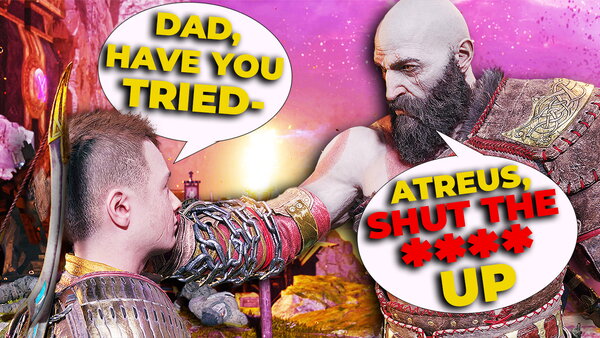
Video games are many things to many different people, but no matter what you want out of a game, you probably expect it to have a basic appreciation for your intelligence, right?
Not all games need to be brutally challenging, brain-breakingly difficult endurance trials, of course, but it's also hugely deflating when a game treats you like you're, well, an absolute idiot.
Even accepting that developers have to fine-tune their games to cater to a wide range of player tastes and skill levels, sometimes a game talks down to players enough that it's clear they didn't nearly get the balance right.
And so, these 20 video games all did something to profoundly insult our intelligence.
It might be a refusal to simply let us figure a puzzle out ourselves, a hilariously obvious plot twist, or a gameplay mechanic that just wasn't ready for prime time.
Whatever it was, these moments had us all questioning the basic level of respect the developers had for our collective intellect, and perhaps even made us question how much we actually liked the game overall...
20. Excessive Puzzle Help - God of War Ragnarök
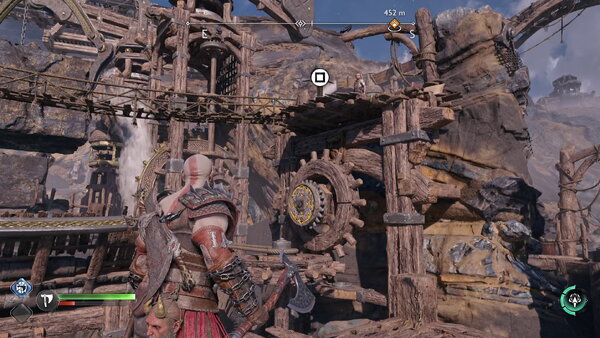
As universally acclaimed as God of War Ragnarök is, there was nevertheless considerable pushback against the game's extremely overzealous puzzle hint system.
Basically, if you entered a room and took more than 10 seconds to figure out what you need to do, Atreus would pipe up with a spot-on suggestion.
Naturally many found this impatient desire to help more annoying than useful, because it denied players the opportunity to figure things out for themselves, even proving intrusive enough to bother more casual-minded players.
It basically felt like Sony Santa Monica assumed that the average player is an absolute dum-dum with no desire to be challenged whatsoever, and to add insult to, well, insult, it took almost two years for them to patch in an option for reduced hints.
Would it have really been that hard to just include this option from the start, or better yet allow players to toggle hints with the press of a button?
19. The Forced Sacrifice - Fallout 3

Much as Fallout 3 is held up as one of the greatest action-RPGs of all time, and for good reason, anyone who played it on launch will never forget how pathetically Bethesda attempted to shoehorn a sacrifice dilemma into the end of the game.
The original ending forced players to choose a character to enter an irradiated control room to activate a water purifier, in turn sacrificing their life for the greater good.
You've got two choices here - either lay your own life down or get the Brotherhood of Steel's Sarah Lyons to do it.
Except, many players swiftly realised that their mutant companion Fawkes, who can withstand radiation sans-harm, could surely just enter the control room and save the day without anyone having to die.
If you bring this up to Fawkes, though, he'll claim that he doesn't want to interfere with your "destiny," ensuring you're forced to kill off somebody in order to save the day.
It was an extremely braindead way to try and raise the dramatic stakes, and fans complained vocally enough that Bethesda released a "fix" in the game's Broken Steel DLC six months later, allowing you to pick Fawkes or any other radiation-immune companion instead.
18. "Press F To Pay Respects" - Call of Duty: Advanced Warfare
The Call of Duty franchise had been criticised for being excessively on-rails for years before the release of 2014's Call of Duty: Advanced Warfare, given the tendency for the series' campaigns to instruct players to "follow" an NPC and basically shoot their way down a scarcely veiled corridor ad nauseum.
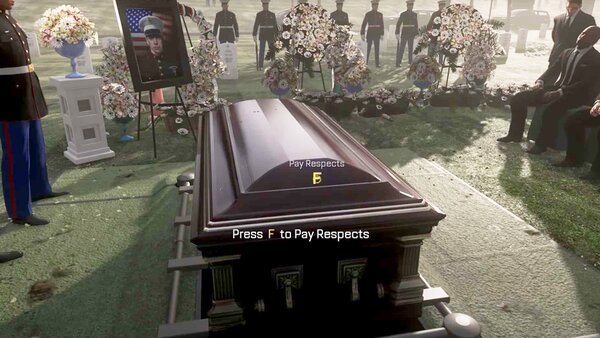
But Advanced Warfare's story babysat players to a level of self-parody when, while protagonist Jack Mitchell (Troy Baker) attends the funeral of his comrade Will Irons (Paul Telfer) early on, the player is prompted to "Press [button] to pay respects."
It didn't take long for the scene to go viral online, with millions of players mocking Activision for having so little faith in players that they even prompted them to mourn.
The moment was so ridiculous that it completely upended the intended tone and storytelling, and became enough of an enduring meme that it even has its own Wikipedia page.
17. Love Story Outta Nowhere - Fahrenheit

Quantic Dream's mostly terrific interactive thriller Fahrenheit makes a clumsy attempt to integrate "mature" elements into its story, with a depiction of sexual activity that left players confused if not amused.
Late in the game, protagonist Lucas Kane dies and ends up resurrected as an insanely powerful undead revenant with martial arts skills that'd put The Matrix's Neo to shame.
In due course, Lucas grows close to Carla Valenti, the cop who has been pursuing him for most of the game, leading to them having extremely awkward sex.
Even ignoring the fact that Carla is technically shagging a zombie of all things, she swiftly confesses her love for Lucas with a laughably implausible expediency considering how long they've known each other.
None of it works, and was apparently a result of the game's rushed production, where reams of story and character development were cut from the third act to ensure it met its release date.
16. Yellow Paint - Final Fantasy VII Rebirth
Final Fantasy VII Rebirth is a mostly excellent middle-entry into Square Enix's ongoing Final Fantasy VII remake project, but a moment early in the game did re-ignite one of the most contentious discourses in recent gaming history.
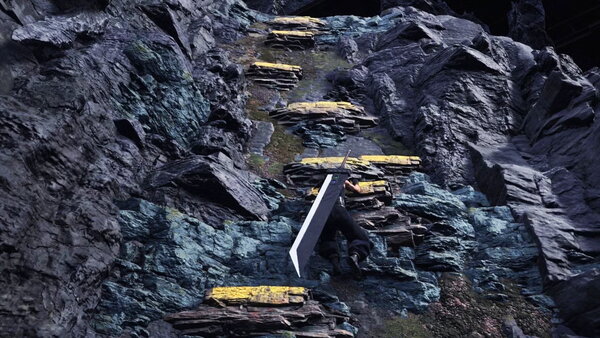
While climbing up Mt. Nibel at the start of the game, you'll find the path handily charted by yellow paint that's been helpfully slathered over the handholds you need to grab in order to scale the cliff.
The presence of yellow paint in games to signpost where players need to go has been a majorly divisive subject for years, some seeing it as immersion-breaking and excessively hand-holding, even while many developers ascertain that it's a simple way to point more casual players in the right direction.
But in this particular instance, it caught so much pushback precisely because the paint's placement is so ridiculous - are we really supposed to accept that someone, somehow, painstakingly painted every usable handhold all the way up the mountain?
There had to be a better way to lead the player onward, because if we're busy thinking about the mechanics of how the yellow paint got there, we're clearly not as immersed in the game world as Square Enix would like us to be.
15. Jason Todd Is The Arkham Knight - Batman: Arkham Knight

The marketing for Batman: Arkham Knight was intriguingly centered around the mystery identity of its central villain, the Arkham Knight.
After thoroughly wringing The Joker dry across their franchise of games, it was refreshing to see Rocksteady place a new villain at the forefront, though within seconds of his reveal, many fans suspected that the Arkham Knight would turn out to be Jason Todd.
For starters, the Arkham Knight's story drew some clear parallels to Todd's own in the classic comic "Under the Red Hood," and nobody else from Batman lore would've really made much sense.
However, Rocksteady retorted by promising fans that the Arkham Knight would be an entirely new character, even as fans remained steadfast in their insistence that it would most likely be Jason.
And of course, the Arkham Knight removed his visor to reveal that, yes, he was indeed Jason Todd all along - a thunderously obvious twist that showed a maddening lack of respect for the fanbase's deductive abilities.
14. Instinct Mode - Hitman: Absolution
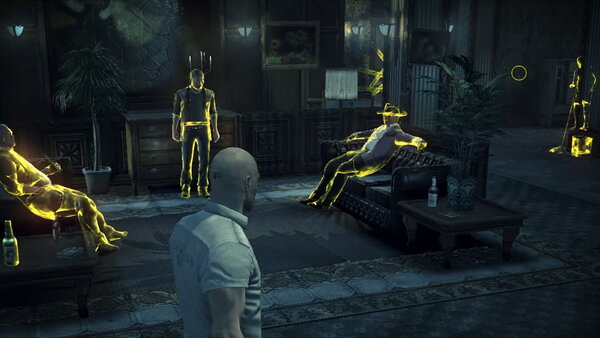
You won't find many Hitman fans who don't rank 2012's Hitman: Absolution among the series' very worst offerings to date, and that's in large part because it was perceived to overtly casualise the Hitman experience with its more linear level design and more forgiving gameplay mechanics.
Case in point, Absolution introduced Instinct Mode to the franchise - a mechanic which grants players the ability to see NPCs and important objects through walls, while also allowing them to avoid being recognised while in disguise.
Basically, it was a cynical attempt to make Hitman more accessible to even the most casual of players, but fans largely felt that developer IO Interactive lost the tense, strategic essence of the series in the process.
Thankfully they took the stern feedback onboard, as 2016's Hitman scaled Instinct Mode back so it was no longer a glorified cheat code for slipping out of sticky situations, as has served the franchise well ever since.
13. "Avoid Gunfire & Explosions" - Need for Speed: The Run
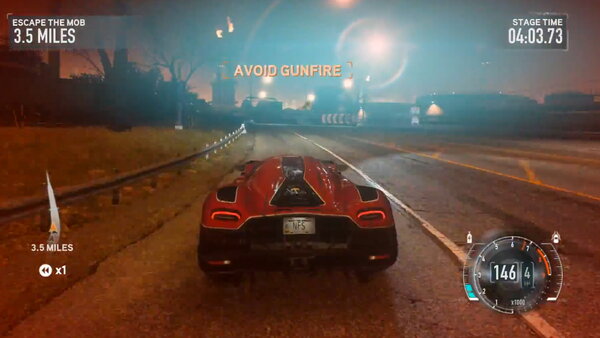
Most racing games are pretty damn straight-forward, and so there's no real reason for them to insult your intelligence, but Need for Speed: The Run nevertheless found a way.
In Stage 8 of the game's campaign players find themselves having to escape the mob, while also dealing with a helicopter firing high-caliber rounds in their direction, just as a bunch of flammable containers start exploding around them.
Hilariously, the game assumes that players won't appreciate the danger of these elements, and so flashes up instructions to "avoid gunfire" and "avoid explosives" like they're special objectives you desperately need to be made aware of.
Nah, you know what? I'm gonna steer straight into the gunfire and explosives, because that's how you survive, right?
It's as though EA Black Box wanted to cater to people who've never played a video game or watched an action movie before, or have even a passing awareness of the dangers of bullets and things that go boom.
12. Rubber Bullets - Yakuza 4

The Yakuza/Like a Dragon franchise has gotten away with a whole lot of silliness over the years, but Yakuza 4 fielded out a plot twist so utterly ludicrous that it became a jumping-the-shark moment for many.
During the story, players witness the purported mass slaughter of the Ueno Seiwa clan by Taiga Saejima in a ramen shop, where Saejima guns down 18 of the gangsters.
Yet near the end of the game, we find out that Saejima unknowingly used weapons loaded with rubber bullets, and so the 18 men weren't actually killed but simply incapacitated.
And if that's not absurd enough, Katsuragi then entered the ramen shop after Saejima left and murdered all the men for real.
Yakuza has had its fair share of contrived, convoluted storytelling over the years, but this is straight-up cartoonish, needlessly complicated nonsense that ended up making Saejima look like a total moron, given the lack of blood that came from his shooting.
We love you, Yakuza, but this was beyond the pale.
11. "Return To Combat Area" - Battlefield
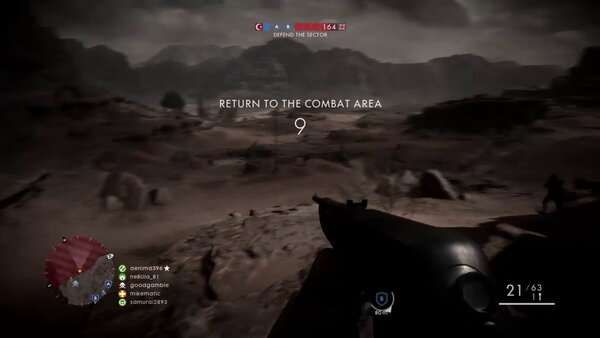
Many years ago, the Battlefield franchise popularised a new way to prevent players from wandering out of bounds without throwing up an immersion-breaking invisible wall.
Instead, players who ventured off-piste would receive a warning that they've left the combat area, after which they'd have 10 seconds to return to a playable zone lest they be shot as a deserter.
Yet ultimately it's not really any less immersion-breaking than an invisible wall, because it's so hilariously transparent that the game is trying to funnel you into the precise area it wants you to be in.
The fact that one centimeter of space can mean the difference between life and death, between being in the fight and branded a deserter worthy of execution, is absolutely comical.
Yet developers en masse have deemed it a more elegant solution to crowd control, and so it's been adopted by countless other shooters over the years. You hate to see it.
10. Venom Snake Is Big Boss' Doppelganger - Metal Gear Solid V: The Phantom Pain

Hideo Kojima sure knows how to serve up a bonkers plot twist with the best of them, though he finally asked too much of players with Metal Gear Solid V's hugely divisive final reveal.
Players who go the extra mile to unlock the game's true ending will learn that protagonist Venom Snake actually isn't Big Boss, but rather a doppelganger.
To be precise, he's the combat medic who was onboard the chopper that crashed at the end of prologue game Ground Zeroes, after which he was given plastic surgery and hypnotherapy to become a Big Boss decoy, who we spend the entire game playing as.
For many players this felt like an ass-pull too far - a twist for a twist's sake that was just too contrived and absurd for its own good.
But there were also plenty of fans who figured it out ahead of time, given that the start of the game lets you customise Snake's face for use in Metal Gear Online, and this avatar is then faintly visible in the reflection of the chopper whenever Snake looks out the window.
There's a whole lot of buffoonery that Metal Gear fans are willing to get onboard with, but this was just too silly and too half-baked to pass the sniff test.
9. Pick A Colour, Any Colour - Mass Effect 3

The Mass Effect trilogy enjoyed enormous success because, in addition to being hella entertaining, it didn't talk down to players and fundamentally respected their intelligence.
But BioWare's meticulously constructed house of cards came tumbling down at the conclusion of the third game, which the studio promised would meaningfully pay off the player's choices across the entire epic trilogy.
Yet this turned out to be a basically empty promise, as at game's end players were offered three choices, each represented by a colour - destroy the Reapers while wiping out all synthetic life, take control of the Reapers at the cost of Shepard's life, or merge all organic and synthetic life.
This sparked instant outrage from the fanbase, who were largely left underwhelmed by such a simplistic conclusion to a trilogy that had built its brand on granular player choice.
The fact that BioWare colour-coded the choices only made it seem that much more facile and patronising, and though they did release a revised DLC ending later, it was largely an act of mere turd-polishing.
8. The Hand-Holding Tutorial - The Legend of Zelda: Skyward Sword

The Legend of Zelda: Skyward Sword is hardly a fan favourite entry into the beloved action-adventure franchise, and this is in large part because of the massively sour impression it leaves in its opening hours.
From the jump, Skyward Sword inundates the player with a ludicrous number of tutorials which, for anyone already au fait with the series' mechanics, are a stamina-draining slog to get through.
Couple this with the incessant intrusions of Link's companion Fi, who continually interrupts gameplay to tell you something you likely already know, and the game's staggering linearity, and Skyward Sword often feels like a Zelda game made for people who've never actually played a video game.
Nintendo did at least address the decade's worth of criticism for the 2021 HD re-release, with Fi's overzealousness being toned way down.
Better still, the franchise has generally taken a less hand-holdy direction with its more recent mainline releases, in turn showing greater respect for players' abilities.
7. "Cut Off Their Limbs" - Dead Space
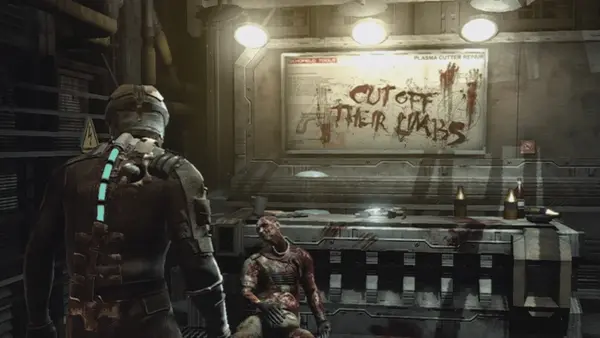
One of the core tenets of survival horror masterpiece Dead Space is its emphasis on "strategic dismemberment" - that is, defeating necromorphs not by shooting them in the head but targeting and removing their limbs.
It's a whole ton of fun, but early in the original game developer Visceral Games makes great pains to bash you over the head with this gameplay principle by quite literally writing it in blood on the wall and then bombarding you with a battery of messages reiterating the strategy.
We got it the first time - we're good.
Now in total fairness to Visceral, excessively hand-holding moments like this are usually due to the dev team discovering during play-testing that a mechanic isn't as obvious as it seems, but even so, it's literally scrawled in unmissable gore right at the start of the game.
If you can't figure it out after that, it's basically on you.
6. The 20-Hour Hallway - Final Fantasy XIII
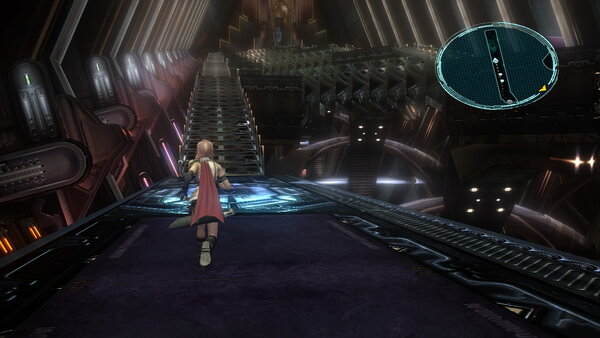
For all of its well-aged eye-popping visuals, Final Fantasy XIII is one of the most divisive mainline entries in the legendary RPG franchise's history, and for damn good reason.
More than 15 years after release, it's still often mockingly referred to as a "hallway simulator" due to the staggering linearity of the game's first half.
And that's no exaggeration - it takes around 20 hours of extremely on-rails gameplay for players to reach the world of Gran Pulse and things to open up, yet the journey there is so thunderously dull that even Final Fantasy die-hards might tap out before that point.
The bombardment of hallways and tutorials and lack of what most fans expect from a Final Fantasy game - compelling combat, party control, and a vibrant game world - left many baffled that Square Enix would ever consider it worthy of the series' good name.
Final Fantasy has been many things over the years, but it's never been this boring.
5. Wesker Has 7 Minutes To Spare - Resident Evil 5
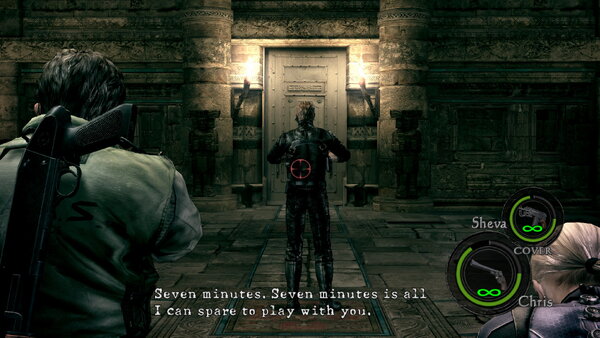
One of Resident Evil 5's most memorable boss fights is the battle against both Albert Wesker and a mind-controlled Jill Valentine, in large part because Capcom decided to spell out what players had to do with an embarrassing lack of subtlety - even for the standards of a Resident Evil game.
At the start of the fight, Wesker infamously says to Chris Redfield, "Seven minutes. Seven minutes is all I can spare to play with you."
Gee, what a strangely specific amount of time to namedrop - d'you think that might be the in-game timer for how long you need to last against Wesker before the fight comes to an end?
And that's exactly what it is - while skilled players can inflict enough damage against ol' Alby to trigger a quicker end to the fight, most will simply succeed by playing out the clock for all of those seven minutes.
Was there really no more subtle way for Capcom to suggest to players that they just needed to hang in there for a little while? Terrible.
4. The Dog Sniffs Out Treasure - Fable II

Who among us doesn't love a dog companion in a video game?
While Fable II's canine buddy is incredibly buggy, the fanbase still has a whole lot of time for him, even though he's basically the embodiment of how dumb Peter Molyneux thinks the average player is.
The dog can help fight off enemies, but its most useful ability lies in sniffing out treasure - because he's really, really good at it.
The problem, however, is that it's often easy to spot where the treasure is yourself, but the game requires you to wait until your doggo has spotted it before you can start digging.
Basically, it's as though Lionhead Studios couldn't fathom the idea that players might be able to find treasure on their own, so they didn't even include a mechanic allowing them to dig it out solo. It's dog or bust.
Much as many love the yappy furball, having to rely on him for basic interactions like this is infuriating.
3. Neil Is Cliff 2.0 - Death Stranding 2: On the Beach
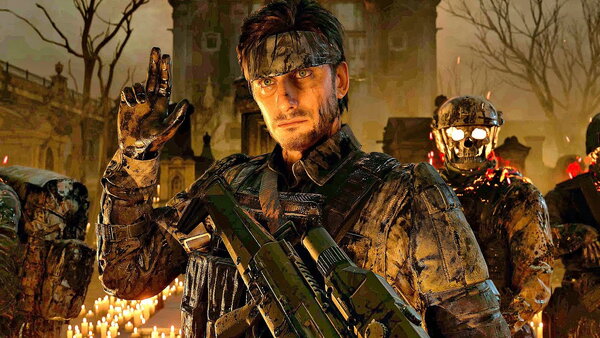
Death Stranding 2 sure had a lot to live up to where its secondary villain was concerned, considering how instantly iconic Mads Mikkelsen's Clifford Unger was in the original.
The sequel's equivalent, a Solid Snake-looking soldier by the name of Neil Vana, certainly had promise on paper, though ultimately Kojima went way too far in having Neil more-or-less repeat the same beats as Cliff.
That is to say, Neil is also a recurring boss throughout the game who shows up with a group of spectral soldiers to hunt the player across a number of surreal battlefields.
And if that's not samey enough, Neil is also a haunted figure with ties to protagonist Sam's past, just as Cliff was in the first game.
Ultimately for all of Hideo Kojima's efforts to make Death Stranding 2 a bigger, better sequel, pretty much everything about Neil felt like a lazy copy-paste of what he did with Cliff in the first game.
Needless to say, if Death Stranding 3 does happen, there will be many eye-rolls if Kojima rehashes the Cliff formula once again.
2. Shelby Is The Origami Killer - Heavy Rain

Quantic Dream's interactive drama Heavy Rain has a lot going for it, though it also flushed plenty of its goodwill down the toilet during the climax, when it was revealed that the elusive Origami Killer is actually one of the four characters we've been playing as throughout the game.
As it turns out, the serial killer is none other than private investigator Scott Shelby, and while it's certainly a bold idea in theory, the problem is that the twist reveals that the audience has been unknowingly controlling an unreliable protagonist.
Earlier in the game, players control Shelby when antique shop owner Manfred is murdered, and the scene makes it abundantly clear that Shelby couldn't be the killer.
But it then turns out that Scott did kill Manfred, because the perspective of events we saw earlier in the game was basically manipulated to ensure that players didn't ever consider Shelby a possible culprit.
That's not clever - it's maddeningly lazy, unfair storytelling that actively works against the audience's ability to figure out the killer's identity.
1. "Courage Is The Magic That Turns Dreams Into Reality" - Tales of Symphonia: Dawn of the New World
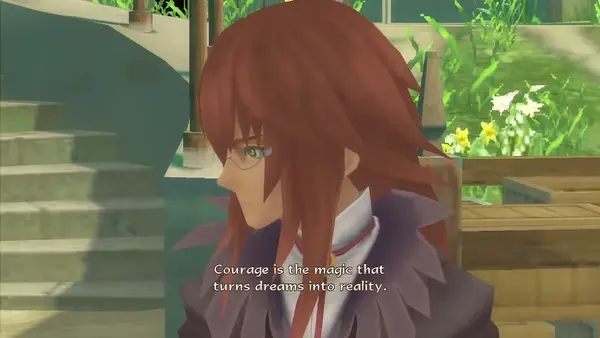
Tales of Symphonia: Dawn of the New World is admittedly not a great RPG, and one made worse by the widely-mocked repetitious invocation of a certain one-liner.
Early in the game, Richter Abend tells protagonist Emil, "Courage is the magic that turns dreams into reality," and for reasons that will only be clear to Namco Tales Studio, we're given a few hilarious flashbacks to the quote mere moments later, not to mention countless times throughout the rest of the game.
Basically, the developer treats every single one of its fans like they just suffered a traumatic brain injury and might have trouble remembering something they heard mere minutes ago.
It's a shame considering the quote itself is actually pretty great, but execution is everything, and in that regard they totally fumbled it.
But on the other hand, this is all funny enough that most fans would probably miss the repetition if it wasn't in the game.