20 Disastrous Gaming Launches Everyone Saw Coming
The most predictable video game launch disasters.
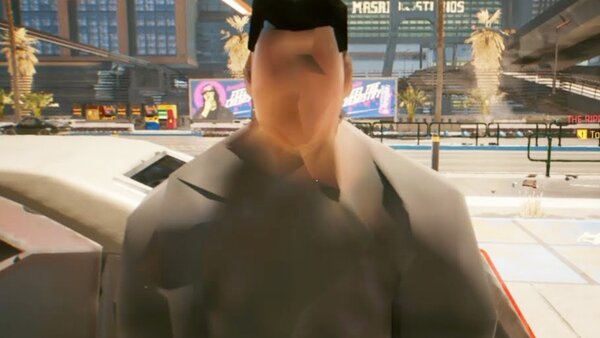
The big difference between video games and most other art forms is that they're amorphous creations with the potential to continue evolving over time, as developers release patches and updates to (hopefully) improve them.
The grim flipside of the modern capability to update games post-launch, however, is that far too many games end up bowing in less-than-ideal shape, with the confidence that they can be further chiselled into condition after release.
And there are certainly times where games have made it clear long before launch that things aren't going to go well right out of the gate, with players en masse latching onto this fact.
That's definitely true of these 20 games, all of which ended up launching quite calamitously for one reason or another, long after the writing was on the wall.
From poor gameplay previews to press reports of a troubled development and even cagey remarks from the developers themselves, the tea leaves absolutely pointed to these games all releasing as a hot mess - which they totally did.
While some sadly never really improved much, others were thankfully continually worked on until they became the game players actually wanted all along...
20. Skull & Bones

It frankly would've been shocking if Ubisoft's open world pirate-themed action-adventure game Skull and Bones enjoyed a successful launch, considering the utter minefield that was its path to release.
Originally announced at E3 2017, the game was continually delayed until finally releasing almost 7 years later at the start of 2024.
During this period many reports were made of the game's troubled development, said to be a result of scope creep and project mismanagement, causing its budget to balloon to an eye-watering $200 million.
By the time a poorly received closed beta took place in 2023, it seemed nigh-on impossible that Skull and Bones could weather the storm of bad PR and somehow launch in a manner that satisfied players, critics, and Ubisoft themselves.
Ultimately the game bowed to aggressively mediocre reviews, most feeling that its empty, repetitive gameplay wasn't worth the $70 price tag nor Ubisoft's widely-mocked decision to label it a "AAAA" title.
Though Skull and Bones didn't have major server issues on launch compared to many games on this list, the utter lack of interesting things to do made it a coma-inducingly dull experience that surely left those few who actually bought it with weapons-grade buyers' remorse.
19. The Lord of the Rings: Gollum
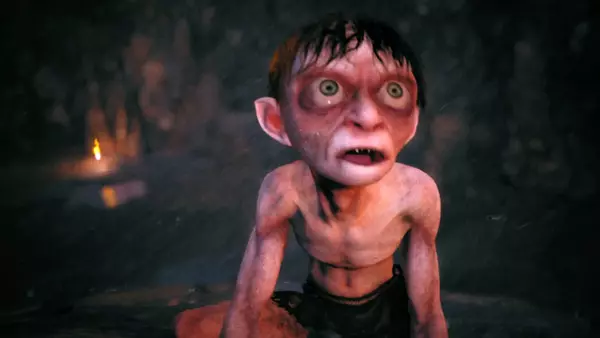
The Lord of the Rings: Gollum was a giant, bleating red flag from the moment it was first announced.
For one, developer Daedalic Entertainment had no experience working in the AAA arena, gameplay previews looked immensely rough, and fundamentally there just wasn't much fan interest in a stealth-action Lord of the Rings game centered around Gollum.
This was all topped off by reviews being embargoed until release day, at which point the avalanche of negativity began, with critics and players alike lambasting the game for its dated stealth gameplay, abundance of glitches, poor AI, naff graphics, and so on.
Even for the low standards of licensed video games Gollum was an utter atrocity, and enough players gave it a wide berth that it predictably flopped, causing a sequel to be cancelled and Daedalic to revert to being a publisher-only.
And then there's the hilariously inane cherry on top of all of this - even when Daedalic apologised to players for the launch state of the game, the apology was revealed to have been written by ChatGPT. You couldn't make it up.
18. SimCity (2013)

The excitement for 2013's SimCity reboot was stymied by the fact that EA confirmed pre-release that it would be an always-online title - an extremely odd choice for a city builder with a distinct single-player focus.
Many called foul that this thinly-veiled DRM would likely make the game unplayable in the event of server outages, and lo and behold, when SimCity launched it was an absolute dumpster fire of server issues, ensuring the majority of paying customers were unable to properly play it.
And even when players could get online to play, many reported losing masses of progress due to the flaky servers.
EA only stoked the ire of the player base further by both refusing to give refunds or release an offline patch, ensuring that SimCity underperformed commercially amid the deafening chorus of justified anger.
It was an outcome which so, so many saw coming, and only an entire year after SimCity's release did EA finally release an offline patch, by which point most folk had long since abandoned the game.
17. The Day Before

Perhaps no video game in history has more blatantly drawn attention to its own impending failure than The Day Before.
The MMO survival game drummed up a ton of buzz online after dropping some snazzy reveal footage in early 2021, though many also expressed doubts that a little-known developer, Fntastic, could deliver on the title's promise.
It didn't help that the game was delayed numerous times and Fntastic weren't remotely forthcoming about detailing The Day Before's actual gameplay. This became enough of an issue that some even believed the game to be a scam.
And so many were ultimately surprised that it released at all, even if less surprisingly The Day Before was promptly confirmed to be a fundamentally terrible extraction shooter.
More unexpectedly, the online backlash from disgruntled players was vocal enough that Fntastic removed the game from sale just four days after release, refunded everyone, and then swiftly closed up shop.
While many ultimately doomed games manage to convince folk that they just might pull it off, never before have players en masse been so utterly united in their skepticism of a game's ability to deliver.
16. Xbox One

The wildly botched launch of the Xbox One had a majorly tectonic impact on the games industry in the years that followed, and yet, it could be seen coming a mile off.
After the hugely successful Xbox 360, Microsoft evidently got a little too arrogant for their own good with its successor, which they clearly believed would sell by the shedload no matter what.
Microsoft ill-advisedly positioned the Xbox One as an all-in one entertainment device, with so much of their marketing focusing on TV and sports rather than, y'know, games.
Then there was the decision to forcibly bundle the Kinect motion sensor with it, and an initial always-online requirement in an attempt to kill the second-hand games market as well as the mere act of loaning a game.
The latter point especially tarnished the Xbox One's reputation before it was even released, and though Microsoft swiftly relented on this policy, the damage had already been done.
Sony quickly released a wildly sarcastic video detailing how to share games on PS4 - a video which may well have single-handedly won them the generation.
This is without even getting into the fact that the Xbox One launched for $100 more than the PS4 despite being marginally less powerful.
And so, the PS4 went on to absolutely trounce the Xbox One in global hardware sales, all while Microsoft spent the entire generation scrambling to win back their market share with consumer-friendly services like Xbox Game Pass.
But it goes without saying that Xbox as a brand is still firmly on the back foot, and it can all be traced back to the utterly misguided strategy behind launching the Xbox One.
15. Fallout 76

Though there was much excitement about the prospect of a multiplayer-focused Fallout game, there was also a healthy amount of pre-release skepticism about Bethesda's ability to deliver the goods.
After all, for as acclaimed as the developer is, this would be their first major foray into the multiplayer arena, and considering the ludicrously creaky nature of the game's dated Creation Engine, many doubted its ability to support such an ambitious project.
It didn't help that Bethesda confirmed the game would be always-online and launch with no NPCs, prompting the usual concerns about server issues and also the prospect that the game world could end up feeling incredibly barren.
Bethesda didn't really make much effort to assuage players of their concerns that Fallout 76 was shaping up to be a big ol', aimless mess, which is precisely what it was upon launch.
Even excusing the abundance of bugs, Fallout 76 was just a thunderous bore in its early days - the world didn't feel alive, largely due to the absent NPCs and thread-bare story.
Bethesda did at least stick at it and whip the game into shape with updates which added NPCs and a more fleshed out storyline, but it's painfully clear that Fallout 76 was taken out of the oven a good while before it was done cooking, just as so many predicted.
14. MindsEye
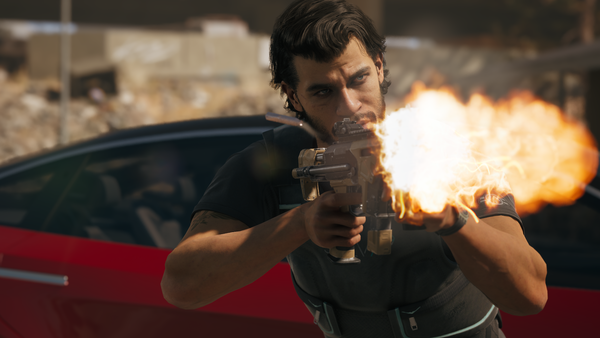
Given the enormous cost of making and releasing a AAA game, it's little surprise that publishers like to promote them extensively before their release, to ensure total saturation of market awareness.
It was immediately puzzling, then, that sci-fi actioner MindsEye had little marketing presence to speak of until a few weeks prior to launch, when IO Interactive finally started giving it the hard sell.
Much fuss was made of the game being directed by Grand Theft Auto producer Leslie Benzies, yet the trailers ultimately failed to sell MindsEye as anything more than another identikit action game destined to come and go in a blip.
It didn't help that the CLO and CFO of developer Build a Rocket Boy quit the company a week before release, review copies were withheld from critics, and the dev also tried to stop people streaming the game on release day.
The ugly truth was that MindsEye launched feeling fundamentally unfinished, and even what was there was profoundly lacking in any personality or spark of its own.
In addition to the critical drubbing, the game peaked at barely 3,000 concurrent Steam players, and that number tumbled off a cliff within mere days as many reportedly sought refunds.
13. Mass Effect: Andromeda
Much as just about everyone wanted Mass Effect: Andromeda to be a smash hit, there were just so, so many warning signs during development that this wouldn't be the case.
For one, various key creative team members - including the original director, lead writer, senior editor, and O.G. trilogy director Casey Hudson - all left BioWare in the middle of Andromeda's development.
Elsewhere it was reported that the decision to switch to DICE's Frostbite 3 engine, requiring all assets to be built from scratch, was proving problematic for an understaffed team.
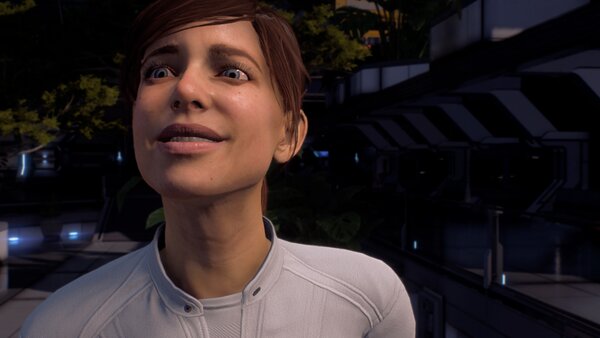
And this definitely showed in early gameplay footage, where many pointed out how stiff the character animations looked.
This was further confirmed when EA ill-advisedly made a 10-hour preview of Andromeda available a week before release, where the game's janky facial animations were widely ridiculed and went viral, helping obliterate the game's momentum days before launch.
While certainly not a failure on the level of many games on this list, Andromeda was received considerably less warmly than its predecessors, and only after a number of substantial patches did it finally begin to feel more polished.
12. The Quiet Man

Cinematic action-adventure game The Quiet Man was announced during Square Enix's press conference at E3 2018, the high-profile reveal suggesting that the publisher had high hopes for it.
With its enticing premise, revolving around a deaf protagonist whose lack of hearing is reflected in the game's muted audio itself, there was clearly a ton of potential here for a fascinating feat in hard-of-hearing representation.
Yet the months leading up to the game's release were bizarrely, well, quiet, with only a few scattered previews talking about how weird it was, before the game was given a low-key release without review copies being provided to most critics.
Ultimately, to the shock of nobody, The Quiet Man was panned for its clunky combat and confused approach to its deaf protagonist.
Many complained about the game's lack of subtitles despite the fact that the protagonist is clearly shown to read lips throughout the story, making it clear that there just wasn't enough thought put into the game on a conceptual level.
Developer Human Head Studios did release a patch containing all of the game's audio a week later, but by that point the damage had already been done and the vast majority of players had already moved on.
The Quiet Man disappeared from the gaming consciousness within days, damn-near guaranteeing that it was a massive sales flop.
11. Anthem

There's no doubt that EA was trying to position BioWare's Anthem as the next big thing in the AAA live service space - an always-online multiplayer-focused action-RPG in which you and a few pals can fly around in Iron Man-esque suits and battle monsters.
As great as that sounded on paper, Anthem's roughshod production was well-documented prior to release, with reports indicating the project was mismanaged, changing direction numerous times over the course of its seven-year development cycle.
This only exacerbated the sinking feeling many had from the game's vague trailers, which were more concerned with vibes and visuals than detailing the gameplay, that EA was about to lay yet another undercooked, overhyped live service goose egg.
And players were bang on the money - Anthem launched with a painfully mediocre campaign, a dull post-game, atrocious loading times, and worst of all frustrating flight mechanics requiring you to remain close to other players.
Though BioWare initially decided to reboot the game, they ultimately announced that these plans were scrapped. Surprisingly, though, Anthem's servers are still online for the time being, with a final shutdown date pencilled in for January 12, 2026.
10. Skate
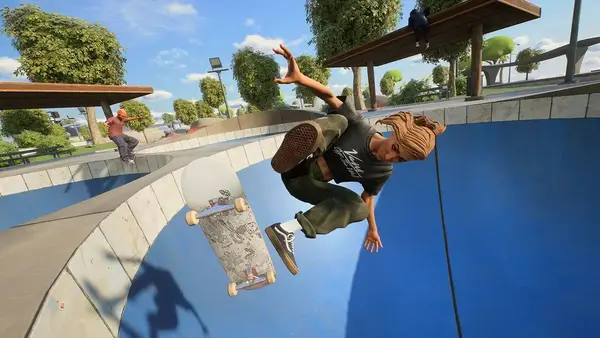
The long-awaited fourth entry into the much-loved Skate franchise finally launched in early access back in September, but all the excitement surrounding its release was firmly tempered by several major red flags.
For one, EA announced that Skate would be an always-online title, meaning there was no option to play it offline and in the event the servers went down, it would be rendered unplayable.
Then there's the free-to-play aspect. Though music to the ears of some, others were quick to question how invasive the game's microtransaction implementation would be as a result.
And indeed, Skate's early access release has been a mess so far, to be kind.
For one, server queues initially made it hell to actually get into the game at all, while the microtransactions have been predictably polarising - particularly the decision to charge $35 for a Dead Space skin.
Then there's the gameplay itself, which hardly feels great compared to, say, Tony Hawk's Pro Skater, as well as the abundance of glitches and sheer bland soullessness of the open world, which gives players desperately little interesting to do.
The new Skate is basically exactly what many thought it would be - an excessively corporate reboot that couldn't feel much further from the original trilogy's core ethos.
9. Aliens: Colonial Marines

There was much excitement when Aliens: Colonial Marines was announced back in 2008, but enthusiasm began to fizzle away in the years that followed, with the project being continually delayed until a February 2013 release was finally set.
However, the gameplay footage shown off in the months leading up to release demonstrated a marked visual downgrade from prior trailers, making it clear that Colonial Marines was almost certainly going to be a major disappointment at absolute best.
A late review embargo that dropped just the day before it came out definitely didn't help the perception that Sega and Gearbox were about to slough an absolute dud out the door, as indeed turned out to be the case.
Colonial Marines was widely panned for its buggy, generic shooter gameplay, atrocious AI, underwhelming visuals, and naff engagement with Alien lore.
Following its release, reports recounted the game's utterly disastrous development, none of which was even remotely surprising considering the end product's shoddy non-quality.
8. Babylon's Fall

Developer PlatinumGames has built their name on delivering eccentric, unique, ludicrously entertaining character action games like Bayonetta, Metal Gear Rising: Revengeance, and Nier: Automata, so many were surprised when they announced a co-op multiplayer action-RPG, Babylon's Fall.
It seemed incredibly far outside the devs' wheelhouse, and while some were intrigued by the ambitious scope of the project, many more never had a sliver of faith in it.
It didn't help that Babylon's Fall resembled a Bland Fantasy Game from the moment it was revealed, with yawn-inducingly familiar aesthetics and gameplay suggesting it was a desperate ploy by PlatinumGames to quickly cash-in on the live service boom.
Well, players saw right through it, because barely anyone actually bothered turning up to the game's predictably calamitous launch.
In addition to critics calling out its boring, sauceless gameplay and art direction, the concurrent Steam player count peaked at less than 1,200 players.
In under two months that figure cratered to below 100 players, and within six months PlatinumGames shut the servers down, effectively killing the online-only title.
7. Concord

Concord might well lay claim to the most disastrous launch in the history of video games.
Sony's live service hero shooter attracted all the wrong publicity from the moment it was unveiled, with few taking much interest in its quippy, James Gunn-flavoured cutscenes nor its generic 5v5 FPS gameplay.
Many roundly dismissed it as an Overwatch clone, a sentiment that was only exacerbated once Sony hosted an open beta in the lead up to its August 2024 release.
That Concord wasn't a monetised free-to-play game but rather a $40 retail release only furthered the feeling that Sony was about to drop another dud in their growing glut of live service flops - one rumoured to have cost as much as $400 million.
Ultimately Concord failed to make a dent, topping out at less than 700 concurrent players on Steam while allegedly selling only around 25,000 units on PS5.
This wasn't hugely surprising to anyone who had been following the game, but what came next was.
Rather than see if Concord caught on in the months that followed, Sony saw the writing on the wall and pulled the plug just two weeks after launch.
6. Final Fantasy XIV
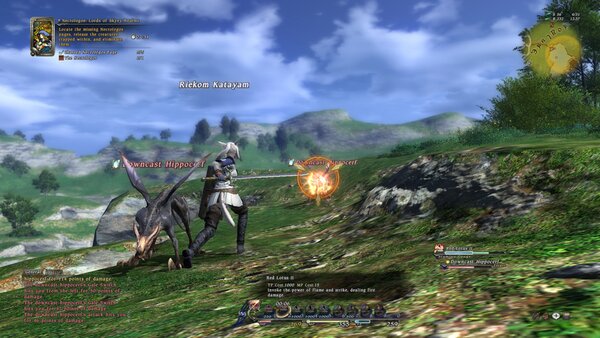
Square Enix well and truly walked open-eyed into a flaming trainwreck with their original iteration of MMORPG Final Fantasy XIV.
An open beta ran for the entire month leading up to its September 2010 release, with fans loudly indicating to the publisher that the game simply wasn't ready for prime time.
The bugs, the crashes, the atrocious interface, and rampant server problems made it clear that the game needed to be pushed back, but in a mad rush to plant another flag in the busy MMORPG space, they forged ahead with the planned launch.
Critics and players alike roasted the game for its dull world, unsatisfying gameplay, technical issues, and general feeling that it was launched unfinished, eventually prompting Square Enix to shutter it barely two years later.
But in a less expected move, they returned with a vastly overhauled reboot of the game, A Realm Reborn, in August 2013, which boasted a new engine, totally reworked gameplay system, and superior server infrastructure.
This time around they got it right, as FFXIV launched to solid acclaim and remains one of the most active MMORPGs more than a decade later.
5. Battlefield 2042

It's no understatement to say that fans well and truly had their pitchforks sharpened for Battlefield 2042 long before it came out, and honestly with pretty damn good reason.
The FPS sequel came to market with a ton of eyebrow-raising issues, from the lack of a single-player campaign to reliable leaks about its rushed development, a poorly received beta, and overpowering sentiment that its 128-player matches were a gimmick.
Outlets that previewed it even encouraged EA to delay the game further, but they stayed the course, and so Battlefield 2042 went on to receive the worst reviews in the mainline series' history.
The game was primarily criticised for its bugginess, the baffling absence of countless basic, expected features - like a scoreboard and server browser - as well as a widely-loathed overhaul of the class system, and again, the lack of a single-player campaign.
Within barely a month, Battlefield 2042's player count had been dwarfed by that of Battlefield V, a game released three years earlier, and EA later confirmed that it failed to meet sales expectations.
4. Mighty No. 9

There was much initial excitement when Mighty No. 9 was announced - a spiritual successor to Mega Man whose development was being spearheaded by franchise designer Keiji Inafune? What could possibly go wrong?
The game's crowdfunding campaign was massively successful, raking in more than $4 million, though in the years that followed the project was subject to extensive delays, causing its release to be pushed back 14 months.
Furthermore, the initial promised art style was switched out for a more generic, less-refined aesthetic, and a trailer dropped shortly before release was widely criticised for including the line, "make the bad guys cry like an anime fan on prom night."
It became increasingly clear that Mighty No. 9 was a grossly mismanaged project from the ground up, and so the fact that the end result was a tired, dull, artistically bland shadow of Mega Man caught few off-guard.
Today, it remains a towering monument to how a gassed-up, heavily crowdfunded game can still fail so spectacularly.
3. Diablo III

As excited as millions of players were for the long-gestating Diablo III, there was also a healthy amount of skepticism surrounding its launch for two reasons.
First and foremost, Blizzard decided to make the original PC version of the game always-online, ensuring players were left at the mercy of the publisher's servers.
And then there was the announcement that Diablo III would feature two auction houses - one allowing the purchase of items with in-game gold, the other with real-world money.
Many players were intensely skeptical of these business decisions, and lo and behold, their doubts were proved to be well-founded once the game launched.
Though Diablo III was well-received by critics playing within a controlled environment, server issues crippled the game on launch for general players, the infamous "error 37" locking many out from playing at all.
And though the real money auction house didn't open until a month later, its pay-to-win nature left some feeling that it took the satisfaction out of the loot grind.
While the real money auction house was shut down less than two years after the game's release and the server issues eventually abated, Diablo III's vitriolic launch remains a core memory of the game for many.
And more to the point, even in 2025 there's still no easy, legal way to play the game offline on PC.
2. Cyberpunk 2077

Though Cyberpunk 2077 was one of the most anticipated video games of all time, and some initially felt that Witcher developers CD Projekt Red could do no wrong, that sentiment began to evaporate the closer we got to launch.
For one, Cyberpunk had been delayed numerous times, all while reports emerged of the game's strained development, including a lengthy period of crunch to meet its final December 2020 release date.
Perhaps most damningly though, CD Projekt Red didn't release any footage of the game running on PS4 or Xbox One before release, and only provided PC review codes to critics, causing many to suggest that the console launch was about to be a hot a mess.
And of course, that's exactly what happened.
It was hardly a picnic on PC either, but the console versions were utterly riddled with bugs and performance issues, enough that Sony took the rare move of removing the game from the PlayStation Store for six months until it was in a worthy state.
Some players were irate enough that they filed a class-action lawsuit against the publisher for concealing the state of the console version, resulting in them paying out a total of $1.85 million to aggrieved customers.
Ultimately CD Projekt Red patched the game into satisfactory shape across platforms and it went on to sell an eye-watering 30 million copies, but Cyberpunk 2077's general brilliance is forever marked with an asterisk considering just how foreseeably, unforgettably awful its launch truly was.
1. No Man's Sky

And finally we have No Man's Sky - one of gaming's all-time great examples of a developer wildly over-promising what they could deliver at launch, getting absolutely roasted for it, but then knuckling down and finally vindicating themselves by over-delivering.
In the lead up to the release of the procedurally generated open world sci-fi game, many questioned whether Hello Games, a small dev team relative to the scope of their project, truly had the capability to deliver a massively explorable universe with multiplayer functionality.
As it turns out, they didn't, at least not at that time.
On launch, No Man's Sky was widely criticised for the repetition of its open world and tediousness of the activities on offer, while the total absence of promised multiplayer elements left many especially angry.
In hindsight it was clear that the game's incredible marketing wasn't aligned with its more modest initial scope, and some of the more vague, cagey remarks made by studio head Sean Murray pre-release should've tipped players off that the game might launch shy of expectations.
But in a neat turnaround, Hello Games worked incredibly hard to rehabilitate No Man's Sky's reputation in the years that followed, with a mind-boggling number of free updates delivering all the promised content and so much more.
As redemption stories go, they went above and beyond, even though the calamitous launch remains a massive cautionary tale of a developer failing to manage hype and expectations.