18 Mind-Blowing Facts You Never Knew About DOOM
Doom was inspired by...Tom Cruise?
The original Doom changed the course of the video game industry for good. Its meteoric rise to popularity ushered in a new era of games development, birthing a genre which still remains one of the most popular and financially viable of its kind.
Like any revolutionary product, the backstory behind the Doom franchise is long and fascinating. The success of the original Doom accompanied the rise of a company whose impact on game development can still be felt to this day, while the franchise itself has provided millions of people with hours of blood-soaked entertainment while simultaneously causing a moral panic.
Indeed, the history of Doom is home to some of the most interesting behind the scenes tidbits that enrich one’s appreciation of this now 23 year franchise, as well as the overall influence it had on both the video game industry and the world at large.
18. It Began Development As An Aliens Game

Before Doom was ever conceived as a battle against the legions of Hell, it originally began development as an Aliens game. Like many game developers, id Software was inspired by the James Cameron sci-fi classic, and wanted to make a shooter based on the film.
Id even went as far as to court Twentieth Century Fox for the license. However, eventually they realized that such a deal would only limit their creative freedom, so they ceased negotiations. Programmer John Carmack then suggested they swap the Aliens with demons from Hell, allowing them to create their own monsters and mythology while at the same time retaining the science fiction/horror atmosphere they drew inspiration from.
17. Heavily Inspired By Dungeons & Dragons

The popular tabletop roleplaying game Dungeons & Dragons provided a lot of the inspiration behind Doom. Many of the developers at id Software were big fans of the game, and would spend much of their free time playing it together.
The idea to use demons was inspired by the conclusion of one of their games, which ended with demons pouring out from a portal and invading the world. This ending made them realize that a similar premise would be perfect for the new shooter they were working on.
The design of some of the demons even take direct inspiration from some of the creatures in D&D. For instance, the Cacodemon was modeled after a combination of both the Beholder and Astral Dreadnought.
16. Origins Of The Title

Doom may seem like the perfect title in hingdsight, but the inspiration behind its usage comes from a surprising source.
Legendary programmer John Carmack actually came up with the title from a scene in the 1986 movie The Color of Money, starring Tom Cruise and Paul Newman. The specific scene takes place at a pool hall, with Cruise’s character holding a custom cue case, to which a man asks, “What you got in there?” Cruise opens the case and simply says, “Doom.”
Carmack liked the name because id Software aspired to dominate and take the video game industry by storm with Doom in the same manner that Cruise’s character dominates his opponent in the scene. They ended up doing just that.
15. John Romero's Head

By now it’s a well known fact among Doom aficionados that the severed head of lead designer John Romero can be found hidden behind the massive Icon of Sin in the last level of Doom II. But why was it put there?
Turns out this inclusion was a giant joke by the programmers at Romero’s expense. Rumor was that Romero could be a pain to work with at times, so a couple of the programmers put his head on a stick in place of the target sprite behind the Icon of Sin as a fun way to get back at him.
This prank did not go unnoticed…
14. Romero's Payback

John Romero eventually found his own severed head in the game, and instead of bringing attention to the in-game prank or outright erasing it, he decided to one up them with a jest of his own.
Upon entering the Icon of Sin’s domain, you'll hear an eerie voice speak demonic sounding gibberish. This is actually Romero himself stating, “To win the game, you must kill me, John Romero!" Romero had gone to sound designer Bobby Prince and recorded this line, reversed it, and snuck in into the level.
Romero hoped that this would remain secret until the release of Doom II, in which its discovery would act as a sort of comeuppance to their prank. Instead, it was discovered the very next day.
13. The Birth Of Deathmatch
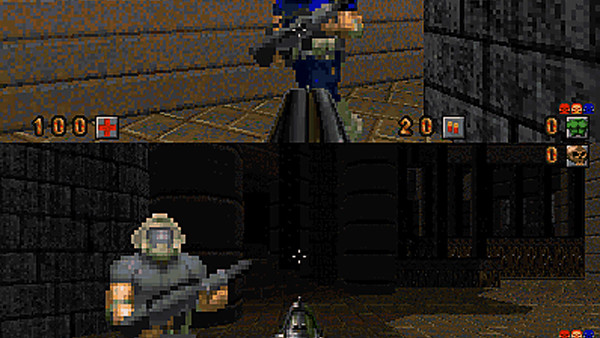
The term deathmatch feels like it has been part of gaming lexicon for as long as we can remember, but in actuality it began, as so many things did, with Doom.
The original Doom was one of the first video games to include a deathmatch mode in the traditional sense, as online and LAN based multiplayer was in its infancy at the time. While somewhat disputed, it is widely believed that John Romero coined the term deathmatch while developing it with John Carmack, and from that point the term naturally stuck.
This game mode and its many variations have since become the core mode of almost every multiplayer based FPS. It’s just one of the many ways Doom set the standard for the genre; a standard which remains intact to this very day.
12. The Doom Bible
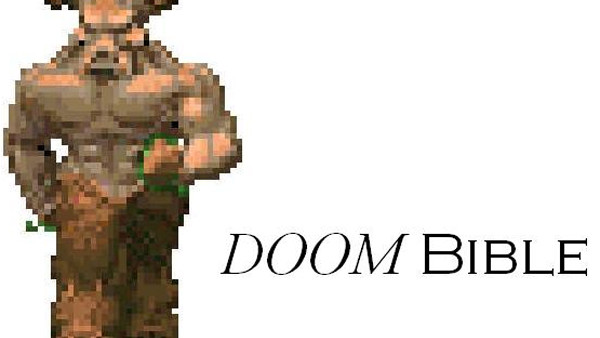
Besides Doom 3, the Doom franchise has never had a particularly deep or intricate story, instead prioritizing gunplay and atmosphere over lore. This wasn’t originally going to be case however.
During development on Doom designer Tom Hall went out of his way to outline the backstory in a design document he called the Doom Bible. This document detailed the setting, characters, and narrative structure of the game, along with various technical elements necessary for its construction.
Most of this never made it into the finished product. John Carmack wanted Doom to be simple and straight to the point, figuring that an elaborate story would take focus away from the gameplay, which he considered to be the highest priority. Their disagreements eventually led to Hall’s resignation during development.
11. The Iconic Weapons Are Toys
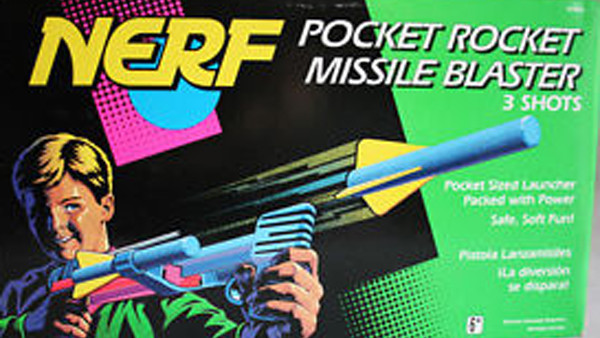
Doom has one of the most satisfying and iconic lineups of weaponry in any game, but did you know that many of them were modeled after children’s toys?
id Software was a very small development team at the time, and consequently were operating on a miniscule budget. In order to save costs, they used Nerf guns purchased from Toys 'R' Us as the models for many for the weapons, including the shotgun, chaingun, and rocket launcher.
The weapons were of course reskined in game; replacing the bright and colorful appearance of the toys with metallic silvers, blacks, and browns so as to give them a more realistic and believable look.
10. Heavy Metal Influences

The first two Doom games are infamous for their atmospheric and instantly catchy soundtracks. However, those with an ear for music might find them a little familiar. That’s because many of the tracks take blatant inspiration from popular heavy metal artists from the '80s and early '90s.
In fact, many of the tracks come very close to being borderline plagiarism. Certain melodies are practically taken verbatim from songs belonging to Alice in Chains, Slayer, and Black Sabbath, among many others, and can be heard sprinkled throughout the soundtrack to both Doom and Doom II.
Despite this, none of these bands ever took legal action against id, likely because they loved Doom too much themselves to care.
9. The First Episode Was Free
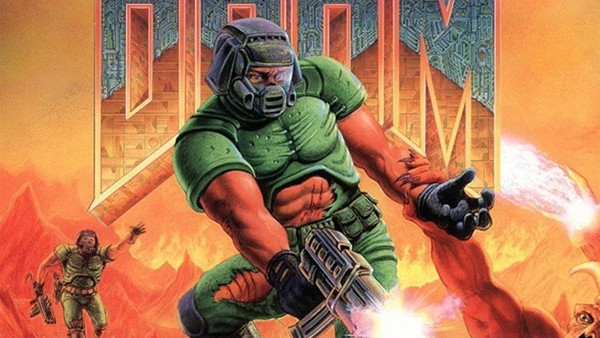
The first episode of Doom, titled “Knee-Deep in the Dead,” was not distributed in the traditional sense. Instead of charging customers for it, id Software made the conscious decision to release it as shareware.
This allowed the game to be freely shared among family, friends, and communities, putting it in the hands of more people than it otherwise might not have had it been sold commercially. The rest of the game, however, was not free, with the following two chapters able to be purchased through mail order. This unique distribution method caused Doom to sky rocket in popularity in a very short amount of time.
The shareware model was not reused for Doom II: Hell on Earth, partially because many of the more casual players assumed they had finished Doom upon completing the initial nine levels of the first episode, and thus didn’t bother purchasing the other two episodes.
8. Doom Was More Popular Than Windows

Doom was such a massive success that at one point it was actually installed on more home computers worldwide than Microsoft’s then newly minted Windows 95. And needless to say, Bill Gates took notice.
Gates briefly considered buying id Software so that Microsoft could profit off the franchise. The buyout never ended up happening, but a deal was made with id for Microsoft to develop a port of Doom specifically for Windows 95 so as to promote the operating system as a gaming platform.
Bill Gates even went so far as to star in a now infamous promo announcing the arrival of Doom to Windows 95, in which he superimposes himself into footage of the game. The port proved to be a resounding success for the burgeoning operating system.
7. Gabe Newell Worked On The Win95 Port

The team assembled by Microsoft to develop the Windows 95 port of Doom was headed by none other than Gabe Newell, co-founder of Valve.
Newell had worked on previous editions of Windows, and like everyone else, he was amazed by what id was able to accomplish with Doom. Working against the preconceived notion that a good game couldn’t be made for Windows, he and a group of engineers worked on porting Doom to the operating system…for free.
The experience made Newell realize the potential of video games, and he left Microsoft to found Valve with fellow employee Mike Harrington. Valve of course would go on to develop their own FPS, Half-Life.
6. Network Overloads
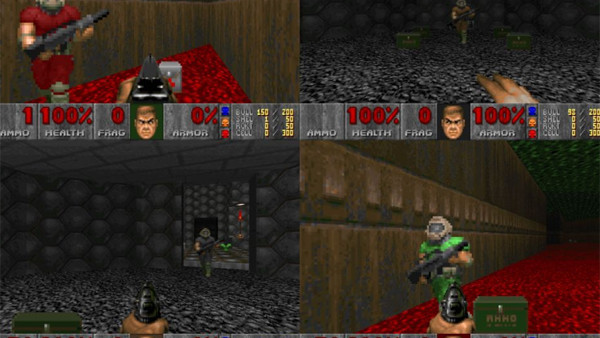
The rising popularity of Doom was such at the time that it caused a severe drop in productivity in businesses and college campuses around the world.
Employees would use company time to play the multiplayer together, which slowed down and even overloaded the networks. This became such a huge problem that businesses and universities were forced to set guidelines for both when and how long people could play the game, with some even going as far as to block its use all together.
Even the offices of id Software weren’t immune to this problem. John Romero himself spent much of his time locked in his office playing with his baby. According to the book Masters of Doom, which chronicles the rise if id Software, John Carmack was forced to break down the door with an axe to get him to stop playing.
5. Rare Doomguy "Ouch Face"
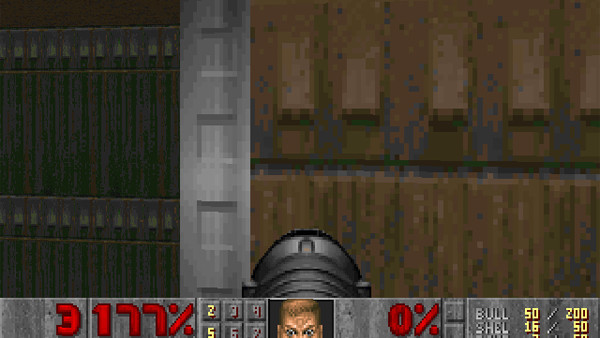
Those familiar with the first two Doom games will instantly recognize the iconic face of Doomguy, which sits centered in the hud at the bottom of the screen. It acts as a visualization of your health; reacting to hits and getting bloodier the more health you lose.
This face makes a handful of expressions, one of which is actually rarely seen do to a coding error. Dubbed the “Ouch Face” by fans, this expression of sudden pain and suffering was meant to trigger when the player takes 20 or more hit points in one tic. Instead, it only triggers when the player gains 20 hit points while absorbing damage.
Given the specifics of these conditions, it’s no wonder why the "Ouch Face" is so rarely seen. Some source ports of the game have fixed this error, so depending on the version of Doom you are playing, the "Ouch Face" will display when it’s supposed to.
4. Banned In Germany

Doom was among a handful of games that stirred a lot of controversy in the early nineties. Its violent and gory content was subject to intense scrutiny, which eventually led to the creation of the ESRB in the U.S.
Other countries weren’t quite so open minded. Germany wasn’t comfortable with the game, fearing the effects it might have on the minds of young people. In response, the German government banned any uncut copies of Doom and Doom II from being sold in the country.
Thankfully, after 17 years, this ban was lifted in 2011 after Bethesda, who had acquired id Software in 2009, lobbied the government to reverse the decision.
3. Marine Doom
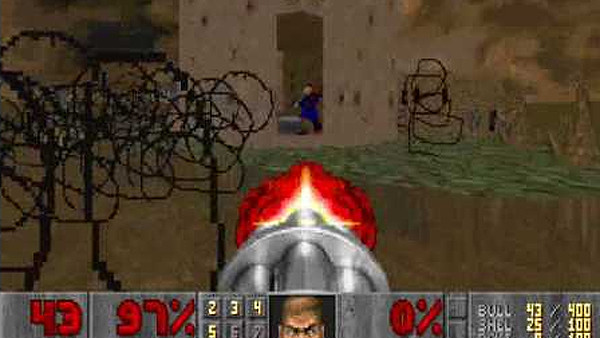
Doom was the first video game to be used as a training program by the U.S. military. A mod of the game, called “Marine Doom", was created by the United States Marine Corps to supplement the field training of recruits.
The mod was designed for a team of up to four players composed of a team leader, two riflemen, and a machine-gunner, to which they are to work together to complete a time sensitive mission. It was specifically used to train cooperation skills, reaction time, and split second decision making under high stress situations. Repetition of play was used to hone these skills until it became instinctive.
Marine Doom was eventually released to the public and replaced with America’s Army, which, unlike Doom, is an original game developed exclusively by the U.S. military.
2. Doom RPG

When most people think of Doom, they think of the four primary entries in the franchise, along with their various ports and remasters. However, there is one Doom game that’s consistently overlooked and forgotten.
Doom RPG was released for mobile phones in 2005, and as its title suggests, it is a role-playing game set in the Doom universe. While its style is very reminiscent of the originals, it utilizes a turn based combat system, leveling you up as you gain experience fighting demons. While it obviously couldn’t hold a candle to the primary games in the series, it was a solid enough effort.
It even managed to get a sequel, Doom II RPG. Released in 2009, it was a significant improvement over the first thanks to the major advancements in mobile technology. Both games remain relatively obscure despite the brand recognition.
1. The Doom 4 That Never Was
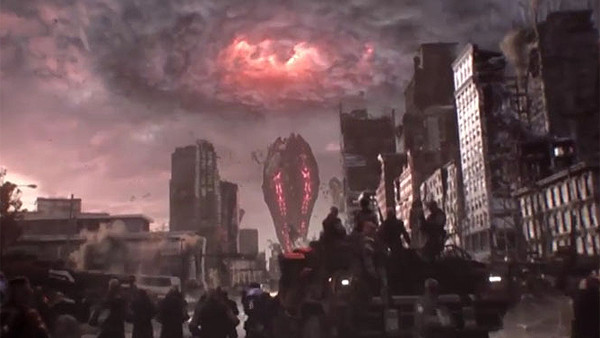
Doom 2016 has been unanimously praised as a return to form for a franchise that had appeared to have lost its way. However, the game could have ended up being very different, and most likely for worse.
Doom 4 had been in development for a very long time, and in that time it went through many different iterations. At one point the game was being developed as a retelling of Doom II: Hell on Earth, with you as a soldier on the ground fighting back against a full scale demon invasion.
It was certainly epic in scope, but id Software and Bethesda eventually realized that it was feeling more like a standard Call of Duty style military shooter than Doom. It was quickly scrapped, and focus was shifted towards making a game closer in style to the originals.
Got anymore fun facts about Doom? Let us know in the comments!