14 'Genius' Video Game Features That Were Total Accidents
9. Kirby's Simple-Yet-Effective Character Design

What you think: Widdle, iddy-biddy Kirby was designed to be a simplistic, easily-loveable nostalgia-creator, his fuzzy and cutesy aesthetic being the result of a thousand different pitch meetings to create the perfect character for all ages.
What actually happened: He was a total non-committal fluke, initially pegged as a placeholder character i.e. a quick doodle by Masahiro Sakurai put together for the sake of getting the game engine off the ground, the intent being to replace him with a 'proper' sprite somewhere down the line. Hell, his name wasn't even Kirby, it started out as Popopo (the parallel being antagonist King Dedede, who stayed to this day), but was changed to Kirby as a humorous spin on his aesthetic, contrasting against American lawyer Jack Kirby who Nintendo had past dealings with.
You can totally tell Kirby's entire look was the sort of thing you'd quickly scribble down in your notebook as a child - he's quite literally a round blob with a face, a smiley face come to life. That's what made him so immediately iconic; alongside hearing every art designer in the world slapping their forehead for not thinking of running with it sooner.
8. The Spy Class In Online Shooters
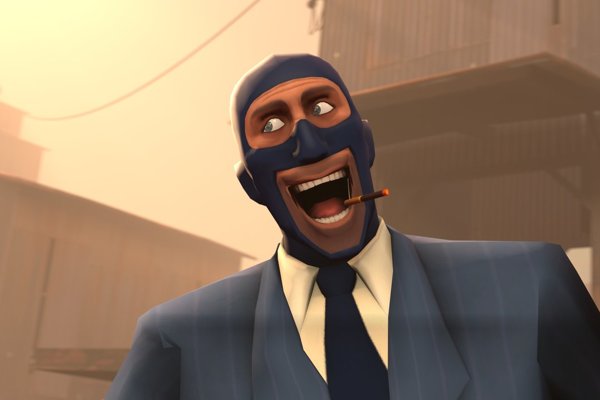
What you think: The spy class in online multiplayer games is just one of the base options that's evolved in various machinations over the years into everything from Team Fortress to Battlefield, Halo and Call of Duty, letting you infiltrate the enemy's ranks without being seen, turning the tables from the inside.
What actually happened: Team Fortress actually came from iD Software's Quake engine; a maelstrom of modded content and talent on behalf of a dedicated programming team headed up by one Robin Walker - rather like Counter-Strike branching off from Half-Life. They set about creating a slew of new classes for their game, but didn't account for one that would accidentally mimic the skin of the opposition, naturally resulting in players on the opposing team holding their fire.
Such an idea was brilliant in of itself, and following Walker's hiring by Valve and their team overseeing development of a fully-fledged independent sequel, the Spy was given the same proper character and loadout treatment as everyone else. It's pretty crazy, and means you could almost say the game spawned one of its most popular archetypes all by itself.
7. Sheng Long's Existence In Street Fighter II
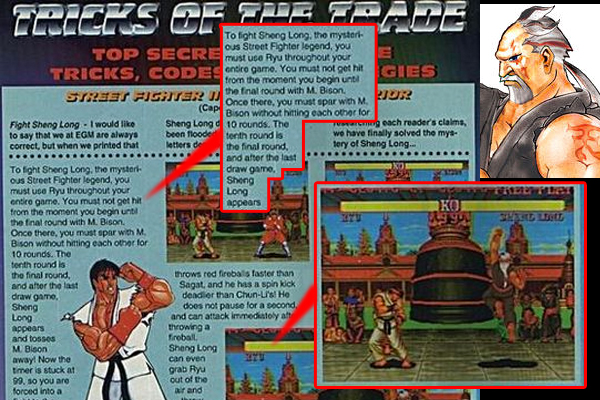
What you think: Street Fighter's most infamous character was born from the need to keep gamers enthralled and replaying a release over and over in the hopes of unlocking this near-mythical character who was touted by magazines and instruction manuals to be in there... somewhere.
What actually happened: It was all a ruse brought about from an initial mistranslation, one that a 1992 issue of EGM then used to sell copies of their magazine, trolling gamers more brutally than the siege of Minas Tirith. Basically, as Ryu's Dragon Punch ("Shoryuken") translates audibly as 'shnglóng' in the Chinese phonetic alphabet of pinyin, this meant his original Japanese victory line of "If you cannot overcome the Rising Dragon Punch, you cannot win!", became "You must defeat Sheng Long to stand a chance" on Western shores.
Capcom could probably have contained the whole thing if not for gamers getting in touch with the magazine, who then printed a totally fake article (yes, really) describing a completely made up way to unlock Sheng in the game. Without the internet to verify anything and word of mouth being king, tens of thousands of us tried our best to unlock the fighter. EGM's tactics included avoiding taking any damage for 10 whole rounds against the screen-filling M. Bison, which they said would then make Long appear.
Naturally it was nigh-impossible, and although many instruction booklets for SF II mentioned Sheng as being Ryu and Ken's teacher (validating a generation of gamers into thinking he was still in the game) it wasn't until SF IV when new character Gouken appeared as a direct response from Capcom, translating Sheng Long's name into a new moniker, finally bringing him to life in some form.
6. Final Fantasy's High-Level Random Encounters
What you think: Thanks to continually extended project deadlines and budgetary restraints, Hironobu Sakaguchi's first Final Fantasy was actually intended to be his last, an all-eggs-in-the-basket gamble to create something that would almost definitely never receive a sequel. Its gameplay was incredibly diverse and in-depth, but it was the game's random encounters that really established a sense of peril when you were out grinding, alongside making your character progression completely unique and addictive.
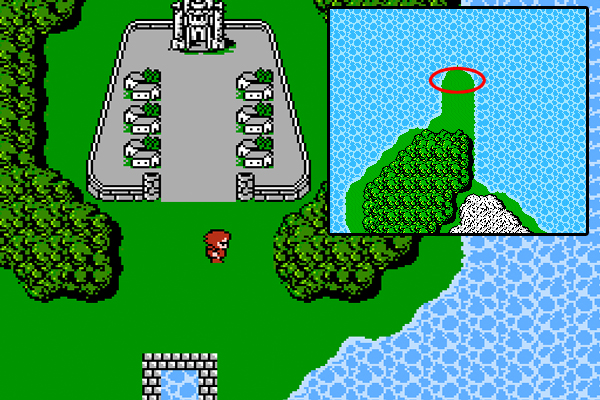
What actually happened: Although the majority of Final Fantasy is one hell of a statement of intent from the studio, thanks to it all being designed on a huge 8x8 grid - each section comprised of 1024 pixels - there became one section that overlapped, meaning you could get access to some top-level monsters hours before you were supposed to.
North of second town Provoka, there was one upper-tier segment of the larger map's landmass that crossed over into its neighbouring quadrant, meaning all the high-level beasties from that entire section were accessible from this tiny outcrop of land - lovingly nicknamed the 'Peninsula of Power'.
From then on out the random encounter system would be built upon, expanded and refined in every possible way, occasionally throwing more high level enemies your way as a reward for exploring for increased lengths of time in the first place - all because of the accidental crossover of enemy pools way back in 1987.
5. The 'Konami Code'
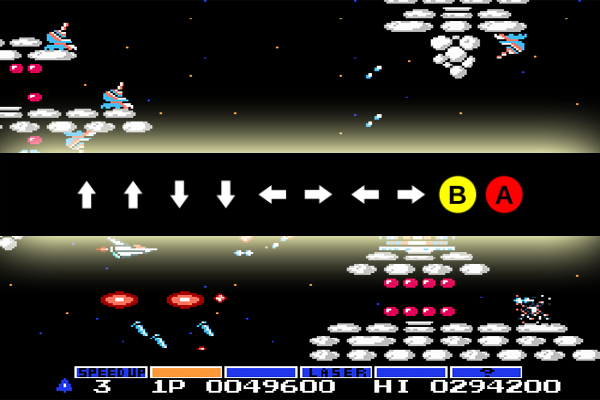
What you think: Konami's now-iconic cheat code was something the various teams decided on intentionally implementing across their many departments, throwing it into everything from Castlevania to Metal Gear Solid, Contra to Dance Dance Revolution.
What really happened: Its simplistic nature was actually to help out fumbling tester Kazuhisa Hashimoto as he attempted to get through 1986 side-scrolling blaster, Gradius.
Hashimoto put the code in himself to grant instant access to the title's full list of power-ups right from the off, literally because his own game was proving too hard. Nearing the release date, Gradius went gold and was being shipped to retail - only for Kazuhisa to remember he'd left the code in the final build of the game.
Naturally, consumers discovered it, but thanks to cheats back in the day being things that were shared with love and hilarity (not charged for, like in 2015), Konami's staff decided to embrace the cultural shift, implementing it in nearly all their games going forward.