11 Half-Baked Video Games That Totally Ruined Their Franchises
If Mass Effect 3 dropped the ball, Andromeda nuked it.

Video games have a nasty habit of overstaying their welcome. Rarely ever going out with a bang on top form, for the most part studios are content to keep pumping out new entries into popular franchises without a regard for quality, or whether or not anyone actually enjoys them anymore. Hell, this is the same industry that gave us nine Assassin's Creed games over the past ten years.
But just because publishers continue to release new games, it doesn't mean their audiences will mindlessly gnaw on any old bone that's thrown their way. In fact, over the years we've seen new entries into once earth-shattering franchises kill entire series' dead, completely burning bridges with fans for good.
It takes a lot to get gamers to finally say enough is enough, but these half-baked duds were so bad, they managed to cause mass exoduses amongst players, ruining any future potential in the process. Even if the publishers continued to release new entries afterwards, these games marked the point of no return, forever going down in gaming history as the titles that completely tarnished otherwise great gaming names.
11. Homefront: The Revolution

The Homefront franchise might be the biggest waste of potential gaming has seen in the past 10 years. Using a great alt-future story about an invaded USA as its baseline, the series has seen two radically different attempts to build some solid mechanics on top of this premise, only to tragically fail on both accounts.
But it was last year's Homefront: The Revolution that hammered home the final nail in the coffin for this once promising franchise. With development duties handed over to the team in charge of EA's Crysis, the series went open-world, shrugging off its corridor-shooter roots in favour of a more varied and less linear experience.
A decent idea on paper, but thanks to an incredibly tumultuous development cycle, the game released with a myriad of bugs and technical issues that made actually playing Homefront a wrestling match between the player and the game itself. It didn't help that when the developers actually fixed these issues, there was no diamond to be found under the rough - only an uninspiring and all too familiar military FPS.
10. Dead Space 3

For a few years around the late 2000s and early 2010s EA was a viscous butcher of a company. Chasing the Call of Duty dollar, the company attempted to retrofit all of their popular franchises to be more in line with what was perceived as being popular at the time.
Unfortunately for the developers of Dead Space, this meant the claustrophobic and isolating franchise was made to incorporate more explosive action set-pieces and a co-op campaign, in order to gain a broader appeal.
While EA expected the changes to push the series to even greater heights, what players ended up with was a sequel that was suffering something of an identity crisis. Not succeeding as a straight-up shooter and also lacking the chills to make for a great horror experience, by trying to appeal to everyone Dead Space 3 appealed to nobody.
Which is a shame, because everyone except EA themselves could see this result coming from a mile off. Resident Evil had already gone down the exact same route, and everyone knows how well a radical shift turned out for that series...
9. Thief

A cult PC favourite, the Thief series and its hardcore stealth system never quite broke into the mainstream in the way many hoped it would. And although the first few releases became underground sensations, a couple of dodgy later titles ensured that the franchise was always going to be confined to its niche fandom.
But Thief 2014 was an attempt to right the sins of these later misfires and finally give the franchise the big push it deserved. Unfortunately, what was supposed to be a grand return to form ended up as just another unremarkable drop in the gaming bucket as far as players were concerned.
Another case of a franchise losing its unique spark in the pursuit of mass appeal, even at a time when there wasn't much at all to play on next-gen consoles, nobody could bring themselves to sit down and trudge through Thief's incredibly lacklustre stealth gameplay.
A wonky map system and a mundane narrative didn't do much to entice players to hang around either, and as result the sequel was probably one of the first big regrets of early next-gen adopters.
8. Perfect Dark Zero

It's crazy to look back at how well Perfect Dark Zero reviewed in 2005. Standing tall with a solid 81 on Metacritic, on the surface you might be fooled into thinking that the soft-reboot of the classic FPS was an impressive launch title for the Xbox 360.
But time has not been kind to Rare's shooter.
Attempting to revitalise the series for a new generation, Rare simply couldn't keep up with increased competition from the likes of Halo and Call of Duty. Clunky controls and misguided attempts at stealth held the shooter back from recapturing former glories, while its online multiplayer lacked the features and the staying power necessary to challenge its younger rivals.
As a result we haven't seen anything from the series since, and considering the sate Rare is in at the minute, fans probably shouldn't be holding their breath for any new entries into the once popular franchise.
7. Mass Effect Andromeda

Say what you will about Mass Effect 3, but at least it had a vision. I mean, you can argue that the vision was stupid, but there's no denying the game stuck to its guns and told the story it wanted to tell.
Mass Effect: Andromeda has no such vision.
Attempting to reboot the franchise in a new direction, the latest Bioware RPG gave players a more open, less focused experienced that was frequently bogged down by monotonous resource gathering, fetch-quests and cover-hugging combat.
Truthfully, Andromeda is a mess, and it's clear that the team just threw every idea at the wall in the hope that something would stick instead of attempting to carve out a solid focus for this uninspired sequel. It makes for a gaming experience that's simply spinning its wheels and biding its time, stripped of all the inspiration and ambition that made the original trilogy so memorable.
So forget the laughable animations you've heard all about because Andromeda's problems are more than skin-deep - they're rotten to the core.
6. Assassin's Creed: Unity
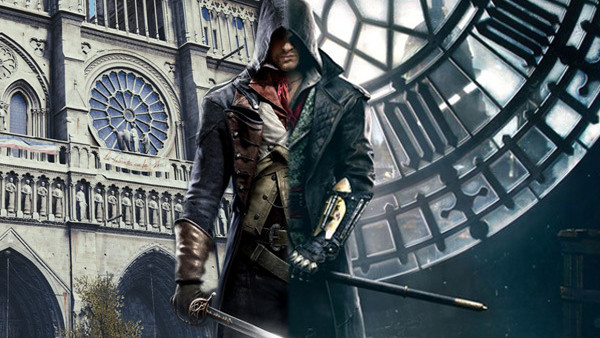
Assassin's Creed: Unity wasn't the final game in the time-jumping series before Ubisoft announced its hiatus, but it was certainly the one that all but forced the company's hand to shift gears and take the title off its annual release schedule.
Famously mocked for a shocking amount of bugs upon first release, Unity was a crystallisation of everything wrong with Assassin's Creed at the time. Featuring a giant sandbox with nothing to do in it, dated animations and gameplay and an utterly forgetful story - even without the bugs this penultimate release would have been the final straw for fans of the franchise.
But it's even more frustrating because Syndicate, the game released after this train-wreck, was actually something of a return to form. As a result not only is Unity's biggest crime that it effectively sealed the series' fate going forward, but that it actually put fans off playing the genuinely good game that followed it.
5. Silent Hill: Origins

The Silent Hill franchise was already entering something of a free fall after the not terrible but definitely uninspired fourth main game in the series. But while that title was the first warning sign, its sequel Origins was the release that set into motion the survival horror series' decline into modern obscurity.
A prequel to the original classic, Origins was the first title in the franchise developed by a studio other than Team Silent - and it totally shows.
While not an outright failure like some of the games that followed it, the release felt like a poor imitation of something much better, ultimately acting as a forgettable entry into an series that was clearly running out of ideas.
It didn't help that the title was created primarily for the PSP either, with the PS2 port receiving a kicking by critics thanks to the limitations of the original hardware. By focusing on the handheld experience Origins acted to many fans as a sign that the publisher lacked the confidence to pursue fully-fledged Silent Hill sequels, a mentality that haunts the iconic property to this day.
4. Halo 5
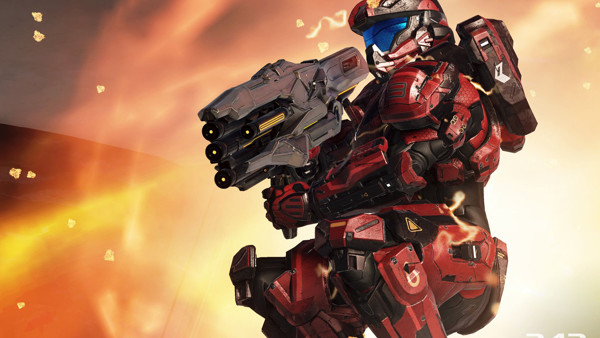
It might be an unpopular opinion, but Halo 4 was a such a breath of fresh air for Microsoft's flagship first-person shooter series.
Sure, it didn't do too much to progress the franchise's core mechanics, but with a more cinematic - and more personal - main narrative, the game did a great job of kickstarting a new trilogy in Bungie's absence.
Sadly, with Halo 5, developers at 343 Studios weren't able to capitalise on that potential.
Giving players one of the most muddled and insubstantial stories in the entire franchise, the game's narrative problems weren't helped by misleading trailers that sold fans a completely different premise to what they eventually got.
A botched multiplayer component that promoted in-game purchases didn't stop fans from feeling burned either, and as a result, it seems as though players are just feeling a bit fed up with Halo these days. We'll no doubt be getting more information on the finale to 343's trilogy once the Scorpio hits this fall, but whether anyone will be interested in sticking around to see out the conclusion to its end is an entirely different story.
3. Mafia III

Another series that never quite found the mainstream success it deserved, the original two Mafia games were some of the most underrated releases of the last generation. Telling brilliant interconnected gangster tales, the titles were revered for their storytelling but failed to achieve mass appeal because of their relative lack of variety when compared to other sandbox releases at the time: namely two little games called Grand Theft Auto III and IV.
Taking the criticisms about their barren open worlds on the chin, Mafia III attempted to give players what the developers thought they wanted, implementing a whole host of side content, collectables and additional missions to complement the main narrative.
Sadly, by the time they got around to including these time-consuming distractions players had already gotten sick of this type of uninspired padding, and Mafia III was ripped apart when it released last year.
And it didn't help that the title felt like two completely different games smashed together, either. The narrative itself was excellent, but the open world activities the sequel had you completing might as well have been created by a different team, lacking the quality and the polish of the title's cutscenes and voice acting.
2. Star Wars: Battlefront

It's hard to call a game that sold over twenty million copies a failure, but what Battlefront achieved in sales it inversely lost in fan support.
Riding the waves of some superb Star Wars hype not only for the game itself but for the new movie dropping mere months after Battlefront was set to hit shelves, upon release it quickly became clear that EA's first foray into the sci-fi universe was nothing but a half-baked attempt to cash-in on the world-conquering franchise.
Devoid of the features fans had been clamouring for, Battlefront didn't have the lasting potential to be the long-term smash-hit everyone expected.
Without a campaign, any multiplayer persistence that appealed to core gamers or a varied array of content (the title's flagship mode only shipped with four playable maps - a crime for a multiplayer-only game like this), it seemed as though EA was fine with releasing a half-finished product while expecting players to pay up for the season pass to fill in the blanks.
Battlefront was the title that broke the camel's back when it came to over-eager pre-orders and day one purchases, so while the title sold millions of copies don't be shocked if that number takes a sharp dive when the sequel drops later this year.
1. Duke Nukem Forever

If I had my way we'd never talk about Duke Nukem Forever ever again, but it would be amiss for the infamous title to not receive its rightful place at the top of a list about terrible games that self-destructed their own franchises.
Releasing after a decade in development hell, Forever shuffled into stores feeling just as old and as tired as the games and movies the series once effortlessly parodied.
With dated combat, horrible graphics and lame, lame lame one-liners, the only thing this game was good at was sucking the final glimmer of childhood nostalgia out of the now-adults who had been waiting over a decade for another round with Duke.