10 Worst Video Games Launches Of All Time (And If They Got Fixed)
These game launches were a disaster… but did any of them actually manage to turn things around?
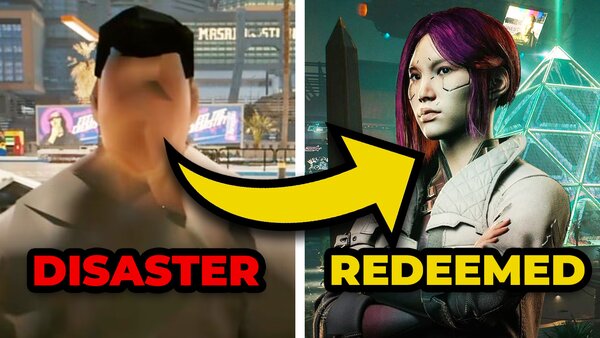
There’s nothing quite like a bad video game launch. Players wait years, hype builds, trailers look incredible, and then, boom: bugs, crashes, broken servers, missing features. It’s one of the worst feelings in gaming, and sadly, it’s become a lot more common in the era of live service updates and rushed development cycles.
In the past, a bad launch was often a death sentence. But in today’s landscape, things aren’t always so final. With enough time (and in some cases, enough public shaming), studios can claw things back. That said, not every redemption story is a happy one. Some titles improved just enough to survive, others were abandoned entirely, and a few remain memes to this day.
So, which games had the worst launches ever? And more importantly, which ones actually got fixed?
From industry giants to overpromised indies, these are the 10 worst video game launches of all time - and where they stand now.
10. Concord

Disaster: Sony’s answer to Overwatch arrived with a thud. Concord, a 5v5 hero shooter from newly acquired Firewalk Studios, was dead on arrival. The game failed to carve out a unique identity, with players criticizing its bland characters, lack of arresting gameplay, and a tone that leaned heavily into a specific Marvel sci-fi series... but with none of the flavor. Most importantly - it just was a game no one wanted to play.
Despite ambitious marketing, launch numbers were abysmal. Within just two weeks, Concord was quietly pulled from storefronts, servers shut down, and refunds issued en masse - a staggering turnaround for a first-party title.
Redemption: There wasn’t one. Unlike other troubled live-service launches that slowly rebuilt themselves, Concord was simply erased. In a brutal but telling move, Sony shut down Firewalk Studios entirely just months after the game’s release, and only 1.5 years since squaring them.
The game now exists only as a cautionary tale - a warning about chasing trends rather than building meaningful experiences. For Sony, it was a costly reminder that live service success can’t be manufactured overnight, and for players, it was a rare case where a game disappeared before most even had the chance to hate it properly.
9. Cyberpunk 2077

Disaster: Few launches in gaming history have been as hyped - or as disastrous - as Cyberpunk 2077. Marketed as a genre-defining RPG from the makers of The Witcher 3, expectations were sky-high. But when the game finally launched in December 2020, it quickly became clear it wasn’t ready.
While PC players faced glitches and performance hiccups, the real nightmare was on last-gen consoles. On PS4 and Xbox One, Cyberpunk was borderline unplayable - plagued by crashes, missing textures, broken AI, and softlocks. The backlash was swift and brutal: Sony (for the first time in history) pulled the game from the PlayStation Store, CD Projekt Red’s stock plummeted, and refund campaigns were launched across platforms.
Redemption: Against the odds, Cyberpunk 2077 clawed its way back. Over the next few years, CD Projekt Red issued dozens of updates, gradually stabilizing performance and overhauling broken systems. The 2.0 update coincidented with its current-gen console release, and brought revamped police AI, improved skill trees, and quality-of-life upgrades, while the Phantom Liberty expansion added a gripping spy-thriller storyline, new gameplay mechanics, and Idris Elba as a key character (always a plus).
By 2023, players and critics alike were re-evaluating Cyberpunk as a truly great RPG. While the launch will always be a stain on its legacy (and still avoid last-gen versions), the redemption arc is one of the most impressive in modern gaming.
8. Minds Eye
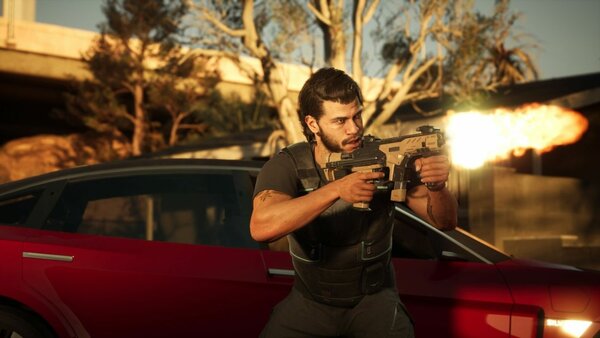
Disaster: Positioned as the flagship launch title for Everywhere, the ambitious player-created content platform from Build A Rocket Boy, Mind’s Eye was supposed to prove the tech, via simple but satisfying means - a story-driven, action-packed narrative game set within a sprawling open world, that felt like a fun throwback to PS3-era action games.
But before it even launched, warning signs were flashing. Marketing was vague, previews were scarce, and the devs began echoing a bizzare defense - that critics were “out to get them” and bad-faith actors were spreading misinformation. Then the game dropped… and the real problems began. Mind’s Eye was a buggy, confusing mess, riddled with technical issues, lackluster gameplay, and a narrative that failed to grab attention.
Redemption: It’s far too early to know if Mind’s Eye can recover, but things aren’t looking good. Just weeks after launch, Build A Rocket Boy began laying off staff. No major patches or updates have been outlined, and enthusiasm around Everywhere as a platform has cooled significantly. While there’s an odd silver lining, the best chance it had was being a decent but forgettable release, but all the bad press has put the game in the spotlight, to the extent if things do improve, it will be filling up outlet headlines front and center.
7. No Man’s Sky

Disaster: No game has ever suffered from the weight of its own hype quite like No Man’s Sky. Touted by developer Hello Games as a near-infinite space exploration epic, the game was meant to deliver procedurally generated planets, seamless multiplayer, deep survival systems, and more. But when it launched in 2016, players quickly discovered that most of those promises hadn’t made it into the final product.
There were no meaningful multiplayer features, planets felt repetitive, and core mechanics lacked depth. Critics slammed it, fans demanded refunds, and Hello Games became the poster child for overpromising in the pre-launch cycle.
Redemption: Rather than run or deflect blame, Hello Games quietly got to work. Over the next several years, they released a staggering number of free updates, each one pushing the game closer to what had been envisioned - and eventually, far beyond it. Multiplayer was added, base-building expanded, VR integration, and new story content fleshed out the world.
By 2023, No Man’s Sky had become one of the best redemption stories in gaming, routinely held up as a model for post-launch support. While its release remains a cautionary tale, its long-term commitment to players is something few studios have matched.
6. SimCity (2013)

Disaster: When EA and Maxis revived SimCity in 2013, it should’ve been a triumphant return for one of gaming’s most beloved strategy franchises. Instead, it became a textbook example of how not to launch a game. The biggest controversy? A forced always-online requirement for a mostly single-player experience.
At launch, the servers couldn’t cope - players were locked out of their cities, saved data vanished, and even the tutorial failed to load. Reviewers couldn't access basic features, and the game was unplayable for days. The backlash was fierce, with fans accusing EA of prioritizing DRM and online infrastructure over player experience.
Redemption: To its credit, EA eventually patched in an offline mode. But by then, the damage was done. Many fans had already walked away, and SimCity (2013) was widely seen as a shadow of what the franchise used to be - with restricted city sizes, clunky AI, and a lack of depth compared to earlier entries.
The final nail came a few years later, when Colossal Order released Cities: Skylines, a spiritual successor that did everything SimCity was supposed to do… and more. EA’s reboot never recovered, and the franchise has remained dormant ever since.
5. Fallout 76

Disaster: When Fallout 76 was announced as an online multiplayer survival spin on the beloved RPG series, fans were sceptical - and with good reason. At launch, those fears were validated.
The game was riddled with bugs, server issues, and baffling design decisions. There were no human NPCs, little narrative direction, and an empty-feeling world that felt like a shallow imitation of what Fallout was known for. Technical problems were everywhere, from game-breaking glitches to inexplicable inventory wipes, and to make matters worse, Bethesda’s collector’s edition bags debacle only added fuel to the fire.
Redemption: To its credit, Bethesda didn’t walk away. Over the following years, Fallout 76 received steady updates and expansions, including the Wastelanders update, which finally introduced human NPCs and storylines that brought the game closer to traditional Fallout experiences. Quality-of-life improvements, seasonal content, and new regions helped stabilize its player base, and in 2023 it even launched on Steam Deck with renewed interest.
While the game never fully escaped its disastrous first impression - and many fans still prefer the single-player entries - Fallout 76 now holds a niche spot within the franchise. Not quite a full redemption, but a definite salvage job.
4. Jurassic Park: Trespasser

Disaster: Back in the late 90s, Trespasser was pitched as the future of gaming - a bold, physics-driven first-person adventure set on Isla Sorna. It was supposed to be the Jurassic Park game that put players directly into the chaos, complete with advanced AI dinosaurs, seamless environments, and a revolutionary physics engine. What players actually got was an unfinished tech demo wearing a game’s skin.
Controls were infamously awkward (you manually controlled your character’s arm to interact with objects), the physics system was wildly unstable, and the game was riddled with bugs. Performance was abysmal on even the most high-end PCs at the time. What was meant to be immersive became nearly unplayable, and critics tore it apart.
Redemption: None - at least, not officially. Trespasser was a commercial and critical failure that effectively killed DreamWorks Interactive’s ambitions for cutting-edge PC development. However, the game earned a kind of cult legacy over the years. Modders and curious gamers re-explored its bizarre systems, and some even credit it with influencing later physics-based titles like Half-Life 2.
Still, despite its ambition, Trespasser remains a cautionary tale: a game that aimed for the stars but barely made it off the ground. Even dinosaurs couldn’t save it.
3. Anthem

Disaster: Billed as BioWare’s (the championed western RPG studio) bold leap into the live-service space, Anthem was meant to be a futuristic looter-shooter with flying exo-suits, cooperative action, and deep RPG storytelling. Instead, what players got was a bland, buggy, and bafflingly empty experience.
At launch, Anthem suffered from long loading times, repetitive missions, inconsistent loot drops, and a convoluted interface. Worse still, the narrative - usually BioWare’s strength - was shallow and disconnected. What was supposed to rival Destiny instead became one of the generation’s most underwhelming releases. Critics panned it, fans deserted it, and EA’s grand ambitions fizzled almost overnight.
Redemption: For a brief moment, there was hope. BioWare promised a major overhaul dubbed “Anthem NEXT,” a complete rework of the game’s core systems. But after more than a year of silence and behind-the-scenes development, the plug was quietly pulled in 2021.
The team shifted to other projects, and Anthem was left to wither on the vine, the game was DOA, but will officially shut down servers Jan 2026. For BioWare and EA, it remains a harsh lesson in chasing trends without understanding what makes them work, not to mention, making sure a developer stays in their lane, or risk efforts blowing up in their faces.
2. Final Fantasy XIV

Disaster: The original release of Final Fantasy XIV in 2010 was a full-blown catastrophe. Square Enix launched the MMO in a barely playable state, with a clunky UI, broken economy, shallow gameplay systems, and bizarre design choices - including the infamous fatigue system that punished players for playing too long!
Critics and fans alike tore it apart, and subscriptions nosedived almost immediately. Even Square Enix admitted failure, with company leadership publicly apologizing for the game's condition. It was so bad that the game’s original director was removed, and support for the title was scaled back just months after launch.
Redemption: Instead of walking away, Square Enix made a bold move: they rebuilt the game from scratch. In 2013, Final Fantasy XIV: A Realm Reborn launched, and this time, they nailed it.
With a new engine, improved gameplay, better narrative, and a more accessible design, it quickly earned the respect of the MMO community. Over the years, expansions like Heavensward, Shadowbringers, and Endwalker turned it into one of the best MMOs of all time. Not only did FFXIV recover - it surpassed expectations, becoming a flagship title for Square Enix and the gold standard for redemption stories in gaming.
1. Grand Theft Auto: The Trilogy - The Definitive Edition

Disaster: On paper, a remastered collection of GTA III, Vice City, and San Andreas sounded like a dream come true. But when GTA: The Trilogy - The Definitive Edition dropped in 2021, it quickly became a nightmare.
The remasters were plagued by technical issues, broken AI, bizarre character models, missing music, and a laundry list of visual bugs - including infamous rain effects that made the game unplayable in some scenes. Worse still, the original versions were pulled from digital storefronts just before launch, leaving players with no alternative. For a series with such a legacy, the release felt like a rushed, cynical cash grab.
Redemption: Three years later, in late 2024, Rockstar quietly rolled out a major graphical patch - one that noticeably improved the trilogy’s visuals and lighting. The update appeared to be based on work by Video Games Deluxe (the studio behind the better-received mobile ports), and significantly cleaned up some of the worst visual offenders.
At the same time, Grove Street Games - the original credited developers - were scrubbed from the game's startup logos and copyright info. While the patch wasn’t marketed as a full relaunch, it showed Rockstar wasn’t entirely done fixing things - and despite all the bad press, the game sold like hot cakes... at least currently it has quality to match the demand