10 Ways The Video Game Industry Has Gotten WORSE This Decade
The more things change, the more they stay the same.

The last ten years has seen a lot of changes. We started 2010 with one console generation where Microsoft was leading the pack, only for them to hugely fumble their entry into the eighth console generation. Sony on the other hand reversed their fortunes with the launch of the Playstation 4, providing gamers with a slew of critically and commercially exclusives like God of War, Spiderman, and Uncharted 4.
Meanwhile, Nintendo has had something of a renaissance. The lacklustre Wii U and its obtuse peripheral were made into a distant memory by the emergence of the Switch and its more classically framed titles like Breath of the Wild and Super Smash Bros. Ultimate.
Now, I don’t particularly enjoy focusing on negatives, I would much rather celebrate the positives and look at the strides and achievements that video games have taken these past ten years.
With that in mind I’ve tried to critique the flaws of the issues surrounding and pertaining to the gaming industry, rather than reel off its shortcomings and turn this into a list of gripes and moans.
From the ever-increasing storage space to the conditions that employees and custodians of the industry are put through, hopefully 2020 and the years succeeding it iron out these kinks, leave the field better off for gamers and game-makers alike.
10. Pricing

This affects the console crowd a great deal more than PC folk, but the arrival of the Xbox One and Playstation 4 saw a jump in the RRP of console games from a reasonable £40 in the UK to a harder to justify £50, with the US spiking from $50 to $60 respectively.
The inception of free-to-play and games on Android and iOS (something I'll get into more detail later) brought in a new wave of casual gamers, and gave rise to a different way of monetising video games as a service rather than a one-off single purchase.
With this model being adopted by many of the bigger publishers and developers, it makes it a hard pill to swallow when a consumer is asked for £50 upfront, £20-£30 for a season pass, and heavily encouraged to spend money in an in-game marketplace.
As the paradigm slowly (albeit with some understandable reluctance) shifts towards digital downloads over physical discs, this has yet to be reflected in the marketplace pricing. As the titan that is Amazon offers decent prices on most games and CEX has cornered the market on preowned titles, the Xbox Marketplace and PS Store price themselves out of their own game.
9. Huge Install Sizes

A first-world gripe for sure but not making it any less of a pain, the infrastructure of current-gen consoles making installing games mandatory has meant that a once ample 250Gb of HDD space can now only accommodate a handful of games depending on the title.
Upon purchasing my Xbox One on the release day (don’t judge me), I thought it would take me many years to reach the maximum capacity of the five hundred roomy gigabytes on the built-in storage unit. One thing’s for sure, the portable hard drive business has sure seen a boom in the latter half of the 2010s.
This virtual consumption is a natural by-product of technological progression, mainly due to graphical fidelity and the scope of what games aim to achieve. However, take four of the more popular games available on Xbox, those being Halo: MCC, Gears of War 4, Red Dead Redemption II and Call of Duty Modern Warfare, these add up to a hefty collective 438Gb.
While there’s not much that can be done to reduce size, the first company to trim down install times could be on to a winner with players.
8. Sequels, Reboots, Remasters

I want to start off by saying that not all sequels/prequels, remakes, or reboots are inherently bad. I do believe however that in the past decade, the gaming industry has mirrored its sister media Hollywood by making iterations rather than original content.
I get that the biggest fish in the publisher pond, people like EA, Activision Blizzard, Ubisoft, they need safety. It’s much easier for an indie developer with no financial ties or board members to please to take creative risks, but its meant we’ve seen some hollow and transparent games be churned out of the annual release machine.
Assassin’s Creed has seen a rise from the ashes in recent years, but in the mid-2010s, the series held some serious lethargy. This year has seen COD return to form (at least from a sales perspective) but everything from Ghosts onwards up until the latest release saw the flagship sail in some seriously choppy waters.
Games like Spyro Reignited, Resident Evil 2, and Crash N.Sane are a showcase of what a true remake is meant to be, but many games were ported to the current consoles and had “HD” added to them.
7. The Demise Of Gaming Retail

Linking in with my point on pricing, physical game retail (in the United Kingdom at least) has been gradually having the life sucked out of it like a pokémon afflicted by leech seed.
While it’s not exclusively a game retailer, CEX has given a swift shoryuken to Game, knocking it out of the preowned ecosystem by offering better prices and a wider range of products. Game rebranded itself a couple of years ago, incorporating “nerd culture” and creating “Game Beyond”, transforming select stores into modern internet cafes.
Spins on this have been replicated overseas with respective chains too, but the response is a shoulder shrug, at best.
Game’s plan seems to be hinged on capturing devoted gamers by getting exclusive preorder editions of games, however many of these impractical and expensive add-ons seem to have fallen short. While these are popular with some gamers, paying £150 for a game that comes with a huge statue that for most (while undeniably awesome), will serve only to collect dust over the years.
Walk into any Game store and you’ll find it reeks of desperation, full of plushies, keychains, soft drinks, anything to capture the slightest portion of your wallet.
6. Day 1 Patches And Unfinished Games
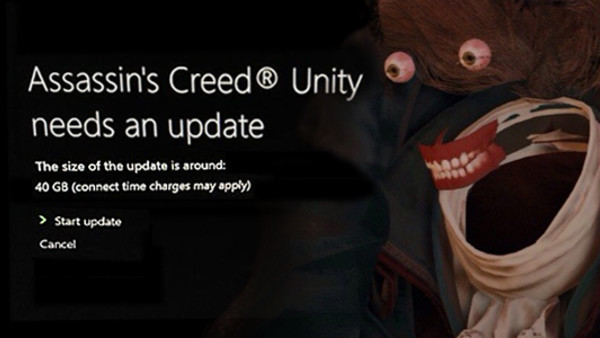
Sadly, gargantuan patches before you even get to a game’s main menu have now become commonplace in gaming for most, when in reality games shouldn’t be released to the public before they’ve either had a full quality assurance assessment or a thorough beta test period. This decade saw some poor examples indeed.
Probably the most infamous example is from Assassin’s Creed Unity. Arguably Ubisoft’s champion franchise (at the very least at the time of its release), Unity saw major file crashes and some freaky animations that caused characters faces to disappear or become distorted.
While it was received well (sort of), Bungie’s next-gen foray into the MMO-FPS hybrid genre in the form of Destiny had some accusations levelled at it after it’s fairly lukewarm and abrupt “story” mode. Thankfully, they stepped up to the plate and delivered a better product with Destiny 2.
As much as it pains me to say, the prime candidate for unfinished game of the decade goes to Bethesda’s burning mess of Fallout 76. Promising so much in it’s reveal, 76 quickly left players feeling duped after finding their wasteland literally empty, with radroaches just one of the many bugs found in the game...
5. The "Freemium" Model

Mobile gaming and apps are definitely the red-handed culprits here, but the rise of people gaming on phones has lead to some very questionable practices and the birth of a business model pretty much unique to the video game industry.
The term “freemium” probably wasn’t on too many peoples lips at the start of the decade, but games like Candy Crush, Clash of Clans, and almost every game ending in the word “Saga” snuck their way onto people’s phones and slowly eroded their hard-earned cash within just a couple of years after inception.
With regards to the landscape of “proper” gaming, EA gave us a capitalist’s utopia when it came up with the idea of Ultimate Team just before the start of the decade.
While not wholly Pay2Win, FIFA gives you a not so subtle nudge in the direction of buying and spending FIFA Points, rather than earning normal coins to purchase packs.
Ubisoft’s For Honor got severely stung over this too, as players worked out it would take around $700 to unlock all the content in the game. Developers can create their own economy, but there HAS to be a delicate balance properly tested and put in place.
4. How Gaming Is Viewed By The Media

Mainstream media has always had an uneasy relationship with video games gradually becoming a greater part of culture in western society.
It's easy to understand, to a degree - the boomer generation hadn't come of age when the industry fully came into its own. I’m certainly not trying to be ageist, but the NES, Atari 2600, and Sega Master System were closer to “toys” when we had them as children, so it’s not surprising older generations still don’t "get it".
The saddest thing is that while I don't buy the notion of games - and by extension, gamers - getting worse, the optics around the industry haven’t improved all that much, either.
There have been some truly horrific acts and tragedies this decade, but what infuriates is whenever the motivation for these acts is talked about. If the perpetrator is a millennial or younger, the finger is immediately pointed at video games, claiming they’re desensitising, abhorrent, and hold no artistic value.
No evidence exists to support such a theory, and never has. We need a much more adult and informed discussion to take place in 2020 and beyond.
3. Studio Closures And Job Security

The past ten years haven’t been the easiest for some, with various big name developers forced to sell their rights or close their doors due to a variety of circumstances. Cannibalisation isn’t always to blame of course, but it certainly doesn’t help.
The 2010s saw some big heads fall onto the executioner’s block. The pioneers of narrative interactions Telltale Games found themselves in dire straits, but were thankfully salvaged for the most part by Robert Kirkman’s Skybound Games.
Fable creators Lionhead Studios found a similar fate but were not as lucky, Dead Space developers Visceral Games fell and even former Gears of War poster boy Cliff Bleszinski’s BossKey Productions was shuttered.
The industry breaks its own monetary records each year, so how is it that development studios find themselves having to declare bankruptcy and people are left unable to provide for their families?
Like many social and economic issues, there are multiple contributing factors, but studios being bought out only to be abruptly shut down (hello, EA) and the lack of a union are the biggest culprits.
I hope the next few years sees more power and stability given to the hard-working men and women of the industry.
2. Microtransactions

Paying for content within video games started before 2010, but the decade gone by is where publishers and developers fully realised how lucrative these in-game purchases could be, especially within the realm of apps and mobile games.
Personally I’m not against microtransactions, paying for content or developers creating ecosystems within their games, but controlling the type of content you are able to purchase is paramount, save making an incredibly unbalanced multiplayer, or circumventing challenge completely in a PvE environment.
Towards the end of the decade (and an ongoing topic today), loot boxes pushed the envelope too far and drew backlash from gaming fans worldwide, with Star Wars Battlefront II being the straw that broke the camel’s back. The 15,000 in-game credit price for Heroes and Villains like Luke Skywalker and Darth Vader saw players almost boycotting the release.
Rocket League has recently felt some fury after it drastically altered its marketing system in-favour of blueprints, and Deus Ex: Mankind Divided was practically tanked for its purchasable Praxis Kits, in-game items used to upgrade abilities.
Here's to the next decade handling MTXs with more care and consideration.
1. The Normalisation Of "Crunch"

The scariest concept or philosophy or whatever you want to call it, to not only emerge in a professional domain but to become par for the course and in some extreme cases to be enforced and mandatory, is the idea of “crunch”.
Speaking from personal interactions (not first-hand experience), I’ve worked with software developers before, from animation artists to coders. They work really damn hard. All day. Every day.
Every ounce of their soul goes into their work, and I can only imagine that multiplies tenfold when it’s your own idea or project from day one.
The latter half of the decade has seen a rise in what’s often dubbed as “hustle culture”, the idea of constantly working, helped in no small part by the coincidental popularity and power of social media.
I’m not knocking anyone for wanting to do this, but an important partner to that conversation needs to be individuals’ wellbeing, especially things like physical and mental health.
There are horror stories from employees, both former and current, about working eighty-hour weeks, being denied lunch or bathroom breaks, sleeping at work, and not seeing their loved ones for weeks at a time.
The 2010s at least saw the start of a discussion about ethical working conditions in the industry, and while it probably won’t ever be eradicated, we now know it exists more than ever. And knowing is half the battle.