10 Ways Assassin's Creed Origins Has Saved The Franchise
Whether it returns in 2018 or not, Origins is a stellar sequel.
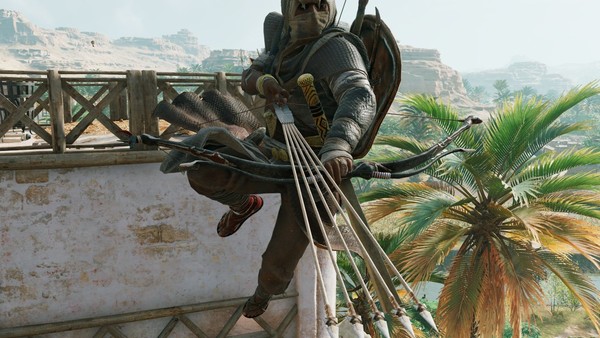
Outside of sports games, Assassin's Creed has had more consecutive annual sequels than any other franchise - a release schedule that's provided just as many ups as downs, culminating in the disastrously unplayable Assassin's Creed Unity in 2014.
Thing is though, at no point did anyone really want the series to pack it in - at least not before AC III.
Until then we were relishing each yearly instalment, and though Desmond's story ended abruptly after he had to sacrifice himself to halt the apocalypse (or something), the very idea of historically-accurate action games is a damn fine one - especially when Ubisoft have the money, time and artistic prowess to do a picture-perfect job.
Cut to Origins, and thanks to relaxing the production line and letting the various developers actually collect their breath for the first time in years, we have a resounding return to form. Downsides come from a rushed opening segment and the occasional programming hiccup where Bayek will auto-jump to the completely wrong place, but top to bottom this is a demonstrable improvement over every instalment since AC: Brotherhood.
Where they go from here is anybody's guess, but at least Ubisoft can rest assured knowing their latest work is also their finest.
10. A Great New Present Day Character
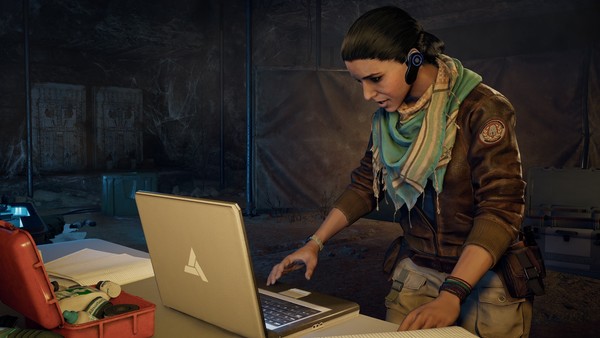
How do you replace Desmond?
Quite easily, to be honest. The overly whiny, mopey, personality-devoid protagonist of the modern day was only interesting by proxy of being our window into the Assassin/Templar war of the 21st century. Nothing more.
Now we have Layla Hassan, a driven Abstergo employee who's essentially gone rogue, deviating from her mission of recovering an Egyptian artefact to "jack into" the memories of both Bayek and Ana. Layla's setup confirms the new Animuses are portable, and can be programmed to decipher the memories of anyone whose blood is inserted into their sensors.
Hassan's general mentality comes across as hungry for discovery and knowledge. She's intelligent, clearly very athletic and able thanks to clambering around the various tombs you pilot her through, and could easily be called upon for a larger role should a future sequel require it.
9. The Best Stealth Ubi Have Ever Designed
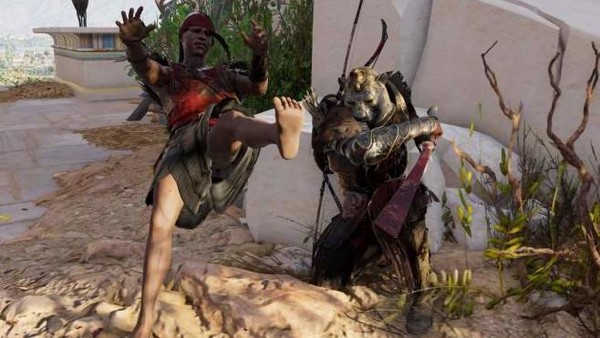
Weirdly, considering AC has always been a game about hidden blades, sleuthing through locations and taking out targets without making a ruckus, Ubi have never really prioritised stealth. AC protagonists are more known for chain-killing an entire legion of goons than picking them off and leaving before anyone notices, and it took until AC Syndicate before we even had a dedicated crouch button.
For Origins, they've rolled together every lesson learned from the last 10 years. Revamped controls continue the ability to crouch, but cover is now contextual, allowing you to kill foes from around corners or behind low walls. Overhead, Senu can tag enemies while Bayek stays safe, or you can create an "Animus ping" to scout the nearby area. White radial highlights on-screen show you which guards are nearby, and Bayek can upgrade his abilities to perform ranged multi-kills, slow motion aiming windows and manual piloting of arrows.
Though we're not in MGS V territory, Ubi have improved one of the most unreliable aspects of the experience, resulting in an Assassin's Creed game that works as a damn fine stealth game.
Who'd of thought?
8. An Environment/Historical Time Period You Actually Want To Explore

I posit the following: The closer we get time period-wise to the modern day, the less interesting and exciting Assassin's Creed is. On a fundamental level, AC flourishes when there are less mod-cons, more encampments and more of a sense that the world around you is somewhere you've never seen before.
Syndicate, whilst technically sound, had very little to offer other than smoggy London streets and horse drawn carriages - things that aren't exactly inspiring, to say the least. Origins' decision to fully embrace and replicate ancient Egypt comes with a replication of one of the most industrious times in human history.
There's an endlessly interesting sense of discovery to a time period where - within a span of a few hundred yards - you'll see statues to various Gods sitting alongside artists and theatre performances; ritual killings next to children playing. Ubisoft did a ludicrous amount of homework too, ensuring things like hieroglyphics, cultural affectations and assorted dresses for each NPC are historically accurate.
Altogether the scriptwriting team are allowed more freedom to design all manner of stories intertwined with relevant facts and terminology, bolstered by possibly the best game world Ubisoft have ever created.
7. No Follower Missions, Quality-Tested Design & More Variety
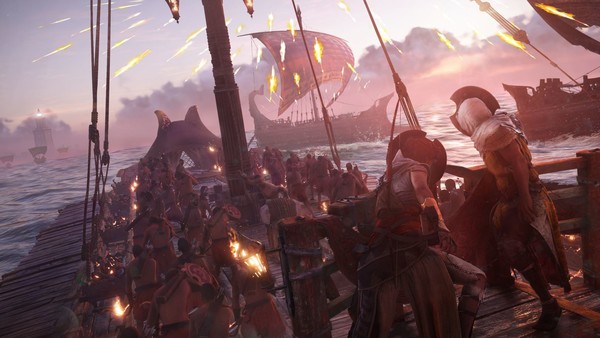
Another part of designing a game with the time to self-reflect and analyse which features fans love, hate and want changed, we finally - for the first time EVER - get an Assassin's Creed with no "follow the target" missions whatsoever.
Atop that, there's a really conscious effort to give players the most mission variety from quest to quest. Within a few hours' play you'll do any and all of the following: high value target-killing, chariot races, tomb-clearing/puzzle solving, ship combat, animal hunting, bandit camp-raids, solving murders and more.
Best of all, missions tend to have a good handful of 'steps' to them, so although you've taken a single side-quest, as the story unfurls you could be going from piecing together evidence to fighting one defensive suspect, chasing down another on horseback and finishing off a group of foes in a fortified space.
It's this blend of gameplay styles that immediately means there's far more to ACO than any other entry, and allows for freeform experimentation as far as pursuing targets and completing your goals goes.
6. Reliable Mounted Combat
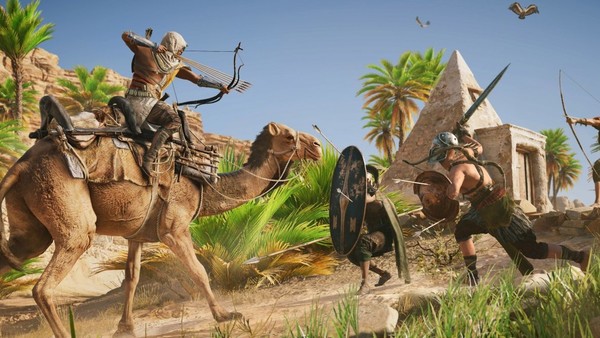
Forever part of the series since the first game, mounted combat was never a reliable or desirable way to complete a mission - mainly because the idea of awkwardly rubbing up against enemies and hoping your character swings in the right direction at the right time is, well, awkward.
No more though, as Origins expands the hitboxes of your blade-swings, becoming extremely generous with as it appears to say "Gah, you were close enough! Let's take some health off!". You can wipe out entire groups of guards with one well-timed swing and a horse-charge through the middle of a platoon, and it feels damn satisfying.
Hopping aboard a horse is often necessary if a target has decided to flee, and you can use it as a more effective way to dodge arrows on the go. Lastly, your special moves (usually reserved for combat) can also be pulled off here, putting you in high-damage states or letting you do one big arching sweep to obliterate an enemy force in one go.
Compared to what we got before it's night and day - a real addition to your repertoire that feels natural to implement in-game.
5. A Naughty Dog-Level Of Care And Attention
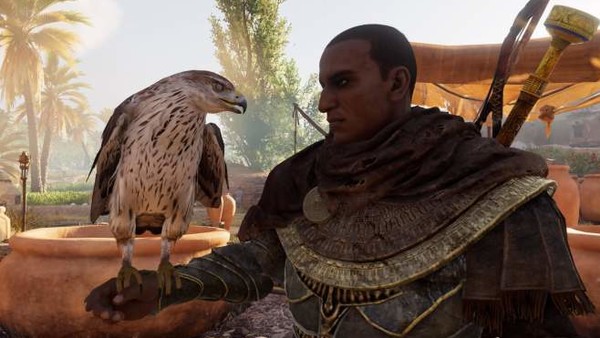
There's a level of assumed "depth" to the design in something like a Naughty Dog game or a Nintendo game, that we tend not to associate with the 'factory-like' production schedules of Ubisoft.
However, whilst it's worth pointing out that AC Unity's interiors included picture-perfect recreations of many actual French Revolution paintings and sculptures, Origins' level of world detail is something else entirely.
Things like tapping the action button to feed Senu during your idle animation, watching the arrows in your quiver actually deplete as you use them, or noticing that as the wind changes direction it'll blow sand in different directions.
You can pet cats, hallucinate and see storms or people if you stay in the desert too long. Vultures will land and peck away at dead bodies, whilst all NPCs have day/night routines, and you can follow ANY of them across a day's worth of animations - including all the animals and their hunting routines. Even your horse's eye reflects the world around it if you zoom in using the Photo Mode.
Such care and attention is unprecedented in AC, and elevates Origins up there with the Uncharteds and Legend of Zeldas of this world.
4. The Best Protagonist & Story In Years
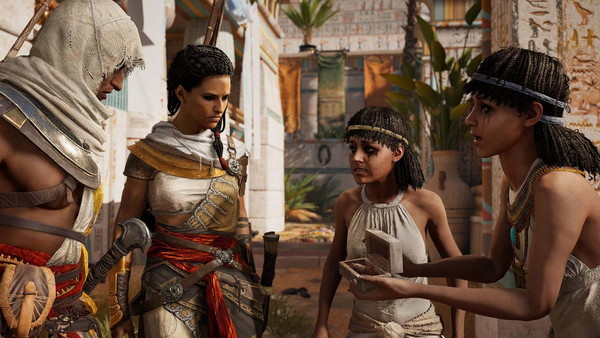
Though it gets off to a very rushed start - you literally jump into Bayek's skin as he's killing someone and carving a victory line in his skin immediately thereafter - Origins' portrayal of a revenge-driven couple is one of the most engaging Ubi have ever written.
Paired off against the present day happenings of Layla and Abstergo's treasure hunt, Bayek comes across as a good-hearted individual forever patting children's heads and helping the populace with any woes they may have.
However, underneath this positive outlook is a man who's tattooed various symbols onto himself that represent the people who killed his son - symbols he then carves back off his skin as he hunts them down. It's a dark, dark way to show a father manifesting his pain in a very physical way, and then you have wife Aya who's using her stature as one of Cleopatra's trusted advisors to help target those responsible.
Together we have a brilliant mix of surface-level duty from both characters, mixed with their sexual drive to ravish one another at any opportunity, and the disturbing reality of letting such a drive for vengeance seep into that attempted normality.
Bayek might not be as immediately loveable as Ezio, but he's an altogether more complex and memorable beast for reasons Ubisoft haven't dared to approach before.
3. Streamlined Gadget Use

Across all the AC games we've always had pretty varied repertoires of moves and gadgets/weapons. From throwing knives to pneumatic blades, rope darts to poison arrows, an assassin's best asset may be their hidden blade, but sometimes you need to add a bit of flair to proceedings too.
Enter Origins' overhaul of how gadgets are implemented into combat - which is something we've needed for years, if not since the very first game.
Now, you do need to hop into the skill tree to unlock these, but rather than having smoke bombs be something you'd have to swap to on a weapon wheel, you can merely tap triangle/Y after dodging or hitting with a melee attack, to drop one. These bombs can then be upgraded to deal damage, allowing you to make swift getaways very fast if need be.
Second is fire bombs, sleep and poison darts. All of these get put onto variations of "hold left/right on the D-pad", giving you quick access without pausing the action, and letting you swap back to different blades or bows with standard taps of the same directions.
Small improvements in theory, but they demonstrably change the way an Assassin's Creed game feels, giving you more options in combat and stealth.
2. A Worthwhile Skill Tree & Progression

From telekinetically piloting arrows to taming animals, chaining stealth kills to shield-charges, parries and better trade prices, AC Origins skill tree would verge on Ubisoft throwing every last thing at the wall to see what sticks - if it wasn't so damn effective.
Coming at a point in the industry where the majority of "upgrades" are "+2% damage" or "increased XP for 1 hour", having an actual set of new animations, abilities and meaningful skills is a godsend.
From beginning to end you do start as an accomplished killer, but after a few hours you'll be clearing guard outposts in a blur of thrown blades and smoke bombs, commanding a recently-released lion to finish off any remaining stragglers.
Progression extends to the amount of weapons and outfits you get too, as though the former falls back on random number generation to give you "better" equipment, you do feel the benefit of being able to tackle higher-level areas once you've spent time unlocking the requisite gear.
1. Minimal Bugs

Hurrah, as - for the first time since 2012's AC III - we have an Assassin's Creed game where the bugs and glitches aren't a major factor in gameplay.
Granted they're still there - Bayek's auto-climb A.I. will occasionally not notice a handhold or see him leap off in a completely different direction, NPCs can get stuck wandering in circles and a certain faceless fellow has been known to crop up on PC - but from top to bottom, that extra year of dev time has paid dividends.

Following a couple of launch window patches, this is easily the most technically accomplished AC since the first three (AC 1, 2 or Brotherhood) - a solidly playable third-person action stealth game where the basic engine doesn't get in the way.