10 Video Games You Didn't Realise Were Originally Open World
These games were almost VERY different.

Depending on who you ask, open world games are either the greatest thing since sliced bread or a tedious, creatively bankrupt blight upon the entire industry.
Ultimately the answer is likely a little of column A and a sprinkle of column B - open world games can offer players unprecedented levels of freedom and immersion, yet we've also all played way too many bloat-filled, time-wasting example of the genre.
Open world games may be popular, but they also represent a massive, even daunting undertaking for many developers, and so typically aren't approached lightly.
As such, it's little surprise that many games start out their life intended to be open world, only for development to be streamlined into something more manageable later on.
This might be because an open world format actually didn't suit the story, the developer struggled with technical limitations, or their budget just didn't allow for a fully lived-in open world to be created.
Whatever the reason, these games were all supposed to be open world in the earliest stages of their creation, before those in charge decided to rework them into something more direct...
10. Astro Bot

Let's kick things off with last year's consensus Game of the Year - Astro Bot.
Team Asobi's endlessly charming mascot platformer was widely praised for its fusion of earnest PlayStation nostalgia with outstanding level design, as well as its modest 10-hour length.
The game launched with around 80 bite-sized levels lasting 5-10 minutes a-piece, but in an interview with Edge shortly before the game's release, director Nicolas Doucet revealed that Astro Bot almost went the open world route.
When Doucet and his team were first putting the game together, they considered making it an open world platforming adventure, though ultimately opted for a more traditional level-based approach because it would grant them more control over the game's variety.
And Doucet was absolutely right - the confined scope of Astro Bot's levels helps keep it a focused experience, even as branching paths and secret areas still promote exploration and curiosity.
An open world Astro Bot could work, but in an era of open world oversaturation, something as reined-in and strictly curated as Astro Bot feels like an oasis in the desert.
9. Halo: Combat Evolved
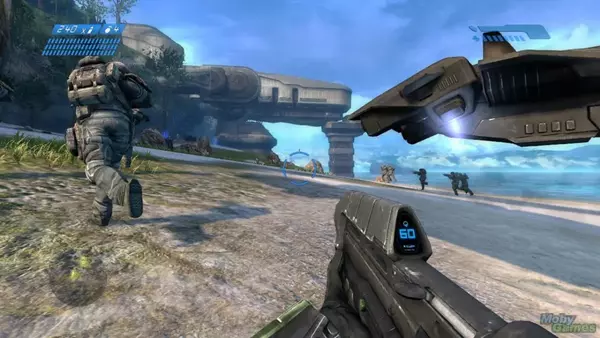
The original Halo went through an intense developmental process before Bungie finally settled on the innovative first-person shooter that finally came to market.
The developer had a bevy of ambitious ideas which they ultimately scrapped, one of which was to make the campaign open world, complete with terrain which could be deformed and reshaped by explosions.
However, technical limitations of the era eventually resulted in Halo becoming a more hemmed-in, linear experience for the most part.
Halo's art director Marcus Lehto recently went into further detail on Twitter, telling a fan that when Bungie was building the very first demo for Halo, the intent was to make the game purely open world.
Lehto added that the game's much-loved fourth level, The Silent Cartographer, was the "closest we got" to open world Halo at the time, with the level's shift away from linear corridors toward a more sprawling, explorable island.
In the end it wasn't until 2021's Halo Infinite that the franchise finally offered up an open world campaign.
8. Metroid Prime 3: Corruption
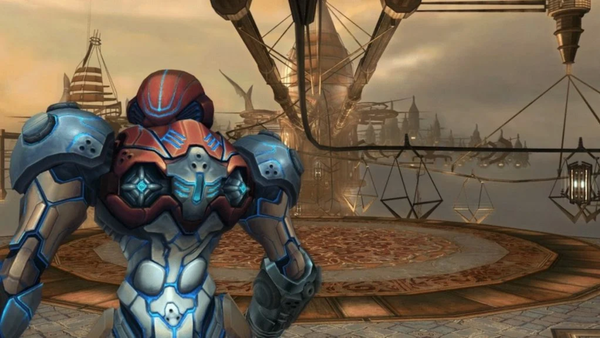
Though the Metroid franchise is primarily known for its tightly crafted linearity, Metroid Prime 3: Corruption very nearly had substantial open world elements, according to series producer Bryan Walker.
In an interview with YouTube channel DidYouKnowGaming, he revealed that an original concept for Metroid Prime 3 saw players operating out of a hub world where they could visit different planets to take on bounties and track down criminals, allowing them to earn upgrades to both Samus and her ship.
But according to Walker, Nintendo bigwigs didn't really understand the concept of a bounty hunter, instead envisioning Samus as an altruistic intergalactic hero, and so the open world idea was quickly killed off.
Walker had no hard feelings about the failed pitch, though, surmising that his team was best-suited to delivering a "finely-crafted and balanced experience" anyway.
Interestingly, rumours indicate that the long-gestating Metroid Prime 4: Beyond will have the series' most expansive areas to date, though will still steer clear of going fully open world.
7. Dead Island 2

As the original Dead Island was an open world game, it was a reasonable expectation that its sequel would also be, but when Dead Island 2 finally came out in 2023, that wasn't quite the case.
The game's scope was constrained to a number of smaller, more confined hubs which players could explore, and though Dead Island 2 was a surprisingly fun time given its hellish development, it's little surprise that the end product was very different from the original vision.
The earlier versions of the game developed by Yager Development and Sumo Digital - before Dambuster Studios finally came aboard and rebooted the project - were far more of a card-carrying open world game set across the state of California rather than mere hubs of Los Angeles.
And while Dead Island 2's eventual linearity left some players disappointed, it in the very least allowed Dambuster to control the game's scope and get it out the door after so many years in development.
Best of all, it went on to become a surprise success story, scoring solid reviews and selling 4 million units to date.
6. Armored Core VI: Fires of Rubicon

FromSoftware proved beyond any doubt that they could handle an open world game with their masterful Elden Ring, and at one point their follow-up title almost adopted the very same style.
In an interview shortly before the release of Armored Core VI: Fires of Rubicon, director Masaru Yamamura revealed that during early development FromSoftware flirted with making the long-awaited franchise reboot an open world game.
Yamamura said that the team discussed developing Armored Core VI in a more open style which would allow for greater exploration and movement, though ultimately decided against it, feeling that it would take away from some of the series' charm.
Yamamura added that an open world style would've required the team to scale back the game's AC customisation features in order to ensure that every loadout could accommodate a huge map, and they simply didn't want to do that.
While IP reboots often do something drastic to differentiate themselves from what came before, Armored Core VI laudably stayed the course and retained the purity of the series, rather than cribbing ideas from the developers' successes elsewhere.
5. Bayonetta 3

The beauty of the Bayonetta franchise is the contained intensity of each stage, hurling players down a largely linear path but filling it to the brim with enemies to waste.
But Bayonetta 3 very nearly took the series in a semi-open world direction, according to a report published by journalist Imran Khan shortly after the game's release.
As it turns out, this was the reason that Bayonetta 3 took the better part of five years to release following its announcement - PlatinumGames initially conceived the game inside of a large hub world which would send Bayonetta to a series of smaller, expansive worlds.
Khan compared it to both Astral Chain and Super Mario 64, yet despite the developer spending a long time working on the idea, pacing problems led Nintendo to ask the team to scale their vision back.
And so, PlatinumGames reverted to developing Bayonetta 3 in a more conventional style akin to its two predecessors, though it's worth noting that many of the game's stages were considerably larger this time around - likely a carry-over from the original design intent.
4. Alan Wake
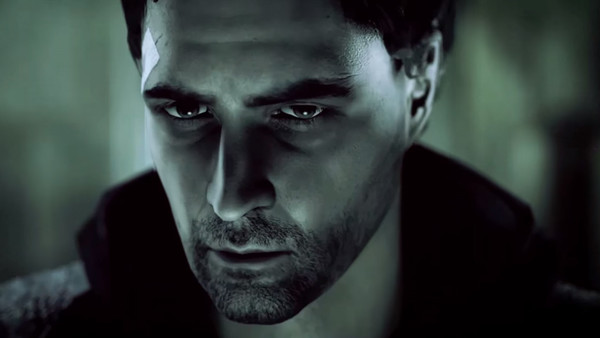
Though Alan Wake is a linear action-adventure game like most of Remedy's AAA titles, the developer originally sought to ambitiously deviate from the Max Payne series' formula by developing their new title as an open world survival horror experience.
With the ability to explore an open, sprawling city, Alan Wake was likened less to Max Payne than Grand Theft Auto, albeit with survival elements where players needed to craft and scavenge during the day to prepare for dangers at night.
However, Remedy struggled for three years to develop a game whose sandbox-style gameplay vibed with its more thriller-centric story, and after realising it simply wouldn't work, the team pulled the Band-Aid off by spending several months reworking Alan Wake into a more linear, episodic adventure.
Remedy retained as many assets as possible from the open world version of the game, including the map for the town of Bright Falls, but streamlined the scope into something that better suited the existing story and tone.
3. Call of Duty: Black Ops III
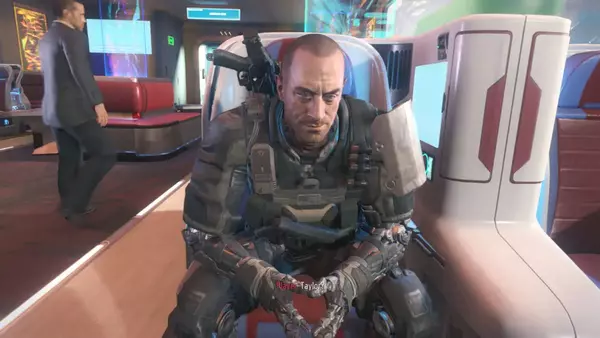
Though Call of Duty finally embraced an open world campaign with its acclaimed most recent entry, Black Ops 6, it almost happened an entire decade ago in Black Ops III.
While Black Ops III's campaign did feature a more open, less-linear level design than prior entries and supported four-player co-op, it was nevertheless scaled back from a full-fat open world campaign which developer Treyarch apparently spent around a year working on.
According to intrepid reporter Jason Schreier, Black Ops III's original open world was scrapped mid-development, forcing the dev team into a period of crunch to complete a more traditional Call of Duty campaign in time for the game's set-in-stone November 2015 release.
In late 2022, extensive work-in-progress images from the open world campaign were leaked online, showing off numerous large, interconnected areas far beyond the scope of a typical game in the franchise - at the time, at least.
On one hand, the reworked campaign is probably the series' wackiest ever, but the rushed development might also explain why it felt close to incomprehensible at times.
2. The Last of Us Part II

The Last of Us Part II has such a confidence of vision throughout - regardless of how some fans perceived it - that it's tough to believe the game was almost something very different entirely.
Yet last year's superb making-of documentary, Grounded II: Making The Last of Us Part II, saw the game's co-director Anthony Newman reveal that The Last of Us Part II was initially developed as an open world game.
Franchise co-creator Neil Druckmann wanted the sequel to be starkly different to its predecessor, and so for the first four or five months of development, Part II had an open world structure with hub worlds which Newman likened to Bloodborne, where the world grows larger the more it's explored.
Ultimately, however, this style of gameplay didn't line up with the story that Druckmann and co. were telling, and so the decision was made to retreat into a more linear experience.
You certainly can't knock Naughty Dog's ambition here, though given the series' story-forward approach, it absolutely made sense to let it dictate the mode of gameplay.
1. Slitterhead

And finally, though Slitterhead wasn't a critical darling compared to most of the games on this list, this deeply unhinged horror-action game from Silent Hill, Siren, and Gravity Rush creator Keiichiro Toyama still has its many fans.
While the body-swapping horror game is a relatively linear experience segmented into clear levels, in an interview with VGC last year, Toyama revealed that he originally intended for Slitterhead to have a fully open world structure.
Yet this ended up being scrapped for the most brutally utilitarian of reasons - the game's budget simply didn't support a fleshed-out open world format.
After all, Slitterhead is very clearly the lowest-budgeted game on this list and the only one that's a card-carrying AA title, so it's little surprise that Toyama's madcap vision couldn't quite stretch to a larger scale.
Considering that the end result was already rather polarising, it likely would've been even more unwieldy as an open world experience, so it was probably for the best.