10 Video Games Where You Were The Bad Guy All Along
You thought you were the hero… You were so very wrong.

From video games’ inception, the rules were pretty straightforward - you’re the good guy. From a faceless shooter blasting alien spaceships to Jumpman rescuing a cocktail bar singer from an angry ape, armed with no better motivation than “you’re destined to win the day”.
But as the medium evolved, developers grew more ambitious and players craved bigger surprises, there have been a handful of times where that default format was flipped completely on its head. And not in the “hey, you’re playing as a giant killer shark” kind of fantasy, where the whole point is relishing chaos as the bad guy.
No, the rarest and most devastating moments came in the form of a last-act twist - the video game equivalent of finding out Kevin Spacey was Keyser Söze the whole time. Only here, you the player have your own personal rug pulled out from under you, forced to rethink the entire motivation of the character you’ve been controlling all along.
So, be aware of MAJOR SPOILERS ahead for the listed games, and here are 10 such times that had us grabbing our controllers in shock, realising… we were the big bad villain of the piece all along.
10. Shadow of the Colossus
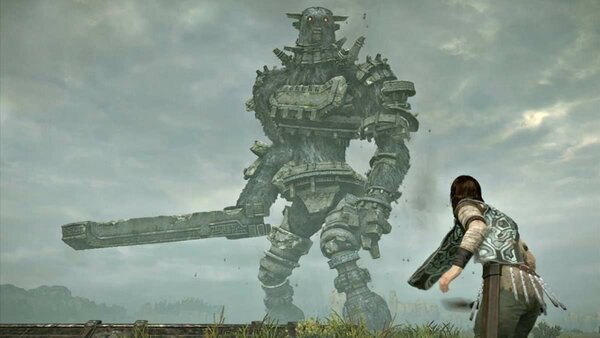
An iconic title that pretty much influenced every single indie game ever made, not to mention the classic output of From Software, and many more. From its haunting environments, minimal (yet devastating) storytelling, and challenging boss battles, the game is a stone-cold classic of its generation, and an incredible swan song for the PS2 console.
That said, things start out almost standard, as the mute protagonist, Wander, attempts to save a comatose beauty by laying her at the feet of an ancient temple. He’s then challenged to navigate across an eerie, yet beautiful, realm and slaughter the Colossi, epic titan-like creatures that will make you wet your pants, but whose deaths bring a tinge of melancholy and sadness. Regardless of how vicious they fight back, most gamers will question whether they are really doing the right thing by murdering these creatures.
Plot twist: no, they're not doing the right thing at all.
It's revealed that Wander actually made a deal with a dark entity to kill these creatures that are, in fact, keeping it at bay - all in the name of reviving his nameless love. The third act is an absolute heart-wrencher as your main character is possessed by the evil forces and then banished to their dark dimension alongside them.
The nameless beauty lives, but at such a heavy cost.
9. Bioshock

We all know Ken Levine’s ocean utopia-turned-apocalypse title was a seminal effort of the 360/PS3 generation, but nailing down the exact aspect that made it such a classic leaves one to ponder multiple elements.
There is the dense, layered world. The enthralling atmosphere. FPS shooting mixed with satisfying RPG powers (when no one had thought to do it). But... who can forget that third-act switch? A narrative swerve that verged on Bruce Willis-is-a-ghost level gobsmacker.
From the jump, the gamer is pulled into the hellish (yet gorgeous) Rapture, an underwater city now filled with drug-addled psychos, as the mute main character shoots, puzzles, and fireballs his way through the tense but fascinating environments. The player is guided by Ryan, a warmly Gaelic NPC who directs them through this dangerous world, hands out enough exposition to fill a bathtub, and always seems to have the best interests at heart.
Except he doesn’t… at all.
In a clever narrative shift, it’s revealed that Ryan is actually Atlas, the main villain behind the whole shebang. Not only that, but he’s been mind-controlling the player into doing his bidding with the simple phrase “Would you kindly?”. It was a sucker punch for a gaming generation, not to mention subverting the default trust factor we have for “the guy on the phone” roles in video games.
8. Papers, Please

This pretty much plays like "Bureaucracy: the video game", but… you’d be surprised how engaging it all is. This indie gem took a minimalist visual approach and a simple gameplay loop, and turned it into a hauntingly memorable commentary on humanity at its most desperate - and quite possibly, at its threadbare worst.
Playing as a nameless border inspector in the fictional country of Arstotzka, the gamer is charged with either allowing people in or sending them away. The rules keep changing and becoming more and more convoluted - plus, the inspector has a family relying on his performance-based wages. That makes it all the easier to take a bribe, and/or become the strong-arm of this ruthless homeland and rake in that dough. This is all done through tedious paperwork and processing, but darn if it isn’t intriguing.
It all comes down to player choice, of course, but evolving into a soulless husk is often the easier and more reliable option to “win” the game - hence, it’s the path most often travelled. And while the player may be doing these actions for the right reasons, the point is, they’re their right reasons - not ones that benefit the rest of humanity.
7. Braid

Braid is a mechanically tight platformer where the everyman protagonist hops, dodges, and runs across a colorful fantasy world while attempting to rescue a captured princess. Outside of its revolutionary time-reverse mechanic, you would be hard-pressed not to immediately think of Nintendo’s famous Italian plumber and his never-ending quest to rescue Peach from Bowser - but there was much more to this.
The game was a big deal at the time of its release, one of the first in a flood of revolutionary indie games that threw gamers back to the golden retro years... while also evolving, modernizing, and reintroducing the genre to a whole new generation. It was a novel concept, which feels fairly routine nowadays, but the one cutting-edge addition - the elaborate time mechanic - turned the concept on its head, not just via gameplay, but through a subtly building plotline that hinted at something much more sinister beneath the surface.
When the reveal comes… It’s a doozy.
The last moments of the game reveal the player was not the hero of the story at all, but rather a stalker figure who chased the princess (actually, an unwanted target of affection) to the point of obsession, with the enemies actually her protectors, keeping the player away from her.
Was it a simple Mario spoof? Or a metaphor for the atom bomb? No one will truly know... that doesn't make it any less impactful.
6. 12 Minutes

This much-hyped title released to a wave of buzz, with a killer voice cast (Willem Dafoe, James McAvoy, Daisy Ridley), eye-grabbing mechanics, and even a Twitter endorsement from Hideo Kojima himself. It eventually fizzled due to frustrating and limited mechanics, but it makes for a relevant case on this list.
Set entirely in one apartment, the game unfolds with a clever Groundhog Day-inspired gimmick. A married couple’s date night is interrupted by an armed assailant. If they die, it begins all over again, but each time the player is armed with knowledge of the scenario from previous loops, enabling them to try and outsmart or escape the assailant.
It is cool in concept... but as a game, it becomes pretty damn frustrating, as the smallest point of error will put you back at the beginning, having to go through the same dialogue, etc. Regardless, its barmy finale is equally its undoing, and the most memorable thing about it.
That everyday protagonist turns out to be a weirdo who’s in love with his half-sister and killed her dad. The wife is actually his half-sister, unknowingly married to him. The assailant is an ex-cop out to avenge that death. And the whole time loop scenario? It's really a mental construct in the protagonist’s mind as he reels from the guilt of the situation.
5. Inside
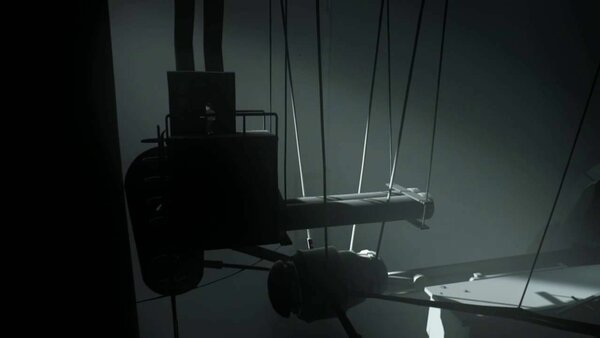
Whilst Limbo marked Playdead's arrival and created a seismic moment for indie video games, some would argue their follow-up, Inside, was the stronger title. Its gripping and devastating plotline was told in a nuanced and haunting fashion. Limbo had the style, but Inside had the substance.
Play as a red-shirted boy, possibly escaping an authoritarian dystopia, hunted by its henchmen, only to end up in a creepy experimental facility that gets stranger and stranger. Puzzle through the scenarios, avoid being shot, pull off some snazzy platforming, and all roads lead to him facing a giant mass of human limbs and flesh that lives in a massive fish tank.
After a terrifying chase, it absorbs him, escapes, and destroys the entire facility in the process - with both of them, now assimilated into one. Was that always the creature’s intention? Was this random boy telepathically called to help it escape and rain down destruction on humanity? It's slightly ambiguous to the point that the gamer themselves must decide how they feel the dots were joined.
I guess those “villains” could've had a pretty legit reason to shotgun the boy from the very first frame after all…
4. Untitled Goose Game

Play as a goose in a quaint little English town. Swim in the pastel-colored pond and waddle through the warmly cel-shaded environments. Many might think this would result in one of the coziest cozy games of all time.
Not so much - because this feathered fellow is basically Satan’s spawn.
Of course, you could, as a player, simply take control of your goose and wander joyfully and aimlessly. But the game gives you objectives, and those objectives reveal that you’re actually a huge jerk. From creating a picnic by stealing from a poor groundskeeper, to wreaking havoc at a quiet pub where folks are just trying to enjoy their Sunday roast - the good guy, you are not.
The real zinger comes in the game’s finale: when the goose is tasked with stealing the town’s prized Golden Bell. If successful, on arriving back at the goose’s lair, he casually chucks his prize into a pit already filled with bells - proving this isn’t a random one-off. These poor townsfolk are doomed to be tormented forever by this beaked anti-Christ.
3. Silent Hill 2 Remake
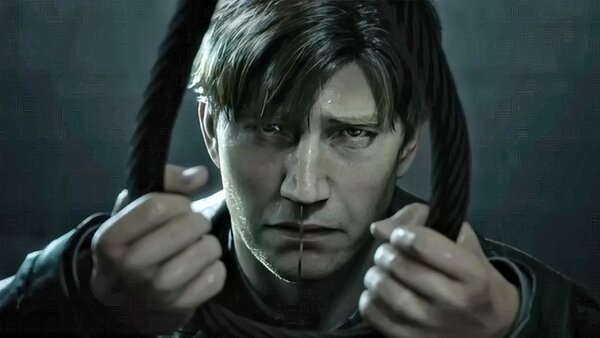
Yes, Silent Hill 2 is one of the most iconic horror games of all time. Its recent remake was also one of the greatest video game remakes ever made. Classic is a word that lingers for both. Yet unlike its closest rival, the Resident Evil franchise, this hauntingly tragic entry had anything but a true-blue, wisecracking hero at its center.
The plot unravels as a mourning husband, James Sunderland, is drawn back to the mist-covered town of Silent Hill via a mysterious letter from his deceased wife. This gives James a strange hint of hope that she might actually be alive... and, maybe, he can save her this time.
From that point, the game takes on a sort of dream logic, as the town becomes filled with creatures that hit close to home for James - waking nightmares echoing guilt and horror. As he fights for survival, tooth and nail, against creepy boss after creepier boss, the final piece eventually falls into place: James isn’t mourning his wife; he’s tormented because he killed her.
Depending on the ending, the act can be seen either as a mercy kill or a selfish choice. As the credits roll and the soundtrack swells, the player is left to decide whether this act could ever be forgiven...
2. Little Nightmares
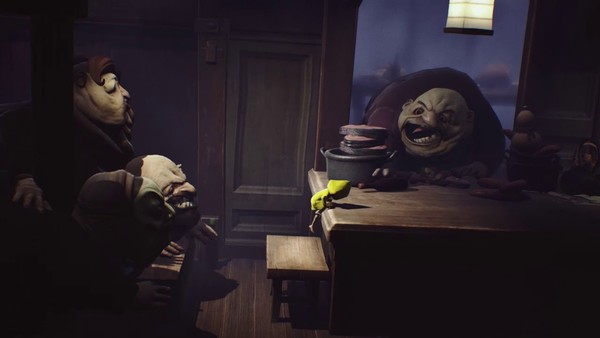
After Playdead’s one-two punch of Limbo and Inside, the company cracked due to internal conflict, with several alumni splitting off to form new studios, leaving the dev team a former shell of itself and unable to continue their momentum. It left us wondering if there could ever be some form of follow-up?
Well, if there was ever a developer or series best placed to feel like a true successor to those minimalist, haunting 2D platformers, it has to be Tarsier’s Little Nightmares, which captured the essence of those games while mixing in a twisted, Tim Burton-esque design and nail-biting stealth tension.
The player is Six, a raincoat-wearing tyke hunted and chased by horrifically twisted figures who want nothing more than her grotesque, shocking demise. Survive all these hair-pulling set-pieces, and the game hits the player with the real payoff - she was worse than all of them put together.
The character has shown hints of an insatiable, monstrous hunger throughout the game, which finally unleashes itself in the finale as she essentially massacres anything in her way. Add to that Little Nightmares II, a prequel that further confirmed Six’s tragic villain origins and, yes - no doubt, be afraid of her. Be very afraid…
1. The Last of Us: Part 2

To call this sequel to the PlayStation first-party classic divisive is likely the understatement of the century.
Recently, there was a whole repeat of events thanks to the second season of the TV show, which followed the first half of this game. The warm critical reception of the first season plummeted with critics, ratings, and snarky YouTubers. It all felt a little déjà vu.
Yet… if this game worked for you, it was truly an experience like no other.
Taking the beloved (yet terminally flawed) protagonist, Joel, from the first game and having him brutally killed in the opening moments was never going to go down well. But putting his surrogate daughter, Ellie, in the driver’s seat for a brutal, bloodthirsty revenge mission to avenge him wasn’t subversive - it was kind of expected. So far, so typical.
Then, midway through, the game dares to flip the entire concept on its head - making gamers play as the killer, Abby. Turns out she had her reasons to kill Joel, and several colleagues that Ellie has already put to waste at this point were less deserving of their fates than expected.
Whether it worked for the player personally or not, there’s no denying it takes the revenge story and flips it inside out, forcing the gamer onto the other side of the narrative and leaving them conflicted at best, infuriated at worst. It had the audacity to present the scenario not as black and white, but smothered in grey.