10 Video Games To Blame For The Current State Of Games
Thanks a lot, Fortnite.

There are two distinct schools of thought about the modern gaming sphere: either that publisher greed has reached a deeply uncomfortable apex, or that there's never been so many brilliant games to choose from at such competitive prices.
Whatever your own opinion, gaming is driven by trends like any other art form: the mascot platformer surged in popularity after the success of Mario, Max Payne popularised bullet-time, and Grand Theft Auto left a trail of me-too open world shooters in its wake.
And while many trends can change entire genres for the better - where would we be without Gears of War's cover mechanics? - they can also be hugely detrimental to the creativity of games as a whole.
These 10 games were all responsible for kickstarting trends that, while not necessarily harmful in isolation, inevitably led to less-imaginative publishers deciding that they wanted their own slice of the very same lucrative pie.
And as they always do, publishers quickly cashed in on the hot trend of the minute, exploiting each to their full predatory potential with the bare minimum imagination necessary.
Do these trends all signify the end-times for games? Not quite, but they nevertheless paint a picture of a AAA gaming landscape in particular that's depressingly bereft of new ideas.
Isn't that why Death Stranding was such a wonderful breath of fresh air, nonsense plotting at all?
10. The "Content-Filled Open World" Boom - The Witcher 3: Wild Hunt

The Witcher 3 is unquestionably one of the greatest video games of the generation and, honestly, of all time.
Not only did it tout a massive, sprawling open world that actually felt alive, but the side quests were among the most substantial, meaningful, and even hilarious that the RPG genre had ever seen.
The game was a mammoth achievement, no doubt, but its enormous success naturally led to numerous action-adventure games in its wake making half-hearted attempts to match its ludicrously ambitious sense of epic scale and detail.
The Witcher 3 pushed the boundaries of what open world games could be, and sensing a gold rush on the horizon, countless publishers offered up their own inferior stabs at the genre.
Mass Effect: Andromeda rather infamously failed to deliver on its expansive promises, and though Assassin's Creed Origins made a solid attempt to elevate the series into the open world realm, neither the storytelling nor the overly cluttered map were quite up to par.
These are two just major examples, of course, but we can blame The Witcher 3 for inspiring so many mediocre action-RPGs to offer up over-large worlds filled with bland copy-paste environments, repetitive sidequests, and tedious collect-a-thons.
The Witcher 3 wasn't the first open world game, but it is arguably the best, and the one which most others have so blatantly - and often lazily - tried to aspire to.
9. Battle Royale EVERYWHERE - PlayerUnknown's Battlegrounds
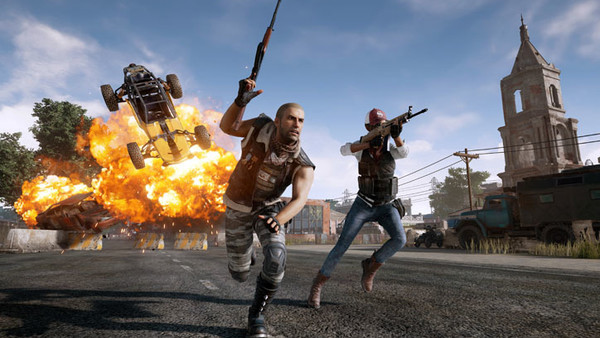
Though its initially meteoric success has been largely eclipsed by Fortnite, PlayerUnknown's Battlegrounds was nevertheless the first game to popularise the Battle Royale genre with the masses.
Sold on the beautiful simplicity of its "100 enter, 1 leaves" premise, PUBG quickly became a pop-culture phenom despite its initial hiccups on PC - namely terrible optimisation and a litany of bugs - and has since become one of the best-selling video games of all time.
In addition to Fortnite successfully stealing the Battle Royale crown away, PUBG's success quickly prompted a major trend towards Battle Royale in the general gaming market.
Not only was Steam flooded with hundreds of PUBG clones, but even AAA franchises such as Call of Duty, Battlefield, Grand Theft Auto, Counterstrike, and Forza got in on the action.
While many of these modes were enjoyable, it's also fair to say that there was an unmistakable whiff of desperation in the air as developers clambered to ensure their own game could cash-in on the latest gaming craze.
Rather than chase truly imaginative and innovative new gameplay modes, devs are now instead devoting time to shoehorning in Battle Royale wherever they can. As fun a mode as it can be, isn't it a bit boring at this point?
8. The "Souls-Like" - Dark Souls

Few franchises have been as monumentally influential on gaming over the last decade as Dark Souls. The famously hard-as-nails action-RPG franchise won itself a loyal legion of fans for its tough-but-mostly-fair degree of challenge, not to ignore its spectacular world-building and fluid gameplay.
Dark Souls' impact on gaming is best indicated by its status as a meme, that a particularly demanding game of any genre can typically be called "The Dark Souls of...," or more tidily, "Souls-like."
The series has had a significant impact on how developers of action and platform games in particular design combat, navigation, and world-building, with many post-Souls games wearing their difficulty like a badge.
But what many Souls-like games forget is that FromSoftware's franchise prides itself on forcing the player to learn from their failures and become a better warrior as a result, whereas many of the dozens of Souls-aping efforts lack the ingenuity of design to give patient players the same rewards.
An interesting recent example is Star Wars Jedi: Fallen Order, which while on paper a neat fit for the Souls style, just lacks the nuance to actually make player progress satisfying.
Instead, it feels like a ho-hum Souls clone with a Star Wars skin wrapped around it, while also cribbing elements from Uncharted, Metroidvania, and so on.
Some may rightly argue that Dark Souls and its imitators are a riposte to the generally lessened difficulty of modern games, but it takes extremely considered and delicate design to make games that are both challenging and rewarding.
Clearly, many Souls-like efforts have unfortunately forgotten this.
7. Season Passes - L.A. Noire

Though loot boxes are the most prominent way for publishers to nickel-and-dime players these days, let's not forget about the impact of the good 'ol season pass.
Season passes were introduced almost a decade ago, whereby players could effectively pre-purchase DLC packs ahead of release at a discounted price, allowing publishers to receive an over-the-odds cash injection before said DLCs were even completed.
L.A. Noire was the first major AAA game to feature a season pass, and unsurprisingly the trend quickly caught on, with countless AAA titles following its greedy lead.
The primary issue, of course, was that the promised content was often vaguely detailed, and in the event that a game flopped commercially, there was no guarantee players would ever actually see all the planned content or even get a refund.
Then there's the issue of publishers blatantly carving content out of games that was completed during main production, effectively allowing them to double-dip players for material which, by all rights, should have been included in the main game - and in extreme cases, was already on the damn disc.
In essence the season pass was a precursor to "live service" games, especially with the likes of Rainbow Six Siege and Destiny 2 charging for annual season passes, basically allowing them to monetise content in perpetuity for years after the game has been released.
And we have L.A. Noire to thank for this, for while the season pass has diminished in popularity in recent years, largely replaced with loot boxes, it made publishers realise just how much extra money there was to be squeezed out of even purely single-player experiences.
6. The "Live Service" Game - Fortnite

To be clear, Fortnite is a great game in many ways, and while it wasn't the first game to adopt the "live service" model, it is certainly the most prominent and successful one.
Fortnite is a free-to-play game which managed to rake in $1.8 billion in 2019 alone, largely due to its Battle Pass system, an evolution of the season pass where players pay a nominal fee for a pass which offers challenges that in turn unlock tiered rewards.
This highly successful formula, combined with Epic's commitment to making the game feel like a living, ever-changing entity, has made the industry as a whole pivot towards the live service model.
Doing this in a F2P game is one thing, but naturally it's also been widely adopted by the AAA market with heavily mixed results.
Take last year's Anthem, which EA designed as a live service shooter intended to keep players engaged for years, only for the game to fall spectacularly off a cliff once players realised how little base content was actually available.
Creating a world that feels truly alive and persistent is extremely difficult, hence why so few developers have actually made the live service model work for both themselves and gamers.
There's a lot to be said for a curated, finite experience that just ends, rather than desperately trying to keep players glued to the same single game forever more.
In an age where there are more quality games available at lower prices than ever, is another 1000-hour time-sink really what any of us needs?
5. Early Access - Minecraft

Love it or hate it, Minecraft is one of the most successful and iconic video games of the last decade, ultimately proving responsible for several gaming trends we now hold as normal - but one above all else.
First and foremost, Minecraft was a primitive example of the Early Access game, with developer Markus "Notch" Persson allowing players to pay 10 Euros to play an early version of the game while he continued to iterate on it.
The masterstroke was that players who paid for the early version would also receive the "final" build of the game for free, which was finally released in 2011.
Minecraft generated $33 million in sales during the Early Access period, and kickstarted a major trend of in-development titles offering access to early betas - and, eventually, the full game - in exchange for money upfront.
This led to the creation of Steam's Early Access program in 2013, and while there's no denying that many games have benefited from the exposure and cash injection they received in Early Access - Don't Starve, Kerbal Space Program, and PUBG, to name just a few - the system has also been open to rampant misuse and abuse.
It goes without saying that players are given no guarantee that they will end up with a satisfactory or even feature-complete game, while a November 2014 study of Steam's Early Access platform found that only 25% of titles in the program had actually made it to a final release.
Though Early Access has indeed helped many quality games make it to market and keep their developers financially afloat, there are many, many more inferior games which just couldn't deliver on their promises.
And because this business model ensures developers have already made fat stacks of cash before delivering a fit-for-purpose game, the incentive to actually release a top-tier product isn't quite so pressing.
4. The "Fixer-Upper" Game - Destiny
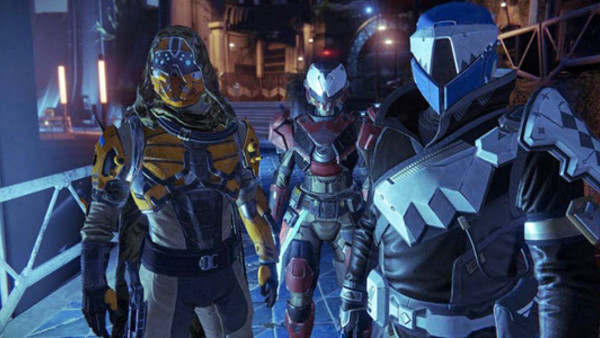
While Early Access games at least let you know you're jumping in early, and usually at a discounted price, there's also a growing tendency for retail games to launch at AAA pricetags while still being feature-impoverished.
Perhaps above all else, Destiny proved that you could curl out a piecemeal game day one, gross record-breaking sales figures, thoroughly piss off the fanbase with a lack of content, and still win them back by releasing a series of expansions while charging them extra for the privilege. Right.
The lesson here was that games didn't need to ship complete or anywhere close to it if they looked cool or had something approaching a "roadmap."
No Man's Sky similarly released feature-poor and ended up piling features on over the years that followed, while Street Fighter V launched unacceptably malnourished, before a later update finally brought things up to standard.
The unfortunate lesson that many publishers are taking from Destiny's success is that they can charge a full whack RRP for their empty new AAA game, fill in the blanks later, and maybe even charge for extra content in the future.
But redemption stories are one thing: then there's games like Fallout 76, which launched in a majorly lacking state and hasn't ever made it up to players who bought in day one.
That is sadly the more common reality when publishers have the nerve to treat their customers like braindead cash machines, to assume that they'll just lap up low-effort titles based on a brand name or appealing aesthetic alone. Oof.
3. Loot Boxes - Team Fortress 2

Team Fortress 2 wasn't the first ever game to feature loot boxes, but it was the first to so shrewdly exploit gambling mechanics and psychology in such a prominent and hugely profitable way.
In September 2010, the hit shooter first introduced loot boxes, which could be unlocked by keys purchased with real-world money. Less than a year later, the game went free-to-play, prompting microtransaction revenue to multiply many times over, creating a runaway gravy train in the process.
In the years that followed, an overwhelming number of multiplayer-centric AAA franchises included loot box mechanics, namely Halo 5, Overwatch, Call of Duty, Gears of War, FIFA, and so on.
But the straw that broke the camel's back came in late 2017, when Star Wars Battlefront II's insultingly transparent loot box mechanics made natural unlocks such a rampant chore, and so clearly gave those buying into loot boxes such an advantage, that there was a colossal backlash from players, the press, and also governments worldwide.
As a result the tide has turned massively against loot boxes in recent times, though their prominence and subsequent controversy nevertheless underlined the contempt with which publishers view the average gamer, and the skepticism with which players should view most MTX systems.
2. The "Good Enough" Subscription Game - Gears 5

First things first - Xbox Game Pass is an absolutely incredible service that presents arguably the best dollar value in modern gaming.
It's the closest thing to Netflix the medium has, and while that affords players a massive library of games at a minimal entry cost, it also has the by-product of perhaps affecting the quality of games created specifically for the platform.
To analogise the point: you probably wouldn't have paid a movie ticket price to watch Michael Bay's new film 6 Underground, but there's a good chance you were happy to watch it as part of your Netflix dues, right? It sucked, but because you didn't lose any direct money out of your own pocket, you didn't mind as much.
Similarly, Game Pass and subscription services like it can theoretically invite a general lowering of standards towards games that are mediocre or merely decent, such that because we haven't directly paid for them, they're "good enough."
For example, the recent Gears 5 was one of the first AAA games to release on Game Pass day-and-date, and while it was a fun ride while you were playing it, it was ultimately a pretty typical, relatively forgettable entry for the franchise.
Had the game only been available through conventional retail, one suspects the response would've been decidedly more mixed. Instead, Gears 5 was largely met with positive notices from a gaming contingent that mostly played it for "free."
Similarly Crackdown 3 was an abject dumpster fire earlier in 2019, but because it was part of Game Pass, nobody got too mad about it.
With Microsoft now dropping every single first-party title on Game Pass day one, one hopes that it doesn't result in games being rushed to release simply to fill up their content library, with the smug confidence that even negative reviews don't matter that much.
1. The Miserable, Self-Serious Thriller - The Last Of Us

There's no disputing that Naughty Dog's The Last of Us was a landmark for video game storytelling: lacking the flighty whimsy of Uncharted, it was a serious, grim, and deeply affecting game with some of the most compelling characterisation the medium has ever seen.
And naturally, it wasn't long before other creatives attempted to imitate its almost impossibly bleak tone to varying degrees of success - most all of them inferior, mind.
Perhaps the most memorable recent example is the Sony exclusive Days Gone, a morbid slog of a game that felt more self-consciously edgy than a genuinely moody, atmospheric romp, to say nothing of its tedious deference towards "realistic" survival mechanics.
In much the same way that Christopher Nolan's The Dark Knight ushered in a decade of try-hard "dark" blockbusters that forgot the crucial human element, so too has The Last of Us challenged other action games to amp up the dramatic stakes while still maintaining a consistent tone and sense of humanity.
If you find yourself groaning at the navel-gazing self-regard with which many modern action games hold themselves, in all of their empty somberness, you can blame Naughty Dog's groundbreaking post-apocalyptic masterpiece in all of its brilliance.