10 Video Games That Were Cancelled (But Not Why You Think)
Star Wars Battlefront III's cancellation had nothing to do with the loot box controversy.

Video game development sure is a tough racket - they take more time, effort, people, and money to make than just about any other art form, and at the end of the day, many of them just end up cancelled anyway.
The complex nature of video game production often means that promising-looking new titles are scrapped even after years in development, most commonly when a publisher loses faith in the project or it gets lost in the shuffle due to a business regime change.
But the reasons for any game's cancellation can be varied and complex, and a lot of the time it simply isn't the one you assumed.
These 10 video games were all unceremoniously scrapped mid-development, and while the writing may have been on the wall for many of them, that doesn't mean the most obvious reason for their cancellation was the correct one.
Each of these games ended up on the chopping block for more multi-faceted and unexpected reasons than most fans initially believed, in turn providing a fascinating glimpse into the nebulous inner-workings of the world's most secretive entertainment industry...
10. Mixed Reviews & The Original's Troubled Development - Days Gone 2

Why You Thought It Was Cancelled
It was initially expected that Sony's zombie actioner Days Gone would get a sequel, but earlier this year it was confirmed that Sony had actually rejected the pitch for Days Gone 2.
A few days later, the game's writer and co-director John Garvin appeared on David Jaffe's podcast and said, "If you love a game, buy it at f**king full price," clearly implying that the sequel was shot down because the game didn't sell enough.
Why It Was Actually Cancelled
But as Jason Schreier's initial Bloomberg report confirmed, Sony ultimately rejected the pitch due to both the first game's mixed critical reception - the PS4 version has a mediocre 71 Metascore - and also its protracted, difficult development.
Clearly Sony didn't have much faith in Bend Studio's ability to deliver on a bigger, better sequel, and though the game's recent PC release sold well out of the gate, it seems relatively unlikely to move the needle enough for Sony to change tack.
Given the generally high standard of Sony's first-party titles, you really can't blame them for balking at a sequel to one of their more divisive recent AAA releases that didn't exactly sell incredibly.
9. Nobody Wanted To Work On It - Fable Legends

Why You Thought It Was Cancelled
Fable Legends was announced in 2013 as the next entry into the hit RPG franchise, with a heavy focus on co-op play and touting a $75 million budget, making it one of the most expensive video games ever at the time.
In 2015 Microsoft confirmed it would be free-to-play, yet following numerous delays the game was cancelled the very next year.
Most initial reports pointed to Fable Legends simply being an ambitious failure that Microsoft realised wasn't going to live up to the enormous hype, given the original plan for it to be a live-service title intended to last up to a decade.
Why It Was Actually Cancelled
A short time after its cancellation announcement, reports revealed that Fable Legends was a game put into development without much in the way of passion from its development team.
Sources who worked on the game claim that it was almost finished before being cancelled, but "nobody wanted to work" on it, with most of the team actually wanting to make a proper fourth Fable game instead.
Sensing the inability to release a live-service game without an enthusiastic team of people to work on it in perpetuity, Microsoft pulled the plug. As an added blow, though, they also shuttered Fable Legends' iconic developer, Lionhead Studios.
8. It Felt Too Much Like Call Of Duty - Doom 4

Why You Thought It Was Cancelled
After the critical and commercial success of Doom 3, Id Software began hinting at the existence of Doom 4 in 2007 and formally announced it in 2008. However, the project's development stalled until 2013 when it was finally cancelled outright, leading to the development of 2016's Doom reboot.
For most, it seemed that Doom 4 was yet another AAA project that got mired in development hell and wasn't able to crawl its way out as production slogged on for years and years before finally being put out of its misery. But that's not quite the case.
Why It Was Actually Cancelled
You might recall that a lot of Doom 4's released prototype footage bore a surprising similarity to Call of Duty, such that fans began mockingly calling it "Call of Doom."
While it's not uncommon for studios to simply ignore the whims of over-sensitive fans, in this case the developers did indeed listen to the mounting feedback from fans and press alike.
According to Doom designer Kevin Cloud, they decided the game they were making was too much like Call of Duty and not enough like classic Doom:
"We had explored a direction and got to a certain point where we felt like this wasn't really capturing what we felt like was going to be a strong Doom and what the fans would want from us."
Creative director Hugo Martin succinctly added, "Doom is about one guy involved in big things and Doom 4 was more about the big things."
Given that the subsequent reboot massively revitalised the franchise, it was clearly the right call to make.
7. Amazon Fell Out With Tencent - The Lord Of The Rings MMORPG

Why You Thought It Was Cancelled
Amazon Studios' The Lord of the Rings-themed MMORPG was announced in 2019, and after around two years of protracted development, they confirmed it had been cancelled this past April.
The cancellation wasn't terribly surprising to many who had been following its production, with job listings late last year suggesting the project was still in its infancy, and reports stating it was also being overhauled for the sake of both next-gen consoles and Amazon's upcoming Lord of the Rings TV show.
It sounded like an over-ambitious project that simply bit off more than studio Athlon Games could chew, but anyone who bothered to read beyond the cancellation headline - not many of us, it seems - learned a different story.
Why It Was Actually Cancelled
The real reason for the cancellation was Amazon getting into a dispute with Chinese multinational corporation Tencent, the parent company of Athlon Games. With seemingly no way to resolve the unspecified conflict, there was no choice but to scrap the project.
Given that a Lord of the Rings MMO could've been a massive money-spinner for Amazon, this sure must've stung no matter the reason.
6. The Failure Of Haze & The Difficulty Of Marketing It - TimeSplitters 4

Why You Thought It Was Cancelled
The TimeSplitters franchise was never a major seller, but it had enough devoted fans for three games to be released.
TimeSplitters 4 was first whispered about in 2007, but once developer Free Radical went into administration and was bought out by Crytek in 2009, it became clear the game had been quietly cancelled.
It was easy to assume that the cancellation was either due to the third TimeSplitters, Future Perfect, not selling enough, or Crytek wanting Free Radical - subsequently rebranded as "Crytek UK" until 2014 - to work largely on its Crysis games instead.
Why It Was Actually Cancelled
There are two major reasons. Firstly, Free Radical's 2008 FPS Haze was a massive critical and commercial disappointment after being hyped as a "Halo killer," shaking confidence in the team's ability to deliver.
It was also felt that the TimeSplitters series was simply too difficult to market to a wider audience without a clear protagonist. Co-creator Steve Ellis said:
"You always got to the point where the marketing person in the room would say 'I don't know how to sell this' because they want a character that they can put on the front of the box. Every marketing person and every publisher we spoke to [said] 'You can't have that as your selling point.'"
Though the series' lukewarm sales surely didn't help matters, it's clear that there simply wasn't faith in Free Radical to deliver a fourth game that could generate gangbusters sales figures.
With Free Radical being relaunched earlier this year, however, a fourth TimeSplitters game is once again in active development with several original founders onboard (including Ellis), while Deep Silver will handle publishing duties.
5. PlatinumGames & Microsoft "Both Failed" - Scalebound

Why You Thought It Was Cancelled
PlatinumGames' action-RPG Scalebound was announced at E3 2014 and immediately caught the attention of press and genre fans alike.
However, the world was shocked when the game was cancelled in early 2017, with initial reports suggesting that Microsoft felt the project wasn't working and hastily cancelled it.
For many fans, it was another example of a mighty publisher pushing a beloved developer around, and gamers being deprived of an interesting game as a result.
Why It Was Actually Cancelled
The situation was actually a little more complex than this, as in 2019 PlatinumGames' head Atsushi Inaba stated that it hurt to see Microsoft raked over the coals by frustrated fans following the announcement, as they weren't solely to blame.
Inaba admitted that "both sides failed" during Scalebound's development. He added:
"I think there are areas where we could've done better and I'm sure there are areas that Microsoft as a publishing partner wish that they could've done better. Because nobody wants a game to be cancelled."
As convenient a narrative as it is that Microsoft enacted their irresistible will upon PlatinumGames, it seems the developer was in over their heads on such an ambitious AAA project and didn't get adequate assistance from Microsoft.
This was recently backed up by game director Hideki Kamiya, who confirmed the many technical challenges faced during development:
"We were working in an environment we weren't used to... We were developing on the Unreal engine. We also lacked the necessary know-how to build a game based on online features. The hurdles we had to overcome were very big... We weren't experienced enough and couldn't get over that wall, leading to what happened in the end."
4. It Didn't Meet Bethesda's Quality Expectations - Prey 2

Why You Thought It Was Cancelled
One of the most infuriatingly cancelled video games of all time is surely Prey 2, the planned sequel to 2006's cult sci-fi FPS Prey.
The sequel was announced not long after the first game's release, yet once the series' rights were acquired by Bethesda in 2009, word largely went quiet on development until the publisher confirmed Prey 2's cancellation in 2014.
Given Prey's relatively modest sales and Bethesda being in the business of mega-seller AAA games, many annoyed fans off-handedly assumed that this was simply a decision based on numbers above all else.
Why It Was Actually Cancelled
But in actual fact, Bethesda's Pete Hines confirmed the cancellation occurred not for cynical number-crunching reasons but because they just didn't feel like the game was shaping up well enough:
"It was a game we believed in, but we never felt that it got to where it needed to be – we never saw a path to success if we finished it. It wasn't up to our quality standard, and we decided to cancel it."
It's admittedly a line that's difficult for Prey fans to believe given how fantastic the game's early preview footage looked.
But we're obviously not privy to the same access that Bethesda's higher-ups were given, so presumably the entirety of the project wasn't quite as coherent as the footage suggests.
Ultimately Bethesda finally released a well-received franchise reboot in 2017.
3. EA Refused To Sell It To Other Publishers - Thrill Kill

Why You Thought It Was Cancelled
There are few cancelled video games more infamous than Thrill Kill, the gratuitously violent and hyper-sexual PS1 fighting game that was basically finished when it was cancelled, with discussions of a sequel already underway.
The popularly accepted reason for Thrill Kill's cancellation was a result of EA acquiring the game's North American distributor Virgin Interactive, and that EA scrapped the game after balking at its graphic content. However, the situation was somehow even more aggravating than that.
Why It Was Actually Cancelled
This wasn't merely an open-and-shut case where EA acquired Virgin and threw Thrill Kill in the bin - they not only refused to release it themselves due to the potential PR fiasco but were so worried about catching flak for being associated with the game that they wouldn't even sell it on to other publishers.
Despite receiving offers from other prominent outfits such as Eidos Interactive, EA were so pathologically concerned with the "bad look" of the mainstream media connecting them to Thrill Kill that they wouldn't even offload the title to another publisher and get paid for it.
EA of all companies saying no to money is frankly mind-boggling, while Thrill Kill was ultimately leaked and circulated on piracy websites a short while later.
Developer Paradox Entertainment ended up reskinning Thrill Kill for the 1999 fighting game Wu-Tang: Shaolin Style, and consequently used Thrill Kill's beat 'em up engine as the foundation for numerous titles they released thereafter.
2. The Star Wars License Is Too Expensive - Star Wars Battlefront III

Why You Thought It Was Cancelled
Star Wars Battlefront II was a massive commercial success despite the fact that its release was irreversibly damaged by its egregious loot box and microtransactions controversies.
Given the game's strong sales no matter the fan outrage, it was reasonable to expect EA and DICE to quickly get to work on Battlefront III, probably just in time for the release of Star Wars: The Rise of Skywalker in late 2019.
But alas, as time passed and no official announcement came, it became clear that Battlefront III had been quietly cancelled.
This was seemingly confirmed in September 2019 when the previous game's design director Dennis Brännvall said there "wasn't the same hunger" for a third game.
Once Brännvall and other key DICE members left the company last year, the writing seemed to be on the wall as to why Battlefront III never came to pass.
Why It Was Actually Cancelled
As we recently found out, there was actually one major motivating factor for Battlefront III never going into production - the massive additional costs required to work with the Star Wars license.
According to reputable leaker Tom Henderson, DICE pitched Battlefront III to EA, who turned it down because "it takes 20% more sales to make the same money" when dealing with Star Wars compared to Battlefield.
It's fascinating to consider EA being in a predicament where the costs of producing a Star Wars game are prohibitive enough that they'd rather not even bother.
It's quite possible the lasting backlash against Battlefront II had some degree of impact in the decision, but it evidently wasn't the driving factor.
1. Scope Creep & Staff Issues At The Studio - Daredevil: The Man Without Fear
Why You Thought It Was Cancelled
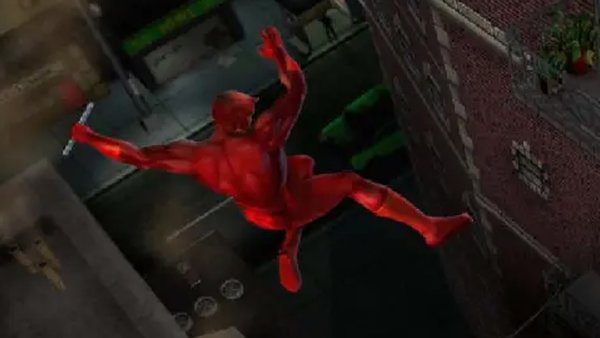
In the early 2000s, Army Men developers 5000ft Inc. got to work on Daredevil: The Man Without Fear, a video game based on the iconic Marvel superhero which publisher Encore owned the rights to.
For the most part the game is accepted to be one of the many video games based on popular IP that never came to fruition due to philosophical disagreements between parties of interest, in this case Sony and Marvel.
And while their differing visions for the game certainly didn't help things, The Man Without Fear's 2004 cancellation was actually caused by two far more specific factors.
Why It Was Actually Cancelled
The Man Without Fear is one of the most egregious victims of scope creep in video game history.
Originally designed by 5000ft as a low-budget, standalone, linear Daredevil game for PS2, once the 2003 Ben Affleck movie was announced Sony and Marvel stumped up significant cash to make the game a movie tie-in set to release around the same time as the film.
More than that, the gameplay would be expanded into an open-world style and additionally be released on Xbox and PC.
It was a lot for a smaller outfit like 5000ft to take on, without even getting into the fact that Sony, Microsoft, and Marvel all had approval privileges on every major aspect of development.
Sony and Marvel did indeed argue about the game's direction, but the wheels truly came off when Encore refused to pay licensing fees for the RenderWare engine and instead insisted that their own proprietary engine be created.
Realising the game's scope had gotten out of control, 5000ft scrapped the open-world elements in an attempt to get the game ready in time for the movie's release, but amid an exodus of employees and rumours of drug abuse in the studio's offices, they missed the deadline.
Ultimately the game received its de facto cancellation after Marvel refused to approve it for release, though some beta gameplay footage did arrive online last year: