10 Video Games That Were A Victim Of Their Own Success

Success can be a double-edged sword far too many franchises often throw themselves on.
As with anything worth striving for in this world, success often comes with a price, and this is most certainly the case for the video game industry. Companies invest more money than they ever have before into bigger and more complex games, all in an effort to become the next critically lauded hit or billion dollar franchise. Those few games that are lucky enough to reach these milestones usually have to face their own set of challenges, for better or worse. After all, success leads to greater expectations and more intense levels of scrutiny from both fans and the media. It means building on that success and preserving a quality formula, while at the same time changing things just enough to remain fresh. And most importantly, it means maintaining high standards of consumer satisfaction, which, as you'll see, isn't always the case. The following are games that have suffered in some form as a result of their success; some unfairly, others justifiably so. Some handled themselves better than others, but all serve as an example of the dangers that can come with hitting the big time.

10. World Of Warcraft

If you were to throw out the term €œMMORPG€ to any gamer, chances are the first game to pop into their mind would be World of Warcraft. At the height of its popularity it had nearly 12 million active subscribers, and despite large drop offs since, it remains the biggest MMORPG of all time. But of course, such a monumental level of success doesn't exist in a bubble. The profits made from World of Warcraft fundamentally changed Blizzard Entertainment going forward. It merged with Activision a few years after the game launched, and as is the case with any merger, significant changes could be felt by the community. Blizzard became larger and more monolithic, and many players feel like World of Warcraft, along with other beloved Blizzard franchises, has declined in quality and customer support as a result. It may be debatable whether this is actually the case, but there are plenty of examples these days of large publishers using shady tactics and mistreating their consumers in their prioritisation of the bottom line, Activision Blizzard included. World of Warcraft may have remained the most successful MMORPG for over a decade now, but its financial achievements have forever changed the business model that supports it, and not necessarily for the better of the game, nor the millions who play it.

9. The Sims 4

It would be an understatement to say that The Sims is one of the most successful video game franchises of all time. The first game exploded onto the scene in 2000, and from there only grew in popularity, breaking records and earning admiration from both critics and gamers. Much of this success comes from the near-universal appeal of its sandbox style, quirky sense of humour and open-ended player driven storytelling. Numerous sequels and expansion packs have only strengthened the grip this series has on people€™s hearts, and has thus earned it a devoted and rabid fanbase. So, it was inevitable that at some point The Sims would disappoint these loyal fans, which is exactly what happened when The Sims 4 was released in 2014. In an effort to focus on newer features, The Sims 4 forgot to include many others that fans consider to be essential. Controversy was stirred because of this, which led to a much more negative response towards The Sims 4 than any previous entry. Sales were rumoured to be well below past instalments, and a dark cloud hung over the game as a whole. Many fans believe this to be the consequence of corporate meddling on the part of EA, including accusations that funds meant for The Sims 4 were being use to support other major EA games like Titanfall. Ultimately, this is yet another case of a publisher assuming they can cut corners while still making a critical and commercial profit off name recognition alone, and that is a situation that more and more successful video game franchises continue to find themselves in.

8. Destiny

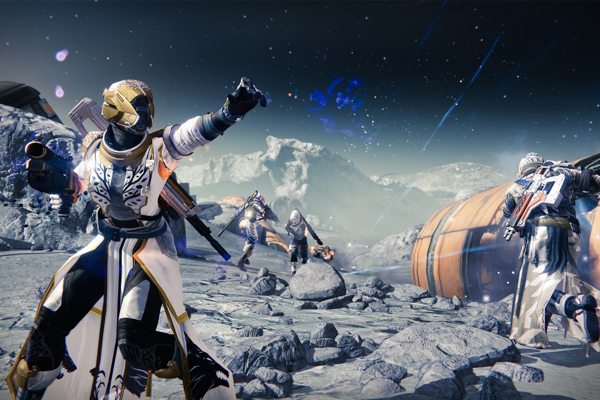
Destiny was the most hyped game of 2014, and for good reason. It was Bungie€™s first title after leaving Halo behind, and was marketed as the merging of the MMO and first-person shooter genres into a new and original sci-fi fantasy universe. A lot was on the line for both Activision and Bungie, and gamers hoped for the first truly epic MMO for consoles. However, the actual release wasn€™t nearly as positive as the hype. Even though it sold well, it was met with a wide variety of criticisms, the greatest of which were disappointments at the overall shallowness of the game. Despite promises of vast open worlds and exploration, Destiny turned out to be just another shooter with weak MMO elements thrown in for the sake of half-baked longevity. It also didn€™t help that the core game was lacking in content, most of which was stored away for expansions and DLC. This business model proved to be highly controversial and turned many gamers off, while others got bored fast. While Destiny was most certainly a huge financial success, the game and Bungie both received a significant amount of backlash when it failed to live up to expectations. It has become the brunt of many jokes and is held up as a prime example of everything that is wrong with modern gaming. Sure, a lot of people still play it, but it's a game that will be forgotten in the years to come; a fate secured by its own making.

7. No Man's Sky

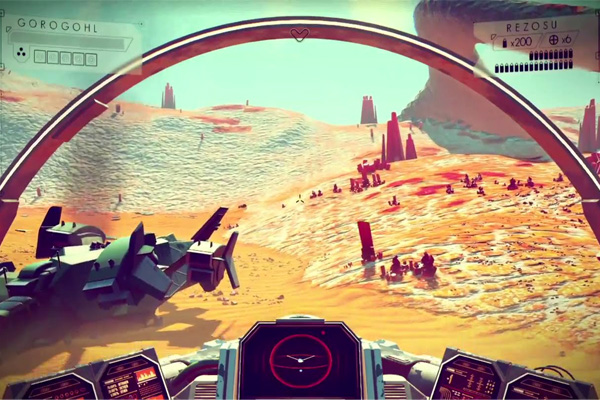
It's probably unfair to proclaim No Man€™s Sky a victim of its own success given the fact that it hasn€™t even been released yet, but so much has been promised that it seems almost inevitable at this point. Heralded as a game with limitless scope and freedom; NMS is a space-adventure that no one will ever beat or explore in its entirety. Frankly it sounds amazing, so amazing in fact that it feels like it won€™t be able to live up to the hype gamers have built up in their minds. It doesn€™t help that so much of it has been hidden behind closed doors. Despite being only a few months out from release, very little has actually been shown off. There could be, and likely are, valid reasons behind this secrecy, and much has been made about the complex nature of the code powering No Man€™s Sky. Odds are that it will be a good game, but considering just how much hype is being generated by its ambitions and promises, No Man€™s Sky will have to be jaw-droppingly amazing to escape any form of intense backlash. Simply put, this is a case where simply being good won€™t be good enough for the majority of consumers.

6. Grand Theft Auto III

The Grand Theft Auto series is such a powerhouse franchise at this point that it€™s easy to forget its humble origins. The first two games were modest successes outside of the UK, and it wasn€™t until the release on Grand Theft Auto III on the PS2 that the series became enormously popular, but with that popularity came intense media coverage about its violent and sexual content. Suddenly, Grand Theft Auto III was being painted as a threat to public health and a corruptor of childhood innocence. It was held up as yet another example of the 'dangers of video games'. Rockstar was attacked and threatened with legal action by lawyers like the now disbarred Jack Thompson. And this scrutiny continued as the series continued to gain popularity, culminating in the now infamous €œhot coffee€ scandal that surrounded Grand Theft Auto San Andreas. Of course Rockstar survived all legal attacks and accusations, and the GTA brand continues to flourish. It appears that most of the critics have gone silent and media outrage has died down over the years, while Grand Theft Auto has been accepted into mainstream popular culture. Grant Theft Auto remains a perfect example of the kind of adversity a controversial game can face when it succeeds in such a short amount of time.

5. Half-Life 2

While many successful video games tend to suffer from overexposure, corporate tampering, or simply failing to live up to expectations, Half-Life 2€™s suffering is more singular and unique. To that end, it still doesn€™t have a proper conclusion a decade after its release, and you can blame Valve€™s continued success for that. Half-Life 2 is considered by many to be a perfect game and Valve€™s crown jewel. Not only did it make significant technological and graphical advancements, but its storytelling, character writing, and universe building are believed to be some of the best video games have to offer. These achievements made the already distinguished Valve an even greater household name. Their success allowed them to further develop their digital distribution service Steam while also giving them the freedom to develop more original games like Left 4 Dead and Portal. However, somewhere within this process, they forgot to provide a conclusion to their most critically acclaimed game. All these years later and Half-Life 2 still remains without an ending, made all the worse by the brutally open-ended conclusion of Half-Life 2: Episode 2. And with no word on whether Episode Three or Half-Life 3 are in development or not, it appears less and less likely that we€™ll ever get it. It seems like Valve is focused on other things, and until they announce otherwise, it looks like the fate of Gordon and Alyx will remain in limbo for the foreseeable future.

4. The Resident Evil Series

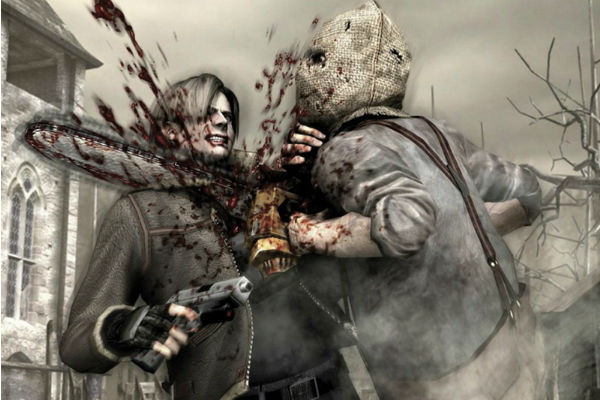
When the original Resident Evil was released in 1996, it popularized the survival horror genre. Gamers had never played anything quite like it, and it became one of the highest selling games on the Playstation. Resident Evil 2 was released two years later, and when that proved to be even more successful, publisher Capcom took that formula and ran with it. Many more Resident Evil games were released in rapid succession over the following years, each one repeating the same formula again and again. The franchise began to stagnate both creatively and financially, forcing Capcom to reinvent the formula with Resident Evil 4. Resident Evil 4 was just the shock to the system the franchise needed, and suddenly Resident Evil was on top again. But Capcom once again fell back into its old habit of repeating itself. Resident Evil 5 was already starting to show its age, and by the time Resident Evil 6 came out gamers were already over it. And just like that, Resident Evil was in a creative rut yet again. Such is the current state of the Resident Evil franchise at this moment. Instead of coming up with new ideas, Capcom seems content to just make money off of nostalgia by putting out HD remakes of the classics. The mighty have fallen, and it€™s all because its success has blinded them from realizing why the franchise was successful in the first place.

3. The Assassin's Creed Series

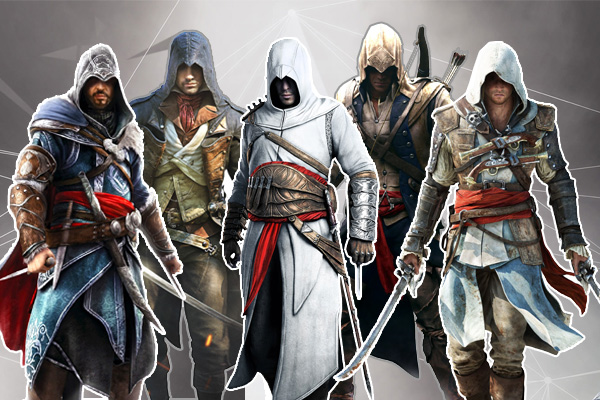
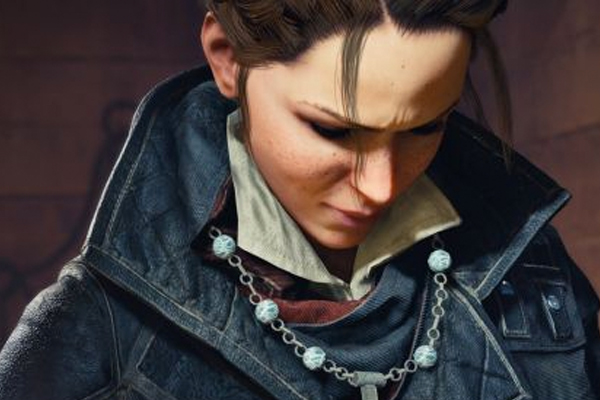
The premise of Assassin€™s Creed has created one of the most unique and interesting video game franchises around. It€™s merging of science fiction with real world history has forged a fascinating mythology, and gamers responded to it with such enthusiasm that it has become one of Ubisoft€™s most cherished franchises. Now, however, that enthusiasm is flatlining, and it€™s because Ubisoft made the mistake of over-saturating the market with as many AC games as possible, in as short a time as possible. It has become so common now to see a new release every year that you might be surprised to hear that it was once only planned as a trilogy. There was a clear end in sight, but as soon as Ubisoft saw how well the games were selling, they quickly eschewed this plan in favour of countless spinoffs and side stories, until eventually the main point of the story was gone. The last couple of years have seen Assassin€™s Creed games hit the market with unacceptable amounts of bugs and glitches, which is no doubt the result of the rushed assembly line nature of their production at this point. Assassin€™s Creed is no longer the unique and compelling franchise it once was; it€™s no longer about telling a story. Its integrity has been corrupted to the point where it is now just another product pumped out every year to make money.

2. Mass Effect 3

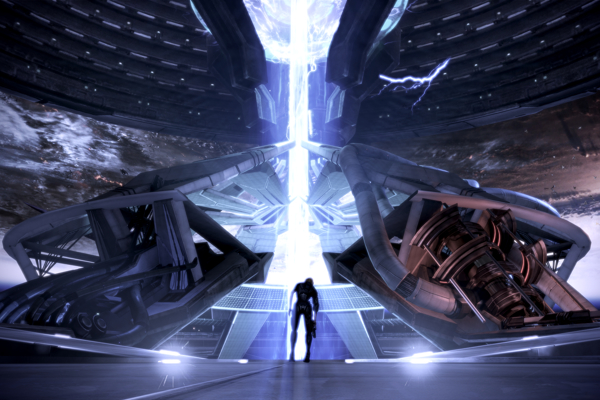
Following the first two beloved games in the Mass Effect trilogy, Mass Effect 3 promised fans a satisfying ending that would take into account all the choices they made throughout all three games. Instead it ended up delivering only a handful of endings of negligible differences that not only left the plot wide open, but betrayed the very ideas and themes that defined the games. And fans were very, very upset. The uproar following the release of Mass Effect 3 still remains one of the most widely covered video game controversies, and it€™s because the series was such a critical and financial success. More emotions and expectations were attached to the ending of Mass Effect 3 than perhaps any other game ever, and the response generated was massive. Thousands of fans proclaimed to having lost their passion for Mass Effect after the ending, while any positivity for the game was overshadowed by the feeling of betrayal many felt upon its completion. The reaction to the ending of Mass Effect 3 was so intense that the franchise is still recovering from it, with many fans approaching the upcoming Mass Effect: Andromeda with skepticism. The Mass Effect franchise may have nestled its way into the good graces of millions of gamers, but it paid the price when all of their passion turned negative and was thrown back in its face once it failed to give them a satisfying conclusion.

1. Guitar Hero

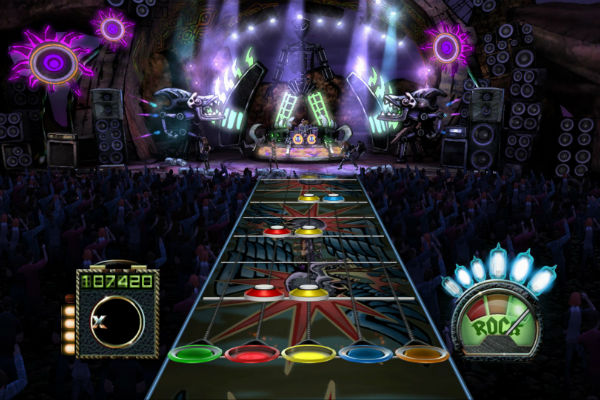
Guitar Hero was quite the unexpected phenomenon when it was released in 2005. Through its ability to make you feel like a rock star, it appealed to both casual and hardcore gamers. It sold millions of copies and jumpstarted one of the most influential and popular video game franchises. Guitar Hero fever rose so high and so fast that Activision began releasing countless sequels, spinoff games, and expansions, and for a while they reaped the profits. But over time the market became so oversaturated with Guitar Hero games that gamers simply couldn€™t keep up. Interest started to wane and sales plummeted. Eventually Activision was forced to put the series on hold because it was no longer proving profitable. The rise and fall of Guitar Hero should stand as a warning of what happens when a video game company focuses on quantity over quality. Activision was so blinded by potential profits that it didn€™t think about how consumers would react to the release of so many Guitar Hero games so fast. Now that Guitar Hero is finally coming back, maybe Activision will learn from their mistakes and be more selective about their release schedule this time. Can you think of any other video games that were victims of their own success? Let us know in the comments!

In this post: 
The Sims
 
Posted On: 
Contributor
Contributor

Film and video game obsessed philosophy major raised by Godzilla, Goku, and Doomguy.