10 Video Games That Wanted The Player To Feel Terrible
Feels bad, man.

While the vast majority of video games are made to provide escapist entertainment, sometimes they can serve a more ambitious and unexpected purpose - to make the player feel like an absolute bag of crap.
Not every game wants to give players a shiny, happy good time, but in fact quite the opposite: some developers yearn to immerse their customers in a deeply miserable world where hope is just a faint flicker.
This is often achieved by having the player control a terrible person, for though many games - such as Grand Theft Auto - effectively celebrate their scumbag protagonists, some actually dare to make the player feel the full grim extent of their character's behaviours.
Then there are games which make the player feel awful through their bleak social commentary, from highlighting the futility of existence to the sheer toil of living in an unfair, often uncaring world.
These 10 games are all deeply depressing experiences in their own rights, and absolutely cannot be recommended to anyone in desperate need of a good laugh.
However, their emotional complexity is also incredibly valuable in a medium that's still struggling to be taken totally seriously...
10. Silent Hill 2

Silent Hill 2 is a sustained, stamina-draining exercise in dread, a game which beats the player down with its relentlessly miserable atmosphere.
This isn't merely some junky survival horror game filled with gooey monsters for the "hero" to slay. Instead, the game serves as a giant, sprawling metaphor for protagonist James Sunderland's own grief-infused depression at - spoiler! - killing his terminally ill wife, Mary.
Though Silent Hill 2 keeps the particulars of Mary's death somewhat ambiguous - namely whether it's murder or euthanasia - playing through an entire game as a suicidally despondent protagonist is a heavy load for the player regardless.
That's not to ignore the numerous supporting characters and subplots, which often touch on cheery subjects such as sexual abuse and drug addiction.
To make matters worse, the majority of the game's endings are intensely bleak, and even if you do attain the "happiest" ending, it's really just the least-upsetting one.
Basically, Silent Hill 2 - or, really, any game in the franchise - isn't one to play if you're feeling a bit low.
9. Life Is Strange

Though much of Life Is Strange's first season - the less said about the second, the better - is focused on the touching relationship between quippy teens Max and Chloe, the game is ultimately building towards an unavoidably grim conclusion.
While protagonist Max possesses the ability to rewind time throughout the game, in the climactic episode she finds herself unable to stop a storm rolling into Arcadia Bay, and is therefore forced to make a binary decision: save the town or save Chloe.
Either outcome is a horrifying one: you can let the storm rip through the town and presumably rack up a significant body count, or leave Max's best pal and potential love interest to get put in the ground.
Neither ending is much of a happy one - players are simply forced to decide whether they think the life of one person is worth that of many more. Whatever you pick, a guilt trip is certain.
8. Papers, Please

Papers, Please is a fascinatingly creative feel-bad game which casts the player as an immigration officer in the fictional Eastern Bloc-esque country of Arstotzka.
As an instrument of the state, you're tasked with coldly stamping passports, scrutinising other documentation, and denying access to anyone who might seem "suspect."
The result is a chilling depiction of the banality of evil, whereby the player is locked into a repetitious loop of bureaucratic busy-work which perfectly surmises how oppressive regimes are allowed to flourish.
Worse still, the player themselves isn't free from danger: if you make too many mistakes or get caught helping the downtrodden - or those attempting to fight back against the regime - you risk the lives of yourself and your family.
No matter which of the game's many endings you get, there's little chance you come out of this feeling good about yourself - or humanity, for that matter.
7. Shadow Of The Colossus

Shadow of the Colossus is one of the most artful and transcendent video games of all time, if also one which harbours an ugly, wearisome secret underneath all that mystical beauty.
As protagonist Wander, the player spends the entire game hunting down sixteen gigantic Colossi, in the knowledge that felling all of the creatures will grant Wander the power to resurrect his fallen love Mono.
But of course, the end of the game includes the legendary mic-drop moment where it's revealed that you've been played like a damn fiddle all along.
As it turns out, killing the Colossi - who were clearly just minding their own business, by the way - actually allows the soul of malevolent entity Dormin to be freed, given that a segment of his essence was imprisoned within each of the Colossi.
Basically, everything you've done throughout the game has been a murder mission, slaying innocent beasts with the sole intent of reviving a single person.
Though Wander ultimately succeeds in his goal - albeit at considerable cost to himself - it's hard to feel like it was really worth it in the end.
6. Brothers: A Tale Of Two Sons

Brothers: A Tale of Two Sons is one of the most unique adventure games of the last decade, in which the player controls two brothers - each with a single thumbstick - as they work together to reach the Tree of Life and save their dying father.
Though only a few hours in length, Brothers is a deeply affecting experience, and one which uses its terrific central gameplay gimmick to enhance the player's overall emotional investment.
But things slam into a brick wall at the end of the game, as the older brother is mortally wounded by a giant spider and dies.
And because that's not traumatic enough, the younger brother - and, therefore, the player - has to single-handedly bury his sibling before completing the rest of the journey solo.
Though their father is eventually saved, it's surely at an even more heartbreaking cost. As beautiful and inventive as Brothers is, it's also an absolute choker.
5. That Dragon, Cancer

That Dragon, Cancer is perhaps more of an interactive experimental art-piece than a true video game, co-developed by Ryan and Amy Green and based on their own experiences of raising their terminally ill son Joel, who devastatingly passed away at the mere age of five.
By design, the game attempts to place players in the shoes of the parents as they come to terms with Joel's diagnosis, the result of which may simply be too emotionally raw and intimate for many to handle.
It is an absolutely beautiful tribute to Joel, no question, if also one that's sure to leave just about every player ugly-crying themselves to sleep afterwards.
Needless to say, you'll want to have some upbeat, disposable junk ready to play or watch afterwards, because this thing will seep into your bloodstream and stay there for a good while if you let it.
4. Spec Ops: The Line

The genius of Spec Ops: The Line lies in its devious conceit, by marketing itself as just another third-person military shooter, only to reveal itself instead as a fanged critique of war-as-entertainment.
What begins as just another war game quickly mutates into a deeply horrifying depiction of war's true cost, both in terms of innocent lives and the human soul.
Yager Development strips away the slick sheen of cinematic combat and re-imagines it here as increasingly mundane and unsettling, drawing an ingenious parallel between soldiers who blindly accept horrific orders and players who similarly follow objectives uncritically.
This culminates in a disturbing late-game reveal that the player character is in fact a PTSD-addled husk of his former self, and that no matter how aggressively you fight your way to the end, you're already a casualty of war.
More than anything, Spec Ops actively asks players to consider the ethics of turning warfare into entertainment, such that playing a glossy Call of Duty set-piece hasn't ever felt the same since.
3. Undertale

Undertale is a one-of-a-kind experience like nothing else, a wildly subversive and expectation-defying RPG which, despite its combat options, actively judges the player for killing things.
The player controls a child who has fallen into a realm known as The Underground beneath Earth, which they must travel through in order to return to the surface.
Along the way, you'll encounter countless enemies, the majority of which can you can either kill, flee from, or befriend.
Given that most RPGs encourage players to kill in order to rack up the vital stats - in this case EXP and LOVE - many simply slaughtered their way through Undertale without questioning anything.
However, late in the game it's revealed that EXP actually stands for "Execution Points," while LOVE stands for "Level of Violence."
To hammer the point home, characters also pop up to chide you for your needlessly combative ways, and though hardly a serious meditation on video game violence ala Spec Ops, Undertale nevertheless takes perverse joy in shaming the player for being so quick to murder.
Before we continue onto our penultimate entry, know that MAJOR SPOILERS will follow for The Last of Us Part II if you haven't beaten it yet...
2. The Last Of Us Part II

The Last of Us Part II may be an incredible achievement, but it's also one of the most bleak and relentlessly upsetting games ever made.
Creative director Neil Druckmann commits to an almost unwaveringly grim and self-serious tone throughout the post-apocalyptic survival horror game, ensuring that as intuitive as the combat mechanics might be, most of the encounters - especially those against humans - are ugly and unpleasant.
Killing even the most anonymous NPC feels genuinely gut-wrenching because you'll so often be forced to listen to them gurgle their final blood-drenched breaths, and you might even hear one of their pals worriedly call out their name. There is nothing flippant here about taking a human life, necessary though it often is.
In terms of its story, the obvious message is "revenge is really, really bad," hammered home by how futile Ellie's mission to avenge Joel's murder at the hands of Abby is ultimately shown to be.
Ingeniously - and divisively, it must be said - Druckmann has the player to spend almost half of the game as Abby, forcing them to learn her motives and even face off against Ellie as a stalker-type boss near the end of the game.
Though most players were initially itching to take Abby down, by game's end it was a bloodlust that felt totally empty, brilliantly envisioned by Ellie's own refusal to kill her, and the price she pays by losing some of her precious, guitar-playing digits.
Despite its insane level of polish and generally jaw-dropping production values, The Last of Us Part II is a fascinating riposte to sexy, sleek action games in which killing is a mere minor inconvenience.
Making it through all of this game's 20-plus hours is an anxiety-inducing, emotionally exhausting exercise, and nobody could blame you for not wanting to revist this bleak world for a good while.
1. Cart Life
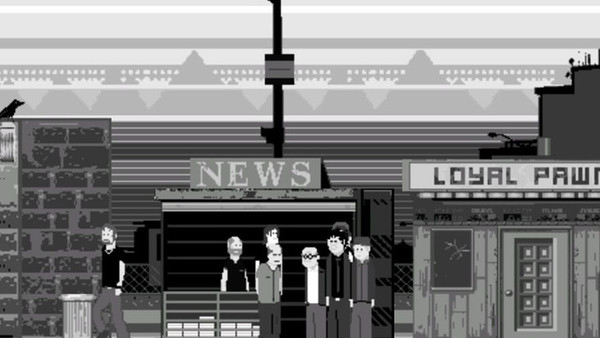
Much like Papers, Please, Cart Life generates truth and empathy through the mundane, as players control one of three street vendors simply trying to make ends meet and take care of their families.
Whether selling bagels, newspapers, or coffee, each scenario forces the player into a routine of repetition, and while perhaps not as "high-stakes" as most video games, the intensely personal scope nevertheless makes it feel urgent in its relatable simplicity.
Better than perhaps any other video game in existence, Cart Life conveys just how soul-crushing and exhausting simply staying afloat can be.
For anyone who has ever felt overworked or underpaid, it's an experience both cathartic and entirely devastating, as is totally the point.
Cart Life may not be fun, but it captures a slice-of-life mood with an uncommon level of insight.