10 Video Games That Pose Extremely Deep Questions
Put on your thinking hat because it's time to get philosophical.

As a relatively new medium, compared to film, books, and TV, a sizeable chunk of the history of video games has been filled with games that don't require you to have your brain turned on. However, since the turn of the century, there have been more and more games hitting the market that flat out refuse to let you play them absent mindedly.
While some games directly smack you over the head with their themes, not giving your mind a second to breathe, others either take a more subtle approach, or somehow unintentionally ask questions that make your head spin as if it were a helicopter.
What makes video games unique as a medium is that you are in control. This allows them to directly make you contemplate the consequences of your own actions, and what they mean, as you play them. Whether it be through their morality choices, character customization, world building, or game mechanics, the avenues in which games can explore concepts are near endless.
Now that we're done with that, it's time to boggle our minds with ten video games that pose extremely deep questions.
10. Getting Over It With Bennett Foddy

Getting Over It With Bennett Foddy is frustration incarnate. It's also pretty deep too.
The goal is simple, all you have to do is get to the top. Every so often a narration will pose some half-hearted philosophical message almost in the tone of parody. It makes sense considering the character you play as is the Greek philosopher Diogenes, a man notorious for his self-indulgent antics.
Speaking of Greek history, the player themselves is essentially Sisyphus, a mythological figure cursed with the eternal task of rolling boulder up a hill only for it to come back down right before reaching the peak.
You'll find yourself wondering what the point of trying to beat the game even is. Do you believe that at some point things will change? Is its out of nothing more than spite? Have you found peace in the comfort of repetition?
These are all questions we face in real life. So often do when end up repeating the same actions expecting a different result, only to find the metaphorical boulder rolling back down the hill once again. We only ever tend to learn when the boulder we're pushing ends up crushing us. Getting Over It brings us face to face with this reality by doing exactly that, crushing us.
9. Spider-Man PS4

This one includes spoilers for the end of the game. Reader beware.
At the end of 2018's Spider-Man Peter Parker finds himself in a position that tests his very heart and soul. A deadly virus is spreading throughout the city, and there is only one sample of the cure. However, his beloved Aunt May is suffering from it as well. He must choose between saving her or the rest of the city.
He ultimately saves the lives of the many over the one. But, the question is, could you do the same? When facing the impossible, can you make the hard choice? More importantly, can you make the right one? Can you do what needs to be done even if it kills you on the inside?
Let's relate this to a real life situation. A loved one is kept alive only through a machine. Do you keep them there and hope for some surprise miracle? Or do you send them on peacefully to the hereafter? Life is filled with moments that we never wanted to come, and it is in those moments that show who we are.
8. The Sims

The Sims is equal parts video game and secret social experiment.
This beloved franchise allows players to make and manage the lives of virtual people. You can work, pursue dreams, form relationships, and do just about anything a person can do. Basically, it lets you play god. In giving players the opportunity to essentially be god, it asks the player what they'd do with neigh-almighty power.
The thing about The Sims is that they're are countless was to play it and go about every situation. For instance, if you wanted a nice house, you could move in with another family and be a part of their unit... or you could burn them alive in a fire and take over their estate.
If you can think of it in The Sims, you can do it. You're an invisible hand controlling the lives of those oblivious to your very existence. The question the game asks you is will you use that hand to create or destroy, for benevolence or malice. What kid of god would you be? The choice is up to you.
7. Control

The word "trippy" doesn't even come close to covering just how strange Control is.
In search for her missing brother, protagonist Jesse unknowingly becoming the chairman for a secret government agency called the Federal Bureau of Control. The Bureau is in charge of investigating and researching possible supernatural phenomena, usually in the form of seemingly everyday objects not of this world.
Like many games on this list, Control deals with a ton of philosophical and existential themes. There is however one connective line running between all of them, that being how everything is more than meets the eye. Reality, and all that constructs it, cannot be seen in one way. There is no single truth to the world we live in, and any attempt to find said truth will just lead to more questions than answers.
What is reality? Does it even exist to begin with? Or is what we call reality only an attempt to make sense of the senseless? Control engulfs you in a sea of extreme weirdness, and by doing so infects your mind with so many questions that it would make Albert Einstein's head explode.
6. BioShock Infinite
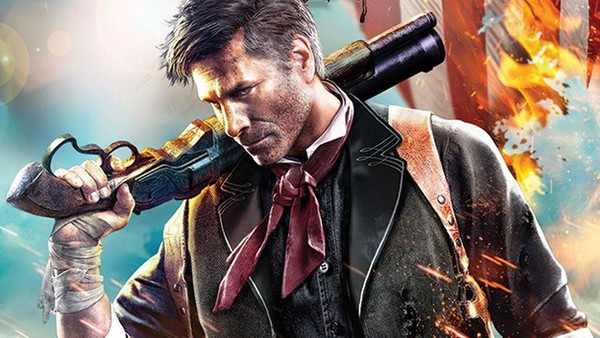
This one is going to be a doozy.
In BioShock Infinite you control Booker DeWitt who must invade the flying city of Columbia to find a mysterious girl in order to clear his debts. Throughout the game you come to learn that the mission is far more complicated than just a simple matter of paying back what's due.
According to the multiverse theory, a major part of Infinite, there are countless alternate universes for every possible scenario. Every little choice we make or don't make creates a branching timeline of their own. It's hard to even know where to start when it comes to all the questions this brings up.
Do realties exists where there are versions of us who embody the best we can become? The worst? Are there worlds where everything went right? Where everything went wrong? What is our place in this multi-cosmic scale? Is there an origin universe that all the others stem from? Can we even know?
You could drive yourself crazy thinking about it.
5. P.T.

The tragedy of what could have been with Silent Hills still stings even now. But, at least one got on hell of a game out of it with P.T.
You play as Norman Reedus's unknown protagonist as he walks down the endlessly looping corridors of his house. The familiar setting grows more distorted each new cycle as a result of his fractured psyche, eventually turning into a nightmare.
Not to sound nihilistic, but Isn't life like this almost? One long journey that changes depending on who we are and what we've done? Existence is shaped by our individual experience and identity, causing it to be either a heaven or a hell of our own making.
This is a theme found in the Silent Hill series as well, yet with P.T. it's more intimate. By having the game take place in such a claustrophobic location and putting us directly behind the eyes of Norman Reedus's character, it make it all the more personal.
The horror here isn't the vengeful spirit of Lisa or the deformed baby in the sink, but rather us, and the worlds we create for ourselves. A horror more real than than we'd like to think.
4. Almost Any RPG Ever

If there's one genre that can be boiled down to a single theme, it'd be RPGs.
Mass Effect, Fallout, Dragon Age, The Outer Worlds, The Elder Scrolls, Undertale, Vampyr, as different as all of these games are, they all ask the player the same central question: Who do you want to be?
Take Vampyr for example. You can do your duty as a doctor and try to cure the vampire virus plaguing humanity, or you can embrace the demon within and terrorize both the living and the dead. The same principle applies to a majority of RPGs. What the genre does more so than any other is allow you to be the hero, the villain, or anything in between.
The opportunity to escape to a different place and be a different person is a huge reason people play video games. Escapism however isn't as simple of a concept as we make it out to be. Rather, when we escape into another person it's a reflection of who we desire to be deep down inside.
It's not just a matter of who you want to be in the game, but in the real world too. So, once again, who do you want to be?
3. Hotline Miami

This underrated neon-drenched masterpiece doesn't screw around when it comes the hard questions.
The player controls Jacket as he takes assassination missions from his mysterious animal masked employers. Most of the levels in the game are completed through repetition. The more you try and fail, the more the key to success gets wired into your muscle memory.
Why keep at it though? There's no real reward besides a feeling of accomplishment that doesn't come close to making up for all the frustration. So, why do you keep going? Is it because you're told to? That you want to? Does it just simply make you feel good? What Hotline Miami is really doing under the surface is asking you why you're so determined to indulge in such brutal violence.
Like the previous entry mentioned, escapisim is often a reflection of the self. It may be just a game, but something inside us keeps us wanting to play despite the extreme difficulty. Is there a primal desire for violence buried somewhere inside our nature? Are we nothing more than animals wearing masks of civility?
It's questions like these that really keep a person up at night.
2. BioShock

We mentioned BioShock Infinite earlier, and rightly so considering just how much depth there is to the game. However, as far as philosophical video games go, few deliver as much as the original BioShock.
BioShock puts you in the shoes of Jack, the sole survivor of a plane crash who must traverse the dangerous depths of the underwater city known as Rapture in order to get back to the surface. Along the way, he learns startling truths that shake his entire world to its core.
Next to its critique of Ayn Rand's ultra-conservative philosophy of Objectivism, BioShock focuses on the age old question of free will versus determinism.
De we govern our actions and ultimately our fate? Are we just following some internal programing inside our brains implanted by our makers? Is there a cosmic script that we're unknowingly playing into only giving us the illusion of control? These questions, and the entire idea of the subject as a whole, have been plaguing humanity since day one.
The way BioShock stares you right in your eye and asks you if you if you're an autonomous person with agency or a self-deluded puppet is what's made it the legend we all know it to be.
1. Spec Ops: The Line

An entire book could be written about Spec Ops: The Line. So, for the sake of brevity, we'll be focusing on how it handles the theme of morality.
The game follows a trio of soldiers in Dubai tasked with taking down a rogue military commander. Pretty straight-forward right? Wrong.
A major criticism of games that try to make you feel bad for virtual murder is they tend to not offer any alternative. What makes Spec Ops: The Line different is that it knows sometimes you don't have a choice, or that every choice is equally terrible.
At first glance, it may be asking you why killing non-real people makes you feel guilty, but it goes deeper than that. Rather, what it's asking is why do we still feel guilty even we're forced into doing something wrong. If we have no say in the matter, then logically we shouldn't feel bad, yet we still do. It takes this idea and draws it out to its furthest extreme, forcing you to question the actions you've taken in life and what they say about you.
Are you a good person? Can we be good in this world? Or is good nothing more than a word we use to help ourselves sleep? Just a little fun food for thought.