10 Video Games That Didn't Deserve To Fail THIS BAD
Titanfall 2 deserved so much better.

There are some video games which have become infamous for their failure. Daikatana's sales were disastrous. Sonic Boom sold less than the biggest pessimists anticipated. E.T. - The Extra-Terrestrial was so inept, it's inspired urban legends, documentaries, and movies.
Because these games sucked, their failure was warranted. But there are some titles that did everything right and yet, still bombed. Despite being hyped up for years, achieving record-breaking pre-orders, and receiving every accolade imaginable, some games tank.
Now, every gaming company, no matter how untouchable they seem, suffers losses every once in a while. So, when a game underperforms, you expect the developers just try again and have better luck on the next project.
But the games on the list didn't just "do badly". These duds lead to entire franchises being abandoned, studios being shut down, and developers quitting the industry.
Although this happens all the time with indie developed projects, there are some beloved brands that couldn't break even, despite receiving positive reviews across the board. In situations like this, it just goes to show that some games, despite their recognition and ratings, are never too big to fail.
10. Conker's Bad Fur Day

Back in Rare's heyday (which is when it existed), it felt like the British gaming developers could do no wrong. Due to their work on Banjo-Kazooie, Donkey Kong 64, and Banjo-Tooie, the company garnered a reputation for crafting adorable and colourful platformers.
But when Rare released footage of Twelve Tales: Conker 64, the gaming community suddenly turned on the once-beloved developers, accusing them of running out of ideas, since they were churning out another kiddy platformer.
Taking this criticism to heart, Rare revised their project, turning it into a totally new game called Conker's Bad Fur Day. Although it maintained the cutesy aesthetic, it was now a hyper-violent title with swearing, excessive gore, tons of boobs, singing poo, insects who roll poo, poo puzzl... basically there was a lot of poo.
Although you have to commend Rare for going against the grain, it was the main reason why Conker failed. Because it was slapped with a Mature rating, younger games couldn't legally get a copy. After its obscene content became more well-known, some stores like KB Toys refused to sell it. Coupled with the fact the game was released at the end of the Nintendo 64's life cycle, it was no surprise Conker sold poorly.
9. The Osu! Tatake! Ouendan Trilogy

Because the rhythm-based gameplay of Gitaroo Man inspired the creation of many music-themed titles like Rock Band, Guitar Hero, and Just Dance, it's a pity this PS2 classic barely made a penny.
Fortunately, Nintendo were impressed with the creator, Keiichi Yano, and partnered with his company, iNiS, to create a rhythm game called Osu! Tatake! Ouendan (which translates into Yo! Fight! Cheer Squad). In this DS exclusive, you play as a group of cheerleaders who help people who are down on their luck. By tapping on specific spots on the touchscreen, you'll perform a dance routine to lift up their spirits.
Even though it was set for a Japan-only release, it generated a lot of buzz, causing Westerners to frantically try to import it. Because of this, you'd expect Ouendan to be a hit.
On the contrary, it sold less than a million copies. But because the west showed interest, iNis gave its spiritual successor, Elite Beat Agents, a worldwide release.
To the surprise of everyone, it sold just as badly as its predecessor. Not wanting to risk another dud, iNiS released the next instalment, Ouendan 2, just in Japan. Despite the company's precautions, the threequel bombed. Even though every entry in the trilogy received rave reviews, all of them sold less than a million copies.
8. The Last Express
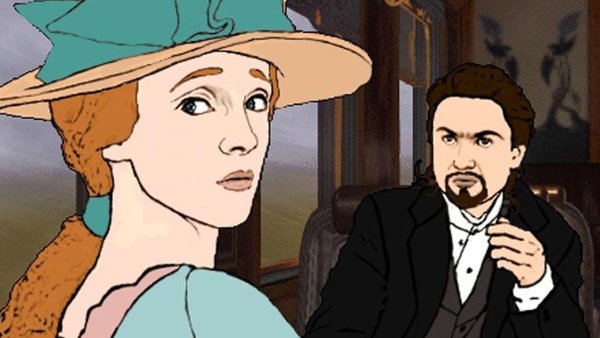
Everyone loves point-and-click adventures, and yet, the genre never seems to catch a break. Despite the legacy and influence of The Secrets of Monkey Island, Grim Fandango, and Sam & Max, point-and-click titles are rarely associated with the words "smash hit".
But in 1997, it seemed like The Last Express could break this trend. Prince of Persia creator, Jordan Mechner, did everything he could to ensure his work would be more than a run-of-the-mill adventure title.
He invested five years and $6 million into the project, utilised rotoscope animation to create the eye-popping visuals, hired professional actors for every role, and had a team of writers put together a phenomenal 800-page script. As a little bonus, The Last Express was also one of the first games to take place in real-time, which blew gamers away back in its day.
Because it was regarded as the best role-playing title of the year, it seemed like The Last Express was destined for glory.
But since the marketing team quit just before its release, Mechner's work of art had zero promotion, causing it to sell one-tenth of what it needed to break even. Although The Last Express should've been Mechner's defining work, it forced his company to fold. This led to the cancellation of the PS1 port, crippling its potential sales even more.
7. Kingdom Of Amalur: Reckoning

Kingdom of Amalur: Reckoning sounds like a game too good to be true. (It was in a way, but we'll get to that.) It all started with baseball legend, Curt Schilling, taking out a loan of $75 million to set up his gaming company, 38 Studios. After the money was secured, he got to work on Kingdom of Amalur: Reckoning, which was to be his company's first game (and sadly, the last).
Even though one could accuse Schilling's shift in career to be a vanity project, the sports icon proved he was deadly serious in making the best game possible. To ensure the visuals were up to standard, he hired Image Comics founder and Spawn creator, Todd MacFarlane, as the head artist. To guarantee the lore was well-written, he got Star Wars novelist, RA Salvatore, for the job.
After Schilling's team spent six years working on his pride and joy, Amalur was finally released. But instead of receiving fanfare and a parade, all it got was... okayish reviews.
It earned $4.5 million, which is.... slightly less than what was needed to pay back the $75 mil loan. Within 90 days of Amalur's release, the company went bust, and everyone was laid of, leave many staff unpaid, (including Salvatore who never received his $2 million fee).
Even though it didn't set the world on fire upon its initial release, Amalur is now viewed as a classic. It's also been remastered in recent years (confusingly subtitled Re-Reckoning), allowing the action role-player to receive the respect and recognition it should've gotten a decade ago.
6. Jazz Jackrabbit 2
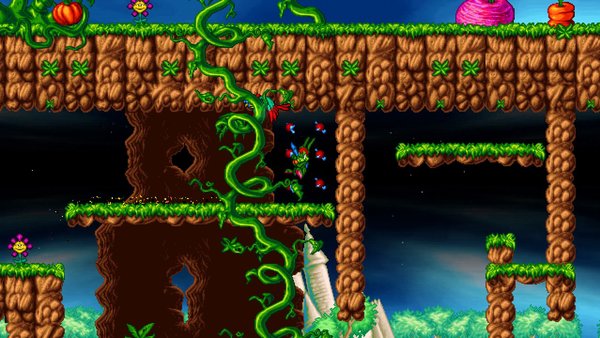
Before Cliff Blezinski was dropping jaws with his work on Unreal and Gears of War, he developed a 2D sidescroller called Jazz Jackrabbit. Set in a world where tortoise and hares have been at war for millennia, our titular bunny must bring peace to society.
Due to decent reviews and adequate sales, Blezisnki got the thumbs up to get working on the sequel. Sadly, Jazz Jackrabbit 2's sales weren't up to scratch, forcing the potential franchise to dissolve.
Although its disappointing when a solid title underperforms, it's nothing special. During the 1990s, there was a myriad of great platformers that didn't sell well. Thanks to Super Mario and Sonic, 2D sidescrollers like Plok, Zool, Rocket Knight, Mr. Nutz, Radical Rex, and Chuck Rock were left in the dust.
However, Jazz Jackrabbit 2 deserves special mention, because its failure is unprecedented. Three years after its release, this sequel sold a grand total of 29,000. To put it another way - it was selling 26 copies per day worldwide. Not 26,000... 26... in the entire world. Crash Bandicoot: Warped, which came out the same time, sold approximately five million copies in that same timeframe.
Regardless of quality or a lack of distribution, it's challenging to find any platformer that sold more abominably than Jazz Jackrabbit 2.
5. Earthbound

Earthbound was an immediate hit in Japan, and has since been regarded as one of the best games on the Super Nintendo.
Despite the fact role-players rarely did well in the western world at the time, Nintendo hoped Earthbound's wacky humour, catchy music, and creative gameplay would break the mould.
Sadly, being an RPG wasn't the only issue with the game doing well worldwide. Because of the overly cutesy graphics, you can understand why the average gamer in the west didn't gravitate towards Earthbound. Because it has a slow start, the few people who bothered to play it gave up long before the story got going.
Also, whoever put the commercial together for Earthbound's release in the west looks like they were deliberately trying to sabotage the project. Instead of focusing on the sprawling story, quirky characters, or the innovative gameplay, the promos showed a hodge-podge of clips out of context, which befuddled potential customers.
Not only does the advertisement give the false impression you automatically win battles just by walking into enemies, it also appears as if the main villain, Giygas the Cosmic Destroyer... is a bee.
With Western viewers unable to make heads or tails of this commercial, you can't blame anyone who wasn't interested in purchasing Earthbound.
4. Mario Kart Live: Home Circuit

As groundbreaking as Mario Kart 8 is, its successor looked like it had the potential to be a literal game-changer. Mario Kart Live: Home Circuit is mixed reality racer, which allows players to control real toy cars via a built-in radio set and the Joy-Cons.
When the trailer was released, many fans felt like the gaming industry would never be the same. You could now play Mario Kart, using your own household as the race circuit. The possibilities seemed endless.
Gamers were so blinded by Live Circuit's potential, they didn't consider the downside. Firstly, it cost $100... at least. If you wanted to buy more toy cars, you needed to be ready to spend a small fortune.
Also, rearranging items in your house to create a level is really inconvenient, time-consuming, and a lot less fun than you would think. Worst of all, the radio signal weren't perfect, meaning the toy car would move irregularly, making racing quite the headache.
Now, because this was brand-new tech, we all expected there to be a few hiccups. As a result, many critics were generous, allowing Home Circuit to receive a decent MetaCritic score of 75%. It wasn't perfect but, with a bit of fine-tuning, this sort of gaming could become the norm.
But after the technical issues became common knowledge, sales for Live Circuit plummeted. After nearly two years on the market, it has only sold 1.27 million units. By comparison, Mario Kart 8 sold the same amount in four days!! Considering Mario Kart 8 accomplished this feat when it was only available on Nintendo's worse selling console makes Home Circuit's sales more depressing.
3. MadWorld

Even though the Wii had plenty of mature games like No More Heroes and Manhunt 2, MadWorld really left an impression, due to its beautiful (and gross) art style. Similar to Sin City, this beat 'em up utilises a monochromatic colouring scheme, which is regularly interrupted by torrents of blood, as your character eviscerates enemies with his arm-mounted chainsaw.
Being Platinum Games' debut game, it's no surprise MadWorld has many commonalities with the company's defining series, Bayonetta. Both franchises have over-the-top characters, unabashed gore, creative killing animations, and a catchy soundtrack. Because Bayonetta was a hit, it felt like MadWorld would receive the same level of success.
Sadly, MadWorld only sold 123,000 units in the US in the first six months, while Bayonetta sold nearly ten times that in the same timeframe. Because of its ludicrous violence, MadWorld was banned in several countries, impairing its sales further. Although Platinum Games hoped the title would fair better in Japan, its sales there were almost non-existent.
Despite the fact the positive reviews allowed a semi-sequel called Anarchy Reigns to be green-lit, it's still a shame to see how badly MadWorld floundered.
2. The Artful Escape
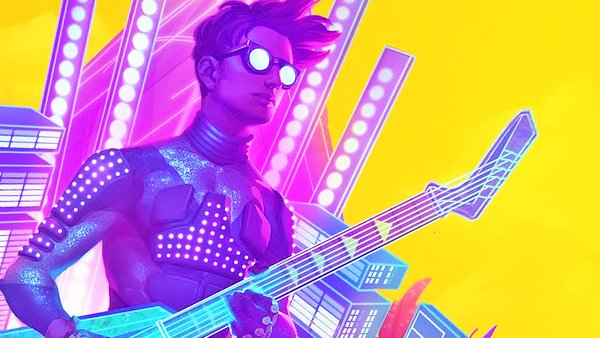
The Artful Escape was a 2021 game by Johnny Galvatron (yes, that's his real name), where the player takes control of a guitarist called Francis Vendetti, who decides to embark on a journey of self-discovery.
Although this sci-fi extravaganza was regularly described as "zany", that doesn't do it justice. If Andy Warhol, Picasso, HP Lovecraft, Yellow Submarine, and a metric ton of LSD were merged together, the final result would be a kaleidoscopic mosaic called The Artful Escape.
With its vibrant soundtrack, oozing visuals, awesome musical puzzles, and star-studded cast, Galvatron (still his real name) looked like he had created a must-buy.
But despite being nominated for a slew of rewards, gamers were too busy buying Assassin Creed Valhalla and Resident Evil Village to give this niche title a shot. This was nothing short of a travesty. In fact, we did a whole article complaining how nobody bought the damn thing!
But after it was released this year on the Switch, PS4, and the PS5, The Artful Escape looked like it would receive a resurgence of interest.
But because the gaming industry has been oversaturated this year, The Artful Escape has swooped under the radar yet again. Although it got more notice this time around, it's insulting that more people aren't buying The Artful Escape, especially now it's available on every mainstream console.
1. Titanfall 2

Never in history has a game been more destined to fail than Titanfall 2. Despite exceeding the original in every way, this underrated follow-up never stood a chance.
So, what went wrong? The short answer is - everything. Because it was released right in-between Battlefield 1 and Call of Duty: Infinity War, Titanfall 2 got swallowed up by the more recognised first-persons shooters.
Speaking of which, Battlefield 1 and Titanfall were both published by EA. But since Battlefield was a bigger brand, the company invested all its marketing into the title, leaving them with pennies to spend on the promos for Titanfall 2.
But it doesn't stop there. Because the doomed sequel was only available on the Xbox One at first, it cut its potential audience in half. By the time Titanfall 2 got released on the PS4, owners had moved on, barely noticing the FPS was available.
Suspecting disaster was imminent, Respawn Entertainment churned out a multiplayer beta of Titanfall 2, hoping it would build up hype. Sadly, it had the opposite effect since the rushed out demo had technical problems, awful maps, and an issue with spawning titans. Despite the fact these problems were resolved by launch day, interest had completely dried up.