10 Video Games BUTCHERED By Terrible Ports
For the love of God, don't play Resident Evil 4 on PC.

Porting a game should be simple, in theory.
You’ve got the actual game already made, and all you need to do is convert to different hardware.
Well, there are actually a ton of factors that developers need to face when transferring titles to new homes. Namely programming architecture, a means of delivery, button mapping, and that’s before you consider all the added features that often get included when releases shift camps. Yet sometimes developers drop the ball so hard that they become legendary, and that’s what we’re here to look at today.
Before I begin I’m not saying these games are bad, in fact in many cases it’s examples of good games being turned rogue, so bear that in mind as we move forward.
10. Lego Racers - PC To PlayStation 1

We begin this list with a trip down memory lane for many, as Lego Racers was undoubtedly one of the hardest video games aimed at children released on the PS1, PC, and N64. The concept might have been all cutesy, centring on building and then racing cars across well known and beloved Lego locales, but in delivery, the PS1 port of the game absolutely destroyed any notion of relaxed fun.
For a start, the game was hard in its own right with races against boss characters often coming down to the wire and even requiring in depth knowledge of tracks that would test even F-Zero GX veterans, and second, the PS1 port contained input lag.
Yes, you read right. A game that required weirdly accurate turns and routes contained input lag, meaning that in order to best this blocky beast you’d need to pre-empt your moves before committing to them. This, coupled with excruciating loading times, meant inevitable restarts and a port that's nothing but constant aggravation.
9. Thunder Cross - Japanese To American Arcades
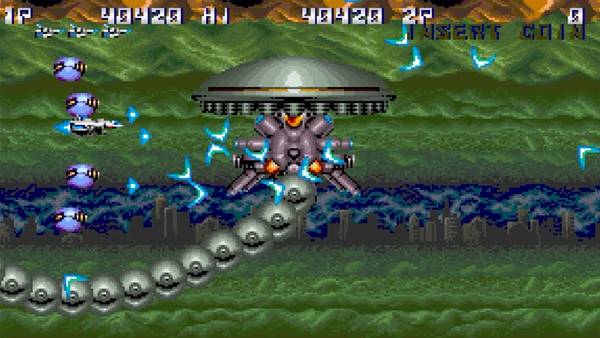
This next one is actually more of a localisation port issue than anything else, but seeing as Thunder Cross released in Japanese arcades first and then the rest of the world I’m counting it on this list. And for good reason I might add, because the US version of this game was abysmal, taking all of the intense action of a bloody good arcade game and turning it into a hot turd.
As you can probably tell, the game is absolutely chock full of things trying to kill you, and the screen is more often than not awash with colourful explosions and oddly shaped laser beams. Therefore, it’s quite essential to make sure you equip your vehicle with the best possible death delivering devices, which is impossible to do in the American arcade version, featuring all the weapons except the Vulcan Cannon and “Lil Baby” smart bombs, and you can’t even change the loadouts in the backend, as options were non-adjustable.
Even autofire was disabled as well, meaning that both fingers and patience got pushed to breaking point.
8. South Park - N64 To PS1

I am not saying that the original South Park game on the N64 was good. Far from it in fact, but next to the PS1 port it’s an absolute shining gem, as the PS1 counterpart is like suffering through a terminal illness.
The N64 version already suffered with terrible draw distance, audio that sounded like it was recorded inside someone's mouth, and controls that felt like hell. The PS1 managed to outdo all this, though. Draw distance was now on Silent Hill-levels of fog, the frame rate skipped about all over the place and the worst thing is, multiplayer maps dropped their names and had item number coding as headers.
It stunk of a terrible port, and was an absolute bomb on the little grey machine.
7. Ghost N' Goblins - Arcade To Nintendo Entertainment System

When porting a lot of arcade titles to their home entertainment system, Nintendo often employed the services of company Macronics to convert them. This had some mixed results, but one of the worst and most egregious was the Macronics “helped” port of Ghosts ‘n Goblins.
The game is well known for being rock solid, however those that played in the arcade would have had their armour knocked off if they tried to apply those skills on the NES version, as here were a slew of issues not found in glorious coin slot version.
Issues such as long load times and game-breaking bugs, but one of the most reported was that controls took a nosedive, and were much less responsive than in the arcades. Things got even worse for the Japanese market though as it turns out this version only gave players 3 lives in order to complete the whole thing.
That’s three lives total. As in no continues whatsoever. Meaning that you’d need to technically beat the game twice on 3 lives with no continues to consider it polished off.
6. Multiple Mega Man Games - NES To Gamecube

Mega Man is a bloody lovely chap, but his reputation took a hit when the Mega Man Anniversary collection landed on Gamecube in 2004. The collection was meant to have Mega Man 1-8 and two Japanese exclusives on the disk, but for some reason a lot of features were removed in the process, most notably the boss rush mode from Mega Man 1-3, Mission mode from Mega Man 4-6 and a ton of music tracks, making some sections play out in silence.
Another bizarre removal is that you can’t unlock hard mode which is just downright strange, AND the credit sequences which pay respect to those who not only created the titles, but those who converted them, were removed.
Maybe with all these missing features the devs were just a little embarrassed? Either way, it’s a massive shame to see Mega Man done over.
5. Blood Bowl - PC to Xbox 360

Blood Bowl is basically Warhammer's version of American Football and while Blood Bowl 2 is a near perfect mix of tactics and good old “let’s actually kill the player” fun, the first game which was ported from the PC to the Xbox 360 had a pretty glaring omission:
It removed online league play.
Oh, that seems like a good idea right? In a game which follows the same conventions as the NFL and therefore is built around league play, surely removing that feature would have been on the top priority list of things to NOT have happen?
Unfortunately, that’s what 360 players got, and it robs Blood Bowl of the very reason why you’d get involved in the first place.
4. Multiple Tony Hawk's Games - Various To N64

This one is a rather painful series of entries, not solely because the N64 owners got absolutely punted in the face multiple times with several lesser ports, but because this is Tony Hawk's we’re talking about.
Because of the lower storage space a tonne of changes had to be made to Tony Hawks 1-3 for the N64, most notable of which was that the in-game soundtrack was completely hacked apart. Tracks wouldn’t even have vocals in some instances, and others would repeat after the first verse, again and again. In a game which is rightly lauded for it’s awesome music, this was a real disappointment for many.
Then there were the other limitations such as muddy graphics and a draw distance much shorter than that on the ps1 which could AND WOULD scupper brilliant runs time and again. Also there was a total absence of cutscenes in the game and I don’t know about you but unlocking the bails videos or the little line trick videos was one of the best things to get after a hard days grinding and being a youth.
It’s safe to say that the N64 tried valiantly to make the rebellious youth feel alive on the console but in delivery was like trying to watch your grandad skate and my grandad is dead. Brilliant.
3. F.E.A.R - Xbox 360 To PS3
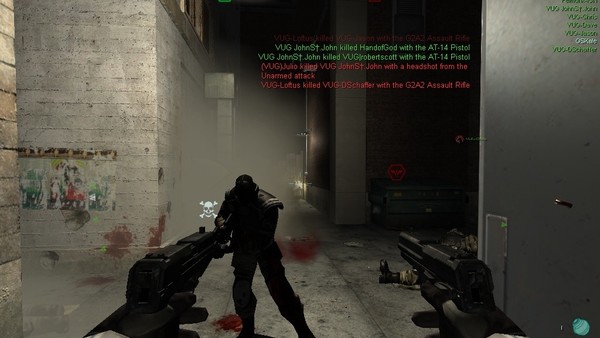
F to the E to the A to the R was a rather brilliant title released originally on the PC, and then ported to the Xbox 360 and the PS3. The 360 got away relatively unscathed with just a bit of graphical downgrade but much of the scary transitioning in one piece. However, when it came to the PS3 version, the only thing terrifying about the title was how much of a botch job was done in the porting.
For a start, there was already an issue with expectation, seeing as it arrived 6 months after the Xbox 360 version. In between these points, DLC and tweaks had been made, and there was a built-in desire to see the “complete” version on PS3. However, when it arrived fans were gutted to see about as much additional content as a plate of scraps, performance issues AND reduced graphics in both framerate and visual performance.
And lest we not forget the PS3 was pushed as graphic powerhouse at launch AND this was one of the first titles for the console to be ported across.
It didn’t bode well for fans of the series, nor the developers.
2. Resident Evil 4 - GameCube To PC

I honestly don’t know how this port ended up bailing so hard on delivering what is easily one of the best Resident Evil games of all time, yet in 2007, Capcom managed the impossible.
It all comes down to control. There are some absolute heathens out there that don’t like the tank controls of the Resi games, and fair play to them, I’ve got terrible opinions as well, however in Resi 4 the devs did their best to update the moves and incorporate an over the shoulder view. Yet trying to actually play in this form on the PC with the default control scheme is the most painful thing in the game, and let’s not forget this is a game where you get a chainsaw to the head.
You’re probably thinking "that’s not too bad right? I can just rebind the keys" and well, if you do... IT REMOVES THE PROMPTS FOR THE QUICK TIME EVENTS.
This was fixed further down the line but upon release, this was one really rotten corpse of the bunch.
1. Pac-Man - Arcade To Atari 2600

For many, this exemplified The Great Video Game Crash of the 1980’s. A moment of greed, laziness, and a betrayal of gamers as a demographic.
Back in the day, Pac-Man was one of the most popular arcade games of the era. Namco had made 400,000 arcade units, but made best of friends with Atari when they signed a deal to port the game over to the Atari 2600.
It’s since gone down as one of the worst examples of any port. Ever.
This game not only managed to be rife with bugs, but it looked like sh*te and was kicked out so quickly that developer Todd Frye couldn’t figure out how to have 4 ghosts on screen at once. Instead he had to work with 2 at a time, phasing in and out.
In a brilliant moment of idiocy, Atari made 7 million copies of the game; more than the amount of 2600 consoles available, as they believed Pac-Man would boost sales of the system overall. It backfired when the game was revealed to be so terrible, and just like that, Pac-Man for the 2600 went on into infamy.