10 Video Game Bugs That Became Features
Inspiration can come from the most unlikely of places...
Video game development is a funny thing. Sometimes great ideas go perfectly to plan and end up being really cool and sometimes a mechanic might be overlooked resulting in a glitch or a bug.
Then there are the times that a mechanic being overlooked and resulting in a bug actually ends up being really cool and that’s what we call a mission failed successfully.
A couple of years ago we did a list on video game bugs that worked so well they became features and in this list we’re breaking down 10 more examples where a technical misstep in a dev studio panned out just fine.
10. The Skyrim Space Program - The Elder Scrolls V: Skyrim

You don’t have to play Skyrim for a hundred hours to know giants are not to be trifled with. I mean, they’re giants after all and they hit about as hard as you’d expect them to.
Well, maybe a little harder than you’d expect them to as a glitch related to the game’s physics engine causes the towering foes to launch you into orbit if you’re caught on the wrong end of their club.
Skyrim launched positively riddled with bugs so this one was in good company but Bethesda and players alike seemed to agree this one was so funny that it should be kept in the game. It had the nice added effect of keeping even brave players warely of wandering giants, plus aside from the hurt pride it’s not a bad view from 150 metres up in the air.
Thus began the meme of the Skyrim Space Program, because rockets are too expensive. Obviously.
9. Creepers - Minecraft

Turns out the iconic creepers of Minecraft weren’t supposed to be creepy at all. In fact, they were supposed to be pigs but when a programming error occurred which reversed the length and height dimensions, they ended up much taller than they were supposed to be.
Thus their extraordinarily weird form was brought to life in late 2009.
Instead of just having a laugh at the weirdly tall pig, correcting the mistake, and moving on with coding, it was decided to turn the creature green and lean into the weirdness. Thus the creepers we know and hate came into being and would begin horrifying players by spawning in the dark and attacking those who stray too close for years to come.
8. An Accidental Revolutionary Difficulty Mechanic - Space Invaders

This bug which became a feature is not only the oldest example on this list and possibly the most iconic, it fundamentally changed the way games were played. And it happened as a result of a mistake.
In 1978 the release of Space Invaders set the stage for the games industry in a whole host of ways. It inspired some of the greatest games to come and some of the most intrinsic mechanics in the genre. It also had a fascinating approach to difficulty that would change the way that difficulty mechanics worked in games, but this approach actually began as a glitch. This isn’t to put down the incredible work of Tomohiro Nishikado who even created his own hardware with which to run the game. Unfortunately, Nishikado still couldn’t get his aliens moving as fast as he wanted them to as the processor couldn’t keep up.
Of course, once the player started defeating aliens, the processor had an easier time rendering aliens and as a result the sprites’ movement sped up.
Inevitably this increased speed made them more difficult to hit thereby making the game trickier the more you played and the more you succeeded. Nishikado was clever enough to see this as a win and kept it in the game, establishing the first example of a dynamic difficulty curve.
7. Skiing - Starseige: Tribes

Wildly popular cult favourite FPS Starsiege: Tribes was the first game in the Tribes series. It was released by Sierra in 1998 and offered up a squad-based multiplayer playground with a story set in the 40th century. Players are equipped with various weaponry and, crucially, a jetpack. While there were plenty of traditional ways for players to get around levels, it was discovered that speedily tapping the jump button while running down a particularly steep slope would result in the character going really, really fast.
This exploit was called “skiing” and especially clever players learned to use it in conjunction with the jetpack to absolutely blitz through the maps.
While in most other games an exploit like this would have elicited a good laugh from the developers and been promptly patched out, Dynamix decided to make it synonymous with the Tribes name and playstyle. This reputation went as far as to extend to the branding upon release of the latest Tribes title, Tribes Ascend, which was slated as the, quote, “World’s Fastest Shooter.”
In Tribes 2, the studio adapted and made maps that would better accommodate skiing so the glitch was no longer an option but a necessity for competitive play. Pretty impressive, really.
6. The Movement System - Warframe

Much like Dynamix, Digital Extremes is a developer that not only cares what its audience wants to see, they’re willing to make huge core changes to the game to make it happen. In this case it’s yet again really what put Warframe on the map, and kept it there.
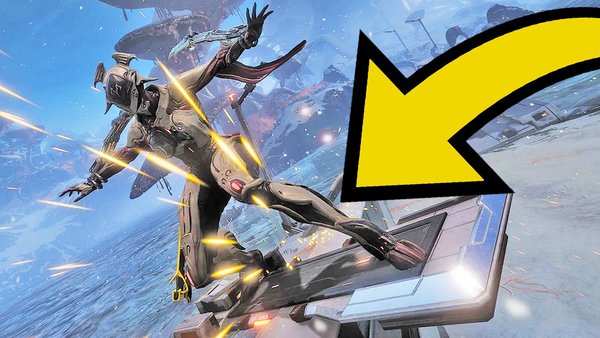
The glitch in question concerns the game's physics engine. Players discovered that they could jump and helicopter around in the air, reaching massive speeds. This was dubbed Zorencoptering and was achieved through stacking speeds.
Despite absolutely breaking the game, Digital Extremes decided that instead of removing the exploit, they’d just make it better.
This totally overhauled the game’s movement systems, introducing new options like the bullet jump and air-gliding manoeuvres. You couldn’t go as fast as the original glitch, but the love players had for it totally informed the evolution of the movement mechanics after that point.
5. The Mist - Silent Hill

It’s hard to imagine Silent Hill without its iconic fear-inducing fog, and yet it largely eventuated due to issues with the hardware and its processing power.
While this one is more of a feature that blossomed out of hardware limitations than a true glitch, it achieved a whole lot more than solving a technical issue. The fog was largely used in order to take pressure off of the hardware so it would only have to render the area around the player. Though there may have been some intention for the fog to be mechanically and narratively important as its use in the Fog World was inspired by Stephen King’s novella The Mist, it ended up being positively crucial to the game’s cult favourite atmosphere.
The horror of not knowing what lay inside the fog and the constant dread of having to push ahead through it helped establish Silent Hill as a survival horror masterclass.
4. The Spy - Quake Team Fortress

In 1996, a small group of Aussies made Team Fortress, a mod for Quake. Within this mod there was a glitch where a player's name could show up as the wrong colour, making it look like said player was on the opposite team than they actually were.
In this case, the bug was an easy fix and it didn’t indeed get fixed, but that’s not the end of the story.
The devs were inspired by the glitch to create a character class based on deceiving the opposite team into thinking they were a member of it. And thus The Spy was born within an update called QuakeWorld Team Fortress, capable of impersonation and very literal backstabbing. Of course, this class would eventually carry forward into Team Fortress 2 as well.
3. Rocket Jumping - Quake

Moving onto a different game but just barely, let’s talk about Rocket Jumping in Quake.
Staying with the trend of a few entries on this list, it turns out you can really get a wriggle on through the game world if you can play with the game’s physics engine just right. In Quake, if you timed a jump just right while shooting a rocket into the ground, you could shoot up into the sky just like you’ve been smacked in the face by a Skyrim giant. Instead of plummeting to your death, though, this boost would give you a great combat advantage and the ability to reach new areas of the map.
Of course, timing your jump wrong would result in your untimely death, but Quake really kicked off the rocket jumping trend by embracing the unintended side effects of its bug instead of doing away with it altogether.
Much like Space Invaders, this glitch paved the way for the mechanic and its usage in a whole host of games post 1996 and it's safe to say that rocket jumping is unlikely to disappear any time soon.
2. Aggressive Gandhi - Civilization

In what is many gamers’ favourite bug-turned-feature in video games, Gandhi got a little murdery in the Civ games which, if you know anything about Gandhi, is not really his deal in real life.
In the early Civ games, Gandhi was programmed to have the lowest possible aggression rating of 1, rendering him only able to wage defensive wars. However, when the AI changes their government to a democracy, their aggression level is reduced by 2.
For those playing at home, this does indeed mean that Gandhi’s rating dropped to -1 which is not just super, super chill. The negative value glitched in the back end sending his aggression rating right up to 255 meaning Gandhi ended up with a very itchy trigger finger on the old nukes. The bug first appeared in Civilization II, but wasn’t fully embraced until Civ 5.
Here, Gandhi’s parameters related to building and using nukes was set to the highest possible value. You know, for the lols.
1. Combos - Street Fighter II: The World Warrior
In our number one spot we have to honour another bug-turned-feature that revolutionised an entire genre of video games and that’s combos in fighting games.
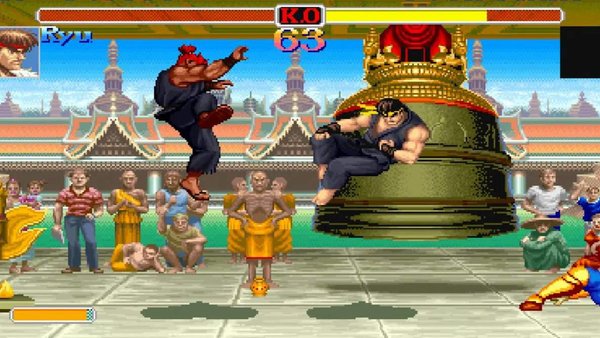
Street Fighter II: The World Warrior arrived in arcades in 1991 and one of its largest contributions to the genre wasn’t even intentional. While Capcom did change the game in a bunch of entirely planned ways, one producer discovered it was possible to cancel animations of particular attacks by trying to initiate a new attack. The outcome here was that said character could land a handful of hits and their opponent wouldn’t have time to defend themselves.
These attacks were left in the game as it was determined the “combination attacks” would be too tricky to pull off, anyway, so they were left in as a hidden feature.
This would prove to be a wild underestimation of determined kids in arcades who made it their life's purpose to discover and learn to pull off these combo attacks. By the time Street Fighter II: Hyper Fighting came along, Capcom solidified combos as an advertised feature and Super Street Fighter II would not only count hits in a combo but grant the player bonus points for their trouble.
Nowadays it’s hard to imagine the vast majority of fighting games without combos so that’s a pretty darn impressive glitch.