10 Times Video Games Secretly Spoiled Their Own Story
Spoilers hiding in plain sight.
Video games are so endlessly complex and wonderfully fluid as an art form that it's little surprise developers take every possible opportunity to include sneaky secrets for more attentive players to seek out.
The non-linear nature of gaming allows Easter eggs and harmless gags to be hidden in plain sight, and sometimes, developers will even go as far as to literally give away epic spoilers long before they're explicitly revealed to less-adventurous players.
These 10 games all dropped crucial plot details in the players' lap - or close to it, anyway - but whether or not they pieced everything together is a whole other matter.
Even if you did notice these curiosities on your first playthrough, without the full context there was no guarantee you'd figure out what was actually being hinted at. But on a second playthrough, these fantastically subtle early-game spoilers left players' minds well and truly blown.
From characters flat-out saying the big plot twist aloud to masterful moments of immaculate visual foreshadowing, these games were all spoiled hours in advance for those who were really paying attention...
10. Scanning Joker In Detective Mode Reveals He's An Impostor - Batman: Arkham City

Batman: Arkham City's climactic plot twist reveals that The Joker the player has encountered throughout the game actually isn't the Clown Prince of Crime at all, but Clayface, who has been masquerading as a healthy Joker while the real one is terminally ill and pulling the strings from the shadows.
It's a fantastic twist that most players didn't see coming, even if they perhaps sensed that something was a little off with the game's version of the villian.
But the truth was pretty much spelled out earlier on, as anyone who used Detective Mode during the Funhouse Joker boss fight would see that he didn't have a skeleton, and therefore wasn't human.
Furthermore, anyone who used Detective Mode on Clayface when he impersonated Commissioner Gordon in Arkham Asylum would be well aware of what The Joker's lack of skeleton specifically implied.
This is certainly one of those twists that seems decidedly more obvious on a second playthrough, but if you were savvy enough to scan The Joker early on, you'd know what was up long before the game finally played straight with you.
9. The Strange Man Points Out John's Burial Spot - Red Dead Redemption
Rockstar's masterful Red Dead Redemption ends with grizzled protagonist John Marston being peppered with literally hundreds of bullets at the behest of double-crossing FBI agent Edgar Ross.
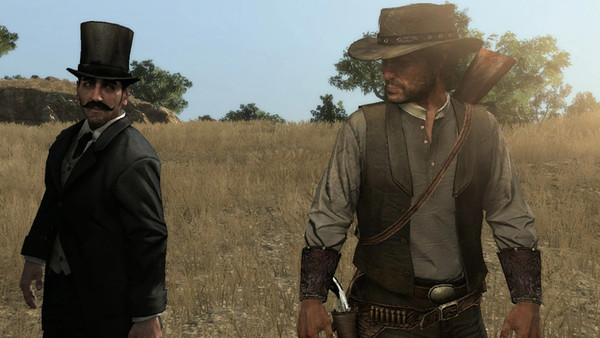
The main game ends with John's wife Abigail and son Jack mourning at his burial spot near their home, an iconic image which was quite blatantly foreshadowed for anyone who undertook the optional Stranger mission "I Know You."
In the mission, John encounters a smartly-dressed man three times who happens to know an eerie amount of information about John's past while speaking only vaguely about himself.
John's final encounter with the strange man takes place at Beecher's Hope, overlooking what will eventually become the burial plot for not only John but also Abigail. The man ominously tells John, "This is a fine spot," after which a frustrated John fires bullets at him which make no impact whatsoever.
The surface-level implication is that the man is either God or Satan, referring himself as an "accountant" and claiming to have followed John throughout his journey.
But whatever the truth, for attentive players it clearly signified the incoming end for both John and either his wife or son.

8. The Boss Tells You She Didn't Defect After The Prologue - Metal Gear Solid 3: Snake Eater

Hideo Kojima's Metal Gear Solid 3: Snake Easter boasts one of the most ingeniously executed and downright affecting plot twists in video game history, that apparent USSR defector The Boss had not in fact defected at all.
Instead, she was still very much on the side of the U.S., feigning defection in order to infiltrate Volgin's ranks and acquire the Philosopher's Legacy. In the end, she died with the entire world thinking she was a terrorist, save for Snake, Eva, and a few others.
But this mind-blowing twist is actually blatantly revealed much earlier in the game, not long after the Virtuous Mission prologue is completed and the opening credits play out.
After Snake encounters The Boss and she disarms him, Snake asks why she defected to the USSR, and she flat-out says, "I didn't. I'm loyal to the end, my purpose."
And there it is. Though The Boss' is such a brilliantly compelling "villain" that virtually nobody caught this on a first playthrough, it's quite the epic truth bomb on subsequent runs.
7. "Delicious Pancakes" Reveals Akechi's Betrayal Early - Persona 5
Persona 5's big twist is that high school detective Goro Akechi is eventually revealed to be the traitorous black-masked assassin wreaking havoc in the Metaverse.
And even though some Persona fans speculated on Akechi's guilt before the game was even released, and the game itself features plenty of foreshadowing to suggest the assassin's true identity, there's one very specific line of dialogue that basically spells it out.
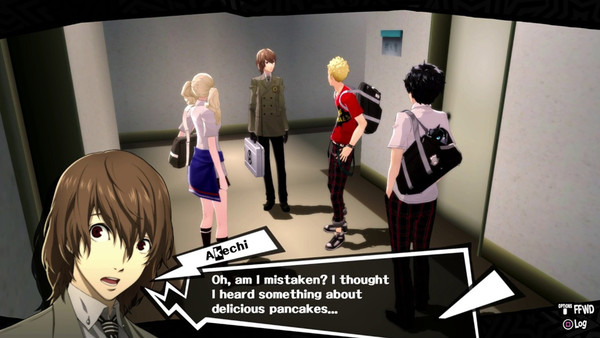
Early in the game, Akechi notes that he heard someone talking about "delicious pancakes," despite the fact that this was said by Morgana.
Given that only people who have been to the Metaverse and heard Morgana speak can then hear him in the real world, it's a dead giveaway that something's majorly off with Akechi.
Despite the twist effectively being given away literally dozens of hours before its out-and-out reveal, many players still didn't put two and two together. But if you're paying attention, it's laid out pretty blatantly.
6. The Game Literally Tells The Player To Stop - Spec Ops: The Line
Spec Ops: The Line is one of the most ambitious war video games ever made, a bleak and brutal commentary on both the futility of war and the nature of player agency in gaming itself.
The game concludes with the big reveal that protagonist Captain Martin Walker has actually been imagining the presence of the supposedly villainous maniac Colonel John Konrad the entire time, a soldier who frequently questions Walker's actions throughout the game.
Instead, he's a fabricated coping mechanism of sorts created by Walker's PTSD-riddled mind, while the real Konrad is in fact long dead.
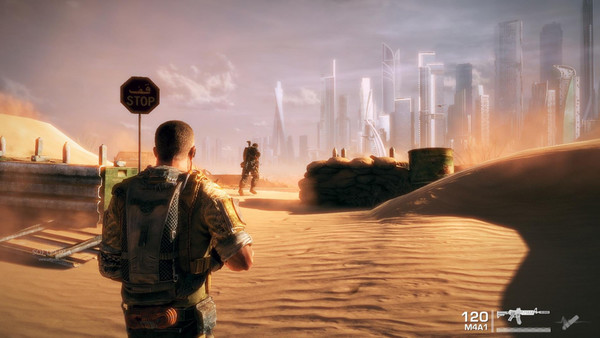
It's a devilishly clever twist, and one which the game hints at quite fantastically mere minutes after it begins. As Walker and his team are approaching Dubai in the opening level, they're met with a literal stop sign in the middle of the desert.
The sign's placement should strike players as odd given the environment it appears in, yet most surely didn't expect that it was actually hinting at the game's prevailing theme, of players committing relentless murder in the stead of "following orders" to complete the game, despite their conscience probably telling them not to.
It's a more cryptic clue than most on this list, for sure, but still quite ingenious in its own way.
5. Kuja Casually Calls You "Brother" - Final Fantasy IX

Final Fantasy IX eventually reveals that its primary antagonist Kuja is effectively the brother of protagonist Zidane, a twist that'd be shocking if not for the fact that it, perhaps unintentionally, is plainly stated earlier on.
When Zidane and co. encounter Kuja at the Iifa Tree mid-game, he says to Zidane, "Oh brother...but you're not ready yet!" At the time, this seems like a pretty standard piece of goofy translation as is par the course for the PlayStation-era Final Fantasy games.
But hilariously, it's a case of the game's big rug-pull being flatly spelled out in the most simple and straight-forward terms, beyond Kuja just stopping and telling Zidane, "I am your brother."
Whoever was responsible for the game's English language translation should've probably got a raise for this fantastic feat of doublespeak.
4. Booker Jokes About His Eventual Fate - Bioshock Infinite

No more than 10 minutes into Bioshock Infinite, protagonist Booker DeWitt effectively announces the fate awaiting him at the end of the game.
In the opening sequence, Booker is baptised by Preacher Witting in a rather over-enthusiastic ritual which sees a near-drowned Booker subsequently wake up in Columbia.
Booker then snidely comments, "That idiot priest needs to learn the difference between baptising a man and drowning one."
This might sound like a comically throwaway comment, but it pays off spectacularly at the very end of the game, when Booker learns that the villainous Comstock is actually a baptised alternate universe version of himself.
In order to prevent Comstock's creation, Booker agrees to be drowned by the gathered Elizabeths moments before his potential baptism, in turn underlining that original pithy quip most players likely didn't give a second thought.
3. Big Smoke's Betrayal Is Hidden In Plain Sight - Grand Theft Auto: San Andreas

Grand Theft Auto: San Andreas follows protagonist CJ as he returns home to Los Santos to avenge the murder of his mother Beverly in a drive-by shooting.
CJ is helped by one of his closest confidantes, Big Smoke, who is eventually revealed to have orchestrated Beverly's murder and has been working with both corrupt cops and a rival gang all along.
But Big Smoke's villainy is actually subtly implied at the very start of the game when CJ returns home and Big Smoke swings a baseball bat at him, believing him to be an intruder.
After realising his mistake, Smoke casually throws the baseball bat on a table, where it lands on top of a framed picture of CJ's mother.
That's pretty damn callous, right? His "friend" just lost his mother and he's carelessly vandalising pictures of her? Pure evil, clearly.
While not an out-and-out confirmation of Smoke being suspect, it was just off enough to suggest he might not be entirely on the level, and lo and behold, he turned out far dirteir than just about anyone expected.
2. The Prologue Mural Spells Out Major Story Events - God Of War

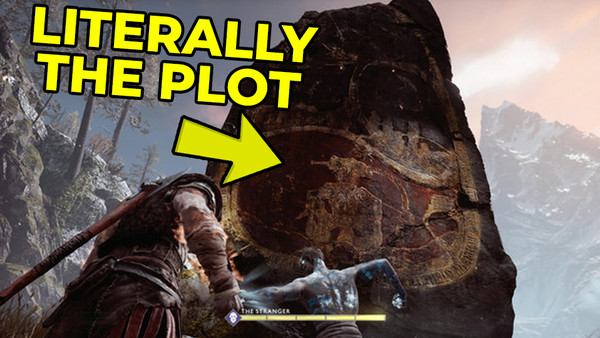
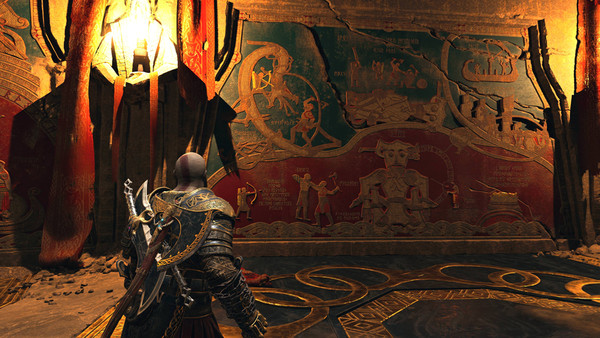
After players defeat God of War's final boss Baldur, Kratos and Atreus head to Jötunheim and find a beautiful mural which depicts their adventures over the course of the game, implying that more-or-less everything that happened had been prophecised.
But quite brilliantly, this mural also makes an appearance far earlier in the game - right at the beginning, in fact.
During Kratos' opening brawl with Baldur - or, as he's known then, The Stranger - you'll throw him against a giant stone slab, and that slab contains a faded version of the very same mural seen at the end of the game.
You'll need a pair of eagle-eyes to make out its contents, but you can just faintly make out not only the final boss fight against Baldur, but also the giant Thamur, the epic escape from Helheim, and Kratos' encounters with the World Serpent among others.
While these images obviously provide only contextual hints at what's to come - and are tough to spot at that - they do nevertheless lay out some of the game's biggest set-pieces in pretty straight-forward fashion.
1. Archer's Corpse Can Be Found In The Main Campaign - Splinter Cell: Conviction
In addition to its main solo campaign, Splinter Cell: Conviction features a smaller co-op prologue, where players take control of agents Archer and Kestrel.
This mini-campaign ends with the death of either Archer or Kestral, leading into the more conventional main campaign where the player once again assumes the role of franchise icon Sam Fisher.
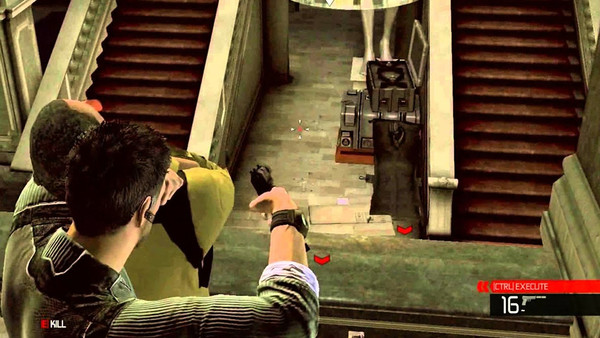
In the second level of the campaign, Kobin's Mansion, players are able to stumble across Archer's corpse half-zipped in a bodybag in the mansion's foyer, with the nearby guards even briefly discussing his demise.
This not only confirms that Archer's death was the canon one, but also effectively spoils the ending of the co-op campaign, given the likelihood that most players would start by playing the main story rather than the co-op one.
As a result it's at least a subtle enough reveal that most players starting out on the main campaign wouldn't yet know who Archer is, and therefore most likely miss the spoiler completely.