10 Times Video Games Admitted They Were Too Hard
Even FromSoftware had to acknowledge that they'd gone too far with Promised Consort Radahn.
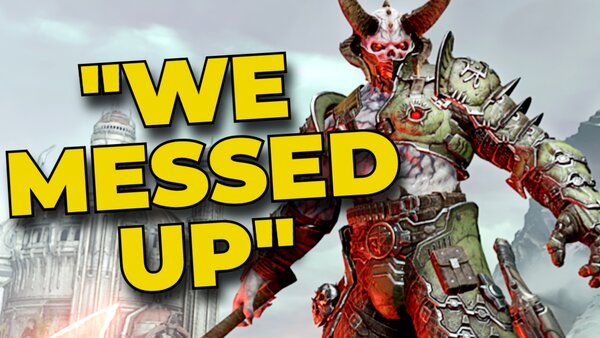
One of the hardest aspects about designing a video game is balancing enjoyment with challenge. Make a game too easy and players won't have a sense of accomplishment as they effortlessly make their way through each level. Conversely, players will stop finding enjoyment in a game that's too difficult and are likely to stop playing altogether.
While there are plenty of games that manage to hit their difficulty sweet spot upon release to give players something that's both fun and puts their skills to the test, it's also common for developers to use patches to make further tweaks to balancing and gameplay after launch.
Sometimes, however, developers can get the difficulty so wrong that it takes more than a simple readjustment to fix.
There's been plenty of times when games have admitted to being too hard. These can come in the form of boss fights that are drastically altered after developers overestimate how much challenge players could withstand. They can also be notorious levels that are reworked in later releases, or mechanics that are implemented to make the intense challenge more manageable.
Although developer intervention has made many of these games easier than they were, they are still difficult games.
10. Elden Ring: Shadow Of The Erdtree (2024)

Whether it's The Nameless King, The Orphan Of Kos, or Malenia, there's no shortage of demanding boss fights in FromSoftware's roster of Soulsborne games. However, the developers took their infamous level of difficulty to new heights with Shadow Of The Erdtree, the critically acclaimed expansion for Elden Ring.
Designed for high-level players, this DLC contained the most brutal bosses that the developers have ever created. None, however, compared to the unrelenting punishment of Promised Consort Radahn, the expansion's final boss.
With his extreme damage output, long combos, oversized hitboxes, and barrage of AoE attacks, he proved to be too much for many players. Social media was quickly flooded with frustrated fans complaining that this fight was borderline unfair, and the developers listened.
FromSoftware would release two patches in response to the outcry to make Radahn significantly easier. First, they gave players more help by boosting the damage for the summonable NPCs in patch 1.13. Then, in Patch 1.14, they drastically reduced the boss's damage, fixed the size of his hitboxes, and made him less aggressive at the start of the battle.
Consort Radahn is still a tremendously difficult fight, but now players have a better chance of beating this DLC.
9. Alone In The Dark (2008)

Released in 1992, years before Resident Evil or Silent Hill arrived on the scene, Alone In The Dark is regarded as being the first survival horror game. Despite its prestigious spot in gaming history, the series' popularity dwindled following its original trilogy.
The franchise continued to receive periodic releases, with the lukewarm 2024 remake starring David Harbour and Jodie Comer being the latest iteration. One of the worst offenders, however, was the 2008 reboot.
Setting the action within a monster-infested Central Park, this release was a bold reimagining of the series that was full of ambitious ideas. As impressive as its real-time fire mechanics were, the clunky and awkward controls made playing this game far more frustrating than it was frightening. Nothing underscored this more than the now notorious driving levels, where the slightest mistake would send vehicles careening off-course.
The developers anticipated that players would experience difficulties. In an interview with Gamersyde, game producer Nour Polloni explained that they aimed to alleviate frustration by including a DVD-like menu that enabled players to skip to any chapter if they found a level too hard.
Although players weren't forced to endure the horrendous gameplay, skipping the worst parts didn't make this game any more enjoyable.
8. Star Wars Outlaws (2024)
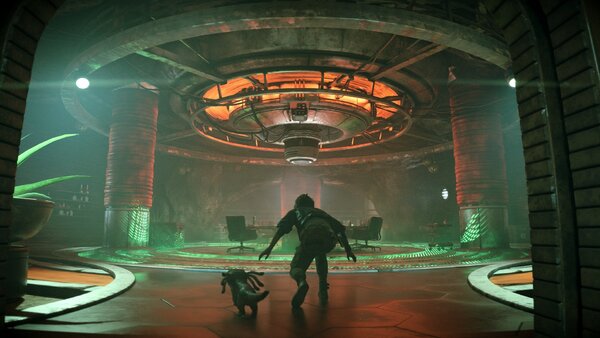
Putting players in the shoes of charismatic thief Kay Vess, Star Wars Outlaws saw players embark on a grand adventure throughout the Empire's underbelly as they became entangled with the galaxy's criminal factions.
For as visually striking and entertaining as this game is, Outlaws had some significant flaws upon its release. Alongside broken enemy AI and barebones combat, its biggest issue was its aggravating stealth missions.
While sneaking around heavily guarded bases, picking locks, and distracting enemies made for a solid foundation for Outlaws' stealth sections, its handful of instant-fail missions created some brutal difficulty spikes within the game's early hours. Players would find themselves constantly being sent back to the previous checkpoint whenever they got spotted. With no option to go loud if things went wrong combined with the inconsistent AI, these sections were miserable to play.
The forced stealth missions were so poorly designed that creative director Julian Gerighty acknowledged that they were "unfair" during an interview with GamesRadar.
After a collection of patches were released to rebalance the gameplay and make stealth more flexible, Outlaws is now closer to being the epic Star Wars adventure that fans hoped for.
7. The Elder Scrolls IV: Oblivion (2006)

Bethesda is best known for their immersive and endlessly entertaining RPGs. However, none embody why these games are so adored better than The Eler Scrolls IV: Oblivion.
In addition to the lands of Cyrodiil being an expansive setting that encourages exploration in all directions, the quests that players uncover are some of the most imaginative and compelling that the studio has ever created. Being an ambitious open-world game from 2006, Oblivion was also more than a little rough around the edges.
While its uncanny facial animations and shoddy voice acting gave this RPG an endearing charm, its strict levelling system caused so much friction that it was drastically overhauled for Oblivion Remastered.
In the original, levelling up was tied directly to a class's main attributes. This meant that players would need to carefully choose which skills to increase or they'd soon find themselves overpowered by enemies.
The remaster combated this unintended difficulty by streamlining its levelling system, which took inspiration from Skyrim. Players would now gain experience regardless of which skills they used and could assign 12 stat points to any attribute each time they levelled up. This meant that players could now play how they wanted without being punished for it.
6. Doom Eternal (2020)

The Doom series has always prided itself on its difficulty. Ever since the first game blasted onto computer screens in 1993, these titles have been stuffed with tough bosses and fast-paced action befitting its face-melting soundtrack.
After developers Id Software resurrected the franchise with Doom 2016, follow-up Doom: Eternal built upon the visceral run-and-gun gameplay by putting a greater emphasis on speed. Gunfights were now faster-paced as players dashed and grappled across arenas, glory-killing demons as they went.
While Eternal shares the series' difficulty, the developers pushed the challenge a little too far when it came to the Marauders.
Appearing mid-way through the game, these intimidating demons are capable of dodging almost every attack. The only way to damage them is to stun them by landing a powerful shotgun blast when their eyes flash green. However, this foe's intense aggression and unforgiving stun window made them a major roadblock for many players.
Id Software soon adjusted the game to make this enemy fairer to fight. Not only were they now less aggressive, but, more importantly, players now had a longer opportunity to stun them.
While still intimidating, facing a Marauder was no longer a death sentence.
5. Final Fantasy VII (1997)

Before patches for video games existed, the only way for developers to change a game after it hit shelves was to release a different version.
This was especially true of Japanese games, which were often re-released as easier versions for Western markets. While some titles were deemed too difficult to receive a release at the time (with some not being made available until years later), others were simplified to make them more palatable. One such game was the original Final Fantasy VII.
Alongside reducing the number of enemy encounters and removing a tricky clock puzzle, the most notable changes in the Western version are found during the fight against Safer-Sephiroth. Specifically, his Supernova attack.
Not only was this attack far more stylish than it was in the original, but it now hit for a percentage of the player's total health instead of dealing a flat amount of damage, which often killed players outright. The result was a better balanced and more entertaining final showdown.
With other changes including extra cutscenes and optional super bosses, this version was seen as being so much of an improvement that it was later re-released in Japan as Final Fantasy VII International.
4. The Legend Of Zelda: Ocarina Of Time (1998)

The Legend Of Zelda is one of the most iconic video game franchises of all time. With the rare exception of the Philips CD-i titles, there's no entry in this series that isn't adored by fans. However, few Zelda games are as cherished as Ocarina Of Time.
From its innovative combat, gorgeous soundtrack, and fantastical plot, the franchise's first foray into 3D remains a timeless classic. However, even this game had some shortcomings.
In addition to Navi's annoyingly persistent reminders, one of the biggest points of contention was The Water Temple. Its frustrating mechanics and convoluted level design caused many players to get stuck in this dungeon for hours. This level's reputation proved to be so infamous that Nintendo would rework the entire sequence for its 2011 3DS port.
Alongside colour coding doors to make navigation more intuitive and amending cutscenes to better highlight what players were supposed to do, the biggest change was made to the iron boots, which were used to make Link float and sink. Instead of manually equipping and unequipping them through the menu in the original, these actions were now assigned to a single onscreen button press.
Although these changes were small, they made an incredible game even better.
3. Clair Obscur: Expedition 33 (2025)
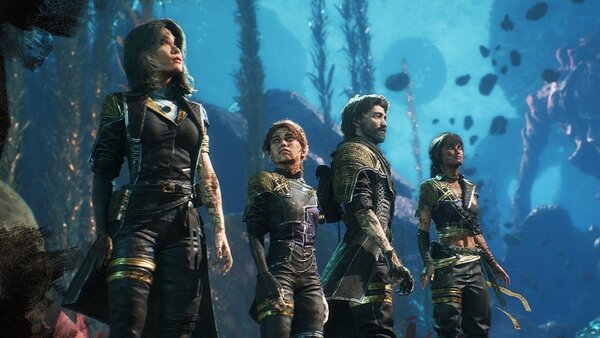
With its magnificent soundtrack, gorgeous art design, and heartbreaking plot that poignantly tackles themes of grief and loss, Clair Obscur: Expedition 33 is one of this year's best games.
Another reason Clair Obscur is so phenomenal is its in-depth combat. Merging classic turn-based action with quick-time button presses, dodges, and parries, each encounter feels satisfyingly tactile. While the battles during the opening hours aren't particularly taxing, the difficulty ramps up as the game introduces tougher enemies with unique mechanics and unpredictable attack patterns.
Like any great RPG, the hardest battles are the endgame bosses intended for high level parties. Unlike other notoriously difficult games, Clair Obscur has an assortment of accessibility features, including a Story mode setting that made combat more forgiving for those seeking a less intense experience.
However, even this more lenient setting proved to be too demanding for some. In response, the developers made its easy mode even easier with Patch 1.3 by increasing the dodge and parry window by a substantial 40% while reducing the damage players take by 10-50%.
These changes were enough for players to complete the main story with relative ease. However, Simon will still annihilate anyone hoping for a more relaxing time fighting this optional boss.
2. Lies Of P (2023)
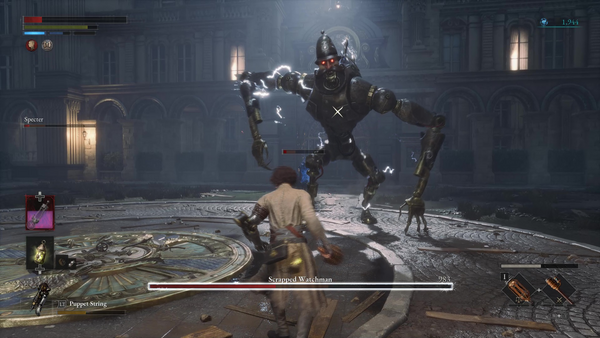
Following the success of the Dark Souls franchise, other developers have attempted to put their own spin on the Soulsborne formula, with Nioh, Black Myth: Wukong, and Jedi: Fallen Order being noteworthy examples. One of the most unique offerings to emerge from this subgenre is Lies Of P.
Set within a dark fantasy version of the classic children's story Pinocchio, Lies Of P sees players fight through hordes of murderous puppets in tightly tuned combat that takes its cues from Bloodborne. From its enthralling steampunk aesthetic, riveting soundtrack, and imaginative boss designs, developers Newowiz and Round8 Studio created something truly remarkable.
Although this game got a lot spectacularly right, it still stumbled when it came to fine tuning its challenges. In this case, its difficulty curve was too steep for many players, who'd frequently find themselves coming up against bosses that were far too hard for where they were in the game. The developers quickly realised their mistake with patch 1.2, which rebalanced the difficulty of certain bosses alongside making field enemies easier to handle.
With further balancing patches being released alongside a dedicated easy mode arriving alongside the Overture DLC, the developers ensured that Lies Of P is accessible to everyone.
1. Sifu (2022)

Blending slick martial arts action with clever roguelike elements, Sifu is one of the most unique titles in recent years. It's also a brutally difficult one that requires that players master its in-depth mechanics to stand a chance at overcoming its demanding challenges. With plenty of deadly foes standing between the protagonist and their quest to avenge their father's murder, players can expect to die a lot in this game.
For as unforgiving as the combat is, developers Sloclap were committed to delivering an experience that rewarded patience and skill. They did this by adding feature like level shortcuts, permanently unlockable upgrades, and including more powerful skills as the protagonist aged after each death to keep the gameplay balanced. Despite these concessions, however, players struggled immensely, with reports showing that many were unable to progress past the second level.
Within weeks of Sifu hitting shelves, Sloclap announced that they'd be addressing the difficulty by adding an easier "Student" mode that would significantly reduce the challenge in several ways. This included simplifying the ageing mechanic, weakening enemies, and increasing the player's health.
However, the developers also added an even more punishing "Master" setting for masochists seeking an even tougher outing.