10 Times Video Game Developers Totally Destroyed Their Own Creations
Bad press doesn't just come from critics, you know...
With all of the hype and preamble that goes into the promotion for any game these days, it gets a little bit difficult to know what information you can really trust. Press junkets, viral campaigns and even celebrity cameos are all tools of the trade for the industry's largest studios, meaning it's easy to generate interest for pretty much anything these days.
What you can more easily rely on, however, is the opinion and information we get when developers and publishers let their guard down and start to inadvertently shine an honest light on their own creations. And, as ridiculous as that may sound, you'd be surprised just how often a studio torches their own work.
We've all been there. On the wrong end of a bad day, saying or doing things we don't mean while lashing out at people who don't deserve it - it's a fact of life. And even the most famous video game studios have been too - they're only human, after all.
There are more than enough examples to show just how careless developers have been over the years, so here I present 10 times - accidentally or otherwise - video game developers destroyed their own creations...
10. Ubisoft Admit Watch Dogs Graphical Downgrade
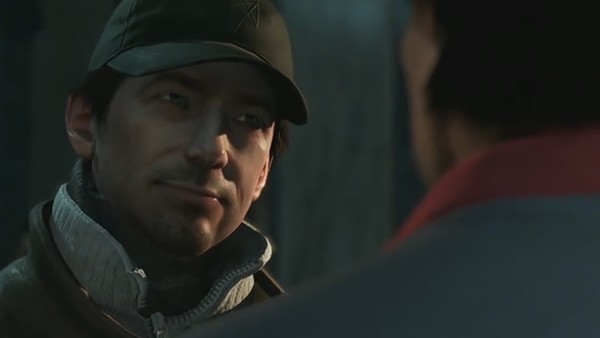
When we were given our first glimpses at Ubisoft's Watch Dogs over the course of the 2012 and 2013's E3 conferences, there were plenty of reasons to get excited. After its eventual release, however, it became apparent that Ubisoft had done their product no favours by showing it off in the manner first served. Critics and gamers all found the finished game had nowhere near the visual polish that its E3 promotional footage had suggested.
Understandably, we were all outraged, as Ubisoft admitted to the apparent downgrade with CEO Yves Guillemot admitting that the game's "PC version does indeed contain some old, unused render settings that were deactivated for a variety of reasons".
When talking about this decision to downgrade the game from what was seen at E3, Guillemot added that Ubisoft had "learned from the mistakes" made with Watch Dogs and added that they would "make sure the games are playable, that they’re running on the target machines. When we show something, we ask the team, make sure it’s playable, make sure gamers can immediately see exactly what it is."
This translated to the game's earlier versions running at a higher visual quality that could only be maintained when small chunks of the final game were being shown. Guillemot finally went on to say that Ubisoft would now focus on making sure their pre-release footage would legitimately reflect a game that is playable.
Probably a good idea to focus on that from the beginning, to be honest...
9. EA Tries To Defend Dungeon Keeper Mobile's In-Game Purchases

Mobile gaming's woes are hardly a particularly unique facet of the industry in the light of countless "free-to-play" scandals, but EA's Dungeon Keeper Mobile is one of the worst of all time. Featuring some of the most egregious in-app purchases of any mobile title, the Dungeon Keeper port was deemed to be virtually unplayable as a result. Even the original game's developer Peter Molyneux joined the act, telling the BBC he was shocked by the work of EA.
Rather than make efforts to improve what could've been an enjoyable mobile experience, however, EA compounded their errors. An EA spokesperson simply explained their product was indicative of "mobile play patterns" [...] checking in a few minutes here and there throughout the day. This way of playing, we've found, allows fans to naturally progress through the game as a free player." This was an easily debunked claim, but EA were unable to return a comment as they quickly had more controversy to deal with.
The developers were also found guilty of fudging their feedback system to only publicise positive reviews, sending any negative feedback to an internal site and away from well-publicised app stores. Talk about devious traps, indeed!
8. EA Admit Star Wars Battlefront's Missing Single Player Campaign Was A Rushed Move
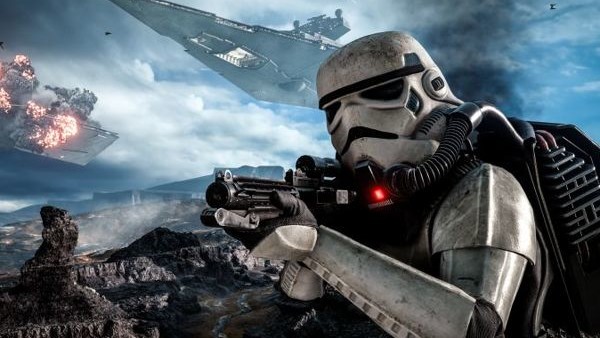
2015's reimagining of the popular Star Wars Battlefront series was another game that rode in on wave after wave of hype. With fans having waited years for anything that may resemble 'Star Wars Battlefront 3', EA's next-gen reboot had represented something of a beacon of hope.
Early beta periods were extremely promising, but many commentators quickly pointed toward the lack of a genuine campaign was a major flaw, and even The Force Awakens' John Boyega reached out to the developers on Twitter. Following the high profile feedback, EA were forced to admit that the lack of a truly meaningful single player campaign wasn't actually always intended.
Instead, the campaign was cut as a decision was made to rush the game out in time for The Force Awakens' launch. EA boss Patrick Soderlund explained that they had "made [the choice] due to time and being able to launch the game side-by-side with the movie to get the strongest possible impact". Translation? The game was a cash-grabbing piggyback ride, rather than the finished article.
Your peers will always say that admitting you made a mistake is a vital first step in correcting any transgressions, but perhaps in this case it would've been wiser to keep the developers' decisions a secret.
7. EA Tries To Justify Dead Space 3's Co-Op Focus

After the massive success of the first two games in the trilogy, Dead Space 3 failed to hit the same heights, scoring considerably lower among critics and players alike. Rather than be grateful that their product managed to score more than an average of 75% - that's a first class degree in university terms, you know - EA jumped into defensive yet again. On their agenda this time? The widely criticised co-op focus that infiltrated the finale.
The decision to add a larger co-op focus, along with dialling down the scares and horror elements, was defended by EA in response to research following the first two games. EA explained that they "tried to open up the accessibility of the IP a little bit by adding a little bit more action, but not undermining the horror. We can't not be a horror game".
They went on to explain that their research suggested many players didn't enjoy the scarier side of the series to date, and that a co-op focus would be the best way to resolve this.
Given how universally the horror elements were actually praised for the first two games, this odd decision once again shows a considerable distance of opinion between EA and their fans. Whatever the real reason behind this change to the formula was, EA's "research-based" reasoning never really works.
6. Microsoft Studios' Treatment Of Fable Legends' Free To Play Status

It may seem a little harsh to poke holes in the work of a studio that sadly fell foul of the industry earlier in 2016, but the fate of Fable Legends simply has to stand as a cautionary tale to developers in the future. Fable Legends was a game that excited many a player when it was first announced, but one that quickly became very contentious.
Initially advertised as the first multiplayer game in the Fable franchise, and promised to be a "reimagining" of the series. In 2015 it was announced that the game would be a 'free-to-play' title in the purest sense, with game director David Eckelberry telling PC Gamer he didn't want the game to rely on micro-transactions, as "the better ones for the customers are the ones where you get to enjoy all of the content without paying money [...] then you pay if you want to."
Details of heavy in-game transactions eventually leaked, however, but Eckelberry continued to insist that their free-to-play model was not "evil."
Microsoft Studios continued to maintain that the game was available as a totally free experience... despite confirmation that paid Xbox Live subscriptions would be required for console players. Microsoft Studios were never willing to admit that their initial promotion of the game may have been too vague, and they stuck to their guns with remarkable stubbornness.
These insistences forged an air of dishonesty around what the game would prove to be upon completion, and in truth, the unceremonious death that it suffered was probably a well-timed necessity.
5. Phil Fish Cancels Fez 2 Amidst Twitter Tirade

A sequel to Polytron's initial title, Fez, was announced in June 2013, but mere months later the game was dead in the water. The cancellation followed a fairly spectacular meltdown by developer Phil Fish on Twitter, thanks to an unfavourable presentation he received from journalist Marcus Beer.
After being strongly criticised for ignoring media requests unless they could personally benefit from the news, Fish asked Beer "Do you only feel comfortable assassinating somebody's character from in front of the camera?" as well as suggesting that if Beer compared his life to Fish's, he'd subsequently kill himself.
The exchange remained heated throughout, before Fish tweeted "I f***ing hate this industry", alluding to the constant threat of criticism being a major turn-off in his line of work. He wasn't finished here, however, and later he confirmed the cancellation of Fez 2 with a final tweet (word for word) being:
"im done. FEZ II is canceled. goodbye."
This is perhaps the most spectacular Twitter meltdown to have ever affected the development of an upcoming game, and the outburst even managed to catch the studio themselves off guard. Fish's Twitter bio now simply reads "NEVER TWEET", which may be considered closing the stable door after the horse has bolted.
4. Ubisoft Apologise For Assassin's Creed Unity's Release Day Quality

In what's become one of the most infamous examples of a broken game being shipped to retailers, Assassin's Creed Unity treated players to a whole host of bugs at launch. Following countless player complaints about this bug within the first few days after release, Ubisoft were forced to take a serious look at the quality of the product they'd shipped. The result was that a big apology was required, courtesy of Ubisoft Montreal CEO Yannis Mallat.
In his statement, Mallat conceded that "Unfortunately, at launch, the overall quality of the game was diminished by bugs and unexpected technical issues. I want to sincerely apologise on behalf of Ubisoft and the entire Assassin's Creed team." Compensation was even given to players who'd struggled with the issues, in the form of free games from Ubisoft's back catalogue.
This eventual gesture was well-received - who doesn't like free games? - but such public admissions of inadequacy from the studio did serious damage to the reputation of the game and to the series as a larger entity.
3. Ready At Dawn Get Lost Clarifying If Length Equals Quality

In the weeks immediately preceding the release of The Order 1886, a serious concern was being raised that the game was going to be far too short to represent anything near decent value. Later, when a YouTuber uploaded a series of videos said to detail the whole game's campaign in just under five and a half hours, the concern became larger and the developing studio had to step in to try to fan the flames. Sadly, however, Ready At Dawn didn't manage to do much more than help the fire spread.
Ru Weerasuriya, the studio's CEO, told Eurogamer, "It's not going to be a short game, it's going to be something that rewards you as you play through, there is a storyline [and] you have information there, and then also it opens the door to a lot of questions you might be able to answer either by what you find in the game, or hopefully by what you will find out in the future."
Make sense of that, if you can. It was acknowledged that the game would never reach the length of a 12-20 hour RPG like Skyrim, but that this shouldn't matter for an immersive experience.
Weerasuriya conceded that "game length is important", of course, but added that "very game has to take its own time to tell its story. Some games can be short. Some games can be long. I still remember the first time I picked up Modern Warfare, I finished the campaign in about three-and-a-half or four hours. And it was fun because they made that campaign work for that because they had something else."
This is an admirable view, of course, but given that Ready At Dawn still insisted on charging premium prices for a short game with no multiplayer, there's hardly much to be said for such boldness.
2. EA And Bioware Undecided On Mass Effect 3's Endings
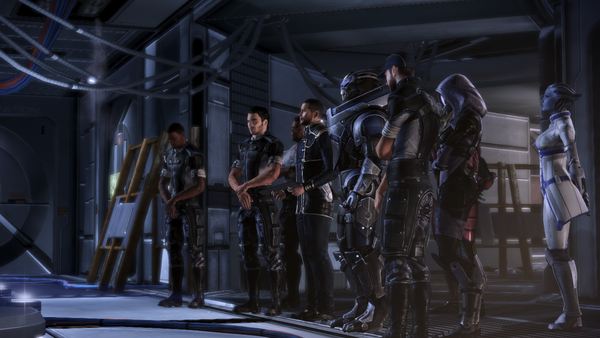
Mass Effect 3 represented the final instalment to the (original) trilogy in one of the most successful sci-fi gaming franchises ever produced. Despite numerous critical reviews pointing to the game's disappointing endings after the game's release, the studios responsible for its development and publication would not concede defeat.
Representatives for EA and Bioware both spoke in support of the game's possible endings at that time, arguing that the story of the games left them little choice with how to conclude and dismissing concerns as simply being "destructive rather than constructive."
Later on, when fan backlash became larger and more vehemently vocal, all of this changed and the Mass Effect 3: Extended Cut was announced with altered and additional endings. Suddenly a position of such defiance had been replaced by an admission that the process leading to the decision on how the game should end was shoddy and taken by just a small portion of the creative team.
Temporarily standing by the game's original content before bowing to consumer pressure and belatedly admitting flaw was a generally terrible move, and one that has greatly tarnished the legacy of the Mass Effect series.
1. Ubisoft Say Female Assassin Would've Been "Too Much Work"
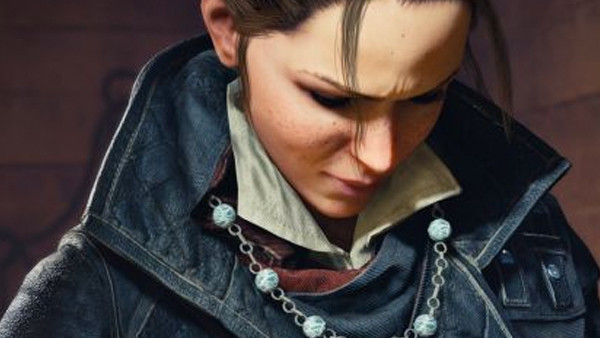
EA and Ubisoft have shared an unfortunate amount of limelight over the course of this list, yet sadly it has to be the latter that take top spot when all is said and done. We talked already about the quality issues that struck Assassin's Creed Unity soon after its release, but that was nothing compared to the immense stupidity that the developers demonstrated when discussing the game's multiplayer modes.
Following a multitude of questions about why no female assassins were made playable for the game's online modes, representatives from the studio offered a number of responses that boiled down to it being too much extra work. From claims about some "8,000 extra animations" being needed, through to assertions about doubling the voice artist' workload - the whole thing smacked of laziness.
Later, when many of these answers were debunked - some by former designers and developers from the series - Ubisoft took to the odd addition that all online players are actually playing as single player protagonist, Arno. This explanation stated "Assassin's Creed Unity is focused on the story of the lead character, Arno. Whether playing by yourself or with the co-op Shared Experiences, you the gamer will always be playing as Arno, complete with his broad range of gear and skill sets that will make you feel unique."
I mean, Assassin's Creed is already barmier than a bag of pheasants, but still.
This odd, logic-defying suggestion took laziness straight into the realms of stupidity, and Ubisoft's apparent unwillingness to put in a little extra work cost them and their game a lot of fans in 2014. Couple this with the damage done by Unity's buggy release, and you really have to wonder if the once promising series will ever truly recover.
--
Are there any other times prominent developers dropped royal clangers about their games? Let us know in the comments!