10 Things You Probably Didn't Know About Tekken

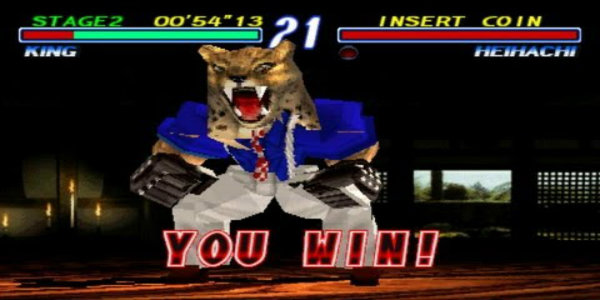
If a dinosaur wearing boxing gloves isn't a sign of quality, we don't know what is.
The fighting game genre started out as a solely 2D venture before the medium was capable of anything else. Following the release of Sega's Virtua Fighter in 1993, developers and fans alike started to see what fighting games could do in the 3D realm. Tekken essentially took that rough template that Virtua Fighter had presented and injected more personality, style and characterization into it. Tekken soon began to distinguish itself as a premiere 3D-fighter that was a massive hit at the arcade. Tekken began to prove that 2D wasn't the only way of doing things, particularly as sequels were released and the graphics gradually became smoother and less blocky. Another big difference in Tekken as a fighting game is move execution. Other fighting games rely on fast and accurate button inputs to execute moves, while Tekken's intuitive system saw a button linked to each limb, meaning it was possible to see and replicate the move without the need for command lists. Continuing our chronicle of fighting games and the little known factoids, secrets and anecdotes behind them - this week we're taking a look at the Tekken series. We've covered both Mortal Kombat and Street Fighter, but this time we'll be going knee-deep into the King of the Iron Fist tournaments. In celebration of Tekken's influence and popularity in the fighting game world, here's 10 things you probably didn't know about Tekken.

10. Tekken Ball And Tekken Bowl Modes
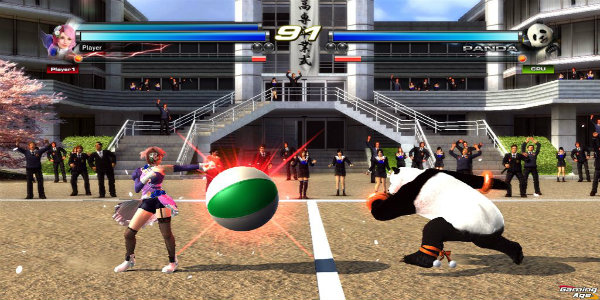
As the Tekken series grew, so did Namco's reputation for including wacky and fun unlockables. At first, this was mainly in the form of unlockable boss characters or gimmick characters, but later on whole game modes were featured as hidden content. By beating the game with every regular character, players could unlock Tekken Ball mode in Tekken 3, in which the player can engage in a fun game of beach volleyball. The mode was quite amusing, and had a fair amount of depth - it featured a variety of balls which affect game-play and the ball would arch, bounce or react differently responding to the kind of attack you used. The mode also appeared in the recent Tekken Tag Tournament 2. Namco put another side game in Tekken Tag Tournament in the form of Tekken Bowl. Obviously, it's a bowling game, you pick two characters, attempt to knock down the pins with one attempt from each character. Oddly enough, this game mode was later released as a free app. Tekken veterans will most likely know about these modes, but that doesn't mean they're entirely common knowledge.

9. Tekken Has Had 4 Feature Films

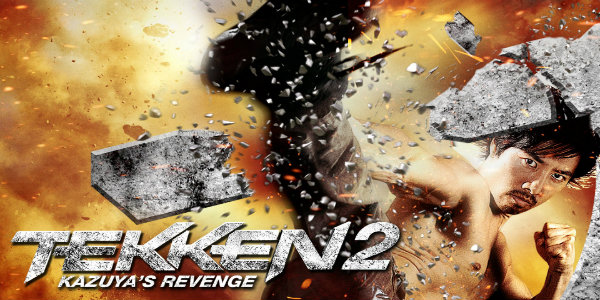
To date, there has been a total of four feature films based on the fighting game franchise. The most well-known is 2009's aptly named Tekken, which attempts to re-tell the tale of Jin Kazama in his quest to avenge his mother's death. The general opinion of Tekken as a film seemed to be that it wasn't a bad action film and had decent fighting sequences, but it took itself too seriously and failed to emulate the over-the-top or often goofy style of Tekken and other fighting games, much like the Mortal Kombat films had done. The film was followed by the currently unreleased prequel known as Tekken 2: Kazuya's Revenge. Tekken has also had two animated films, 1998's two-part OVA, Tekken: The Motion Picture and 2011's Tekken: Blood Vengeance. Tekken: The Motion Picture follows the events of the first two games, focusing on then main protagonist Kazuya and his rivalry with his abusive father, Heihachi. In contrast, Tekken: Blood Vengeance uses 3D computer-animation instead of traditional anime, and doesn't inherently focus on the King of the Iron Fist tournaments. It's more focused on the corporations and organizations that exist in the world of Tekken and the espionage which ensues between the game's many characters.

8. There Are Secret Moves Not Shown On Move Lists
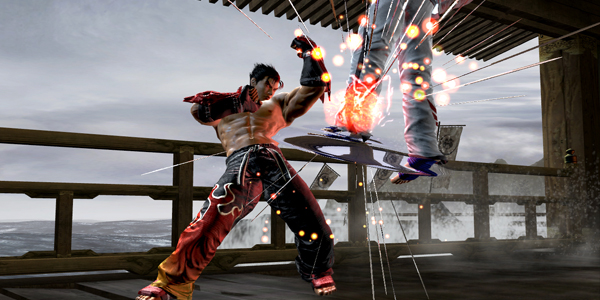
Back when the fighting game genre was still young, move-sets were seldom seen and players were expected to figure the inns and outs of each character on their own. Tekken was one of the first games to popularize command lists, but ironically, there were several powerful techniques in the game that weren't actually specified as such on commands lists. The most well-known of these secret moves is probably the Electric Wind Godfist. The move was originally exclusive to Jin and later became available to other members of the Mishima family, such as Kazuya and Heihachi. Another such move is Heihachi's Headbutt Carnival. This move is more peculiar as it can only be executed against certain characters, who usually have some kind of affiliation, relation or rivalry with Heihachi. In Tekken 3, this list consisted of Jin, Paul, Lei, Kuma/Panda and himself. In Tekken 4 the list was the same but with the addition of Bryan and Law, but as of Tekken 5 and forward, the move works on almost every male character. It's also been pointed out that the throw has a great resemblance to the move Stonehead, as the escape, damage and animation are almost identical. As of the most recent Tekken games, Namco have added most secret moves to the command list.

7. Tekken 2 - Big Head Mode

In console versions of Tekken 2, if a player holds the select button whilst picking a character, they'll appear much larger with a giant head and will have a high-pitched voice as if affected by helium. Even though the character models appear larger, this is purely cosmetic and doesn't actually change reach or hit-box within the game's engine. The scale of the model and size of the head is said to be directly correlated to how long the player holds select. If holding both select and up, the same effect will occur, but the character will bounce ridiculously high in the air if juggled by a combo, a sound will also play on the stage select if this method is used. To undo this modification, a battle needs to be lost so a different character or costume can be picked, thereby resetting the character model. There's no idea as to why this is included in the game, nor has there been any real acknowledgement by Namco.

6. 5 Characters Have Appeared In Every Game
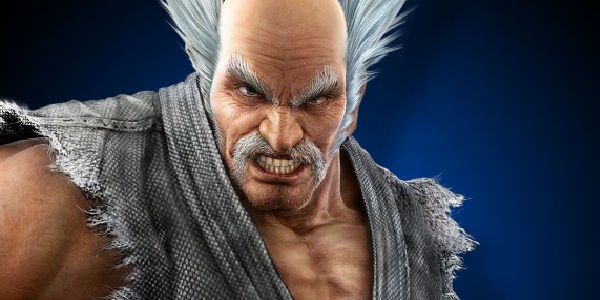
One thing Tekken is famous for, is the huge amount of unlockable characters throughout the games. Sometimes these characters would be original entrants, sometimes they'd be variations of other characters, or possibly even comedy relief characters like Gon. As such, Tekken has a massive roster of characters who have appeared over nine installments of the game, those being; Tekken 1-6, Tekken Tag Tournament 1 and 2, Tekken Revolution. Of those characters, a surprising five have appeared in every installment of the series. Those are Heihachi Mishima, Kuma, King, Paul Phoenix and Nina Williams, while Kazuya, Yoshimitsu and Lee have eight entries. Heihachi is not all that surprising as he's a huge attraction of the series and arguably its most famous character, but the nine-time appearances of Kuma, Paul Phoenix and Nina Williams may come as a surprise, considering they're not often important characters in the Tekken canon.

5. Anna's Costume Was Cut Due To Complaints From Peta
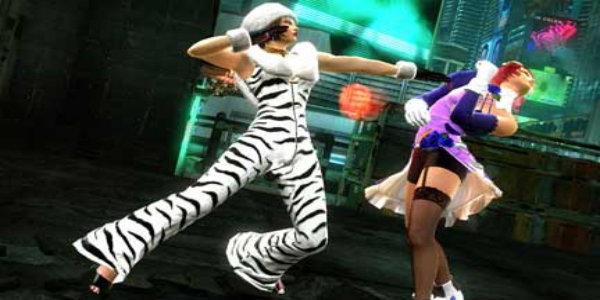
Anna Williams has always been one of the more distinct females in the Tekken franchise, with her flirtatious behavior, opulent costumes and stylish personality. In the first few games, most Tekken characters had one costume and a palette swap with little variation, with most of the designs carrying over to the next game. In Tekken 3, Anna retained her stylish silk dress, but was also given a new costume in the form of a white tiger catsuit with fur trim. The costume appeared again in Tekken Tag-Team Tournament, but was absent from Tekken 5. This is because PETA (People for the Ethical Treatment of Animals) complained directly to Namco, implying that the use of fur and animal stripe was actually promoting the hunting of exotic animals in the name of fashion. As a result, Namco omitted the costume from Tekken 5, and her white tiger stripes would not be seen again until much later entries in the franchise. It's a ridiculous notion that a character's costume could actively inspire poachers, anyway.

4. Tekken Card Challenge

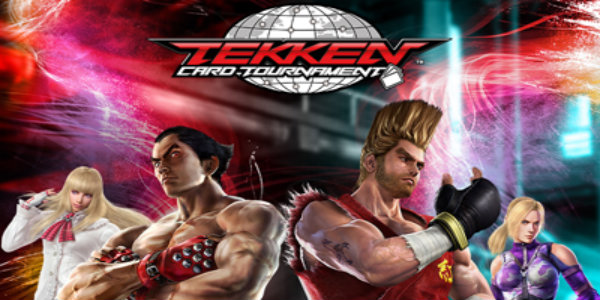
While Tekken has had quite a few variations of the fighting game style with its numerous spin-offs, what you may not know is that Namco also released a turn-based fighting game/trading card game hybrid in 1999. The game is called Tekken Card Challenge, the premise is that characters are still fighting in the King of the Iron Fist tournaments, but in this situation the fighting techniques and moves are presented by playing cards. After defeating an opponent, you'll advance onto the next one at an enhanced difficultly until you defeat the boss - much like a fighting game arcade mode. The game was released exclusively for the WonderSwan, the Japan-only handheld competitor to Nintendo's Game Boy Color. While the game never reached western audiences, it was repackaged over a decade later as a game for computers, tablets and android devices as Tekken Card Tournament. Namco also decided to release physical copies of the cards which have been available since September 2013.

3. In Tekken 2 There's A First-Person Fighting Mode
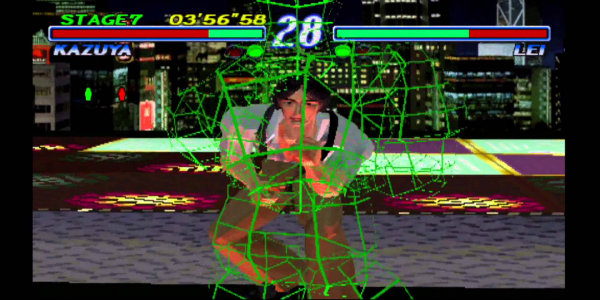
Much like the previously explained big-head mode for Tekken 2, there's another game variation you can trigger by pressing buttons whilst on the character selection screen. After unlocking every character, If the player holds L1 and L2 before the first stage, they'll appear as a wireframe model in a first-person display, similar to Nintendo's Punch-Out!. The player can still fight as he normally would, just in first-person perspective, as a selection of green wires instead of an actual character model. There's very little explanation as to why this mode exists in the game. It's apparently only accessible after you've unlocked every character, but it doesn't actively seem like a reward mode when compared to Tekken Ball or Tekken Bowl. It's possible this is a test mode simply left in the game, that designers decided to let players access as an Easter egg. While the big head mode is quite well-known, Tekken 2's wire frame mode is not quite as famous.

2. Tekken Originally To Be Titled 'Rave War'.
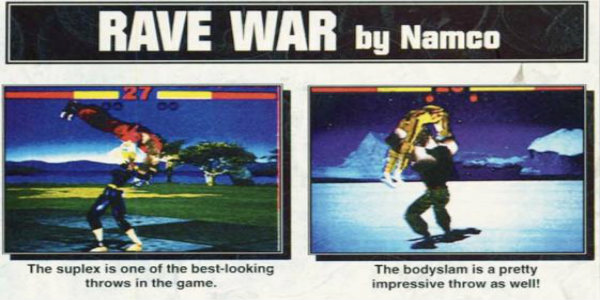
Tekken translated simply means 'Iron Fist', in reference to the King of the Iron Fist tournaments around which the games are based. However, Namco weren't originally happy with this name for U.S audiences, as they thought it sounded too typically Japanese, while 'Iron Fist' sounded far too cliche. According to images found in issue 65 of Electronic Gaming Monthly, Tekken was originally set to be released in the U.S as 'Rave War', as you'll see in the image above. There's been no explanation, interview or clarification of this name change by Namco at this point, so it's pretty unlikely we'll ever get an explanation. After looking at the different definitions of rave, the use of it in this case probably relates to the meaning of anger, madness and incoherence.This definition of rave is not often used, but obviously this might have simply been a bad choice of words due to sloppy translation and outdated English vocabulary. Rave War is a ridiculous sounding name for any game, sticking to Tekken was a good call by Namco.

1. Devil Kazuya Can Be Unlocked By Playing Galaga
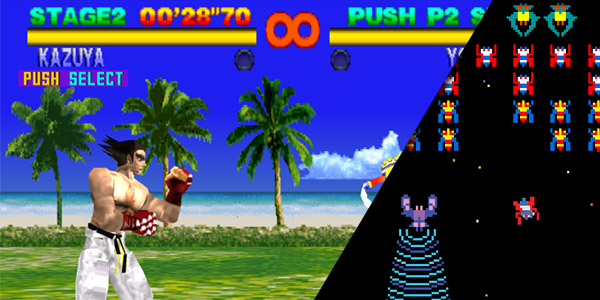
While Tekken may have countless unlockables, secrets and hidden game modes, most of them are easily achieved. Practically every character, mode or secret in the series is unlocked simply by completing the game with a certain character, playing a number of matches, or through the completion of a certain mode. However, this isn't the case with Tekken's very first appearance on consoles when Namco ported the arcade hit to the Playstation 1 in 1995. To unlock a playable version of demonic Kazuya Mishima, gamers would have to go through a much more difficult process. In order to brighten up the loading screens for Tekken 1, Namco decided to put a small version of their arcade shooter Galaga on the screen so the player had something to do while they waited. Most players would blast a few aliens, then press start to play an actual game of Tekken. However, if a player was daring enough to complete nine challenging stages of Galaga with only one continue, they'd unlock Devil Kazuya. Not only is there literally no hint to this anywhere in the game, that's an incredibly hard task to accomplish, particularly when the mini-game is said to sample only the hardest stages of Galaga. Given Tekken 1's lack of popularity and notoriety compared to its sequels, many didn't play the very first installment of the series, so this secret didn't become public knowledge until years later. Even now, it remains one of Tekken's most well hidden secrets.

In this post: 
Tekken
 
Posted On: 
Contributor
Contributor

Sam is an experienced Film, Gaming and Wrestling writer, critic and journalist who was written for a vast number of different entertainment websites. Follow him on twitter at @Sams_Reel_Views.