10 Things Pokémon Sun & Moon Must Fix From X & Y
Come on Nintendo, why no mid-battle evolutions?!

The announcement of Pokémon Sun & Moon for the Nintendo 3DS was a bit of a strange one. Earlier this year an apparently 'official' notification revealed that the new generation of main series games would be arriving in 2016, but it was soon noted that the original source was not quite as reliable as it first appeared. Bad times.
Skepticism was very quickly replaced by renewed joy, however, when a genuine Nintendo source confirmed that the games were - in fact - real. This announcement also confirmed that the 2016 release date was correct, meaning that aspiring trainers everywhere will have the chance to flip that baseball cap around yet again, as they head off in search of brand new monsters in an all-new region.
Pokémon Sun & Moon will represent the second new generation title to hit the 3DS following X & Y in 2013. Despite the fact that a couple of remakes - Omega Ruby & Alpha Sapphire - have come in between, there hasn't yet been much of an improvement over the first 3DS titles, as the 3rd Gen remakes pretty much stuck with all of the tropes from X & Y.
So, as we look forward to Sun & Moon before the end of the year, I've taken a look back at X & Y to see where improvements can be made ahead of an all-new generation. Obviously these were great Pokémon games, but no one's under the illusion that they were perfect.
With that in mind, let's consider 10 things that Pokémon Sun & Moon will need to fix, if they are to improve on those 3DS predecessors...
10. Add Variety To The Mini-Games
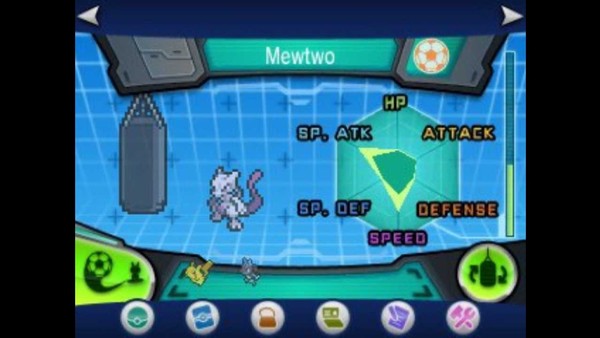
The introduction of training mini-games for Pokémon X & Y was a great first step toward adding variety to the series' established formula. The Pokémon-Amie game was a cute, virtual pet-style game that allowed you to interact with a chosen monster on the device's touch screen. This had the in-game benefit of increasing their happiness, which can be a major boost toward evolution for some types.
The Super Training was an additional game that let you participate in mini-games to boost the stats of your team in the same way that competitive players use EV training, too. It was a solid introduction, allowing even casual or novice players the chance to hone the growth of their combatants towards particular skills. You could increase the meagre speed of a sluggish Snorlax or add a little extra punch to a Riolu ahead of its evolution to a mighty Lucario.
The only trouble with Super Training, however, was that it became immensely boring very quickly. Practically all the games simply amounted to tapping the touch screen frantically, needing little or no attention to be paid once you got used to them. Adding some rhythmic variation or movement-based puzzles could easily add some longevity to these useful games, making them less of a bore as the full game wears on.
9. Scrap The 3 Vs. 3 Battles
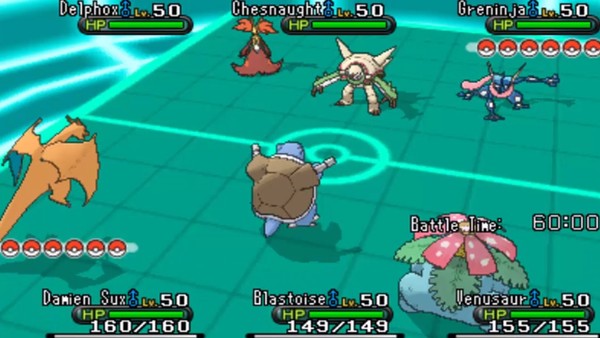
Larger battles were introduced to the series prior to X & Y, but they were a larger feature than ever in the sixth generation. Considered a way to increase the action in a fairly formulaic series, it's easy to see why piling more Pokémon onto a battlefield could've been seen as a reasonable move to make.
In practice, however, these larger battles only served to point out some of the flaws in the makeup of the series. For starters, in regular 3 on 3 battles you'll find certain Pokémon are only able to attack their counterparts if they aren't too far away. This makes the game feel terribly stagnant and removes any illusion that you're participating in the kind of exciting, dynamic battles seen in the anime series.
They also highlight how important chance can be to a battle. Placement becomes everything, as if you have a strong type-match that isn't well-positioned at the start of the battle then you may not even be able to make good use of it. It could be argued that adding a shuffle mechanic to these battles could help save them, but ultimately they're an addition that wouldn't really be missed if removed altogether.
8. Increase Attack Power Points
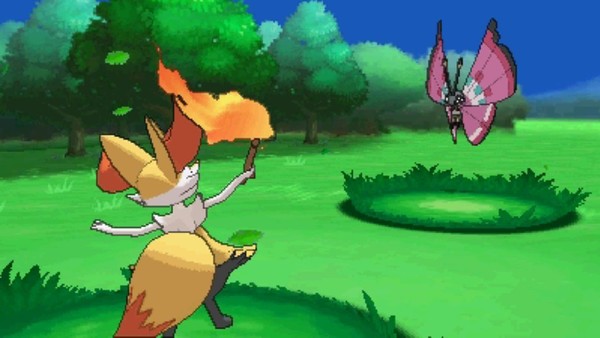
For years now, many Pokémon fans have been suggesting that the traditional limit of four attacks per monster should be lifted in favour of a higher available amount. This may be too drastic a change, however, and there's a much simpler change that would help move-set balancing as the series moves forward.
Increasing the PP of stronger moves in the game would make adding them to your roster much less of a gamble. A Pokémon's strongest move is always great to have, but given that most of them only carry a PP of 5 - and they regularly have poor accuracy - it's quite often worth overlooking them for a less powerful but more reliable attack instead. This takes away a lot of the excitement of training your Pokémon into their higher levels, as their eventually becomes very little to play for.
There is an argument, of course, that this would overpower the high-level battling scene as the most powerful moves would be more readily available. Fear not, however, as we'll be addressing that very problem a little later on...
7. Ditch The Skates And Stick With Running Shoes
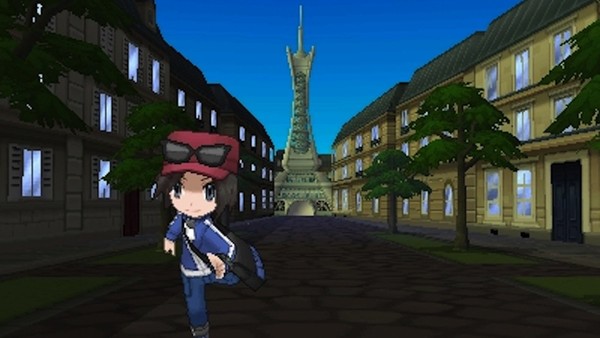
Different movement methods have been available in Pokémon games since the bicycle of the very first generation. In the sixth generation, we were introduced to roller skates on top of the running shoes and an accessible bike to give player movement more variety than ever .
The skates were a fun addition in X & Y... for about thirty seconds. After that they became a complete annoyance as they were pinned to the 3DS' small analog stick; if you wanted to walk or run you had to stick with the D-pad, which felt like a step backward compared to the smoothness of the stick's movements.
While I can imagine everybody will have loathed the skates - and I do admit this is a minor complaint - it's not worth revisiting them again. Counting player steps with the skates was nigh-on impossible, meaning mechanics like egg hatching or poison tallying became immensely difficult. Stick with the running shoes and let players use the device's analog stick for all movements in Sun & Moon.
6. Let Us Play Champion Or Gym Leader In The Post-Game
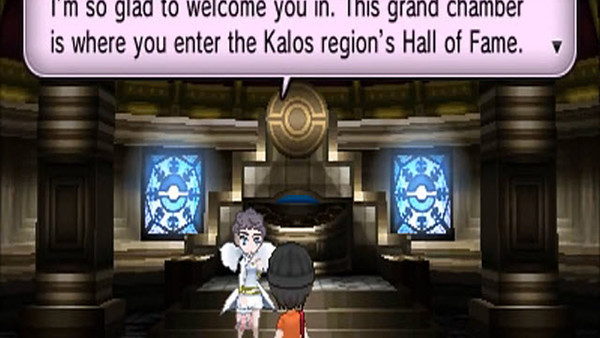
The first major accolade that every Pokémon player will achieve will be gathering all eight Gym badges and defeating the Elite Four and their reigning champion. After being inducted into the Hall of Fame, however, things tend to fall a bit flat in the post-game play.
Save for a few external challenges and trying to fill the Pokédex with all of the elusive little buggers, there simply feels like there's nothing to keep battling for. If players could face a weekly, randomised challenger as the champ - or even as a Gym leader - it would keep single player content competitive for longer. Losing to one of these could even force you back through a reinvigorated Elite Four as you attempt to reclaim the crown.
Some of you may know that I've asked for this in a Pokémon feature previously, but it remains as something I firmly believe would boost the longevity of the main games.
After all, have you ever really felt like the champion once the dust has settled in the Hall of Fame? There could be prizes for win-streaks as the champ, and I'm not just talking about the inflated ego that would inevitably come with dominating the region!
5. Drop The Power Of The Strongest Attacks
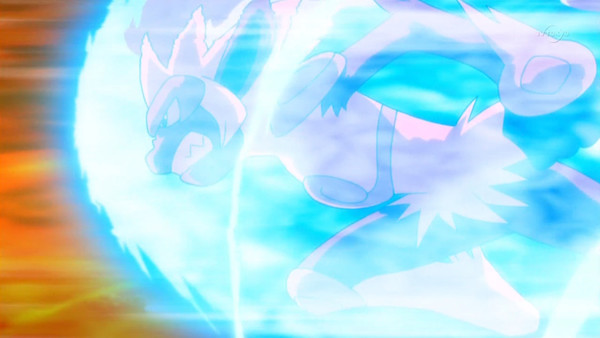
Training your elite team to the point where they learn their most devastating signature moves is a very rewarding feeling in any Pokémon game. In recent times, however, some of these have become so unbelievably powerful that they represent a virtual death sentence for whatever poor creature will be stuck on the receiving end.
By the time players get to the latter stages of the main game, battles essentially become a contest of who can deploy one of these attacks the quickest, since he who strikes second isnt actually likely to strike at all. Even during Elite Four battles towards the end of X & Y, most of these top-level moves would lead to one-hit KOs against supposedly the most well-trained beasts in the land.
Admittedly these moves are mitigated - in most cases - by recoil damage for your own Pokémon, but if youre tactically clever enough, then this will be the only damage youre on the receiving end of anyway. Dropping the power of these moves while removing the alternative negatives, would lead to more challenging, more exciting AND longer-lasting battles overall. It would be a real achievement to navigate these in the latter stages.
4. Increase The Overall Difficulty

Probably working hand-in-hand with the previous point, it's very clear that the difficulty has to be increased where Pokémon Sun & Moon are concerned. X & Y were an absolute doddle to work through by the time your team were around level 20 and above, and there was virtually no challenge left in the game at all past that point.
The addition of the extra training methods in X & Y were great for adding variety to the core of the game but, coupled with various other overly helpful mechanics, it did have the effect of making the game too easy. In previous generations, the experience you could earn had to be carefully dished out against the available number of worthy battles, but with the sixth generation this was not the case.
The Exp. Share item, which players are given early on in the game, actually gave experience to your whole party of Pokémon rather than just one chosen monster. I actually found myself switching the item off to preserve any sort of meaningful challenge in the game, as initially I was equally levelling six Pokémon with a near pointless ease. You may argue that these games are aimed at kids, but I played generations one and two as a kid, and the difficulty for Sun & Moon only has to meet the challenge of those titles to mark an improvement.
3. Mid-Battle Evolutions

If I don't keep asking for this, then who will? Well, probably someone else I suppose; the internet is a pretty huge and opinionated place, after all.
But anyway, one of the things Ive wanted to see in the series for a while now is the introduction of mid-battle evolutions, once the necessary level is met. Levelling up and learning new moves happens in battle, so why not evolving as well?
I spoke before about how some of the most exciting moments in Ashs journey in the anime have involved an evolving Pokémon turning the tide of battle mid-flow, and it would be great to see this represented in the games.
And, since it wasnt a feature that was introduced in X & Y, I can still consider it something that has to be fixed. Come on, guys; imagine the thrill of clinching a gruelling, early gym battle as your starter Pokémon finally hits their second stage evolution and gains the strength to emerge victorious. It would be brilliant.
2. Bring Back Peripheral Compatibility

When the Gold & Silver remakes hit the Nintendo DS system in 2009, they were accompanied by an extra peripheral in the form of the Poké Walker. This little device was essentially an extra companion to the game that allowed you to train a partner Pokémon, find useful items as you walked and even catch new - sometimes exclusive - Pokémon along the way.
The Poké Walker was a ton of fun to use, and it was a great way to stay engaged with the game even when playing through the DS wasnt possible. Walking the dog? Picking up a prescription? Take your favourite Pokémon with you! Now if only there were an easy way for Nintendo to get another item to keep the game going, thats constantly attached to their players
Well, there is! Since smart phones are essentially now glued to all of our hands like some sort of Skynet social-bot, the Pokémon Go app would be the perfect cross-compatibility tool for the new generation. Location exclusive events could be taken out of the hands of retailers, and timed events would be easier and more interactive than ever. This one really is a no-brainer.
1. Stick With Team Rocket

One of the most difficult things for latter generations of the series to replicate has been the role of the antagonists following generations one and two. Obviously the rival comes as a given, and I do think the move to increase the number of regular fellow challengers in generations five and six was definitely a clever move.
The antagonists Im talking about, however, are the no-good Teams that form the basis of each games sub-plot. If you consider that your trainers rise through the ranks and quest to become champion is the main narrative, then the conflict with the likes of Team Magma or Team Plasma has always formed an interesting, if unnecessary, secondary thread.
The problem with these threads in recent times has been the need to vary the antagonist team and give them their own new motivations. In most recent generations they are starting to come off as superfluous as their bizarre criminal goals become less and less believable or engaging. Team Rocket were a success in the early games because they were - quite simply - just evil people. There was no complex motivation or grand scheme, just an organised criminal unit looking to seize power by stealing the worlds most powerful Pokémon.
It was a worthy and enjoyable challenge to get out and thwart them, so why not bring them along to the new region?
What are your biggest wishes for the new generation? Join the discussion in the comments below!