10 Things Nobody Wants To Admit About The Outer Worlds
Party like it's 2008.

The Outer Worlds is finally out, and players are flocking to Obsidian's RPG in droves. Though they were once immensely popular, this generation has lacked role-playing experiences like this, ones which are actually built around player freedom and not just shooting monsters and levelling up guns.
It's a space Bethesda used to absolutely dominate, but their reputation has been - putting it politely - damaged over the past generation, and players have been starved of quality experiences in the genre.
Obsidian haven't only scored an open goal though, they've created a genuinely compelling new universe to explore with their latest game, picking right up where they left off with Fallout: New Vegas.
That said, it ain't perfect. While The Outer Worlds is a great time, it's not exactly the second coming of RPGs, and some of its old-school charms might have been better served staying in the past...
10. Dialogue Checks Haven't Evolved Since 2008

On one hand, the fact that The Outer Worlds features robust dialogue checks at all is a good thing. Being able to pump XP into Lie, Persuade and Intimidate skills and having more than one way to bluff your way through quests and open new dialogue trees is satisfying, and adds to the classic RPG structure that Fallout and Mass Effect moved away from.
However, it's very much a classic system to a fault. For the most part, these prompts only serve to skip conventional gameplay and progress the game quicker, with the only input from the player being how much time they've put into upgrading specific skills.
It can be satisfying, but using a dialogue check rarely opens up new gameplay possibilities. Instead, they replace parts of quests entirely. Choosing the dialogue option is the gameplay.
This is how it worked back in 2008 with Fallout 3 and even before that. It's nice to see it back at all, but there should have been more evolution after over a decade.
9. There Are No Surprises In The Open World
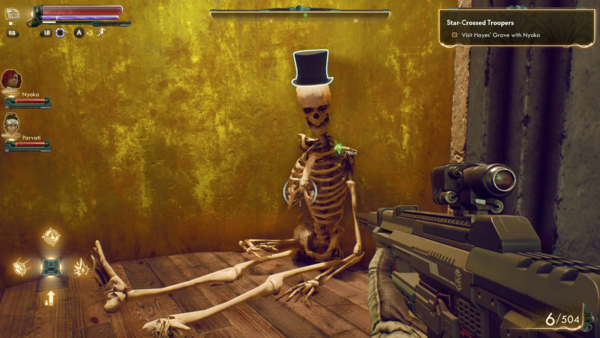
The decision Obsidian made to split The Outer Worlds into a bunch of smaller sandboxes instead of one big open world works to give it a tighter focus, inject some variety into the environments and give each area its own unique set of enemies and NPCs.
The issue is, though, that there's rarely any surprises to be found while you're out exploring. Perhaps as a limitation of the development time, you're going to be seeing the same old buildings, looking through the same crates, and being funnelled from one point of interest (that are almost always visible on your map beforehand) to the next.
The sense of freedom in exploration isn't really there, and you only occasionally stumble onto something wild and creative that doesn't have anything to do with a major quest given by someone else.
There's still a sense of wonder in the fact that these are alien planets, but you know before landing anywhere that you're going to find a couple of factions and some repeated monsters, with little out there to find on your own.
8. The Pacing Is All Over The Place

The Outer Worlds, as enjoyable as it is, has such a weird flow. The central plot is all about your unfrozen hero trying to save the rest of the Hope's crew, but that quickly takes a back seat to shenanigans. It's always a presence, but it's clear the game is more interested in the conflicts between the different factions you come into contact with, and the majority of your time is spent getting a feel for each one, and then doing a bunch of missions for them.
The thing is though, each new world comes with their own characters and settlements. Consequently the game plays out in distinct chunks, where you land on a world, spend an hour or two exploring towns and talking to everyone, and then a bunch of hours venturing out to do the ten quests you just logged.
Consequently, you can go ages without shooting anything, and then even longer without talking to anyone. It's not a major problem, but it can make it feel as though you aren't progressing all that much. Likewise, it's difficult to know how far through the game you are because the main plot takes such a back seat.
The core components are great, but they're pieced together in a strange way.
7. The U.I. Totally Sucks

This might seem like a nitpick at first, but the problems of the U.I. undeniably add up to a frustrating overall experience.
For one, the text is way too small. Both in the menus and in conversation, it can be straining to be constantly reading, and there is a lot of reading to be done in The Outer Worlds.
This exacerbates the info dumps the game likes to give you as well. Especially early on, everything from character levels to flaws to items is explained through text pop ups, but because the text is so tiny and they're so frequent, there's a good chance you'll skip over important information.
The inventory system is also muddled, and it can be difficult to navigate through your items, buy new ones, and tinker with your squad. In any other game this might not have been too bad, but because of how much time you spend scavenging and upgrading both you and your companions (not to mention engaging in dialogue), it can become needlessly grating.
6. Enemy Types Are Uninspired

The creepy crawlies that are in The Outer Worlds make for pretty good combat fodder. Each world has a bunch of different aliens with their own unique designs, but while they may be visually appealing, they aren't all that inspired.
In fact, there's only really a handful of different species to fight on each planet, and you'll be fighting them over and over again. Okay, so they do come in a couple of different flavours: there's small ones, medium-sized ones, big ones, and super big ones.
Combat wise, they don't have too much new to offer either. There's enemies that spit acid, dog-like creatures that can quickly close you down, and hulking insect-like queens that tank damage.
That's just the aliens though, the human enemies fare even worse. They all look pretty similar, and occupy samey roles: snipers, heavies, melee-rushers etc.
It's all solid stuff, but after a while familiarity sets in.
5. There's Not Much Variety To The Builds

The issue with recent RPGs has been that they've all but thrown out character building. So many of the quests devolve into action, so really specialising a character and having to commit to a certain playstyle has been lost - if not made totally impossible - by narrow design principles.
Admittedly, The Outer Worlds has done away with that same action-heavy philosophy, but it's far too easy to become a Jack of all trades and still not have to think about building a playstyle.
In my playthrough anyway, my weapons skills were always high enough to make mince meat of any enemy, I usually had at least one of the dialogue check options available, and Science, Medical and Engineering skills were strong enough to unlock new dialogue paths and solve issues. Likewise, I can only count a handful of times I was unable to pick a lock.
That's partly because of the bonuses you can get from good gear and the right characters. Your base stats might not be amazing, but you can boost them massively by equipping items and tailoring companions to your weaknesses. As a result, some of the challenge and character building only shines if you actively limit yourself.
4. It's Way Too Easy

If you're exploring and doing side missions in The Outer Worlds, you're going to absolutely breeze through it. Though it starts off challenging enough when you land near Edgewater, with menacing nearby alien pits and dangerous mercenaries roaming the lands, the difficulty quickly drops off.
Once you've got a couple of companions, a full set of weapons and more than the starting armour, very few combat encounters are going to be challenging. For the most part, hitting the companion abilities and sitting back with a heavy weapon (which you'll have plenty of ammo for if you've been exploring) will get the job done, and you won't have to worry too much about thinking in combat.
Even on higher difficulties (with the exception of Supernova, which skews entirely in the opposite direction), the game rarely poses a challenge, which boils a lot of the combat down to repeating the same old tactics.
3. Customisation Is Massively Lacking
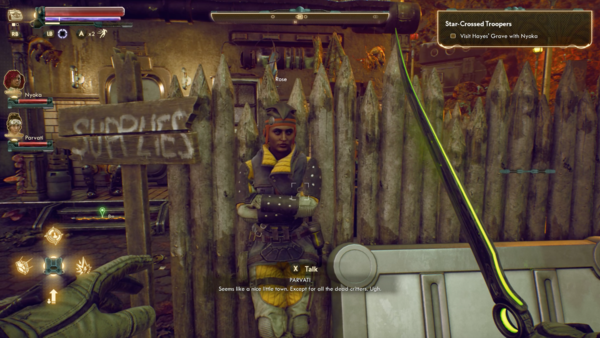
A part of the fun with games like The Outer Worlds is in customising your character, swapping out armour, tinkering with weapons, and having your curiosity rewarded with good, inventive loot. At the moment, the game does have some of that; you're constantly finding new items, can modify them at workbenches and there's no shortage of things to pick up.
The sad thing is, though, that most of the upgrades are the same things you've been using for hours, just with better stats. Instead of having a bunch of different weapons, the same ones crop up in different versions, for instance the Light Pistol Ultra instead of the Light Pistol Mk. 2, which look and act identical to the previous editions, minus some modifications or attachments. There are a few specially-named items to be found, but even they are just variations on standard models.
This is fine as is, and it still gives you enough of a thrill and a power surge, but it links to the point earlier about there being no surprises.
2. So. Many. Fetch Quests
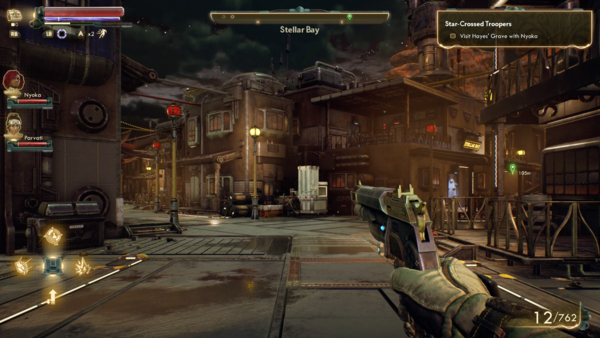
One thing that hasn't changed between Fallout: New Vegas and The Outer Worlds is just how much time is spent being somebody's errand boy.
Most of the quests follow the same formula: you talk to someone about a thing you need, they respond by saying they could give it to you, but you need to do something for them first. The majority of the time this requires you to pick something up, fix a thing or a kill a thing, return and collect your reward.
Now, this is a tried-and-tested questing structure, but it's shocking how little the game deviates from this formula. Even if the requests are different, most have the same outcomes, and after a while you can see the strings piecing the whole game together.
There are flashes of inventive mission types, such as a murder mystery that's sprung on you as you explore one of the towns, but these are few and far between, and are often over all too quick.
1. It's Closer To Mass Effect Than Fallout
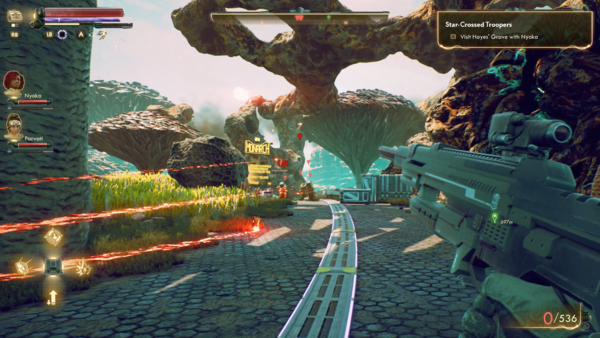
Ever since it was first announced, The Outer Worlds has constantly been compared to Fallout. It's an obvious comparison to make as well; Obsidian developed arguably the best modern Fallout with New Vegas, while everything from the presentation, to the dialogue, to the gameplay evoked the template Bethesda's titles helped define.
However, while all those comparisons remain true, the finished product actually has just as much in common with Bioware's RPGs - if not more. The way the worlds are split into mini-sandboxes (which are way more rigid and linear than you might expect), the focus on companions and the hub worlds are all indebted to the first two Mass Effect games.
Now, this isn't a bad thing. The Outer Worlds puts enough of its own stamp on everything to stop it from being a mere imitation. However, it does mean that if you're jumping in expecting another Fallout you're setting yourself up to fail, as the overall structure makes some pretty major deviations from that series.