10 Things Nobody Wants To Admit About The Elder Scrolls Games
If it is broke, you should fix it.

The Elder Scrolls has been monumentally successful, but the series certainly isn’t infallible.
After all, The Elder Scrolls Online was a momentous disappointment at launch, and Skyrim – despite its critical and commercial success – was plagued with technical problems, including numerous game-breaking glitches and an underwhelming main quest line which left plenty to be desired.
These are problems which even the most diehard fan would struggle denying, the cracks in the armour which are becoming increasingly more apparent, which nobody wants to acknowledge.
Why? Well, because the series is remarkable in many ways, and is tremendously appealing, meaning most people would rather reject these concerns than address them directly.
It’s understandable, but detrimental – because if these problems are continually ignored – they’ll only continue growing in prominence, eventually ruining the appeal of the series. That said, here are 10 things nobody wants to admit about one of the greatest RPG franchises ever made…
10. The Games Are Mired By Fetch Quests

This particular problem – though a constant source of criticism – is just as prevalent in Skyrim as it was in Morrowind, released nine years earlier.
It’s almost inexcusable, especially when the quests themselves are used as a means of padding out runtime, justifying the inevitable “over two-hundred hours of gameplay” claims plastered across the back of the box.
These sorts of quests are created just to give to player something to do in between actual content, and it’s about time the series moved away from the practise altogether. It’s completely transparent, actively cheapening the overall experience, ruining any sense of pacing and generally spoiling the game at times, too.
After all, fetching a sword from a neighbouring town, reacquiring a stolen family heirloom or delivering a letter have one thing in common – they’re busywork, designed to distract the player from actual gameplay.
9. The Puzzles Are An Afterthought

There are puzzles scattered through the series – used appropriately only on occasion – usually overlooked in favour of secondary elements, included mostly out of obligation.
Skyrim for instance, includes numerous puzzles in multiple
dungeons, which usually involve matching symbols in order to open passageways,
which – besides pulling levers to open doorways – might be the laziest idea of a puzzle ever conceived, requiring no thought whatsoever.
The puzzles themselves can be powered through using a process of elimination, rendering them a casual hindrance easily overcome, nothing more.
That said, there’s one exception – which can be found in the fourth instalment, Oblivion – in which the player is expected to uncover the location of a mysterious cult using information dispersed throughout four separate books. The quest is called ‘Path of Dawn’, and it’s everything the series should be striving to achieve.
Besides that, there are almost no puzzles worth mentioning in the entire series, which is a shame considering how much it would benefit from some actual complexity. Instead, dungeons are packed with countless, indeterminate enemies – which are easily dispersed – creating only a shallow sense of accomplishment.
8. The Story Is Always The Same

The Elder Scrolls is constantly praised for its scope, many people claiming to have spent hundreds of hours in the game without touching the main quest line. Naturally, this begs a very important question: why are they avoiding the most important thing in the game?
It’s the main story – surely, the most
interesting – so, why continually avoid it?
Well, Skyrim and Oblivion repeat the same basic story – with only a handful of alterations between the two – which wouldn’t necessarily be a problem, except that story is an unsatisfying one.
In both cases, you spend the majority of your time running errands or gathering information, clearing out dungeons, playing catch-up and generally wasting time before the inevitably disappointing conclusion, which usually involves an inappropriate boss fight with a god.
Besides that, the overarching narrative never seems to affect the world in any interesting way. Once Mehrunes Dagon and Alduin have been defeated, things revert to their natural state, and nothing – besides some minor cosmetic alterations – seems to have changed, whatsoever.
In fact, everything appears identical to when you started, as if nothing happened in the first place.
7. The Guilds Have Always Been Disappointing

Guilds are usually a highlight, especially compared to the underwhelming main quest.
In fact, some of the most memorable quests have been part of the Dark
Brotherhood, or Mage’s Guild. Equally, the most interesting characters are
usually guild members – such as Lucien Lachance, Kodlak Whitemane, Aela the
Huntress and Astrid, the leader of the Dark Brotherhood.
That said, the guilds – despite their relative merits – are surprisingly shallow, almost succeeding despite their poor execution. Customisation options are especially limiting, giving players – who eventually become leaders – considerably few options in regards to the day-to-day management of guild activities.
Instead, players should be allowed to recruit new members, expand their reach and establish contacts with neighbouring towns, giving them a genuine sense of investment, and making them feel as though they’re actually in charge.
Guilds are especially frustrating because of their immense potential. They’re great, but they could be fantastic, providing they were paid more attention during the development process, which they never are.
6. The Plot Always Revolves Around The Player

Bethesda, the player is an agent in your world, so not everything has to revolve around them. Without a doubt, the player’s character should be the hero – or villain, depending on your playstyle – but, the extent to which the player is emphasised throughout the story is downright ridiculous.
In Skyrim alone, the player is prophesied to overcome Alduin, become the fabled Listener of the Dark Brotherhood – hand chosen by the Night Mother herself – the arch-mage, the Harbinger of The Companions – an ancient institution of werewolves – and the leader of the Thieves Guild.
In Oblivion, you even become The Grey Fox himself.
It’s pretty ridiculous when you really think about it: the fact that every single quest line – including the main quest – ends with the player fulfilling some ancient prophecy, becoming this destined leader born once every thousand generations.
Every instalment, the entire plot is written around a single individual – the player – which makes the world seem small and inconsequential, reducing the complexity and scope of the universe significantly.
5. The Game-Breaking Bugs DO Get In The Way

Skyrim was a mess upon its release, ruining players’ experiences with the game and destroying any semblance of immersion.
For some, glitches and bugs aren’t always a problem – because they assume the developers will eventually get around to
patching them – but, is that really good enough? Purchasing a product should
guarantee a degree of functionality, and releasing something which is
essentially broken is downright unethical.
In small doses, graphical screw-ups can be forgiven – sometimes, they’re even amusing – but game-breaking glitches are a separate issue entirely, causing the game to crash, and forcing players to restart their adventures constantly.
Skyrim was especially culpable, but every major release in the series – and Fallout too – has been riddled with technical problems, some of which have been downright hilarious, and others painfully frustrating.
Fans might not want to admit this, but the Elder Scrolls is a broken series – technically speaking – harming players’ experiences by rushing unfinished games out for release and fixing them only after the problems have become apparent.
4. The Environments Are Monotonous

The environments – while aesthetically pleasing – and monotonous, and indistinct.
Skyrim is one massive snowy, mountain environment, and Cyrodiil consists mainly of forests and grasslands.
Oblivion is a nightmare reminiscent of the depths of Hell, and the Shivering Isles is diverse, but takes too much inspiration from Morrowind, which might be the single, genuinely varied and interesting location featured throughout the entire series, complete with numerous, wide-ranging regions, each with its own distinct landscape and wildlife. Dungeons are equally as unremarkable, lacking any real identity.
Skyrim attempted to correct this problem, but couldn’t improve on the dungeon crawling experience in any meaningful way. They’re just so monotonous and unmemorable, and, if asked to differentiate between two separate dungeons, most players would have great difficulty in doing so.
To that end, the whole series is in desperate need of some variation, except Morrowind, of course.
3. The Combat System Has Always Sucked
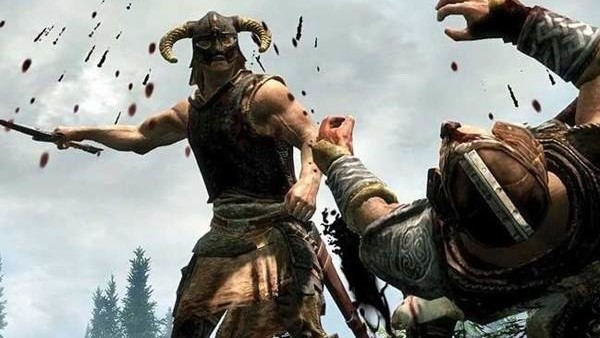
Perhaps, the most common criticism against the series is aimed towards the combat system, which has always disappointed, never showing any signs of improving. Swordplay is particularly repetitive, requiring no input whatsoever beyond a single button press, which can be hammered repeatedly to solve pretty much any problem the game will throw at you.
Upgrading your abilities – which would usually solve the problem – doesn’t, improving only the effectiveness of that solitary button, staggering enemies or dealing more damage. As a result, some players avoid using swords entirely, preferring bows or magic instead, which provide a far greater sense of accomplishment in combat situations.
The trouble is: there’s no nuance whatsoever, which makes dungeon crawling and random encounters complete frustrating, because the combat mechanics are repetitive by nature.
Surely, after five instalments, this particularly gripe needs to be addressed?
2. Morrowind Has Never Been Surpassed

Morrowind is easily the best in the series - which wouldn't necessarily be a criticism - except it was released over a decade ago. Neither Skyrim nor Oblivion have surpassed the game - apart from on a technical level - making it easily the best written instalment in the entire series, bursting with personality and conceptual originality.
For one thing, the environment was varied and expansive - actually meriting some exploration - and the writing was engaging, commenting on the nature of destiny, and touching on moral issues without bashing the player over the head. The characters were more memorable, the side-quests more diverse - although there were some fetch quests involved - and the world was more interesting.
By comparison, Oblivion and Skyrim - despite their relative merits - are almost boring, watering down the best aspects from their predecessor and standardising the experience.
Case in point: If asked to name as many non-playable characters as possible from the series, the majority would surely come from Morrowind, because it actually had characters.
1. The Formula's Growing Noticeably Stale

This particular point really cannot be stressed enough. The Elder Scrolls has gotten noticeably stale since the fourth instalment. Skyrim relocated the series – and made several improvements – but did nothing to differentiate itself from previous iterations, serving as an adequate re-tread, perfecting the formula but not evolving the series in any significant way.
Oblivion was a watered-down Morrowind, and Skyrim was a technically superior Oblivion.
In both cases, the plot revolves around prophecies and omniscient antagonists; both games are mired by fetch quests and identical quest lines; they both begin with the sacking of a city (Kvatch and Helgen); they both involve travelling to alternate dimensions in order to combat powerful adversaries (Mankar Cameron in Paradise, and Alduin in Sovngarde), they both feature – mostly – the same factions and guilds, and they both end as they begin, with nothing really changing.
There’s something to be said for playing it safe, as well as sticking to what you know. 'Don’t fix what ain’t broken' is another popular defence against this kind of criticism, but that said, nothing stale is worth keeping, and this particular series is starting to decompose, fast.
--
Where do you stand on The Elder Scrolls, and what should Bethesda do for the sixth main instalment? Let us know in the comments!