10 Risky Sequels That Saved Dying Video Game Franchises
It's always darkest before the dawn.
Video game franchises, more so than movies, are always conceived to be around forever. The industry as a whole rarely greenlights one-offs (the the point where even a complete experience like The Last of Us inevitably ends up with a follow up), instead wanting bankable franchises it can count on, be it through sequels, spin-offs or remasters.
Of course, managing to maintain a brand's relevancy for potentially decades is no easy feat. While some of the earliest major names in the industry like Doom are as big as they've ever been today, popularity is never unwavering. More often than not, if a franchise was once successful it will eventually bounce back, even if it's driven into the ground and killed temporarily by terrible business decisions or bewildering creative left turns.
It's not easy to bring a series back from the brink though, and it usually takes a risky reinvention - something which looks completely ridiculous on paper, veering too far away from what people either liked originally or what's profitable at the moment - to deliver something special that jolts the corpse of a video game series back to the land of the living.
In many cases, however, they don't just return to their former glory, but surpass it completely...
10. Resident Evil 7

While I don't think Resident Evil 6 was as bad as people say it was, it was a disaster for the franchise. The game was a huge resource sink from Capcom, who had over 600 developers working on the sequel at its peak, indicative of just how unwieldy and bloated the series had become by that point. It still sold well, but after a critical kicking and an overwhelming backlash from fans, the publisher was forced to scale back and rethink its plans for Resi as a whole.
Resident Evil was put on ice until the start of the next gaming generation, with Capcom keeping their mouth shut as to how they were going to carry the franchise forward. All fans had to chew on in the meantime was uninspired-to-ok spin-offs, with hope for a return to form increasingly extinguished with each new release.
But, then, Resident Evil 7 turned the entire ship around. A concerted effort to reinvent the series just like the fourth game, the sequel simultaneously broke new ground and went back to basics, with a new setting, perspective, tone and set of characters all complimenting its re-embracement of classic survival-horror tropes.
Such a drastic change didn't please every fan, of course, but it raised Resi back from the dead and, alongside the remake of the second game, reclaimed its place as a giant of the industry.
9. Fallout 3

While Fallout fans can be split down the middle, divided into those who prefer the isometric, tabletop RPG-orientated earlier games, and those who embraced Bethesda's more streamlined, first-person shooter revival, there's no denying that the post-apocalyptic series was six feet under before the latter studio took the reigns.
After a couple unsuccessful attempts to break the mainstream, the original developers went out of business after two genre-defining games, leaving the IP to languish for years, and a cancelled version of Fallout 3 destined to go down as one of the biggest "what ifs?" in gaming history.
Fortunately, (or unfortunately depending on what you think of Fallout 4 and 76), Bethesda picked up the franchise, and while it kept the iconography and broad story, completely refitted the game to fit into its Elder Scrolls mould. It resulted in one of the highest-rated RPGs of all time, and one of the best spin-offs of all time in Obsidian's New Vegas.
They might have driven that momentum into the ground a little recently, but for those few years, Fallout was bigger than it had ever been.
8. Mortal Kombat

Like a lot of the franchises on this list, Mortal Kombat eventually buckled under its own weight. The PS2 era was a prolific time for the fighting series, with the developers churning out increasingly larger games every few years, throwing in features like conquest, chess, and expanding on the already-confusing plot to the point where it had become virtually incomprehensible.
It all cumulated in Armageddon, an ambitious title, but one which was practically bursting at the seams as it struggled to fit all of the content bloat the devs had amassed over the past couple of sequels into one neat package. The next game was Mortal Kombat vs. DC Universe, a title which epitomised just how far the series had come from its roots.
Following that title, the franchise's publisher went bankrupt, and the IP was picked up by Warner Bros. The future was up in the air, but fortunately, the originally developers were picked up as well, and they got to work on righting the wrongs of the prior releases. They opted for a hard reset, turning back time in the narrative to go back to basics in an effort to re-embrace the gory, 2.5D arcade roots of the original titles.
It worked, and MK (and NetherRealm as a whole) have gone from strength to strength ever since.
7. Tomb Raider

Tomb Raider, even at its worst, has always been one of the biggest names in the gaming industry. Lara Croft is still synonymous with the medium at large, and that brand recognition meant the franchise could survive the odd bomb here and there, and generally just coast along on brand recognition without delivering properly great titles.
The series didn't totally tank, but by the end of the 2000s it became increasingly hit and miss. For every Legend there'd be an Angel of Darkness, and for every Anniversary there'd be an Underworld. There was no real singular event that broke the camel's back, but a general feeling that Lara's time had passed. The industry was entering an era of gritty, modern action games, and Tomb Raider's old-school sensibilities didn't cut it.
Consequently, the franchise was put on ice in 2008, with a new publisher taking over after that. 2013 saw the franchise return, but it was radically different, taking an Uncharted approach with a far more violent, action-oriented gameplay style and a slightly less crazy narrative.
It was a top-to-bottom revamp which rejuvenated the franchise - it's just a shame the following sequels didn't live up to the potential it established.
6. Wolfenstein: The New Order

Though it was once a pioneer of an entire genre, by the time the late 2000s came around, Wolfenstein had been left in the lurch. Failing to properly keep up with the times, the shooter series had continued to struggle to maintain an audience's interest more focused on online multiplayer and modern-military games. There was an effort to keep it alive, of course, with a reboot in 2009 doubling down on the supernatural, but even then it seemed as though the franchise's time in the sun was over.
But then, with a new developer at the helm and a new publisher in charge of overseeing the IP, The New Order was put into production. An attempt to revitalise the franchise without losing its key features, the sequel/reboot jumped ahead in time, to an alternate 1960s where the Nazis had won World War 2, and the resistance was all but finished.
It was a genius move (as was the decision to move away from the Nazis' supernatural preoccupations in favour of futuristic tech), allowing the series to breathe in a unique setting that nobody else was occupying. It helped that the combat was tight as well, and that the story managed to do the unthinkable and actually make people care about knuckle-head BJ Blazkowicz.
5. Prey

Admittedly, the term "franchise" is being used a little loosely for this entry, as Prey only enjoyed one title before it died a long, drawn-out death. But, the IP was very much envisioned as being an ongoing series, with Prey 2 being announced almost immediately after the first release, and was a constant presence until it was cancelled in 2012.
It's one of the most grieved over cancellations of all time, primarily because it was shown off a bunch of times and looked like a huge departure - yet huge step up - from the wonky original. Bethesda ended up canning it due to alleged worries over quality, and eventually rebooted production and handed it off to a new studio, Arkane.
What they came up with was a far cry from the bounty-hunting focus of the original sequel, but instead a System Shock-inspired RPG sim. It was a risky move to aim for a far more niche sub-genre, but the decision paid off dividends, and the newly-retooled Prey became one of the low-key best releases of 2017.
4. Hitman

The Hitman series has always been a staple of the stealth genre, but just like each one of its peers, IO Interactive's series succumbed to the pressure of needing to attract a wider audience. After Blood Money gave fans all of the hardcore assassin goodness they could have hoped for, the next sequel, Absolution, stripped a lot of the player freedom out in favour of a more linear, and more action-orientated experience.
It wasn't a terrible game, but you could see the compromises being made, and the distaste it left in fans' mouths was reflected in the sales. After this, publisher Square Enix planned on taking IO off the franchise in favour of a newly-formed internal studio, eventually relenting after the former's other projects fell through.
In an attempt to "save" the series, the publisher allegedly mandated that the next game to be episodic, thinking that was the direction the industry would be moving towards. That decision both helped and hindered the game: on the one hand, it gave the devs the freedom to create infinitely replayable levels that were exactly what fans were after, but it also hindered sales.
Afterwards, IO and Square split, with the former keeping the IP. A sequel swiftly followed, and while financial problems are still an issue, Hitman in its current form is the best version of itself.
3. God Of War

Despite being one of Sony's premier franchises during the PS2 and PS3 era, God of War - just like Killzone - looked ripe for the chopping block when the PS4 came around. While still selling well, other franchises had put them to shame, making them feeling a little shallow in an era where narrative was king.
Consequently, after middling spin-off Ascension released in 2013, the franchise was thought to be complete. Kratos' story had been told, and the developers couldn't possibly top the spectacle established so far. Plus, there was the feeling that gaming as a whole had moved past the character's one-dimensionality.
But, after taking some time off, Sony and Santa Monica decided on an approach that seemed destined to fail: transform God of War into a story-driven, character-centric experience. Swapping out the setting, the combat mechanics and most of the cast, the new reboot/sequel humanised Kratos and transformed him into a sympathetic character.
Many thought there'd be no way the devs would be able to tell a properly affecting story in this world, but they ended up eating their words when God of War became one of the best-reviewed games of the generation.
2. Nier: Automata

Nobody really had any idea that the original Nier would become a franchise. The strange, surreal third-person action game from the mind of acclaimed game director/crazy man Yoko Taro enjoyed a cult fanbase, but a litany of issues stopped it from becoming anything close to a smash hit.
Though the director had envisioned the game as the first in a saga, publishers initially rejected any sort of follow up due to the original's poor sales, with the 2010 release seemingly destined to be a one-off. Taro kept shopping the idea around though and, unfathomably, Square Enix agreed to publish the game. Initially, the sequel was conceived as being a farming simulator mobile rip off, which was thankfully dropped in favour of a proper AAA experience.
While some of the original team returned, acclaimed action studio Platinum Games were brought in as the main developers, which instantly awarded the sequel with far more polish and precision on the gameplay side of things.
That, combined with Taro's always-intoxicating writing style, meant that the new project solved pretty much all the issues that plagued the original, and ended up selling way more than either the developers or the publisher anticipated, seven years after the dreams of Nier being a franchise had been all but extinguished.
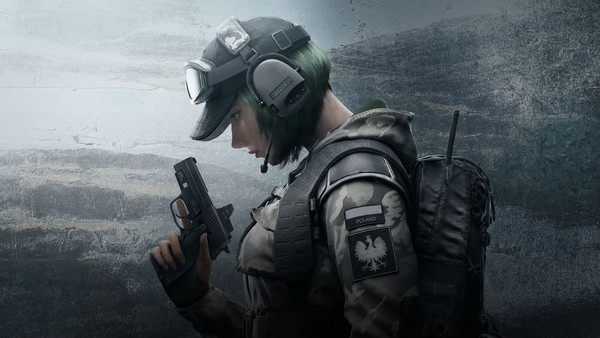
1. Rainbow Six: Siege

Rainbow Six: Siege is one of the best games of the entire generation so far, but it came so close to not even happening. After popularising the series in the mainstream with the two blockbuster Vegas titles, Ubisoft looked for a way to increase the appeal of the IP even further, attempting to move away from the tactical roots the games were originally built on in favour of a more straightforward, linear modern-military game.
Like every FPS in the late 2000s, it was an attempt to ape Call of Duty, and while the in-development Rainbow Six: Patriots looked very cinematic and pretty in screenshots, it didn't really feel like Rainbow Six. Ubisoft kept chugging ahead for years with no updates, until it canned the project outright in 2014, six years after the last game released.
The next time we saw the franchise was a couple years later with the new game, the multiplayer-orientated Siege. The direction of the new project was a stroke of genius, as while an online-only instalment initially seemed a bit like Ubi jumping on the bandwagon, it allowed the series to tap back into the high-stakes tactical gameplay that made it famous in the first place.
It could have gone so terrible wrong (and almost did, considering the game's state at launch), but Ubi were commited to their vision, and rightfully so.