10 Outdated Video Game Design Tropes That Must Die
What are we, 12 years old?

Despite what the doom-and-gloom crowd might tell you, video games are better than ever - there's more diversity, artistry and choice than in the history of the medium, and it's only set to get better as time marches on.
That said, the state of things is also pretty damn far from perfect.
As technologically advanced as gaming has become in 2019, some developers aren't quite so quick to move with the times, but have instead leaned back hard on some of the laziest, most outdated and straight-up out-of-touch ideas possible.
Granted, it's rarely entirely the fault of "lazy devs" - publishers can exert cynical control over them for their own financial interests, games can be rushed to market, and occasionally it's a case of good intentions going horribly wrong.
These 10 trends are all pervasive throughout video games, often regardless of genre, and though they're frequently complained-about, it sadly doesn't seem like most of them are going anywhere any time soon. At least until players start voting with their wallets, that is.
There was a time when these tropes felt fresh and innovative - mostly, anyway - but in 2019, they've just got to go...
10. Forced Walking Sections

Because developers realised they couldn't really get away with unskippable cutscenes acting as disguised loading screens anymore, over the last decade-or-so there's been a steady increase in the amount of forced walking sequences in narrative-driven video games.
These sequences will typically serve as a break in the action, as the player is forced to slow-walk while talking to another character and being spoonfed plot exposition.
Some especially egregious examples include Gears of War, The Last of Us, Red Dead Redemption II and, most recently, Anthem, which only allowed players to move around their home hub of Fort Tarsis at an agonising snail's pace, presumably in order to pad out the game's miniscule amount of launch content.
And even if developers aren't doing it to hide loading screens or elongate the experience, it demonstrates a pure lack of confidence in the game's ability to captivate the player, or that players will actually want to listen to the story.
Slowing the player to a crawl and forcing a drawn-out spiel on them is never good design, and honestly, you're better off just giving players a cutscene instead, so they can at least put the controller down for a few minutes.
Instead, in the misguided quest for gameplay that's more "immersive" and "cinematic", we have these painfully distended asides that force the player along a rigid, mostly fixed track.
9. Detective Vision
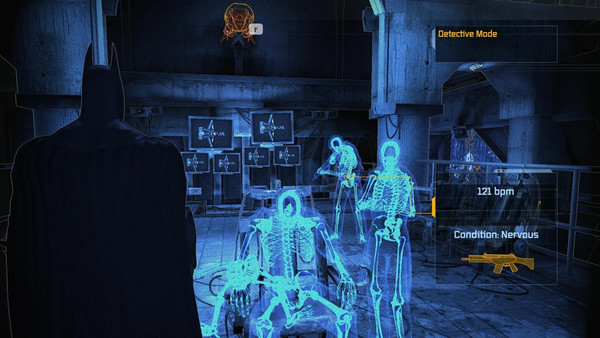
Ever since the release of Batman: Arkham Asylum, the "detective/magic vision" trope has become exceedingly popular, especially in open-world third-person action games.
The mechanic typically allows players to switch to an alternate viewing mode where they can see an enhanced perspective of their environment, singling out enemies, combat possibilities, collectibles and so on.
It's appeared in the likes of Assassin’s Creed, Dishonored, The Last of Us, Tomb Raider, The Witcher 3, the more recent Hitman games and Horizon Zero Dawn, to name just a few.
It's basically a lazy way for developers to hold the player's hand and ensure that everyone can make their way through the game no matter what.
But ultimately it just diminishes the incentive of players using their own observational faculties to progress, and also encourages them to ignore their beautifully-rendered surroundings in favour of the typically washed-out new viewing mode.
Though these modes can usually be toggled on or off, the fact that games are designed around them often means that players have no choice but to switch to a neon-tinged view of the action.
8. Stopping The Game To Dump Exposition
Exposition-based "tell, don't show" storytelling is one of the laziest and most irritating narrative devices that a game can employ, and it's used constantly.
While games like Uncharted generally do a solid job of keeping the laboured chit-chat minimal and allowing a lot of the action to do the real talking, too often games will simply stop the player dead in their tracks and vomit up reams of robotic information about the plot and characters.
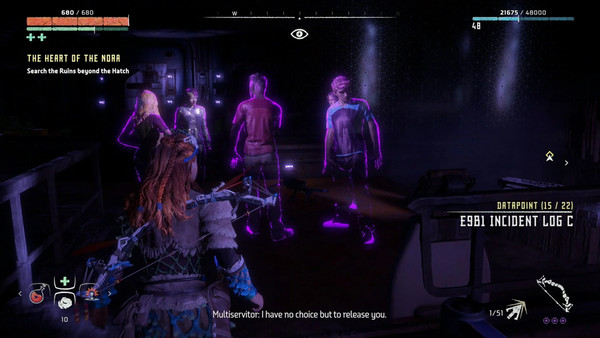
Perhaps no AAA game in recent memory has done this quite as blatantly as Horizon Zero Dawn, which throughout its campaign required players to watch numerous post-mission hologram recordings which ladled out the plot in the driest and most yawn-inducing fashion possible.
For a game otherwise overflowing with creative ideas, it was embarrassing.
The Metal Gear Solid franchise is the undisputed king of this trope, though, with Hideo Kojima frequently serving up cutscenes of up to an hour in length which mechanically outline the hilariously convoluted plot.
As entertainingly barmy as the MGS games are, they're also a prime example of how less can be more. Nobody needed to sit through a solid 40 minutes of gasbagging - much of it in visually bland codec conversations - just to get to the final boss in MGS2.
7. Pointless Collectathon Tasks
The uptick in open-world games trying to compete for players' time over the last few years has seen these titles increasingly saddle players with an absurd number of peripheral content.
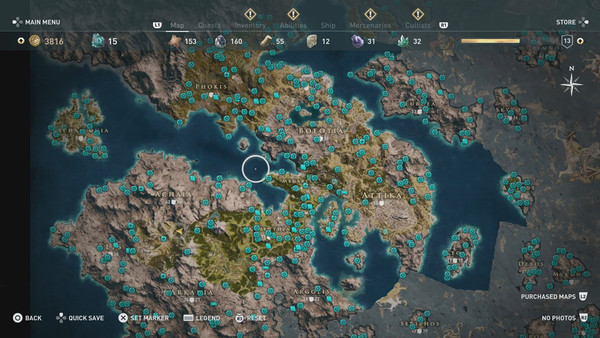
And though this is sometimes in the form of meaningful side missions, it too often devolves into developers daring players to hoover up hundreds if not thousands of meaningless collectible items scattered around the map.
The Assassin's Creed games have practically taken this to the level of self-parody in the past, flooding the map with more icons than any single human being can possibly keep up with.
In actual fact, it's simply an attempt to keep the player glued to the game as long as possible, and therefore increase the probability that they'll splash out on microtransactions or become psychologically addicted to the game - and therefore the IP.
A player who cuts through the main questline and moves directly onto another game is a publisher's worst nightmare, and so the inclusion of junky tat to be scooped up for tens if not hundreds of hours is often mandated to developers from on high.
It's almost as cynical as gaming gets. Almost.
6. Tailing Missions
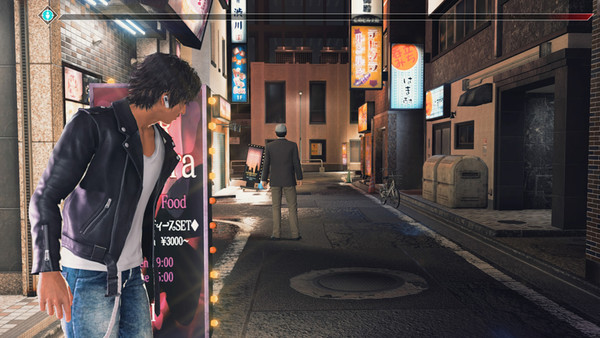
Ah, the tailing mission, where players are tasked with following a perp, but make sure you don't get too close, or you'll spook the mark and they'll flee the area!
The Grand Theft Auto franchise is largely credited with originating the tailing mission, where players would follow a perp in their car, and have to maintain a distance where they neither scared them off nor lost sight of them.
Like early stealth, escort and water missions, GTA's tailing missions were actually pretty novel and fun, but like any vaguely inventive mechanic, it's adopted by the industry as a whole until it's driven towards the Earth's core like a giant tent peg.
The Assassin's Creed series is especially guilty of this, generally using tailing missions to dryly deliver exposition, while failing to complete the tail as the game intends results in a Game Over.
Metal Gear Solid 4: Guns of the Patriots also features an infamously frustrating tailing mission in Act 3, and most recently, Sega's Judgment misguidedly over-indulged in tedious tailing.
These missions are almost never fun and just feel like bloated dead-weight intended to piss players off, especially as making even a minor mistake so often results in a fail state.
5. Story Choices That Ultimately Mean Nothing

If you're playing a game for the story, there's nothing more infuriating than realising that the supposed narrative choices you're making throughout the game have little-to-no bearing on the overall outcome of the plot.
This was most famously the case in Mass Effect 3, which took the choices you made over the course of the three games and effectively cast them aside in favour of a lame "pick a colour ending." This wasn't what fans were promised, and they duly revolted.
Hell, FIFA's new The Journey story mode is even guilty of this, promising a narrative that will evolve tailored to your footballing success, only for the game to force the player into contrived, canned dramatic scenarios that don't reflect your actual performance (such as being loaned out even when you're scoring goals left and right).
Then there are games which seem to give the player impactful choices, only for it to amount to nothing.
The prime offender might be Telltale Games, whose episodic adventure titles, though fun, present an hilariously transparent illusion of choice at best, because developing enough permutations to give a true impression of "freedom" presumably isn't financially viable.
4. The Hero "Almost" Falls To Their Death

The action-adventure genre loves to tease players by throwing them into mortal peril as much as possible, but too often these games rehash the same tired shtick to the point that it rouses more of a groan than a gasp.
The Uncharted and Tomb Raider reboot franchises are both terribly guilty of this, of leaving the protagonist hanging gingerly off a cliff or only barely able to reach a platform, or hell, even have the platform crumble away beneath them.
We as players know that the game isn't just going to randomly kill the hero out of nowhere, so these desperation beats ultimately come across incredibly hollow.
At best, it typically requires the player to spam a few buttons in order to free themselves, and within a few hours of play, it quickly feels totally played-out.
3. Pandering Fan Service
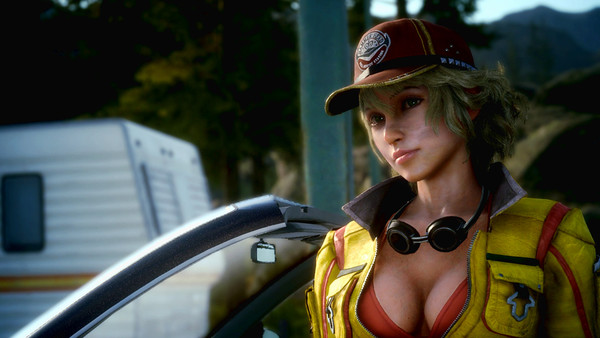
There's nothing wrong with media reflecting the audience's healthy interest in sex, but it's also fair to say that video games don't have a particularly good track record when it comes to treating players - or women - with much respect.
The annals of gaming history are littered with titles that feature wildly, unnecessarily sexualised characters, for no other reason than to pander to horny nerds who, executives and designers believe, can be lured in with a giant pair of boobs.
Perhaps the ultimate instance of this trope is Lara Croft, whose gigantic triangular rack helped make her a pop-culture phenomenon, but mercifully, the recent reboot finally made her more realistically proportioned (and far less of an object).
But Lara Croft is far from an outlier.
Resident Evil 3: Nemesis kits Jill Valentine out in a tube top and skirt combo, Halo makes the character of Cortana needlessly sexy, the Batman: Arkham series takes exactly the path with Catwoman your gutter brain would expect, Heavy Rain features pointless shower nudity that adds nothing to the story, and so on.
The most prolific franchise offenders, however, are probably Metal Gear Solid and Final Fantasy, which indulge this trope at least a few times in every game.
The first Metal Gear Solid literally asks the player to watch Meryl's ass jiggle in order to figure out which soldier she's disguised as, while Metal Gear Solid 3 features countless suggestive glimpses at a scantily-clad Eva, and then Metal Gear Solid V goes fully off-the-rails with the skimpy-clothed Quiet, who is dressed as such for the dubious reason of absorbing nutrients through her skin. Hmmm.
As for Final Fantasy? Final Fantasy X had Lulu, whose watermelon-sized breasts were barely contained beneath a coat held up by a few belts, while Final Fantasy XV had Cindy, the beautiful mechanic who bore her cleavage at all times, no matter the possibility of spilling hot engine oil on her chest.
It's when practicality is sacrificed in favour of cringe-worthy skin-peddling that it becomes problematic, though it's also fair to say that some games are so about their sexiness that it's decidedly easier to tolerate - as in Dead or Alive, Soulcalibur and especially Bayonetta, which basically feels like a parody of over-sexed video games.
But in a medium that's still struggling to be taken seriously by a lot of the world's adults, it sure would be nice if developers didn't cynically assume we're all out-of-control horndogs who won't play a game unless it's full of sexy imagery.
2. Forced "Optional" Missions
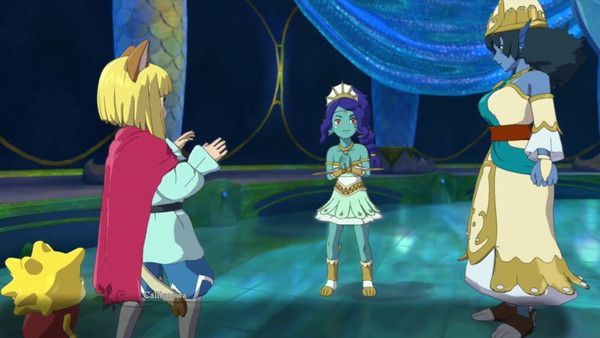
Pretty much any major RPG or open world game these days will feature heaps of additional, optional side content alongside the main campaign, and often these peripheral missions will far outweigh the size and length of the core story.
But optional is the keyword here - otherwise, why not just make it part of the core questline?
Looking at you, Ni No Kuni II: Revenant Kingdom, a game so flabbergastingly disappointing for numerous reasons, least not that it throws up several brick walls over the course of the story, requiring players to complete what were initially suggested to be optional side missions.
The player has to recruit a certain number of citizens to their kingdom throughout the game, requiring them to participate in short yet soul-sappingly dull fetch quest missions for hours on end.
It's not fun, and is clearly just a listless attempt to pad out a game that doesn't have enough meaningful content.
It's not too common compared to most of the tropes on this list, but it's becoming increasingly common in the RPG genre - Xenoblade Chronicles 2 also pulled the same trick back in 2017.
1. Unreasonably Grindy Unlock Requirements

Grinding is a core component of many games, especially RPGs, but in more recent times it's a practise that's become roped into the gameplay loop of some unconventional genres, such as shooters and sports games.
This is entirely the fault of microtransactions-based game economies, which place desirable unlockables in the far distance and present players with two options - tough it out the hard way for potentially hundreds of hours to unlock everything, or just buy some virtual currency and unlock it in seconds.
2K's WWE and NBA games are hugely guilty of this, as was EA's trainwreck that was Star Wars Battlefront II.
These games all thoroughly disrespected paying customers by dangling a carrot miles away and allowing them the "opportunity" to effectively buy their time back with a workaround.
It's pathetic, and undermines the sense of reward players get, because when you unlock a character or item after giving it your all and truly earning it - in something approaching a reasonable runtime, no less - it feels great.
Knowing that someone else has spent £50 on tokens and done it with a few clicks creates a wholly uneven and unsatisfying player dynamic that's just gross.
Microtransactions for cosmetic items aren't inherently a bad thing, but when it comes to actually valuable unlocks?
It sucks, especially when you consider loot box mechanics and the clear desire of video game publishers to make players addicted to the dopamine rush of opening a box, no matter the contents.