10 Out-Of-Character Moments In Video Games That Fans HATED
Look at how they massacred my boy!

It's imperative for gaming brands to update themselves in order to stay relevant. Though Cloud Strife and Kratos have gone through major changes over the years, they are the same people at their core.
Certain traits may be tweaked, but it's important that the essence of their personality remains the same. Solid Snake will always do what's best for the world. Geralt will never back down from a fight. Link never speaks in The Legend of Zelda. (The Philips Cdi games don't count.) If these characters behaved differently, it wouldn't sit right.
However, there are moments in gaming when an iconic hero or villain acts so oddly, players can't help but think, "They would never do that!"
To be fair, anyone can go against their nature in an extreme situation. After all, a pure soul may become aggressive if a loved one is threatened. Also, watching someone acting atypically can be a defining moment, since it highlights character growth or an important story beat.
With that said, these uncharacteristic moments came across as unintentionally hilarious, stupid, or downright insulting. Sometimes, the out-of-the-blue incident is down to bad writing. Other times, you'd swear the developers didn't understand the character in question.
Whatever the reason, watching these gaming characters acting the way they did caught everybody off-guard.
Spoilers follow.
10. Lara Croft Pulls Out A Cursed Dagger - Shadow Of The Tomb Raider

Few IPs have rebooted themselves as successfully as Tomb Raider. Though the modernised version of Lara Croft has the same unquenchable passion for adventure, she's more emotionally vulnerable than her classic counterpart. It's also easier to see this Lara as a genuine human being, since she exists in a more realistic setting.
However, this makes the opening of Shadow of the Tomb Raider all the more infuriating. After discovering a Mayan temple, Lara stumbles upon the cursed Dagger of Chak Chel.
Knowing her rival, Pedro Dominguez, intends to use the Dagger for his evil, Lara removes the artefact from the chamber. When Dominguez takes the Dagger from Lara soon after, he alerts her that her actions have triggered a Mayan apocalypse called The Cleansing.
However, Lara knew what would happen since the temple's murals warned looters not to remove the Dagger. Also, Lara read this warning aloud, so she was fully aware that taking the enchanted blade would have catastrophic consequences.
Even though the classic Lara was brazen and cocksure, she would never be dumb enough to pull a stunt like this. Considering this Lara is supposed to be mature and considerate, it makes less sense she would do something this thoughtless and foolish.
9. The Jedi Flip In The Eleventh Hour - Knights of the Old Republic II: The Sith Lords

Throughout the KOTOR sequel, the protagonist, The Exile, can choose whether to embrace the Light or Dark Side, which has a drastic effect on character relationships and the overarching narrative.
However, there are times where NPCs reactions to your behaviour doesn't make sense. After following the Dark Side, a trio of Jedi, Vrook, Zez-Kai, and Kavar will confront The Exile, attempting to cut off their connection to The Force.
If The Exile chooses the Light Side, the Jedi will respond by... doing the exact same thing.
Now, some context is required to understand the situation. At this point, the Jedi have discovered The Exile's force powers have been corrupted, which caused countless deaths. Despite being peacekeepers, Vrook, Zez-Kai, and Kavar feel like they have no choice but to take The Exile down.
With that said, the Jedi's actions here don't match their personalities. Zez-Kai has repeatedly emphasised the fallibility of the Jedi Order and how they must avoid compromising their principles. Kavar was more sympathetic towards The Exile's plight than anyone, so it's jarring to see him turn on his friend in a heartbeat.
Vrook was depicted as cautious and suspicious so his hostile intentions towards The Exile is logical. However, the last-minute heel turn of his companions doesn't add up.
8. Mia & Sheba Pull A Cruel Prank - Golden Sun: The Lost Age
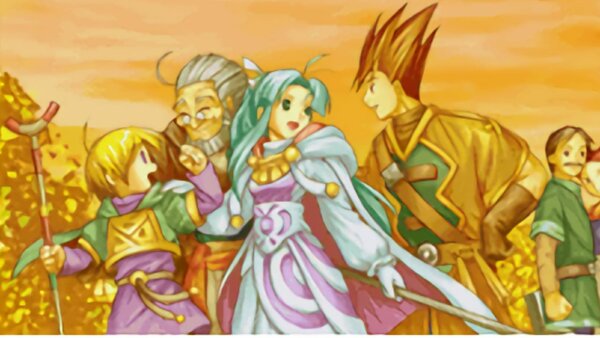
Golden Sun follows a group of magic-users called Adepts who have vowed to stop evil forces from harnessing the lost art of Alchemy. The second entry, Golden Sun: The Lost Age, concludes with Alchemy being revived near the heroes' home of Vale, resulting in its destruction.
One of the Adepts, Garet, is devastated, assuming his parents died in the blast. Fortunately, the citizens of Vale made it out in time, meaning Garet's family are safe and sound. His companions, Sheba and Mia, are aware of this, so they should reassure Garet that his mother and father aren't dead.
Instead, they laugh at the grief-stricken hero and call him a baby. Despite the fact Garet sees his family minutes later, he absolutely believed his so-called friends were belittling his grief.
Not only is this a cruel prank, Sheba and Mia never displayed his sort of behaviour before. For the last 30 hours or so, the pair have been depicted as kind, considerate and noble warriors. Although this type of prank is more befitting of Cartman, Sheba and Mia would never act this way in a million years.
7. Chris Becomes Superhuman - Resident Evil 5

Resident Evil 5 isn't the worst entry in the main series, but it has the biggest jump-the-shark sequence. Though Capcom's survival horror franchise is renowned for its campy nature, RE5's finale was downright cartoonish.
After Chris Redfield and Sheva Alomar corner the big bad, Albert Wesker, on his plane, a fight breaks out, causing it to crash into an active volcano.
Now, having the final confrontation over a magma-filled river is already over-the-top. But this sequel still felt obligated to crank it up a notch.
During the battle, Chris has to push a humongous boulder into the lava, and use it as a platform to reach the other side. Now, using brute force to move a two-ton rock is a stretch, but players would accept it, considering they've seen the heroes pull off ridiculous feats like this all the time.
But then, Chris inexplicably starts punching the boulder, causing it to topple into the lava below.
Chris is a swole guy with biceps to spare, but no human being could move a boulder like this, especially without breaking every bone in their fist. After this display of strength, Wesker should've asked Chris in all sincerity if he was secretly the Hulk.
Even though this showdown was meant to be epic, Chris' unexplained super-strength was just dumb.
6. Alfred Gives Up On Batman - Batman: The Enemy Within
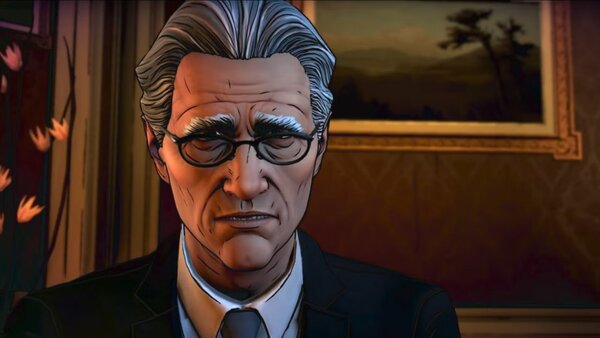
Like its predecessor, every decision made in Batman: The Enemy Within affects how characters react to you. Because of this, each interaction carries a lot of weight.
Regardless of the choices made, the story concludes with Alfred telling Bruce Wayne he's become disillusioned by Batman's crusade, inspiring him to leave Gotham. The player can then decide to let Alfred go or encourage him to stay by hanging up the cape for good.
As shocking as this ending is, the idea that Alfred would abandon his duties is baffling, considering he's been there for Bruce through thick and thin. Alfred maintains the stiff upper lip, makes jokes, and encourages Bruce to never surrender, no matter how bad things get. Alfred disagrees with some of Bruce's methods, but there's no indication he's thinking about leaving prior to the epilogue.
Now, you could argue that seeing the Joker's influence on Gotham sent Alfred over the edge. But Batman's confidante has been through far worse. Depending on your choices in the previous game, Alfred lost an eye or had his ear partially sliced off. Though these incidents would break the average man, Alfred came out stronger than ever.
As a result, this last-minute dilemma feels like it was inserted, purely to end the main campaign with one last emotional conflict.
5. Quiet's Rain Dance - Metal Gear Solid V: The Phantom Pain
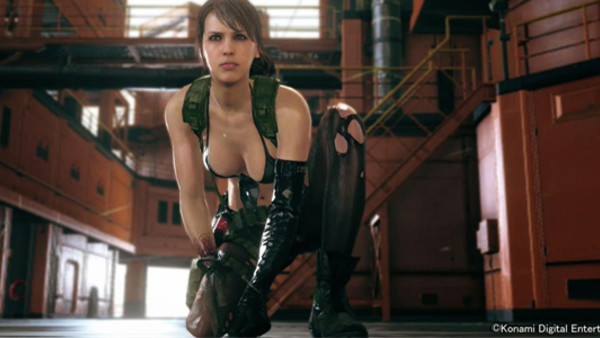
Metal Gear Solid has never shied away from sexualising its female characters, and the fifth instalment is no exception. In MGSV: The Phantom Pain, Big Boss has a run-in with a soldier called Quiet who drinks and breathes through her skin, compelling her to wear skimpy clothing that teeters on semi-nudity.
Initially, Quiet comes across as obvious eye candy. But after delving into her complex backstory, you start seeing her as a three-dimensional character.
Though she's a ruthless killer, she's undergone staggering hardships, which drove her to attempt suicide. Although many of her actions aren't justified, it's easy to see where she's coming from once you get to know her. And when it's all said and done, you should see Quiet is far more than a sex object.
That is until the rain dance sequence, of course. If Big Boss develops a strong bond with Quiet, it'll unlock a scene of the scantily clad soldier writhing and gyrating in the pouring rain for two minutes straight.
Quiet is basically fan-service incarnate, but the way she behaves in this sequence completely goes against her character. Hideo Kojima's team weren't subtle with Quiet's sex appeal by any stretch of the imagination, but they went way too far here.
4. Mega Man Becomes Murderous - Mega Man VII
Few platformers are as formulaic as Mega Man. Every entry in Capcom's classic sidescroller involves the titular android traversing through multiple levels and battling eight Robot Masters before squaring off against Dr. Wily in his skull-themed fortress. Though Mega intends to arrest Wily, the maniacal scientist always gets away in the nick of time.
Now, it must be tedious for Mega Man, especially since he has to endure a myriad of enemy robots, spikes, lava pits, and those infuriating disappearing block sections before facing Wily for the umpteenth time. Although a lesser hero would snap, the Blue Bomber's loyalty to the good fight never wavers.
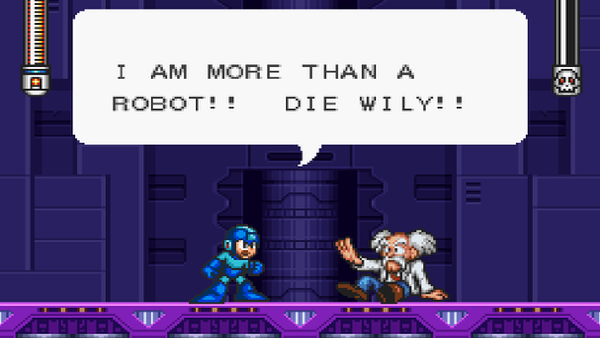
Well, usually. After besting Wily in Mega Man VII, the deranged inventor apologises for his wrongdoings and agrees to "go quietly".
Without warning Mega Man whips out his arm cannon, telling his arch-nemesis that "I'm gonna do what I should've done years ago." Just to ensure the loveable robot's actions can't be misconstrued, he then yells, "Die, Wily!"
Despite the fact Mega Man's murderous intent seems out of the blue, it's understandable considering the crazed doctor has evaded justice about a dozen times. (The fact Wily escapes seconds later strengthens this argument further.)
Although Mega Man always tries to be noble, this climax proves he has a breaking point.
3. Raiden Kills Liu Kang - Mortal Kombat (2011)
When Mortal Kombat 4 underperformed, Ed Boon and John Tobias knew they needed to do something bold for the follow-up, which led to them killing off the central hero, Liu Kang.
Although this ballsy move paid off, die-hard fans were peeved they couldn't play as EarthRealm's champion. As a result, Liu Kang was brought back as a zombie in the follow-up.
As the series continued, there were criticisms directed towards Raiden, since he was gradually moulded into a darker character, even though he was initially perceived as an incorruptible force for good.
So, when the spine-ripping gorefest was rebooted in 2011, veterans were happy to see the original status quo had been retained. This instalment, simply called Mortal Kombat, had its fair share of changes, but felt like the same story in essence. Also, it was nice to see Liu Kang and Raiden joining forces to defend EarthRealm from the forces of evil once again.
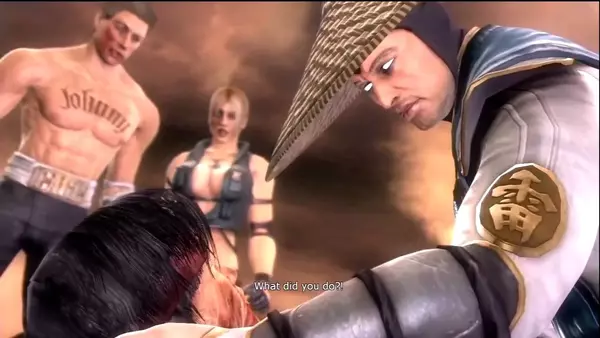
But at the end of the Story Mode, the pair's relationship turns sour on the flip of a dime. When Liu Kang challenges his mentor's plan to defeat outside forces, the thunder god kills him. Weirder still, the Shaolin monk is brought back as a zombie in the sequel. (Why are the developers obsessed with Zombie Liu Kang?)
The fanbase hated this plot-point so much, Mortal Kombat 11 retconned it, explaining that Raiden was under the influence of a Titan called Kronika (who had never been mentioned before).
2. Yuna's Entire Story Arc - Final Fantasy X-2
The monumental success of Final Fantasy X inspired Square to launch a direct sequel, which was unprecedented at the time. Though Yuna's summoning abilities was integral to FFX's plot, the game concluded with her being unburdened from that role. On top of that, Yuna watched the love of her life, Tidus, die before her eyes. As such, it was obvious Yuna would be very different in Final Fantasy X-2.
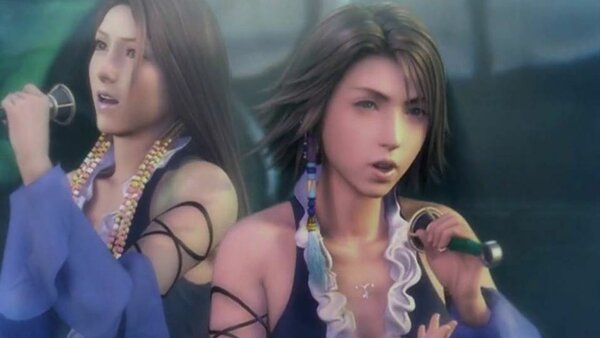
But nobody expected her to be revised this much. The Yuna we knew was a calm, reserved, and self-sacrificing warrior who carried the weight of Spira’s fate on her shoulders. But in the follow-up, she had been reimagined as an outgoing and playful pop-singer.
Now, you could argue Yuna simply let loose since she was finally free from her summoning duties. Rather than wallowing over Tidus, she found a more positive outlet for her grief.
With that said, virtually none of the classic Yuna is present in this character. Also, having her discard her priestess robes and don crop tops and skirts feels like a blatant attempt to oversexualise her.
Even though FFX usually maintained a serious tone, watching Yuna and her teammates, Rikku and Paine, acting more upbeat and whimsical gives off J-pop Charlie's Angels vibes.
1. Samus's Personality Transplant - Metroid: Other M
The Metroid franchise has remained remarkably consistent, which makes its only mainstream dud, Metroid: Other M, stand out even more. Though graphically stunning, the Wii exclusive was unfulfilling due to its weak story and reduced focus on exploration.
However, Other M's biggest problem was how it mishandled the protagonist, Samus Aran. It's been established since her debut 25 years earlier that Samus is a fearless warrior who would battle any foe, even if they were a hundred times her size. Time and time again, the cosmic bounty hunter has jumped into the jaws of death without hesitation.
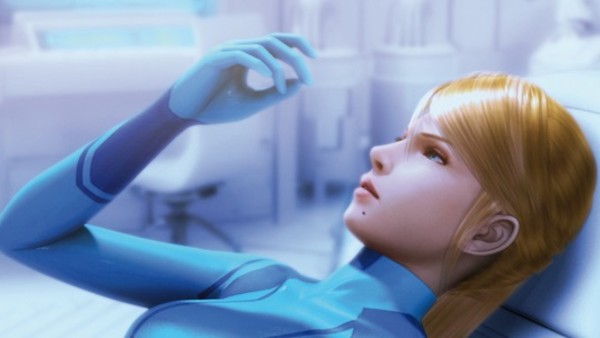
Although Other M had the perfect opportunity to flesh out Samus, the way she's portrayed is a betrayal to everything the character stands for. This time around, the alien-blasting badass is depicted as whiny, unassertive, and annoying. (The bad voice-acting doesn't help either.)
On top of that, Samus becomes noticeably frightened when she confronts her most recurring enemy, Ridley despite the fact she's defeated the malevolent pterosaur five times in this past. And in all of those previous encounters, the space-hopping heroine never displayed an ounce of fear.
This incarnation of Samus is so disconnected to how she's been depicted before or since, she might as well be a different character.