10 Nintendo Gaming Innovations That Changed Everything
Without Nintendo, you wouldn't even be able to save your progress - think about THAT.
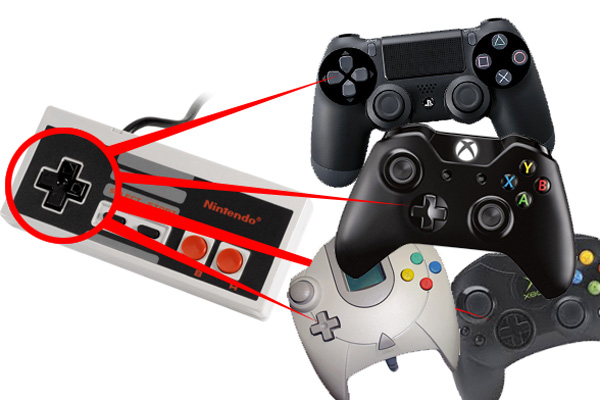
10. Shoulder Buttons On Controllers

9. Game Save Files
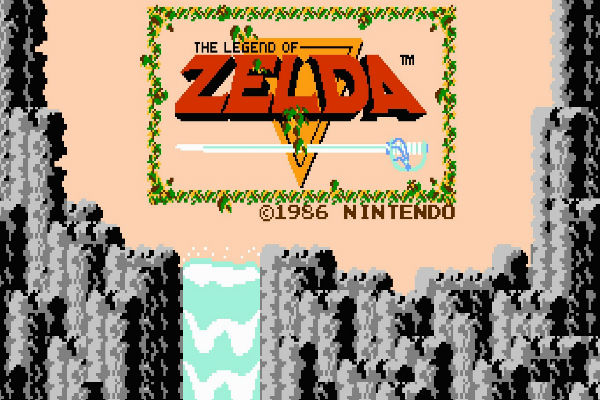
Not having save files for games now is inconceivable. Roaming open-world games could not function if you had to start from the beginning each time you turned on the console - something Nintendo realised when they developed The Legend of Zelda on the NES.
An epic action-adventure game, 1987's TLoZ had a vast map and story that was not intended to be completed in one sitting. So, Nintendo shipped the game with a save feature, made possible by a battery inside the game cartridge. It was not long before save files became another industry standard first brought to market by Nintendo. Up until the release of TLoZ, many NES games allowed players to track their progress by forcing them to type in long, elaborate passwords - whereas other titles didn't let you save at all. Can you imagine doing that with Fallout 4?
8. Controller Feedback (Or 'Rumble Technology')

Lylat Wars on Nintendo 64 is a wonderful game, with exciting gameplay, tight controls, a fun campaign mode and a surprisingly aggressive multiplayer mode. All these factors made it one of the N64's great titles, but it stands out for making history in one particular way.
Copies of the game were bundled with a Rumble Pak, a peripheral that fitted into the back of the gamepad and caused it to shake to simulate things happening in game. The Rumble Pak jolted in time to your damaged spacecraft, pulsed ominously if your Arwing was in particularly bad shape and jolted loudly if you crashed. It may have eaten through AA batteries and made the controller twice as heavy, but the Rumble Pak helped to make games more immersive. A huge number of titles on the system ended up having Rumble Pak support, and its success made Sony release the Dualshock. Can you think of a current-gen controller that doesn't rumble?7. Motion Control
Nintendo built the Wii around the entire concept of motion control, with an ugly TV remote-like controller and sensor bar that sat on top of your television. The Wii looked like a huge gamble from Nintendo but a decade later, it's safe to say their gamble worked.
The bowling and tennis mini-games of launch title Wii Sports were particularly memorable, perfectly showing off the potential of multiplayer motion control straight out of the gate. Microsoft and Sony responded with motion control technology of their own after the Wii's success; though neither Kinect or Playstation Move has proven overly successful, their mere existence shows the impact the Wii had: with over 100 million units sold, its success is undeniable. Over time casual gamers became disinterested by the Wii and the technology has never been able to match the accurate input of a standard gamepad. Wii Sports bowling sure was a blast though.6. Wireless Controllers

Nintendo were not the first company to release a wireless controller; that honour goes to Atari, who released wireless joysticks for the Atari 2600 back in the 1980s. Atari's efforts were generally unsuccessful, with the CX-42 gamepads proving cumbersome and having a terrible battery life. Nintendo dabbled with the idea themselves for the NES but could not get them to work reliably, so the idea of wireless controllers was shelved for years.
Then Nintendo released the Wavebird for the Gamecube. The Wavebird was larger than a normal Gamecube joypad but retained the original's design and was light enough to use easily. It used radio frequency technology like the CX-42 gamepads, and the success of the Wavebird led to all future consoles embracing wireless controllers as standard. No more having to untangle the cables before playing your favourite games. Pure bliss.
5. Four Player Multiplayer
Any gamer of a certain age probably remembers Goldeneye on the Nintendo 64 with a rose-tinted fondness. It might be ugly as sin and handle like a large jet now, but in the '90s this was the height of first person shooters.
Those who played it will certainly remember the multiplayer mode; from the frustration of being shot with the Golden Gun by Oddjob to the brilliance of the Facility map, everyone will have their own memories. This was all made possible by the four controller ports on the front of the console. Before the release of the N64 most consoles had just two controller ports as standard. Games like Goldeneye, Mario Kart 64, Super Smash Bros and WWF No Mercy proved that while gaming may have been a largely solitary experience in the past, people wanted to play together. The current era of online mass multiplayer owes a lot to Nintendo's realisation of the importance of multiplayer.
4. The D-Pad

The humble directional pad seems like an obvious choice for early gaming controllers now, but its intuitive design was one innovated by Nintendo. In the early days of home gaming, many releases were ports of arcade favourites and they aped the feel of the original releases by using joysticks.
1982 saw the release of Donkey Kong on the Game & Watch, a line of handheld electronic games. Each Game & Watch featured a single game, playable on an LCD screen. The Donkey Kong version was notable for its early use of dual screens, but it is also the first piece of video game hardware to implement the cross-shaped directional pad. The pad was designed by Gunpei Yokoi, best known as the creator of the Game Boy.
The success of the D-Pad on Game & Watch led to its inclusion on the NES controller a year later, and before long controllers on other systems implemented D-pads for their own joypads. Other companies may have modified and evolved the humble D-Pad but Nintendo's is the original and the best. Nintendo eventually moved away from using the D-Pad as the primary form of controlling games with the next entry on this list.
3. Thumbsticks
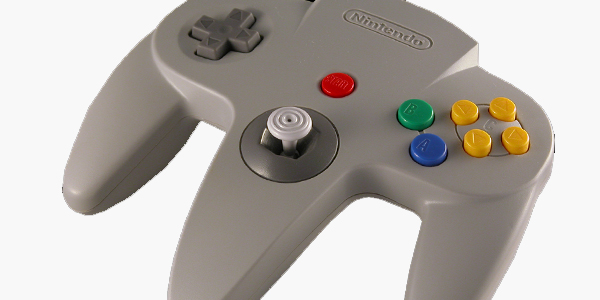
Thumbsticks launched on controllers as far back at the 70s, with the 1292 Advanced Programmable Video System and Atari 5200 among the first to try the idea out. Despite these dalliances, the D-Pad remained the control input of choice for most controllers until the release of the three-pronged Nintendo 64 controller in 1996, which had a control stick that allowed for precise and tight control of a character in 3D environments.
This was proven perfectly by the classic launch title Super Mario 64. Players could make the fat plumber hop, skip and jump around each level with such grace and accuracy that it was a revelation. Another launch title, Pilotwings 64, also used the control stick to fine effect, so much so that Sony quickly incorporated thumbsticks into their own Dual Analog controller - it's pretty hard to imagine gaming without them now.
2. Portable Gaming
With the advent of smartphones and tablets, people take for granted that they can play video games wherever and whenever they like. Back in the 70s, the best you could do was play with a calculator.
Nintendo's forays into portable gamingcame with the aforementioned Game & Watch series of portable devices. Dozens of games were released on Game & Watch units, and they proved the forebear for one of Nintendo's biggest successes, the Game Boy. Released in 1989, the grey brick with the green screen was a huge hit, and combined with its later iterations, sold over 118 million units worldwide. The flagship title was Tetris, which played a big part in the console's success.The Game Boy may be gone now, but its influence is still felt today, with mobile gaming the quickest growing sector in the industry. In a way, you can thank the Game Boy for Angry Birds.
1. Proper 3D Gaming On Consoles

In the mid-90s, gaming was on the cusp of a revolution; side scrolling platformers and 2D fighters were the norm, but with the release of the PlayStation and N64, 3D gaming was on its way.
Nintendo had dabbled with 3D environments on the SNES, with StarFox and F-Zero both providing 3D gaming experiences for the first time on home consoles. They were nothing compared to what was to come: Super Mario 64.
Arguably the finest launch title ever released and a shoo-in for title of the greatest platformer ever made, Super Mario 64 was a ground breaking, hugely innovative game. It created a new archetype for 3D gaming, with Mario moving through all three axes in space seamlessly. It looked great too, with fully rendered 3D polygons as opposed to two dimensional sprites. For a few years, 3D platformers were all the rage. Super Mario 64 laid out the template for how to do 3D gaming right. There may have been other 3D games out first, but none were as important. None changed the gaming landscape in the same way, and no other game showed the world that 3D gaming was definitely the future. Nintendo are the most storied and prolific company of them all - were there any major innovations we missed?