10 Most Ridiculous Things Gamers Can't Stop Arguing About
You Press UP To Look DOWN, And Press DOWN To Look UP. OBVIOUSLY.

Before we begin in earnest, the irony of writing an article about the things gamers argue over, which itself is likely to provoke arguments, is not lost here.
Since the good old, formative days of eighties and nineties gaming, players have nailed their colours to a particular mast, often throwing scorn and derision at competitors in the process.
Whether these disagreements relate to hardware, software, characters or controls, some gamers LOVE a good argument, as ridiculous as it may seem to others.
Gamers, however, are certainly not alone in their preternatural ability to vehemently - and often publicly - disagree with each other.
Whether Blur Vs Oasis, Slytherin Vs Gryffindor, or normal Kit Kat Chunky Vs Peanut Butter Kit Kat Chunky, the human capacity to argue about seemingly inconsequential things should not be underestimated.
Gamers revel in tribal arguments, defending their interests with passion and fervour.
Obviously this does not apply to EVERY gamer, with most happy to live and let live with peers who may not share particular gaming predilections, instead appreciating all aspects of this beloved hobby.
There are, however, countless arguments new and old which refuse to go away...
10. Random Encounters

As we know from games like Pokemon, Final Fantasy, and everything in between, random encounters/battles are a mainstay of the role playing genre.
Some players love them, some detest them.
We've all been there; you're traversing the overworld, wandering through the tall grass, attempting to complete a side quest or simply hit your next waypoint when, WHAM (not the band), an enemy appears right on top of you and battle commences, ready or not.
Whilst games like Pokemon Sword/Shield are getting better at signposting these encounters by openly showing the enemies on screen, allowing you to choose whether not to engage, many more titles still insist on hiding these encounters from the player.
Taking Octopath Traveller as a modern example of hidden, random encounters, leads seamlessly onto the next point of debate: their frequency (which - granted - can be adjusted in certain titles).
It wouldn't be overstating matters to say that some players DREAD traversing the overworld, as they know all too well that with every tenth step they take, BOOM - a random battle will ensue.
Other gamers, however, adore random encounters, as they allow for the opportunity to grind out additional, otherwise-squandered XP, to more quickly level up their party.
9. Camping

...or "Sniping" as it should really be called.
For reasons best known only to themselves, there is a substantial, vocal contingent of gamers who appear to have a HUGE problem with the perfectly valid, tactically sound, and all-round brilliant strategy of hiding in a bush for the majority of an online match in shooters like Call of Duty and Fortnite.
This commendable tactic requires both skill and - most importantly - patience to master, as it can involve literal minutes at a time of sitting there, controller in hand, doing absolutely nothing - you don't even need to be holding the controller, to be fair.
Professional, God-tier camp...sorry "snipers", are sometimes even able to go and make a cup of tea and a sandwich, then come back and resume their high-intensity sitting as if they'd never left the room in the first place.
Truly impressive stuff.
However, far from just sitting there doing nothing, the sniper must be ready to take the all important shot upon seeing a hapless "runner" stumble blindly into their sights.
Kill in the bag, points on the board, and kettle back on the boil, the sniper resumes their high-intensity sitting.
8. Mobile Gaming

One of the more modern and unquestionably more vitriolic gaming-related arguments, is whether or not mobile gaming should even be considered gaming (in the classic sense) at all.
Almost all of us - even the so-called "hardcore" gamers - have at least an app or two on our phones or tablets which we can boot up for five minutes on the bus or the train, and close down and put away just as quickly.
Games like Candy Crush, Clash of Clans, and Raid: Shadow Legends immediately spring to mind, but the multitude of app stores and mobile marketplaces out there are virtually spilling over with mobile games both free to play and fully priced.
These are definitely games - you input a command, and your character does a thing on-screen: a game, then.
So why do so many people argue that they are not "real" games?
To further muddy the waters, legendary gaming licences such as Pokemon, Fire Emblem, Sonic the Hedgehog and even Mario now have their own mobile games (and fairly successful ones at that), bridging the already tenuous gap even further between mobile and more traditional, console gaming.
So should playing Fire Emblem Heroes on mobile be considered "Gaming"?
Answers on a postcard.
7. Screen Looking

For the uninitiated (said in Tom Hardy's Bane voice), the concept of Screen Looking relates primarily to couch co-op multiplayer sessions of (tragically) days gone by, and is most prevalent in first person shooters like Goldeneye 007 and TimeSplitters.
A heinous and morally reprehensible rival would literally look at your section of the screen to figure out your location and ultimately your game plan, and would adapt their strategies accordingly - basically cheating, then.
But is it really cheating? Surely it's just part of the game. How else would your older brother figure out you were hiding in a bush (camper!!!) if he didn't look at your screen to work it out? It's just solid strategy at the end of the day.
In a bid to negate the impact of this questionable tactic, the internet is awash with all manner of weird and wonderful workarounds - usually cobbled together out of cardboard and hope - which help players to prevent their sneaky siblings from committing the dastardly deed.
As a slight aside, Screen Looking has a sibling of its own: Controller Looking (Pad Peeking?) which can most commonly be witnessed in the wild during penalty shootouts in FIFA and Pro Evolution Soccer.
6. Western RPGs Vs JRPGs
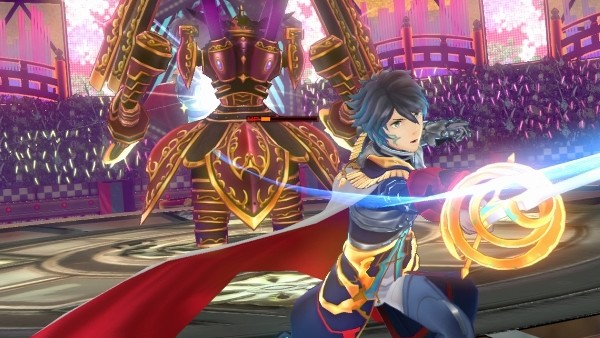
Much like arguing over whether classic Star Wars is better than modern Star Wars (it's all Star Wars, people) arguing for the ultimate supremacy of either Western or Japanese RPG titles seems to be missing the point somewhat.
The argument basically revolves around the question of whether Western RPG series' such as Mass Effect, The Witcher, Elder Scrolls, and Knights of the Old Republic, are better/worse than Japanese RPGs such as Fire Emblem, Final Fantasy, Dragon Quest, or Pokemon.
Just listing those few from each side is enough to make most gamers salivate, but the debate rages on over which are objectively "better" - a quandary which is nigh on impossible to quantify.
What are we actually comparing here; Total units sold? Number of entries per franchise? Impact on popular culture? Whether or not Henry Cavill has played them?
It's nonsense when you think about it; how many of us have both Mass Effect and Dragon Quest games in our collections? How many of us completed Fire Emblem: Three Houses then immediately went back and replayed The Witcher 3 for the seventh time?
We don't passionately debate whether Western or Japanese developed platform or action games are better, so why do it with RPGs?
5. Rule Set In Super Smash Bros.

To be clear, we're not talking about competitive, tournament play here - that's an altogether different beast to wrangle.
Whilst most fighting games do indeed have options to customise the finer points of bouts, and can therefore be tailored to a player's preference, Super Smash Bros takes this tinkering to a whole new, headache-inducing level.
"Three minute timed battle, five stock, launch rate 0.5%, show damage off, score display on, no items".
Most Super Smash Bros players would barely even comprehend the meaning behind these bizarre words, let alone have any definitive opinion on their respective merits during either online or offline battles.
Most of us just want to play a regular game of good old fashioned, standard Smash Bros, minus the tinkering with, and manipulation of, the core game.
Choosing and creating original rule sets in Smash has become a meta, a game within a game. It is an art form whereby creative and/or absolutely deranged (the two are not mutually exclusive) players can come up with some weird and wonderful variations on the traditional, default Smash setup.
And then argue with others that theirs is the definitive way to play, obviously...
4. E-Sports
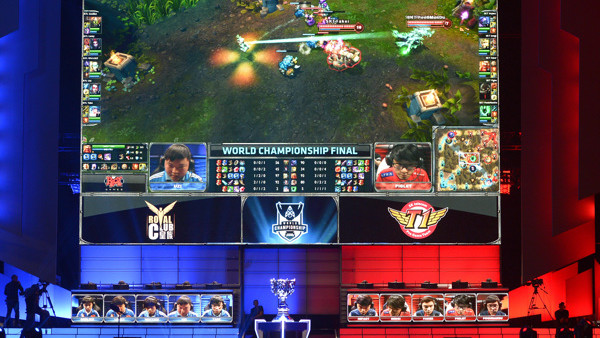
In fairness, most gamers stand in solidarity on this point, with most of the argument coming from the non-gaming general public.
Are E-Sports "real" sports? Could video gaming ever become an Olympic event?
Ask the aforementioned Muggles and they will (a) laugh in your face, (b) display zero comprehension as to what video games even are in the first place, or (c) slap you with a bible (other religious texts are available).
The thing is though, competitive gaming can be just as competitive, just as difficult, just as mentally and physically taxing as any other legitimate sport you could name.
One need only look to the competitive League of Legends scene and the undeniably HUGE global audience this attracts, with seven-figure prize money coveted by teams from all around the world.
How, then, do you define what is classed as a sport in the modern age? Do E-Sports players run around on a field? No - but then neither do racing drivers. Do E-Sports players train day and night to the point of exhaustion? Yes, of course they do.
Could just anyone off the street play a game like LOL to the astronomically high standards that professional players can? Absolutely not.
Starting to sound a bit like a sport, isn't it?
3. Console Wars

Perhaps the oldest and most ubiquitous entry on this list is one which every gamer is either aware of or has actively participated in: the console war.
From the halcyon days of Atari and Intellivision, the legendary Sega and Nintendo bouts of the nineties and, most recently, Xbox and PlayStation, gamers have consistently picked a side.
Whilst it is obviously true that many gamers have no distinct brand loyalty, and would pick up an Xbox AND a PlayStation simply for the love of gaming, there has always been a highly vocal contingent who would strongly beg to differ.
Perhaps subconsciously taking their lead from Sega's (in)famous "Genesis Does What Nintendon't" advertising campaign of the nineties, there are gamers of all backgrounds who are extremely quick to point out your staggeringly numerous failings as a human being and - somewhat inevitably - question your parentage, should you DARE to state your love for a system which they themselves do not own.
It's ludicrous, really. More consoles equals more choice and ultimately more games, and that's a huge positive.
Then there's the PC gamers...
2. PC Gamers

Nice segue, eh?
"Bloody PC gamers, coming round 'ere with their "Graphics Cards" and their "Teraflops"... Thinking they're better than me and my Sega Master System..."
Like King Thranduil openly displaying scorn and derision for the stricken Dwarves of Erebor, PC gamers can be a.... curious bunch.
While a console is fundamentally the same machine on launch day as it is seven to eight years later once it's inevitably replaced by a newer, sexier model, PCs are designed to adapt.
They're meant to be upgraded and modified along the way so as to render even the newest console a relic the day after its release, and damned if some PC gamers won't let us forget it...
Speak to a PC gamer, and it's not about whether or not they enjoyed a game, but how amazingly it ran, what mods they used, how many thousands of pounds worth of tech were shaking the house to its very foundations at the time, how many lowly console gamers they'd coerced into bringing them wine and oysters throughout....
In fairness, there are some ridiculously powerful PCs out there which leave our sad little consoles in the dust, like a Pagani Zonda racing a Granny on a mobility scooter.
It's just jealousy, really.
1. Inverting The Y-Axis
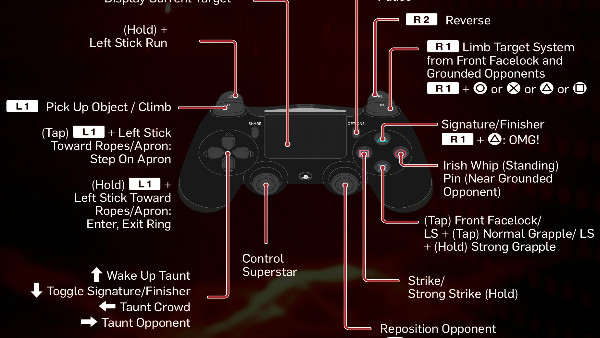
This one always turns gamers' worlds upside down - or should that be downside up?
You're at a friend's house, they hand you the controller so you can take over at Call of Duty. There's an enemy on a balcony above, so you move the stick to aim toward this high ground...and fire your shot into the floor instead.
"The Y-Axis is calibrated wrong!" you scream.
For years, the default setting for aiming has been this: Push the the stick "Up" to look "Up", "Down to look "Down", with the option to invert this if we are insane. But is this correct?
Think about it - Fighter pilots pull DOWN to lift the nose of their craft UP, the same way that you would push DOWN on the handle of your supermarket trolley to lift it UP over a kerb or stationary child.
Inverting the Y-Axis may actually be correct after all...
Games are getting wise to this conundrum, instead asking us to "look up" during tutorial sections and then calibrating our controls accordingly.
At the end of the day, we're talking about personal preference here, so it's down (or should that be "Up"?) to the individual player to decide how best to enjoy their beloved hobby.......or sport.
Watch Next
How Well Do You Remember The Original Star Wars Battlefront Games?
