10 Lessons The Gaming Industry Must Learn From 2014
Only half of them from Assassin's Creed: Unity.
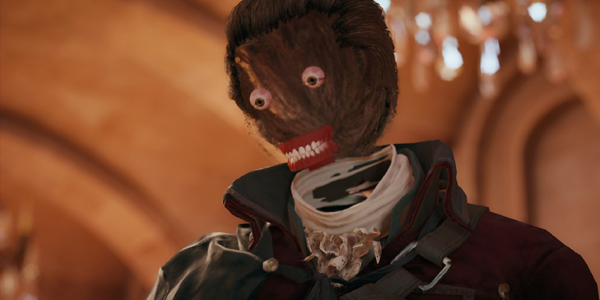
10. Broken Products Aren't Acceptable
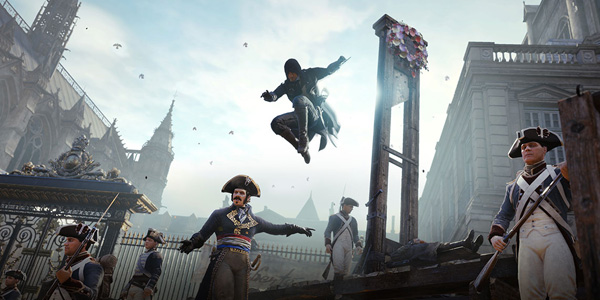
9. Studios Can And Should Apologise
Of course, even the loftiest wishes won't guarantee that quality assurance departmentswhich must consist entirely of either albino unicorns or nobody at all, apparentlydo their job. We're sure to see more corporate and production blunders in this console generation, but that doesn't mean we have to see the same backlash that scarred such releases as Battlefield 4 and SimCity. Throw as many stones at Ubisoft as you want (really, feel free, because damn), but they've owned up to the absurd state of Assassin's Creed Unity. As Eurogamer reports, the game has recently received its fourth patch which, on top of the previous three, has done wonders for the once flailing game. What's more, Ubisoft is handing out free copies of Unity. Are they handing them out as condolences? Promises of a worthwhile product? Or just a sure-fire way to block potential lawsuits? Probably a mix of the three, but whatever the case, it's a free triple-A gamenot something many studios can lay claim to. Should we have to patch up our new game? No, and it's absolutely ridiculous to have to do so. But seeing genuine repentance from a studio which is now actively working to resolve a glaring mistake is ultimately a good thing. Better to not have glaring mistakes in the first place, but hey, halfway. Point is, if you screw the pooch, you'd better offer more than "we thank you for your continued patience" as recompense.8. E3 Is A Broadcast

7. Social Media Is Powerful
6. Multiplatform IP Should Not Become Exclusive
5. Piracy Is Inevitable, But Can Be Minimised

4. Indie Is A Very Real, Very Valuable Market

3. Region-Locking Is Archaic
2. You Can Have Too Many Micro-Transactions
The rampancy of micro-transactions in games is largely a result of the industry's growing pains. As games became more advanced, they became more expensive to produce, so studios needed a way to recoup costs. Unfortunately, what started as a harmless source of additional revenue has become the de facto way to gouge consumers. Micro-transactions are not inherently bad. For a game like League of Legends, they allow players to customise their characters. In Blizzard's Hearthstone, they're the quickest way to unlock new cards. Micro-transactions are acceptable in these two scenarios because they don't undermine anything and don't feel necessary. The majority of LoL players haven't spent more than a few bucks on the game, and it's entirely possible to become a top-tier Hearthstone player without spending a dime. But let's look at Assassin's Creed Unity. As Eurogamer points out, Unity players are able to buy powerful equipment early by paying up to £64.99 in exchange for Helix Credits. All purchasable items can be obtained by simply playing the game and buying credits is entirely optional, but the game still suffers from their inclusion. Cramming in-game purchases into predominantly single-player games will invariably cheapen the experience. It adds "Insert money to win" to every challenge, and suggests to the player that their experience is somehow incomplete, that they must pay more to get the full product. This is a greedy, needless way to try to get more money from consumers who, in Unity's case, already paid full price, and represents a system that has no business being in any game.1. Delays Are OK
